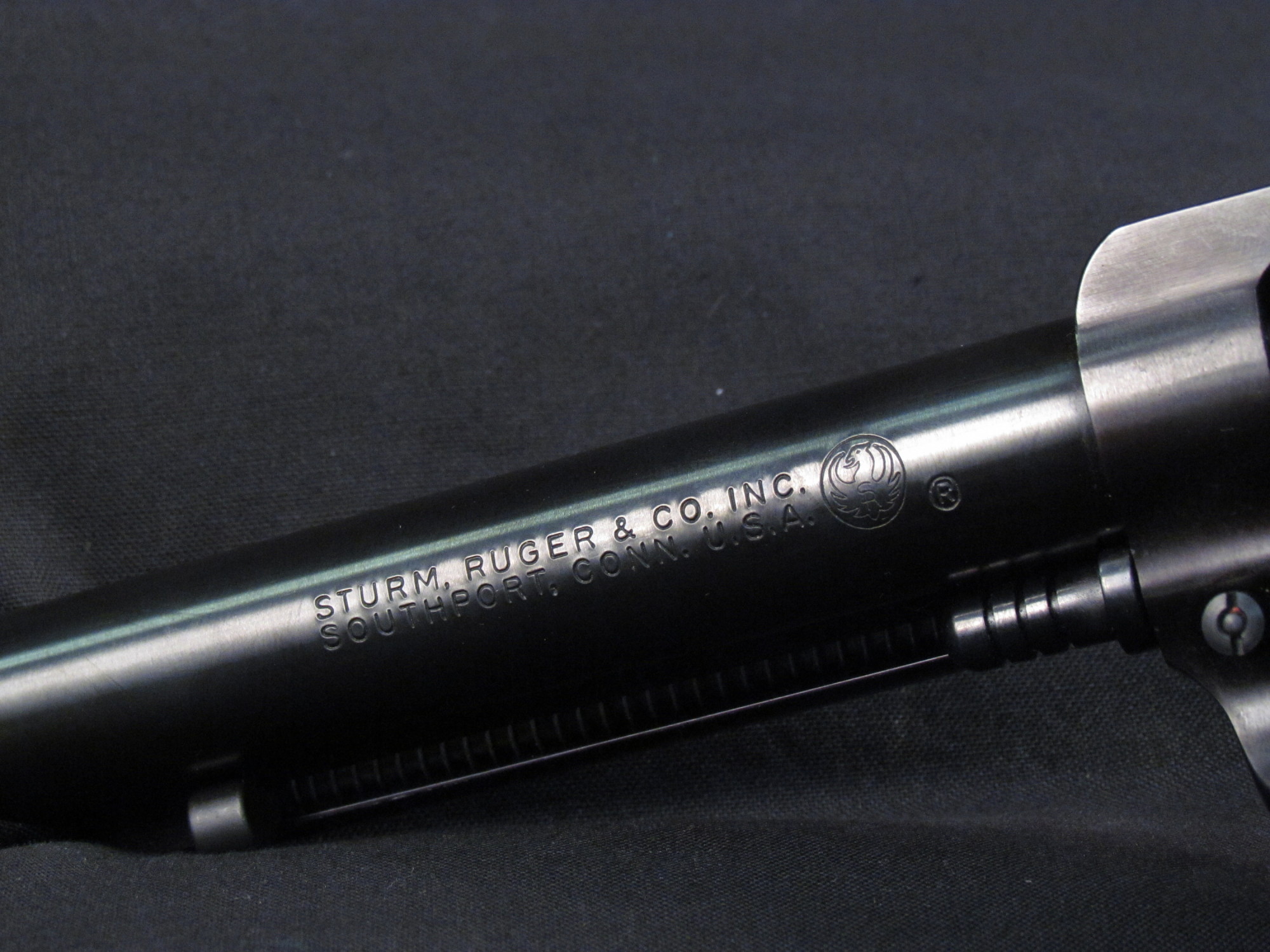
A real trail gun is not about fashion. It is about trust when the road ends and the weather, terrain, and distance start working against you.
It was built for hard use from the beginning
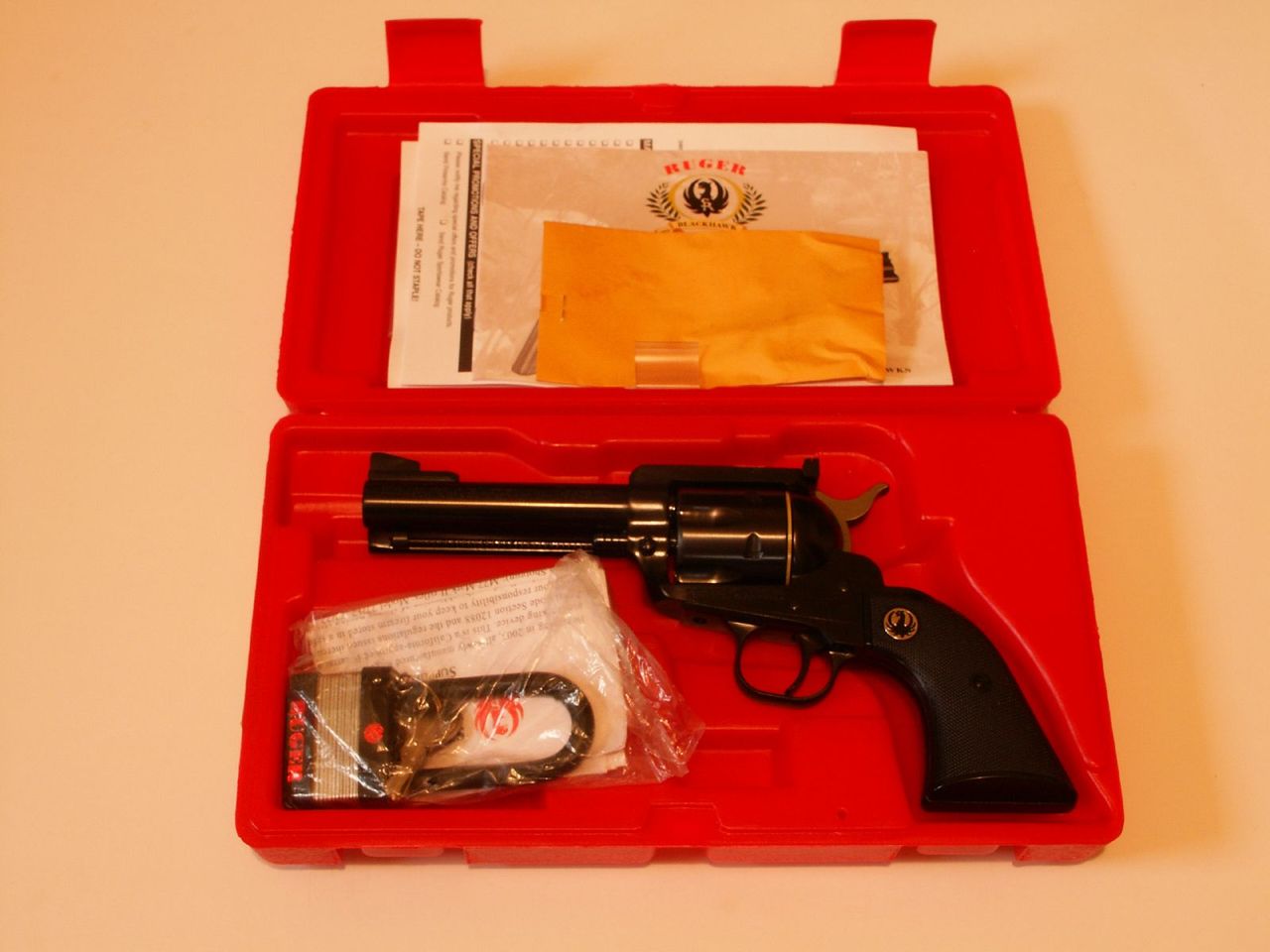
The Blackhawk has always occupied a practical middle ground between cowboy romance and modern utility. When Ruger introduced it in 1955, the idea was simple: give shooters the familiar feel of a single-action sixgun, but add features that make sense for real use. American Rifleman has noted that adjustable sights were part of that formula from the start.
That matters on the trail because fixed-sight nostalgia only goes so far. Loads vary, distances vary, and eyes vary. A revolver you can actually dial in is a revolver you are more likely to hit with under field conditions.
Ruger also built the Blackhawk with coil springs and a notably stout frame, traits that helped build its reputation for longevity. In rough country, where dust, knocks, sweat, and neglect are all possible, overbuilt is usually better than elegant.
The action is slower, but the design is honest
A trail gun does not need to win a timer. It needs to ride comfortably, come out cleanly, and fire every time you ask it to. The Blackhawk’s single-action system is slower than a double-action revolver or a semi-auto, but it also encourages deliberate shooting, which is usually what matters most in camp or on a remote trail.
That deliberate pace pairs well with the kinds of problems trail guns actually solve. Think venomous pests at close range, a wounded varmint near camp, or the need for a compact sidearm while checking fence, traps, or stock. These are usually precision problems, not volume-of-fire problems.
There is also a mechanical clarity to the Blackhawk that many outdoorsmen still appreciate. Load one round at a time, index the cylinder, cock the hammer, and break the shot. In cold weather or with gloves, that kind of straightforward manual operation can be a feature rather than a flaw.
Modern safety made it more practical in the field
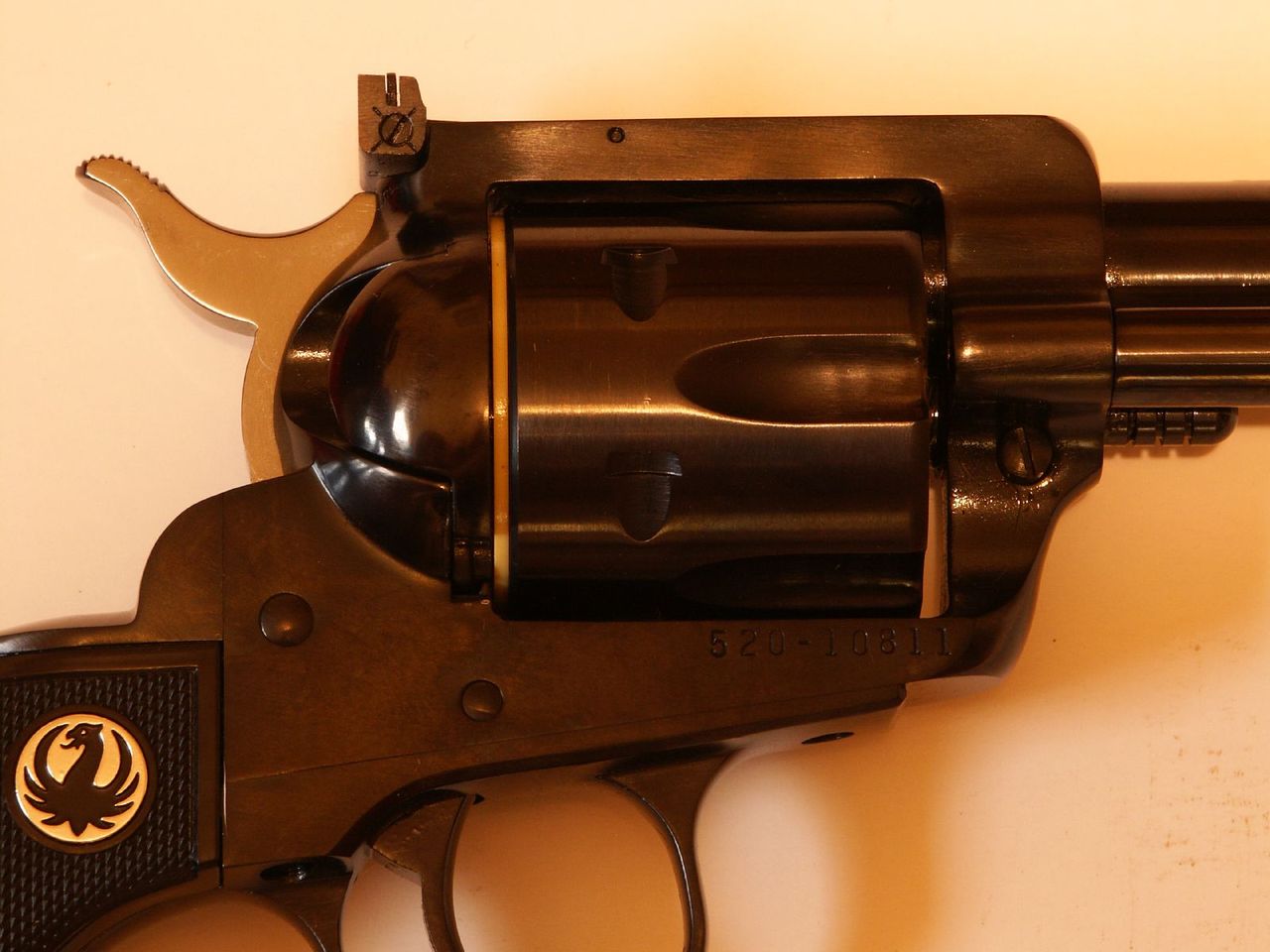
One of the biggest reasons the New Model Blackhawk works as a real trail gun is Ruger’s transfer-bar system. Ruger’s own manuals and company materials note that New Model single-actions use a transfer bar, and the redesign arrived in 1973. In plain terms, that gave the revolver a safer carry system than the older three-screw guns.
That distinction matters because people still lump all single-actions together. A pre-1973 example should be understood on its own terms, but a New Model Blackhawk is a different conversation for field carry.
For hikers and hunters, practical safety counts more than internet mythology. If a revolver may spend long hours on a belt, in and out of a truck, or around camp chores, modern carry safety is not a minor detail. It is part of why the Blackhawk stayed relevant instead of becoming a museum piece.
Versatility is where the Blackhawk gets interesting
Trail guns live or die by ammunition flexibility. Here the Blackhawk has a strong case. Ruger has offered convertible versions with two cylinders, including .357 Magnum/9mm and .45 Colt/.45 ACP. Ruger specifications list the .357/9mm convertible with a 4.62-inch barrel at 42 oz. and the .45 Colt/.45 ACP convertible with the same barrel length at 39 oz.
That gives the user options that are genuinely useful in the real world. A .357 Blackhawk can digest full-power magnum loads for field use, then back down to .38 Special for easier practice. Older Ruger literature also notes that .357 Blackhawks can use .38 Special when less power is needed.
The convertibles go one step farther. If your camp box already has 9mm or .45 ACP, a second cylinder can simplify logistics. That is not just range fun. On long trips, easier ammo sourcing is a real advantage.
It carries bigger than a compact pistol, but shoots better
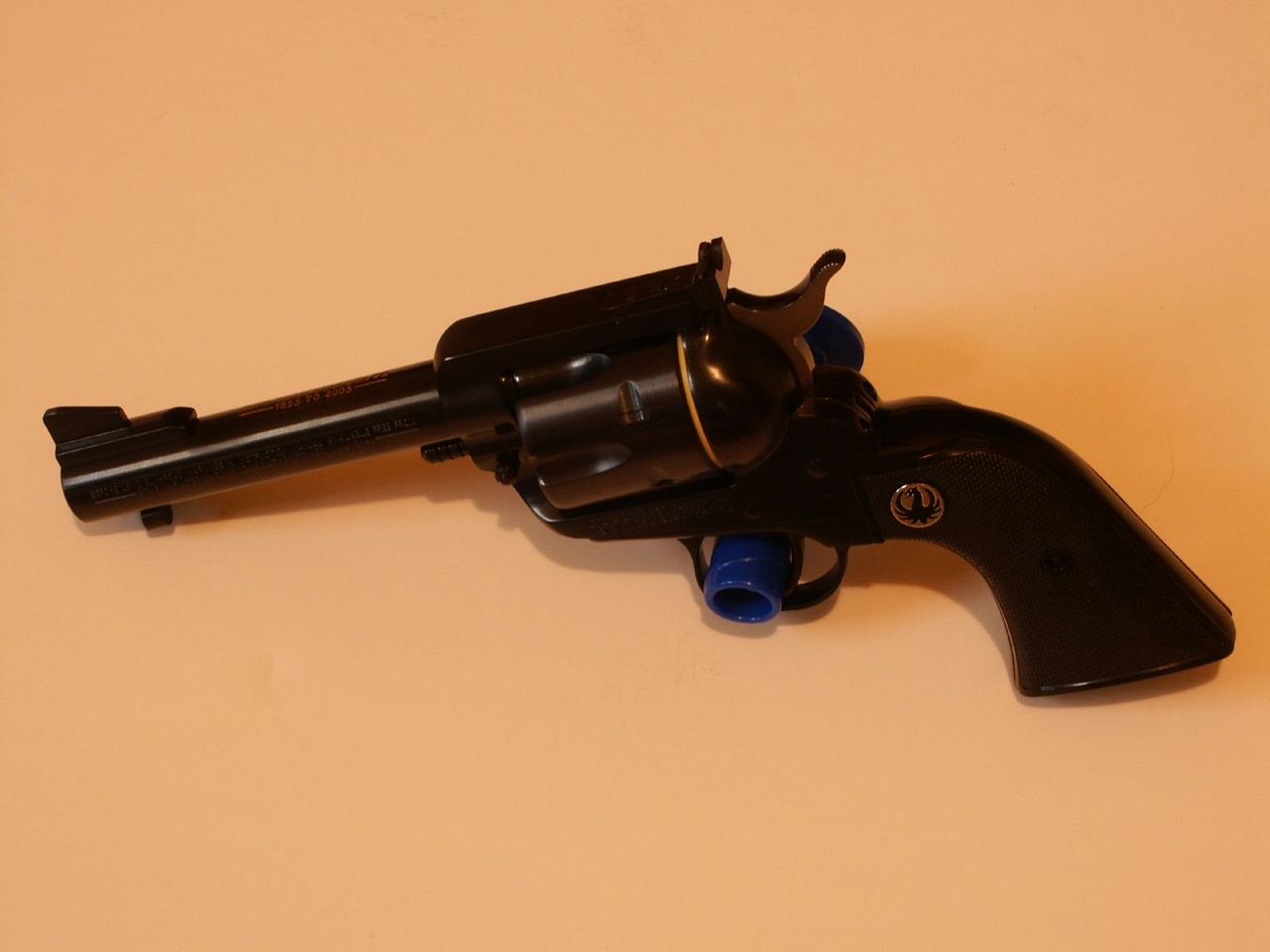
No one should pretend a steel Blackhawk disappears on the belt. At roughly 39 to 45 oz. in common convertible trim, it is a substantial handgun. Still, trail guns are a compromise, and the Blackhawk makes its trade in favor of shootability.
The plow-handle grip helps spread recoil, especially with heavier loads, and the longer sight radius of the 4.62-inch and 5.50-inch versions aids practical accuracy. Adjustable rear sights and a ramp front sight give the shooter a more precise setup than many old-school fixed-sight revolvers.
That extra size also pays off when a shot must be placed carefully. A trail sidearm is often used one-handed, from awkward footing, or after a long day outside. In those moments, a gun that points naturally and stays controllable is worth some extra weight.
Why it still earns respect in the backcountry
The Blackhawk is not the newest answer, and it is not the universal answer. But it remains a credible one because it does so many trail-gun jobs well. It is durable, accurate, mechanically straightforward, and available in chamberings that cover everything from economical practice to serious field use.
For many outdoorsmen, that combination still beats higher capacity or faster reloads. A trail gun is often carried far more than it is fired. When it is finally needed, the shot usually has to count more than the split time.
That is the Blackhawk’s real argument. It is not trendy, and it does not need to be. It is a working sixgun with modern safety, useful sights, and enough strength and versatility to justify its place on a belt deep in the woods.