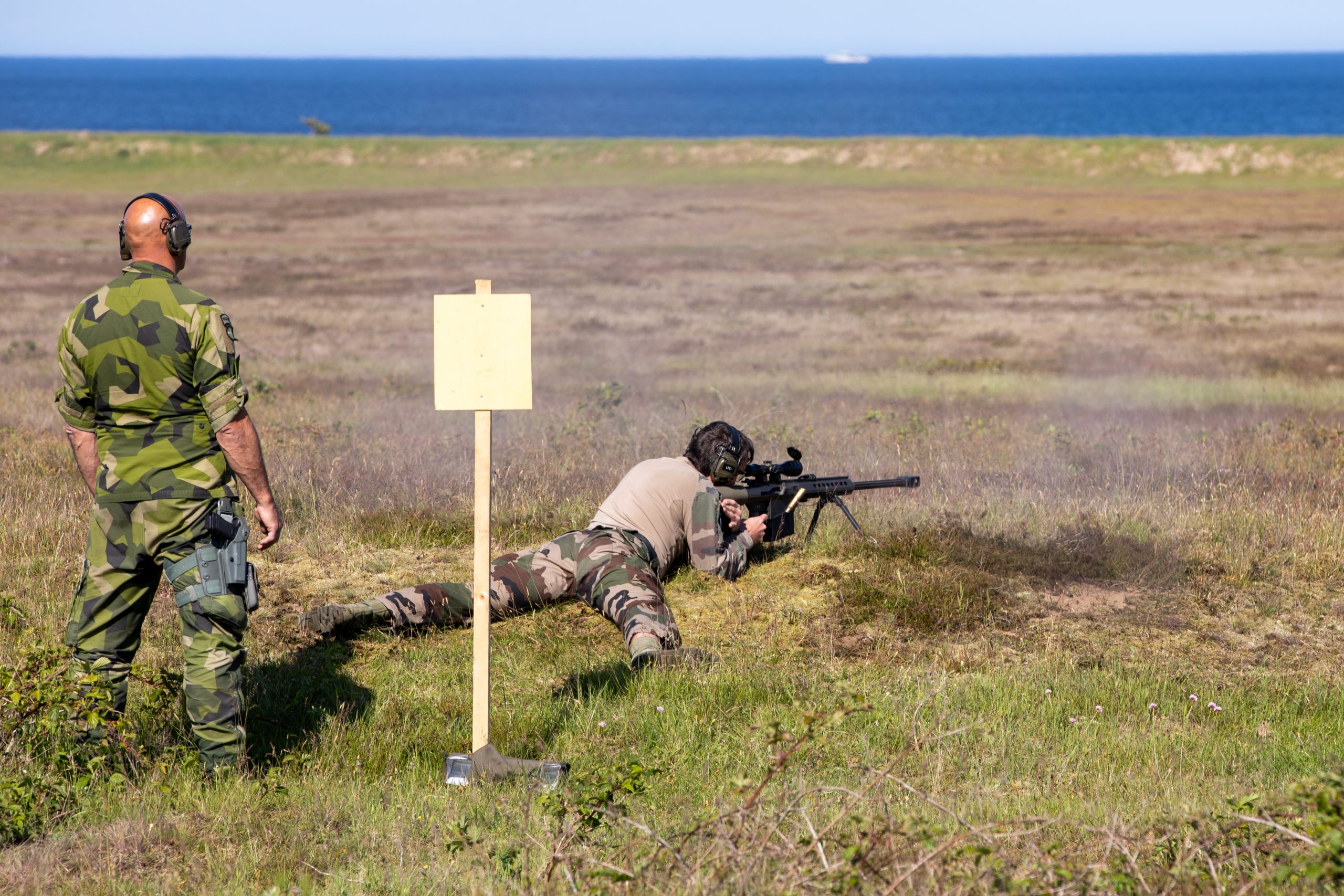
Some rifles fill a role. The Barrett M82 created one.
When it appeared, it did not just extend range. It reset expectations for what a shoulder-fired rifle could do.
A Rifle Born From a Wild Idea
The Barrett story starts in 1982, when Ronnie Barrett sketched the concept for a shoulder-fired .50 caliber semi-automatic rifle. According to Barrett’s own company history, that original idea became the Model 82, the platform that launched the company and eventually an entire class of large-caliber rifles.
At the time, the idea sounded borderline impractical. The .50 BMG cartridge was associated with heavy machine guns, vehicle mounts, and crew-served systems, not something a single shooter could carry and fire from the shoulder with any real control.
That is what made the M82 so disruptive. It took a cartridge known for extreme power and put it into a man-portable rifle that was not a novelty, but a usable battlefield tool.
What Made the M82 Different
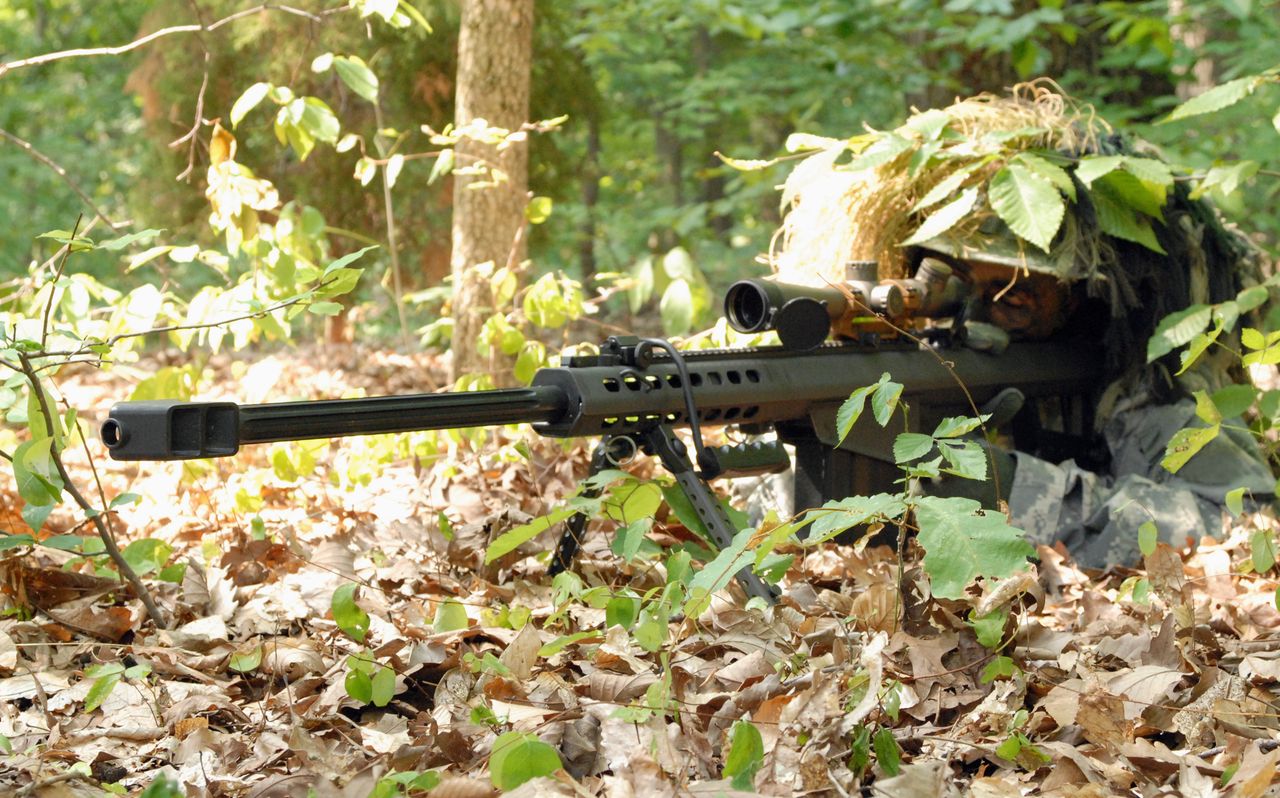
The M82 was not simply big. It was engineered around making the .50 BMG manageable, combining semi-automatic operation with a recoil-reducing system that included a distinctive muzzle brake and barrel movement under recoil.
That matters because raw power alone never explains a rifle’s reputation. The M82 earned attention by making follow-up shots faster than bolt-action heavy rifles and by giving shooters a platform that could engage targets at serious stand-off distances without crew-served logistics.
Official U.S. Army product information for the M107, the military designation adopted from the Barrett design, describes a 10-round detachable box magazine, a 29-inch barrel, and precise fire capability out to 2,000 meters. In military use, that kind of reach made it more than a conventional sniper rifle.
Why the Battlefield Paid Attention
Barrett notes that the U.S. Armed Forces bought significant numbers of Model 82A1 rifles for Operation Desert Shield and Desert Storm in 1990. That conflict helped demonstrate the rifle’s value against light materiel, hardened positions, and distant targets where ordinary 7.62 rifles simply ran out of authority.
The rifle’s role was always a little different from the Hollywood version. The Army describes the M107 as a semi-automatic long-range sniper rifle that gives sniper teams greater destructive force against light materiel and personnel targets at longer ranges, especially in open or urban terrain.
In plain language, the M82 family gave shooters a way to disable equipment, punch through barriers, and force enemies to respect distances that once felt relatively safe.
Accuracy, With a Different Meaning
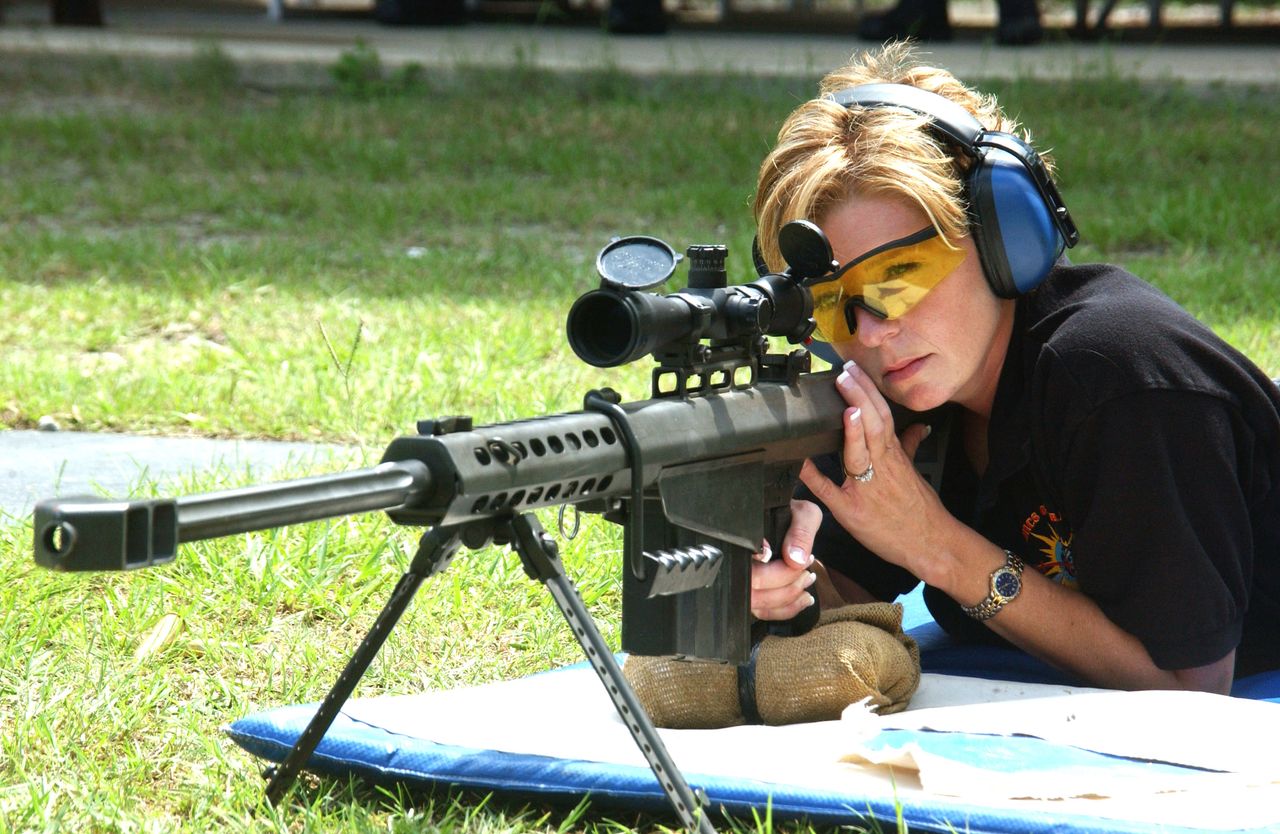
The phrase “long-range accuracy” means something different with a Barrett. This was never just about tiny benchrest groups. It was about placing a very powerful projectile on meaningful targets far away, under field conditions, with enough repeatability to change tactics.
Older military references for the M82A1A listed an effective range of about 1,800 meters on equipment-sized targets, while current Army material for the M107 cites precise engagement capability to 2,000 meters. That distinction matters because the rifle’s legacy is tied as much to target effect as to pure paper accuracy.
In other words, the M82 rewrote accuracy by expanding the definition. Precision was no longer measured only by group size, but by whether a rifle could reliably solve real problems at extreme distance.
The M107 and the Rifle’s Broader Legacy
The Barrett Model 82A1 was adopted by the U.S. Army as the M107, a milestone the company still highlights. Barrett also notes that in 2005 the Army recognized the .50-caliber M107 as one of its “Top Ten Greatest Inventions,” a remarkable distinction for a shoulder-fired small arm.
That recognition reflects more than brand success. The rifle influenced doctrine, procurement, and the civilian long-range market, proving there was real demand for large-caliber rifles that blended range, speed, and practical anti-materiel capability.
Barrett says its rifles are used by the U.S. military, law enforcement, civilian shooters, and more than 80 State Department-approved countries. Whether one focuses on military history or firearms engineering, that spread shows how thoroughly the concept took hold.
Why the M82 Still Matters
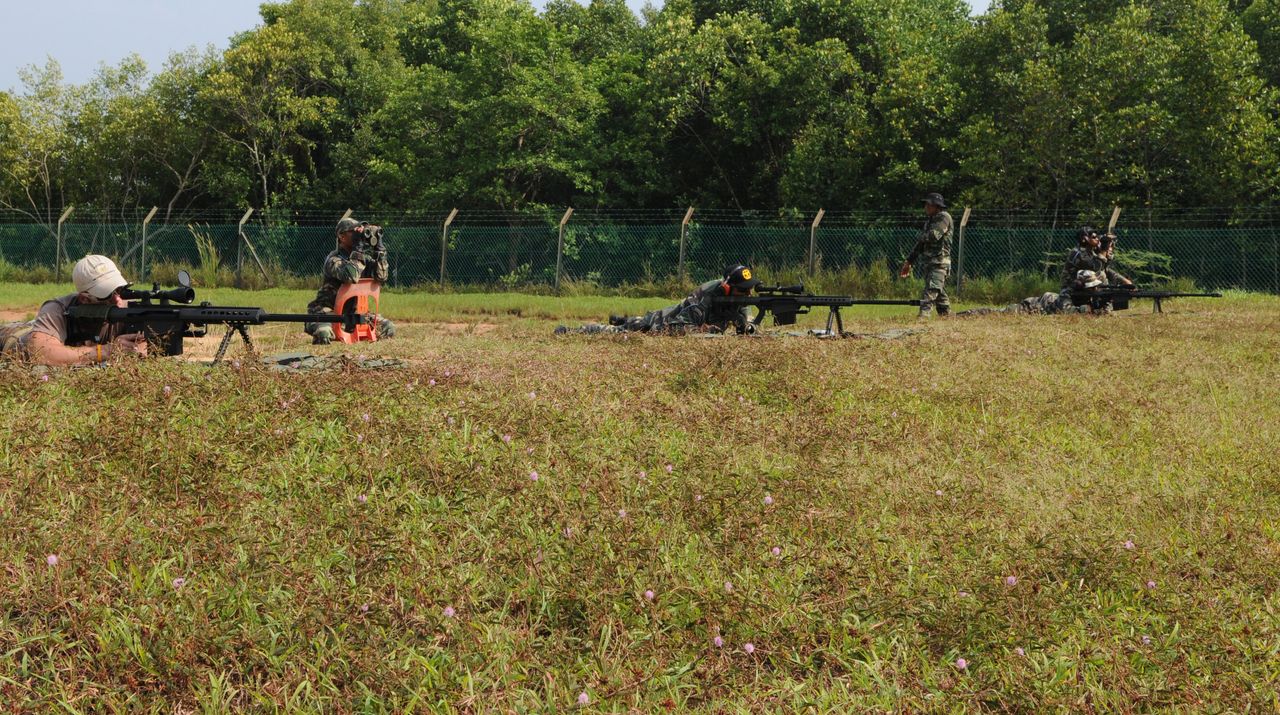
Today, the Barrett M82 remains one of the most recognizable rifles on earth because it represents a turning point. Before it, a shoulder-fired semi-auto .50 BMG sounded like a stunt. After it, the category was real, proven, and globally influential.
Its deeper legacy is conceptual. The rifle helped convince militaries and shooters that “accurate at long range” did not have to mean only lighter calibers and traditional sniper formats. Power, reach, and precision could live in the same package, even if that package was large, loud, and unapologetically specialized.
That is why the M82 still matters. It did not just hit faraway targets. It changed the conversation about what a rifle could be.