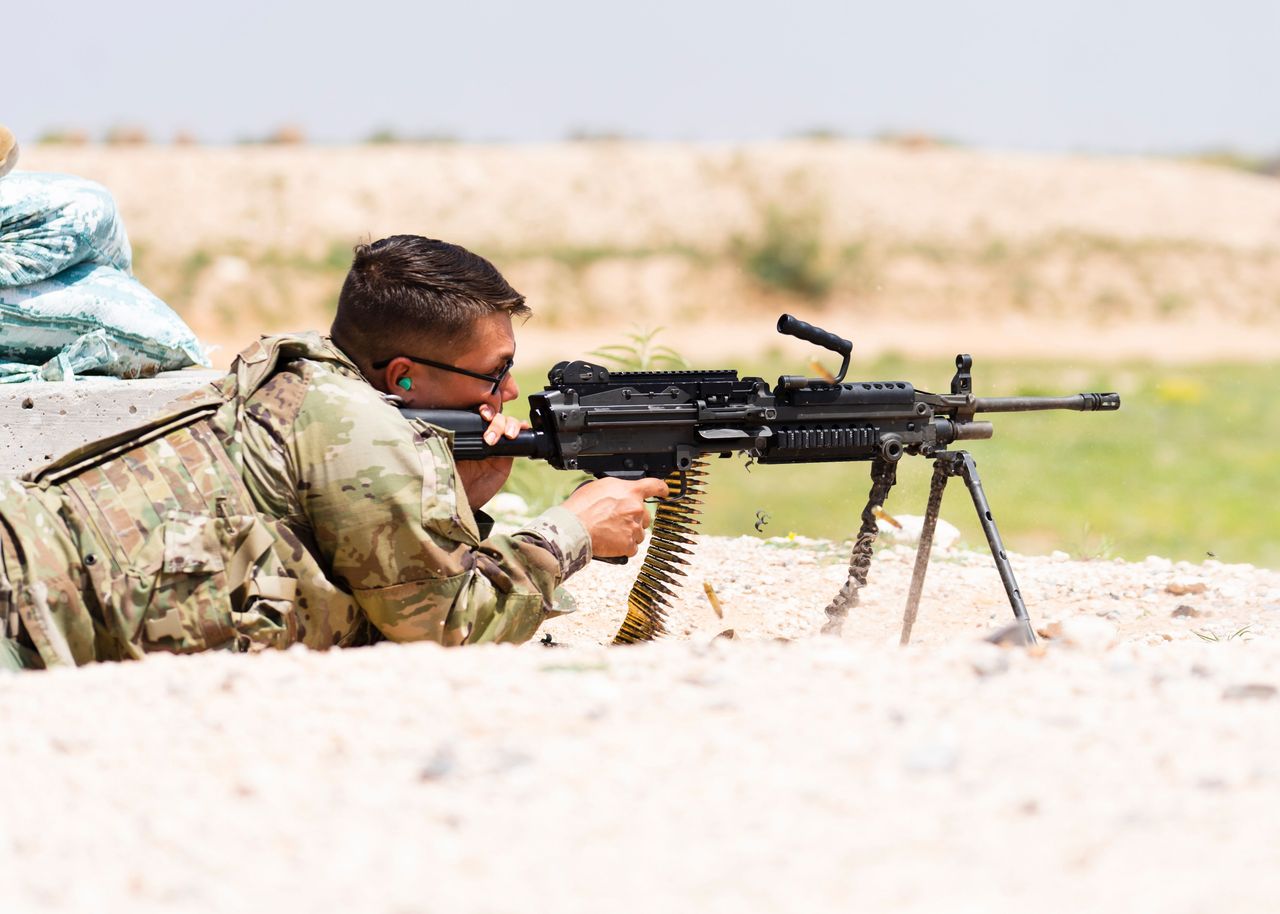
For decades, the M4 carbine defined the look and feel of the American infantry rifle. Now the Army is moving to the XM7, and the change is bigger than a simple model swap.
Why the Army is moving on from the M4

The M4 became a battlefield staple because it was light, compact, accurate enough for close to medium range combat, and easy to carry on long missions. Chambered in 5.56x45mm, it gave soldiers a controllable rifle with high magazine capacity and manageable recoil. In Iraq and Afghanistan, it proved adaptable across urban fighting, vehicle operations, and patrol work, which is one reason it stayed in service so long.
But military planners have spent years looking at how combat is changing. Potential future conflicts may involve longer engagement distances, better-protected enemy forces, and a greater need to hit effectively beyond the ranges that became common in counterinsurgency warfare. According to Army briefings and reporting from defense outlets, that concern helped drive the Next Generation Squad Weapon program that produced the XM7.
At the center of the shift is lethality at distance. The Army wants a rifle that can reach farther and hit harder than the M4, especially against adversaries wearing advanced body armor. Officials have repeatedly emphasized that the new system is designed for a very different threat environment than the one that shaped the M4’s long run.
This is not the first time the Army has debated replacing its standard rifle, but this effort has moved further than many previous attempts. The XM7 is not just a new firearm. It arrives as part of a wider package that includes a new cartridge, a new suppressor, and a new fire control optic.
The XM7 brings a more powerful round

One of the biggest differences is the ammunition. The XM7 fires the 6.8x51mm cartridge, a significantly more powerful round than the 5.56mm used by the M4. That added power is central to the Army’s goal of increasing effective range and improving penetration against hard targets and body armor.
The 6.8mm round, developed for the Next Generation Squad Weapon effort, uses a hybrid case design in its military form to handle higher pressures. In simple terms, it is built to squeeze more performance out of the weapon system than legacy infantry rounds. That means faster velocities, more energy on target, and a greater ability to stay effective at distances where the M4 begins to give up some advantages.
There is a tradeoff, and it is an important one. More power usually means more recoil, more blast, and heavier ammunition. Soldiers may carry fewer rounds for the same weight, which has direct consequences for load planning and combat endurance.
That balance between performance and burden is one of the most closely watched aspects of the XM7 rollout. Supporters argue the extra reach and punch are worth it in a high-end fight. Skeptics note that the best rifle on paper still has to work in mud, fatigue, and the everyday reality of infantry movement.
The rifle itself is larger, heavier, and more specialized

Compared with the M4, the XM7 is not simply a familiar carbine with a fresh coat of paint. It is generally larger and heavier, reflecting the demands of the more powerful cartridge and the hardware built around it. That matters because infantry weapons are judged not only by what they can do on a range, but by how they feel after hours of carrying them.
The XM7, produced by SIG Sauer, was selected alongside the XM250 automatic rifle under the Army’s broader modernization plan. Reports on its fielding have pointed to a loaded weapon system that can weigh noticeably more than an M4 setup, especially once the suppressor and optic are attached. For troops already carrying body armor, water, batteries, radios, and other mission gear, every extra pound counts.
At the same time, the Army is not pretending the XM7 is aimed at exactly the same job description as the M4 in every tactical sense. The newer rifle is optimized around overmatch, meaning the ability to outrange and outpenetrate an opposing force. That concept places a premium on power and precision, even if it costs some lightness and handiness.
In practical terms, soldiers may notice that the XM7 handles differently in tight interiors, during rapid transitions, and on extended foot movements. Whether those tradeoffs feel acceptable will likely depend on mission type, terrain, and how much confidence troops gain in the weapon’s added capability.
New optics may be as important as the rifle
A lot of public attention has focused on the rifle and ammunition, but the optic may be just as revolutionary. The XM7 is expected to pair with the XM157 fire control optic, a sophisticated sighting system designed to help soldiers shoot more accurately at longer ranges. This is one of the clearest signs that the Army sees the weapon as part of a networked shooting system, not a standalone rifle.
The optic reportedly includes a variable magnification scope, laser rangefinder, ballistic calculator, atmospheric sensors, and digital display features. In effect, it can help estimate holdovers and aiming solutions that once demanded much more manual skill and experience. For ordinary troops, this could reduce the learning curve for making hits at a distance.
There are obvious advantages here. Better first-round hit probability matters in any firefight, and especially in one where enemy targets may appear briefly or at ranges that stress conventional carbine optics. If the system performs reliably, it could make squads more dangerous without requiring every rifleman to become an expert marksman first.
Still, advanced optics bring their own concerns. Batteries, durability, maintenance, and training become much more important when a key part of the weapon system is electronic. A simple rifle can fail in simple ways, but a digitally enhanced rifle introduces another layer of complexity that the Army will have to manage carefully.
Suppressors are becoming standard, not optional.
Another major change is the routine use of a suppressor. The XM7 is designed around a suppressor from the start, rather than treating one as a special accessory. That reflects a wider military shift toward reducing muzzle flash, blast signature, and shooter fatigue while improving command and control during engagements.
Suppressors do not make rifles silent like in movies, but they do make a real difference. They can cut some of the punishing sound and overpressure that rifles produce, especially in confined spaces or around vehicles. For soldiers, that can mean better communication, less immediate hearing damage risk, and a less disorienting shooting experience.
There is also a tactical benefit. A lower visible signature can make it harder for enemies to pinpoint where shots are coming from, particularly in low light. In an era of drones, sensors, and rapid target detection, even modest reductions in signature can matter more than they once did.
Of course, suppressors add length, heat, and maintenance demands. They can make a rifle feel more front-heavy and can become extremely hot during sustained firing. Even so, many military experts see the suppressor as a smart baseline feature for modern infantry weapons, and the XM7 reflects that thinking clearly.
What this means for soldiers in the field
For the average soldier, the XM7 will change more than the rifle slung across the chest. It will alter training routines, qualification standards, maintenance habits, and likely even the way squads think about distance and fire discipline. A more capable rifle can expand tactical options, but only if troops learn to exploit its strengths.
Marksmanship training may shift toward longer-range engagements and more deliberate fire. With the M4, troops often emphasized controllability, volume of fire, and familiarity with a lightweight platform. With the XM7, the Army may lean harder into precision, target discrimination, and understanding how to use the fire control optic under stress.
Logistics will also feel the impact. New ammo means a new supply chain, different loadouts, and fresh calculations about how much a soldier can carry without sacrificing mobility. Armorers and unit leaders will need to support a system that is more complex than the M4 in several ways.
Fielding will not happen overnight, and not every soldier will get an XM7 immediately. The Army has started with close combat formations, where the demand for greater lethality is most pressing. That phased rollout gives the service time to learn from real users before the rifle spreads more broadly.
The XM7 signals a bigger shift in Army doctrine.
The XM7 is really a symbol of something larger than hardware modernization. It reflects the Army’s belief that future infantry combat could be deadlier, longer-ranged, and more technologically demanding than the wars that defined the M4 era. In that sense, replacing the old carbine is as much about doctrine as it is about engineering.
If the Army is right, squads will need weapons that can defeat better armor, reach across wider spaces, and integrate with smarter targeting tools. The XM7, the XM250, the 6.8mm cartridge, and the XM157 optic all point in that direction. Together,r they suggest a force preparing for peer-level conflict rather than just irregular warfare.
Whether the XM7 becomes as iconic as the M4 will depend on what happens after adoption. Soldiers will decide quickly whether the added range and power outweigh the weight, recoil, and complexity. History is full of promising military systems that looked excellent in testing but earned mixed reviews in the field.
What is clear already is that the Army is not making a minor update. It is rethinking what a standard infantry rifle should do, how far it should reach, and how much technology should be built into every trigger pull. That is why the XM7 matters far beyond the gun itself.