Hollywood sold Americans a lie about silencers for decades. Now the market is big enough, and moving fast enough, that millions of buyers may finally find out what these devices actually do.
Hollywood taught people to expect a whisper
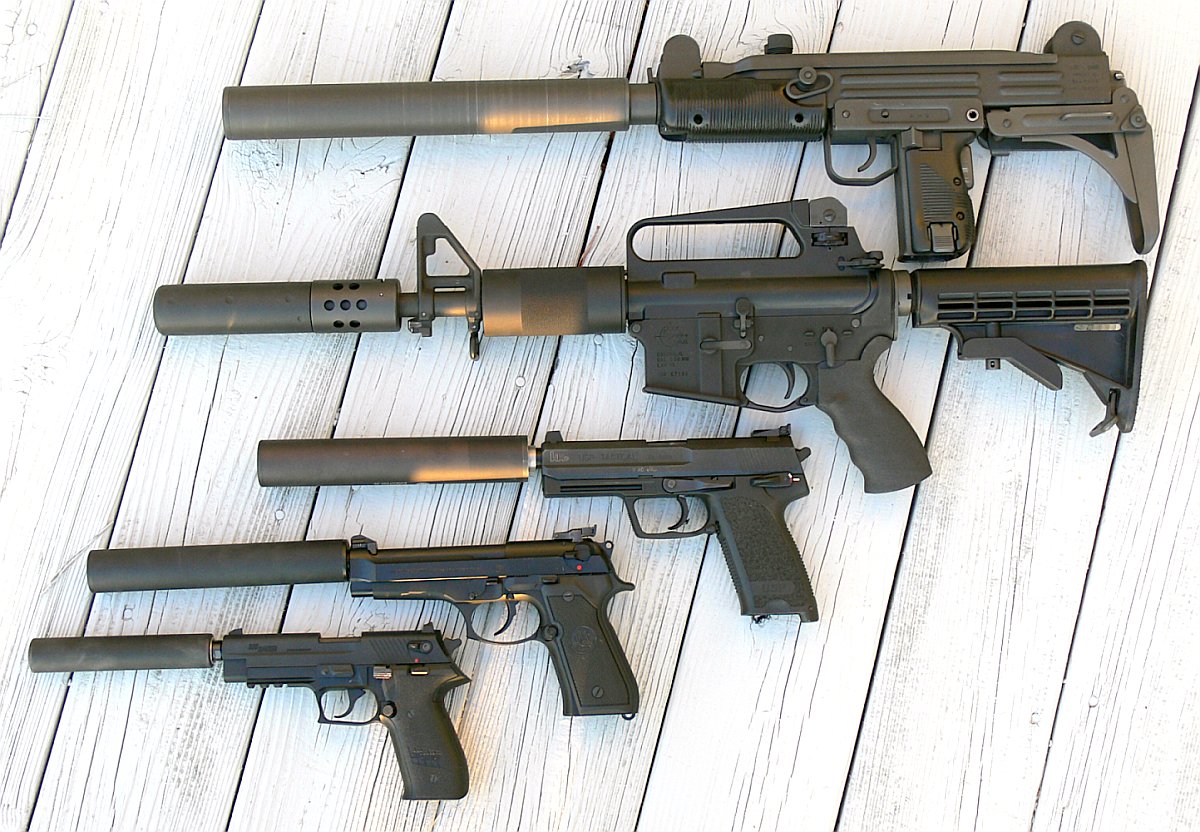
In movies, a silencer turns a gunshot into a soft little click, like a stapler in the next room. That image has been repeated so often that plenty of non-gun owners, and even some first-time buyers, assume a suppressor makes a firearm nearly silent. Real suppressors do not work that way, and the gap between screen fiction and range reality is enormous.
A suppressor reduces muzzle blast by slowing and cooling expanding gases before they leave the barrel. That matters a lot, especially outdoors, because the sharp concussion is what most shooters and bystanders notice first. But it does not erase the sound of the shot, and it definitely does not make centerfire rifle fire vanish into the air.
The science on gun noise makes the point clearly. A CDC-backed NIOSH document says firearm noise near the ear can range from about 140 to 175 dB peak SPL, which is well into hazardous territory, while NIOSH also warns that repeated exposure at 85 dBA or higher can damage hearing over time. Suppressors can cut the blast, but they are usually a noise-reduction tool, not a magic mute button.
Why is this myth being tested right now

This is not just a culture story. It is a market story, and a regulatory story, happening at unusual speed. The National Shooting Sports Foundation reported in July 2026 that more than 845,000 suppressor applications had been submitted and about 768,000 approved from January through May of this year alone, based on ATF data shared with the group.
That kind of volume matters because it shifts suppressors out of enthusiast circles and into the hands of ordinary buyers. Once a product moves from specialist adoption to mass adoption, myths get exposed fast. The first trip to the range becomes the fact check, and no ad campaign or action movie can soften the surprise when a “suppressed” rifle still sounds very loud.
The legal backdrop is changing too. AP reported in August 2026 that a federal judge in Texas struck down enforcement of parts of the National Firearms Act as applied to suppressors and certain short-barreled firearms, after earlier policy moves had already removed the tax on some NFA items. Even where the law remains in flux, the public message is simple: access may be getting easier, so interest is climbing.
The first surprise for new buyers is simple: they are still loud
The biggest misunderstanding is not technical. It is emotional. New buyers often expect the first suppressed shot to feel cinematic, and instead it feels more like “noticeably improved, but still serious.” That is especially true with supersonic ammunition, where the bullet itself creates a crack that no muzzle device can erase.
This is where the hearing-protection argument becomes more credible than the Hollywood fantasy. NIOSH says repeated exposure to loud noise can cause permanent hearing loss, and CDC guidance stresses that if you have to shout to be heard, the sound may already be dangerous. A suppressor can reduce blast exposure, but that does not automatically make every setup hearing safe in every environment.
Indoor shooting makes the lesson even harsher. Reflected sound, short barrels, high-pressure cartridges, and hard surfaces can turn a “quieter” setup into something that still feels punishing. That is why experienced shooters so often pair suppressors with plugs or muffs anyway. For many new owners, the real education will be discovering that suppressors are best understood as one layer of protection, not the whole solution.
Faster approvals are changing buyer behavior
For years, one reason suppressors stayed niche was the buying experience itself. The extra paperwork, fingerprints, transfer rules, and long waits discouraged casual customers. That friction did not just slow sales. It also kept suppressors culturally distant, which let old myths survive with very little real-world correction.
That barrier has weakened dramatically. ATF’s current processing page says median processing times for individual eForm 4 applications finalized in June 2026 were 6 days, and an ATF press release from July 27, 2026 said Form 4 processing had fallen from around 150 days in fiscal year 2021 to roughly 18 days. That is a profound shift in consumer psychology.
When a buyer can move from interest to possession in days or weeks rather than most of a year, the suppressor stops looking like an exotic collector item and starts looking like a practical accessory. That means more hunters, recreational shooters, and first-time NFA customers enter the market with mainstream expectations. And mainstream expectations, shaped by Hollywood, are exactly what reality is about to challenge.
What real users tend to learn after the purchase
The first lesson is that caliber, barrel length, ammunition, and environment all matter. A suppressed .22 with subsonic loads can sound dramatically softer than a short-barreled 5.56 firing supersonic ammunition. Put differently, “suppressed” is not one experience. It is a category covering outcomes that range from impressively mild to merely less obnoxious.
The second lesson is that comfort matters as much as raw decibel reduction. Shooters often talk about less concussion, less muzzle flash, easier communication, and reduced fatigue over a long range session. Those quality-of-use improvements are rarely captured in Hollywood, but they are a big reason suppressor owners become repeat buyers.
The third lesson is social. Once one person in a hunting camp or shooting group starts using a suppressor, other people usually notice the difference in blast and ask questions. That word-of-mouth effect helps normalize the device as safety gear rather than criminal gear. Industry research cited by NSSF says suppressor registrations grew 265 percent from 2020 to 2024, which suggests that normalization is already well underway.
The political fight adds even more confusion
Suppressors sit at the intersection of guns, health, and symbolism, which makes them easy to caricature. Supporters frame them as hearing-protection tools that reduce noise pollution for shooters, guides, dogs, and nearby landowners. Opponents often hear the word “silencer” and picture covert crime, even though the practical effect is usually to take the edge off a still-loud gunshot.
That clash in language matters. “Silencer” is historically common and legally familiar, but “suppressor” is often the more honest term for what modern users experience. The old cinematic label invites people to imagine silence. The practical label suggests reduction, moderation, and realism.
The politics may stay heated, especially as court rulings and federal policy continue to move. But mass consumer experience has a way of flattening exaggeration. If hundreds of thousands of additional buyers keep entering the market every year, more Americans will hear for themselves that a suppressed firearm is not a movie prop. It is a loud machine made somewhat less loud, with meaningful benefits and very clear limits.
The myth may not survive the next buying wave
The most important thing about this moment is not whether suppressors become universally accepted. It is that direct experience is about to outrun secondhand mythology. When a product reaches enough people, the public story changes from fantasy to user review, and suppressors now appear to be crossing that line.
That could have several effects at once. Retailers may spend less time battling old gangster imagery and more time explaining host guns, mounting systems, point-of-impact shift, and ammunition choices. New owners may become more disciplined about doubling up with ear protection instead of assuming the can solved everything. And the broader public may start to separate criminal stereotype from ordinary sporting use.
In the end, the Hollywood myth gets tested one trigger press at a time. Millions of Americans may soon discover that the real suppressor story is less dramatic than the movies, but more useful than the movies ever admitted. It is not silence. It is mitigation, comfort, and hearing-risk reduction in a world that has confused “quieter” with “quiet” for far too long.