It took only one ugly safety scare to put a wildly successful handgun on the defensive. For SIG Sauer, the P320 controversy became a lesson in how fast engineering, reputation, and liability can collide.
The pistol that seemed unstoppable
When SIG Sauer launched the P320 in 2014, it looked like the company had found the perfect modern striker-fired formula. The gun was modular, easy to configure, and aimed squarely at the enormous law enforcement, military, and civilian markets that had made polymer-framed pistols the center of the handgun business. Its removable fire control unit lets owners swap grip modules and slide lengths without changing the serialized core.
That flexibility mattered. Instead of selling shooters one fixed pistol, SIG was selling a system. The P320 quickly built a reputation for good ergonomics, a crisp trigger, and adaptability across carry, duty, and competition roles. In an industry where small design changes often get marketed like revolutions, the P320 really did feel like a fresh idea.
Then came the biggest validation possible. SIG won the U.S. military’s Modular Handgun System competition, and the M17 and M18 variants of the P320 became the new service sidearm family. That contract transformed the pistol from a strong seller into a flagship product and pushed the brand deeper into police holsters and gun store counters nationwide.
Success that large creates a dangerous kind of confidence. Once a gun becomes a market leader, people assume the hard questions have already been answered. But in the P320’s case, the problem that would haunt it was not about accuracy, magazine capacity, or ergonomics. It was about what could happen when the pistol hit the ground the wrong way.
The flaw that changed everything
The core controversy centered on drop safety, specifically whether some early P320 pistols could fire if dropped at a particular angle. In 2017, public testing by Omaha Outdoors and reporting that followed helped bring attention to an unnerving possibility: under certain impact conditions, inertia could move internal components enough to cause a discharge without a conventional trigger press.
SIG Sauer later acknowledged a narrow but serious issue in pre-upgrade pistols. In its voluntary upgrade materials, the company said it had modified the design using lighter internal parts, including a thinner trigger, lighter sear, and lighter striker, to improve protection against unintended discharges if the pistol was dropped. The company did not call it a recall, but the language made clear the risk was real enough to justify a no-cost factory fix.
That distinction mattered legally and politically. A formal recall carries one kind of public meaning. A voluntary upgrade sounds more controlled, more technical, and less catastrophic. But for owners, departments, and plaintiffs’ lawyers, the practical question was simpler: could an uncommanded shot happen in ordinary ownership, and if so, how often?
The answer depended heavily on which incidents you counted. SIG has consistently maintained that the P320 cannot fire without a trigger pull and that many alleged events involve holsters, foreign-object intrusion, or handling errors. Critics point to court cases, injury claims, and the fact that SIG changed the design at all. That gap between engineering explanation and public perception is where the crisis really grew.
Why one fix turned into a trust crisis

Gun owners can forgive many things. They are used to break-in periods, magazine preferences, and even occasional parts updates. What they do not forgive easily is uncertainty about whether a holstered or dropped pistol might fire when nobody intended it to. Once that fear enters the conversation, every unexplained discharge starts to feel like proof.
The P320 problem became bigger than the original drop-fire allegation because the issue arrived at the exact moment the pistol was exploding in popularity. A boutique handgun with a limited customer base might have weathered the storm quietly. America’s hottest service pistol could not. Every police injury claim, social media video, and lawsuit amplified the sense that the story was growing rather than fading.
SIG’s own success made the backlash worse. The company had sold the P320 as a thoroughly modern sidearm trusted by professionals. After the upgrade announcement, skeptics asked an obvious question: if the gun was already safe, why did it need new parts to reduce the chance of firing when dropped? That tension sat at the heart of years of public argument.
The result was not just a product controversy but a brand test. SIG was no longer defending only a mechanism. It was defending the credibility of its engineering, its marketing, and its assurances to agencies and private buyers. In the firearms business, where trust is everything and mistakes can maim or kill, that is about as serious as a problem gets.
Lawsuits, injuries, and a war over the facts

As the years went on, the fight shifted from gun counters to courtrooms. Plaintiffs alleged the P320 could discharge without a trigger pull, sometimes while holstered, and several high-profile cases turned the pistol into a national legal headache. According to the Associated Press, one Philadelphia jury in late 2024 awarded $11 million to a man wounded when his holstered P320 fired, a verdict that gave critics of the platform a major talking point.
At the same time, SIG fought back aggressively. The company has repeatedly said there has never been a final judgment establishing that a P320 fired without a trigger pull due to a design defect, and it has highlighted dismissed claims, voluntary withdrawals, and expert disputes. In 2026, SIG announced that a Massachusetts federal case was dismissed with prejudice after the plaintiff withdrew his claims on the eve of trial.
This legal tug-of-war created a strange public picture. One side emphasized injuries, prior design changes, and recurring allegations. The other emphasized testing, alternative explanations, and the inability of some experts to reproduce a no-trigger discharge under scrutiny. To the general public, that often looked less like clarity and more like two realities colliding.
Meanwhile, the earlier class action settlement added another layer. Settlement documents tied to the case described claims that pre-August 8, 2017 P320 pistols were defectively designed, including allegations involving the absence of a mechanical disconnector when the slide and barrel were in an unlocked condition. Even without a dramatic nationwide recall label, the legal record kept the controversy alive.
The military connection raised the stakes

If the P320 had remained a civilian-only product, the story would still have been big. But the pistol’s military variants changed everything. The M17 and M18 gave SIG enormous prestige, yet they also tied any safety discussion to the credibility of the U.S. armed forces and the idea of institutional vetting.
That connection became especially sensitive after scrutiny involving the M18 in the Air Force. The Associated Press reported in 2025 that the Air Force said SIG Sauer pistols were safe after an airman’s death had triggered a review, and later reporting said an airman was arrested in connection with the shooting that prompted the earlier pause. Those developments undercut the idea that the military issue had proven a broad design failure, but they did not erase public concern.
For critics, the military angle reinforced a different point: the civilian P320 and service variants were close enough in the public mind that any incident involving one echoed onto the other. For defenders, the opposite was true. They argued that a pistol subjected to military testing and adopted across all service branches could not be casually dismissed as fundamentally unsafe.
That left ordinary readers and gun buyers sorting through a mess of partial truths. Military adoption demonstrated serious testing and institutional confidence. It did not, by itself, settle every claim about every commercial configuration, every holster setup, or every alleged real-world incident. The badge of official approval helped SIG, but it also guaranteed the controversy would never stay small.
How SIG kept the brand from going under
The surprising part of the P320 saga is not that it became controversial. It is that the brand survived the controversy without losing its place near the top of the market. Many companies would have been buried by years of injury allegations tied to a flagship handgun. SIG endured by combining legal aggression, product iteration, and relentless message discipline.
First, the company moved quickly in practical terms, even if it resisted the language critics wanted. The voluntary upgrade program gave owners a path to updated components at no charge, and SIG said it covered shipping. That mattered because the best crisis response in the gun industry is usually concrete mechanical action, not a public-relations slogan.
Second, SIG never ceded the central narrative. The company consistently argued that the pistol would not fire without a trigger pull and that many reports were being misunderstood or mischaracterized. Whether one finds that fully persuasive or not, it prevented the public conversation from hardening into a single uncontested version of events.
Third, the company benefited from sheer market momentum. The P320 platform was already deeply embedded with enthusiasts, agencies, and military users. Holsters, magazines, optics-ready models, and aftermarket support kept the ecosystem strong. In business terms, SIG was not just selling a pistol anymore. It was selling an entire family of products that customers had already invested in.
What the P320 story really means
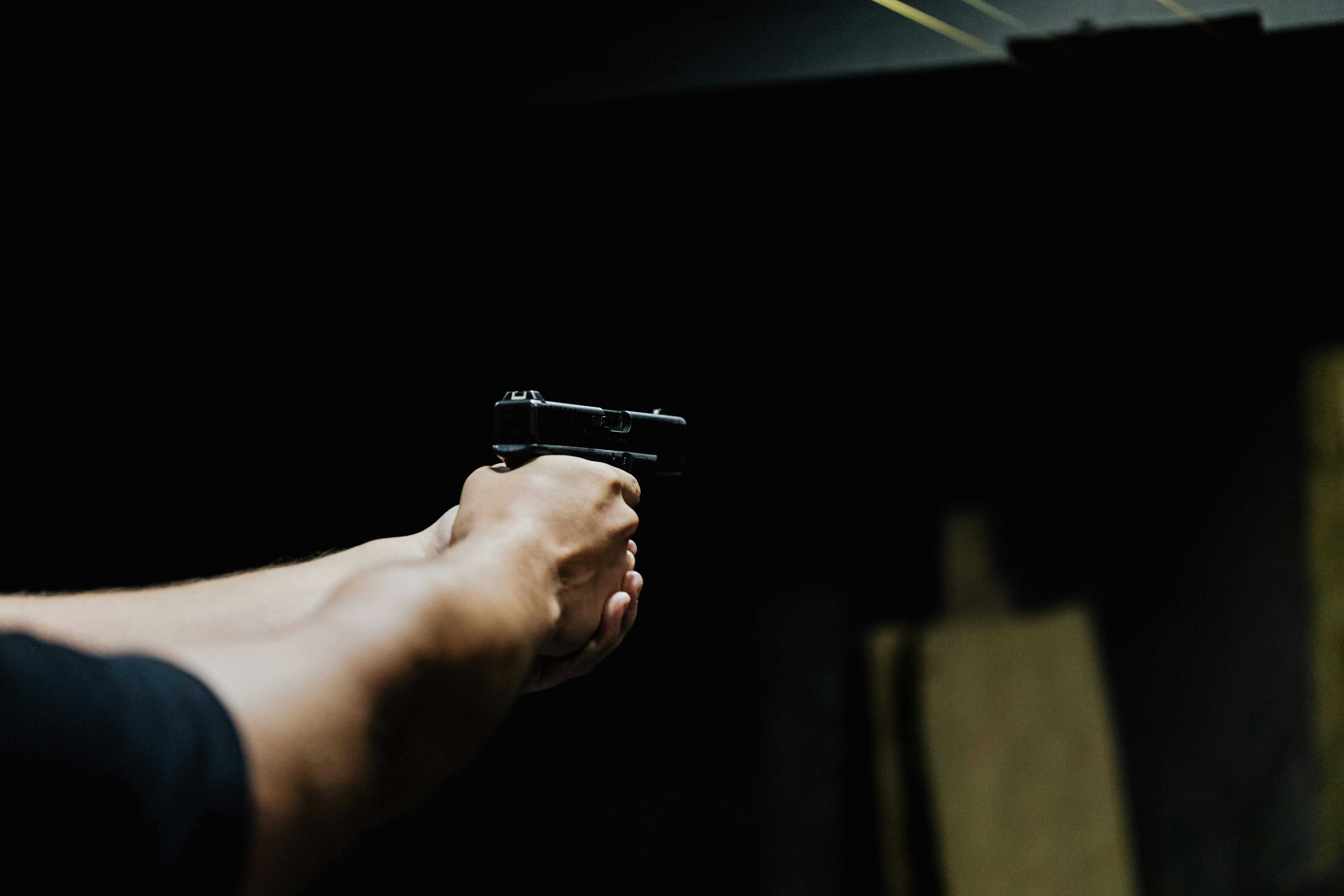
The bigger lesson here is not simply that one handgun had a troubled chapter. It is that in the firearms world, a single design vulnerability can threaten years of brand building almost overnight. A pistol can be accurate, modular, popular, and institutionally endorsed, but if users lose confidence in its passive safety, none of those strengths feel like enough.
The P320 episode also shows how language shapes public understanding. “Voluntary upgrade” and “recall” can describe very different corporate strategies, yet many consumers hear them as moral signals rather than technical terms. Once suspicion takes hold, every phrase a manufacturer chooses gets interpreted as either candor or evasion.
There is another uncomfortable truth. Modern firearms are mature technology, but mature does not mean infallible. Small changes in trigger mass, sear geometry, internal safeties, or tolerances can have outsized consequences under rare but violent conditions. Sometimes the flaw is not a dramatic cinematic failure. Sometimes it is a very specific edge case that becomes devastating because the stakes are so high.
In the end, SIG Sauer did not escape the P320 controversy untouched. It absorbed reputational damage, legal pressure, and years of scrutiny. But the company also proved something important about the modern gun market: a dominant brand can survive a major design scare if it fixes enough, fights hard enough, and convinces enough customers that the gun they carry today is not the gun that sparked the panic.