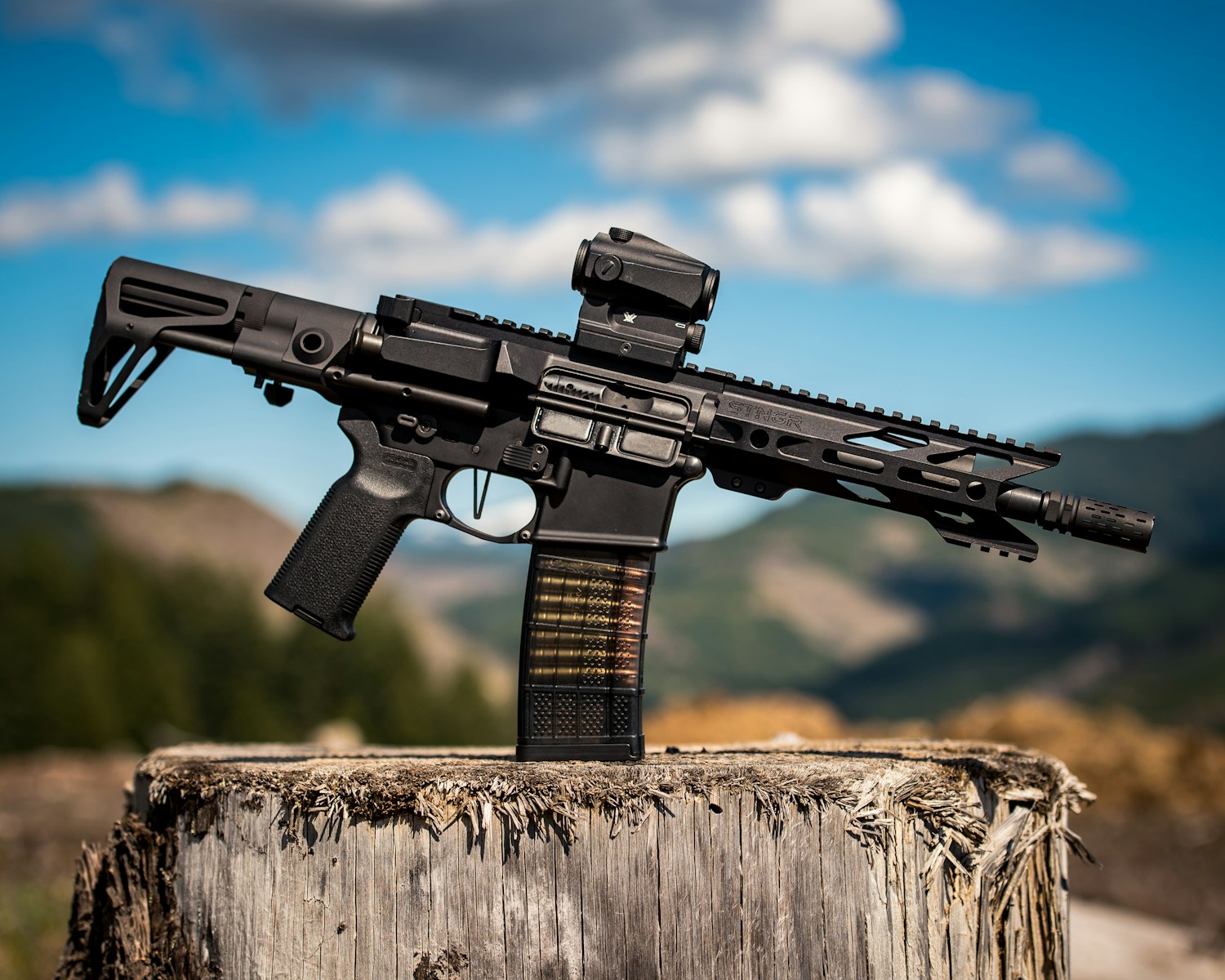
This one landed fast, and it landed hard. A federal judge in Texas just took a serious swing at one of the oldest gun laws on the books.
What the judge actually did

U.S. District Judge James Wesley Hendrix ruled on August 5, 2026, that key National Firearms Act registration requirements cannot be enforced against the plaintiffs in a Texas case challenging the law. The decision focused on suppressors, short-barreled rifles, short-barreled shotguns, and certain other NFA items that had long been tied to a federal tax and registration scheme.
That matters because the National Firearms Act, first passed in 1934, was built around Congress using its taxing power. For decades, the law required a $200 tax stamp and federal registration for specific classes of firearms and accessories considered unusually dangerous at the time. In practical terms, that meant extra paperwork, background review, waiting periods, and the risk of federal felony charges for getting it wrong.
According to the Associated Press, Hendrix said that once Congress eliminated those taxes on several covered items, the government lost the constitutional footing it had relied on to keep the registration system in place for them. That is why gun rights advocates are describing the opinion as a sledgehammer blow rather than a minor procedural tweak.
Still, the ruling is not a blanket deletion of the entire NFA. It does not automatically legalize everything for everybody in every state, and it does not wipe machine guns out of federal law. What it does is crack open one of the central legal supports behind the modern NFA framework.
Why a tax law suddenly became vulnerable

The key twist here is legislative, not just judicial. In 2025, President Donald Trump signed a budget bill that eliminated the NFA taxes for suppressors, short-barreled rifles, short-barreled shotguns, and “any other weapons,” while leaving the broader registration structure in place. That created a strange legal setup where the government was still regulating these items through a law originally justified as a tax measure, even though the tax had been reduced to zero.
That gap became the opening for gun rights groups. Their argument was straightforward: if the tax is gone, the federal government cannot keep using a tax statute as the constitutional basis for registration and criminal enforcement. In other words, a zero-dollar tax is not much of a tax at all.
Hendrix appears to have agreed with that basic logic. The decision did not depend only on modern gun politics. It also turned into a structural constitutional question about Congress’s enumerated powers and whether a tax-based law can keep operating in the same way after the tax itself disappears.
That is why this ruling has broader significance than a single firearms dispute. It touches a long-running question in American law: when the legal engine that once powered a statute gets stripped out, how much of the statute can keep running on momentum alone? In this case, the judge’s answer was not very much.
What parts of the NFA are in the crosshairs

A lot of readers hear “NFA” and think only of suppressors. That is too narrow. The National Firearms Act covers several categories, including machine guns, short-barreled rifles, short-barreled shotguns, suppressors, and a catch-all category known as “any other weapons.” But this ruling did not flatten all of those categories in one stroke.
The practical focus is on the items whose taxes were zeroed out by Congress. That is why suppressors and short-barreled long guns are front and center. For years, these items came with a $200 tax stamp, registration in the National Firearms Registration and Transfer Record, and approval from the Bureau of Alcohol, Tobacco, Firearms and Explosives before transfer or manufacture.
Machine guns are a different story. They remain heavily restricted under separate federal law, especially the post-1986 ban on new civilian machine gun transfers. So anyone reading viral social posts and assuming this means machine guns are suddenly unregulated is badly overreading the case.
There is also a state-law wrinkle. Even if federal registration requirements are weakened or blocked, some states have their own bans or restrictions on suppressors and short-barreled firearms. That means the real-world effect can differ sharply depending on where someone lives, what item is involved, and whether that person falls within the scope of the court’s order.
Why did this happen now and not years ago
Timing is everything in gun litigation, and this ruling came at the intersection of two major trends. The first was Congress changing the tax side of the NFA in 2025. The second was the Supreme Court’s modern Second Amendment shift, especially after its 2022 Bruen decision, which told courts to judge gun restrictions against the nation’s historical tradition of firearm regulation.
Since Bruen, lower courts have been more willing to scrutinize older gun laws in ways that once seemed unlikely. Reuters has reported on a string of recent firearms cases where judges have struck down or narrowed laws involving assault weapon bans, ammunition restrictions, and possession limits for certain groups. The legal environment is plainly more aggressive toward regulation than it was even a few years ago.
On top of that, gun rights organizations have become much more strategic. Instead of making a single broad challenge, they have filed multiple lawsuits in different jurisdictions, often with carefully selected plaintiffs and theories. Some of those cases attack the NFA under the Second Amendment. Others attack it through Congress’s taxing power and enumerated powers.
That layered approach helps explain the “almost overnight” feel. The law did not suddenly become controversial in August 2026. The groundwork had been laid for months through litigation, statutory changes, and a judiciary that has grown more skeptical of old firearms restrictions.
What the ruling means for gun owners right now

For gun owners, the most important word is scope. Early reporting and discussions around the case indicate the ruling’s protection is tied to the plaintiffs and associated organizations rather than every American automatically. That is a huge distinction, because viral headlines often blur the difference between a sweeping constitutional declaration and the narrower relief a federal district court actually grants.
In plain English, this is not a national green light to ignore every NFA rule tomorrow morning. The order may shield members of certain plaintiff groups and customers or entities tied to named plaintiffs, but that does not mean the ATF is suddenly powerless across the board. Enforcement boundaries matter, and they can get very technical very quickly.
There is also the appeal clock. If the federal government challenges the decision, the case could move to the Fifth Circuit, which has already been active in NFA-related litigation. Reuters and other court coverage in recent months show how quickly firearms cases can rise from district judges to appellate courts and sometimes toward the Supreme Court.
So the immediate takeaway is cautious, not reckless. This ruling is a major legal development and a genuine blow to the NFA structure for certain untaxed items. But it is not the same thing as a settled nationwide rule that every dealer, buyer, builder, and state government can safely treat as final.
The arguments supporters and critics are making
Gun rights advocates see this as a long-overdue correction. Their view is that suppressors are common safety accessories, short-barreled rifles are ordinary firearms in a more compact format, and the NFA’s registration regime became an obsolete relic once the tax foundation vanished. Groups backing the lawsuit argue the federal government should not maintain what they describe as a registry by inertia.
They also point out that the $200 tax in 1934 was meant to be punishingly expensive. Back then, it was serious money. Today, while still inconvenient, it no longer serves the same economic function. Once Congress reduced that tax to zero for several categories, they argue, the legal fiction holding the rest of the scheme together became impossible to defend.
Critics see the ruling very differently. Gun control organizations and public safety advocates argue that suppressors can make it harder for witnesses or police to identify gunfire and that short-barreled weapons are easier to conceal and maneuver in close quarters. The Justice Department has also continued prosecuting unregistered NFA possession cases as recently as this summer, showing the government still views these items as uniquely risky.
That divide explains why this case will not fade quietly. On the one hand, it is a constitutional breakthrough. For the other, it is a reckless invitation to strip away one of the oldest federal barriers around particularly sensitive weapons.
Where this could go next
The next chapter is likely to be written in the appellate courts. If the Justice Department appeals, the Fifth Circuit will become a central battleground. That court has already shown a willingness to reconsider long-standing gun rules, and its recent opinions suggest it is not especially deferential when the government leans on old assumptions rather than modern constitutional analysis.
A lot will depend on how higher courts frame the issue. They could treat this mainly as a taxing power case, asking whether a tax-based statute survives when the tax is gone. Or they could treat it as a Second Amendment case, asking whether suppressors and short-barreled firearms are protected arms in common lawful use. Either path could have major consequences.
If the ruling stands, expect more lawsuits aimed at the remaining NFA framework and perhaps other gun laws built on similarly old legal theories. Plaintiffs will argue that once one pillar falls, the rest deserve a fresh constitutional inspection. That is how one district court opinion can become a launch point for a much larger legal campaign.
For now, the bottom line is simple. A 90-year-old federal gun law just took one of the hardest hits it has seen in generations. The NFA is not dead, but after this ruling, it looks a lot less untouchable than it did a week ago.