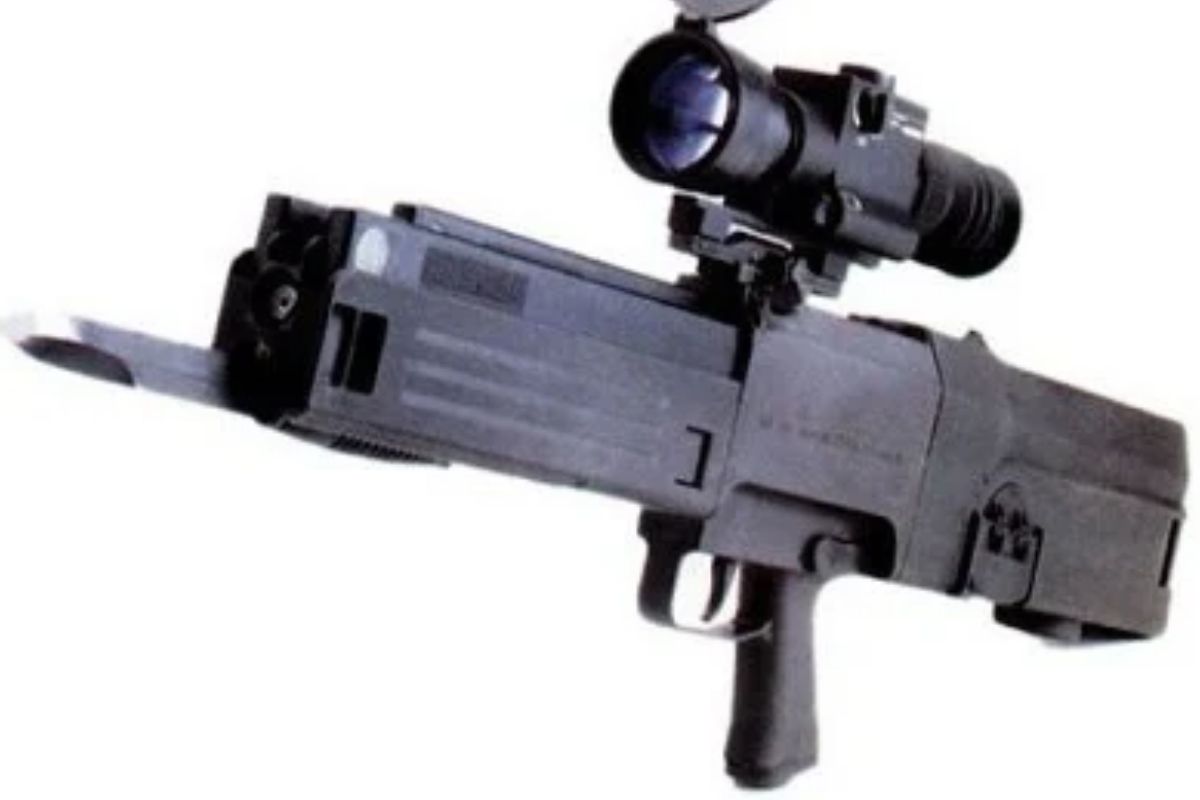
The HK G11 was one of the most ambitious military rifle projects of the 20th century. Developed by Heckler & Koch in West Germany with contributions from other German defense organizations, it challenged the conventional rifle design that had dominated military service for decades. Instead of relying on traditional cartridges with metal cases, the G11 used caseless ammunition and an unusual rotating chamber system. Its designers hoped to reduce ammunition weight, improve controllability, and increase hit probability during short bursts. Although the project never entered regular military service, its 10 distinctive features reveal why engineers believed infantry weapons could be redesigned from the ground up.
1. Caseless Ammunition Eliminated the Traditional Cartridge Case
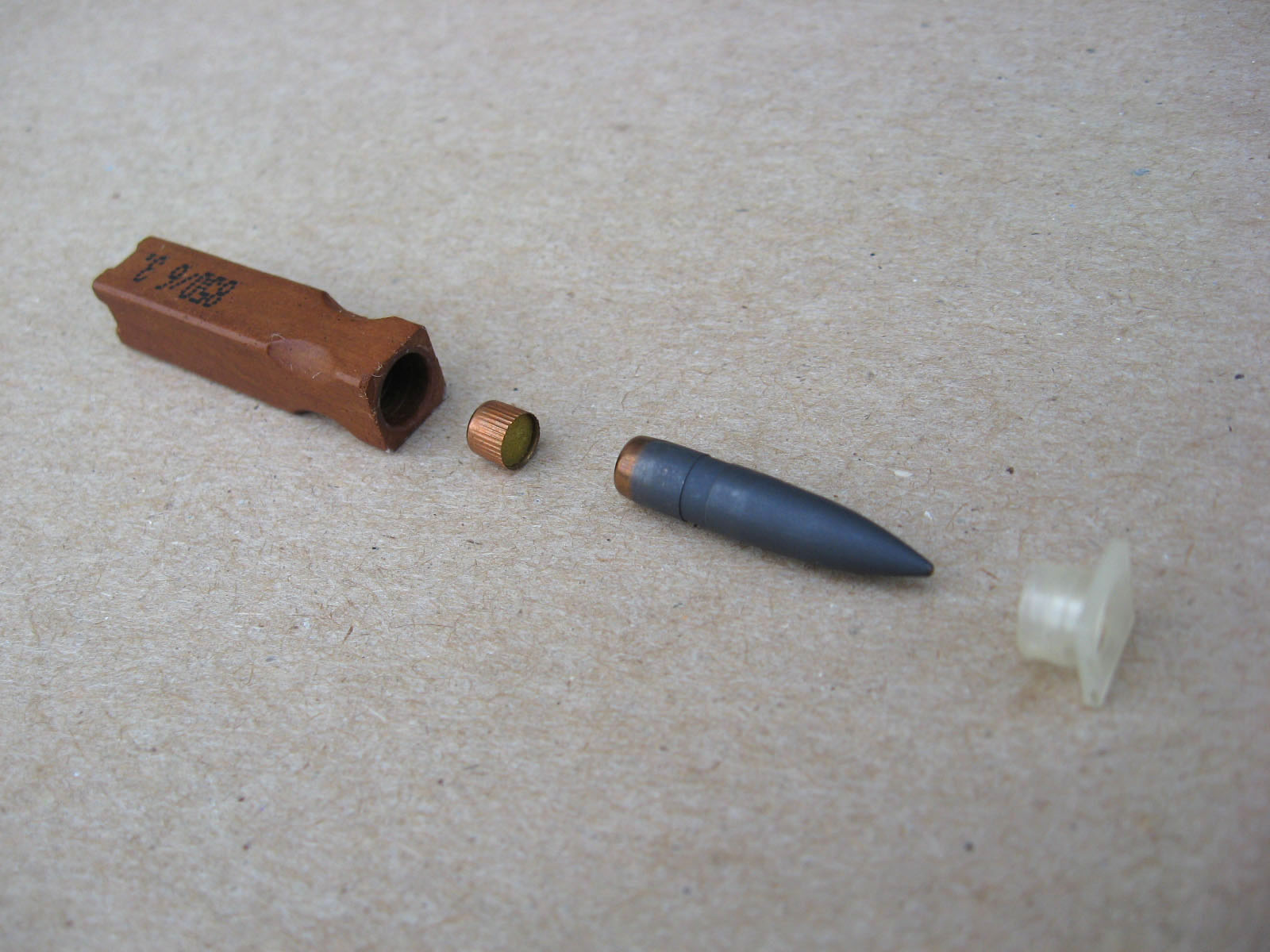
The G11’s biggest departure from conventional rifles was its 4.73×33mm caseless cartridge, developed with Dynamit Nobel. Instead of using a brass case around the projectile and propellant, the round incorporated the bullet and primer within a solid propellant block. This removed the need to extract and eject a spent case after every shot. The idea promised lighter ammunition and a simpler firing cycle, although the ammunition itself required careful engineering to withstand moisture, handling and heat. It was a radical change to a component that military rifles had relied on for generations.
2. A Three-Round Burst Fired at Around 2,000 Rounds Per Minute
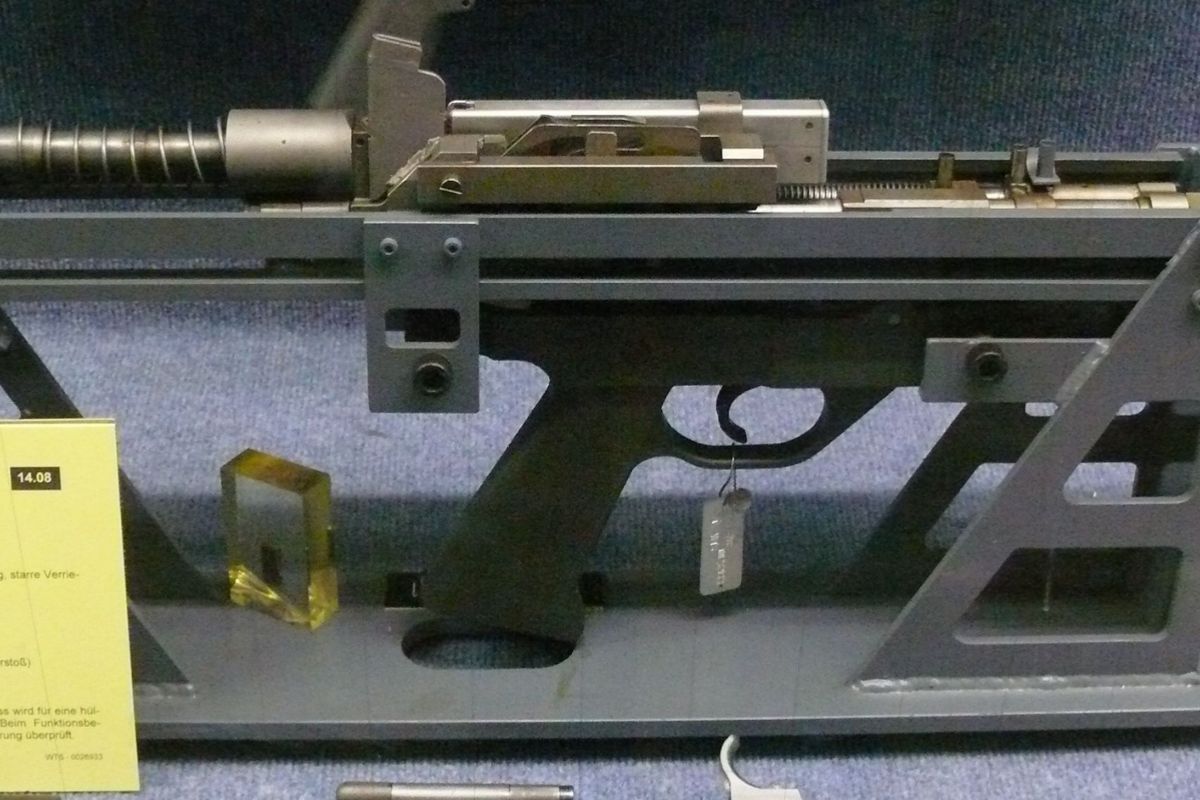
The G11 was designed to improve hit probability during short bursts rather than simply increase its overall firing rate. Its special three-round burst mode reached approximately 2,000 rounds per minute, allowing all three projectiles to leave the barrel before the shooter experienced the full effect of recoil. This unusual feature was intended to reduce the influence of muzzle movement on subsequent shots. For comparison, its sustained automatic firing rate was around 460 rounds per minute. The distinction made the G11 particularly interesting because its design focused on delivering a rapid, controlled burst rather than continuous fire alone.
3. A Rotating Chamber Replaced the Conventional Bolt Arrangement
Most military rifles use a familiar sequence of feeding a cartridge, locking the action, firing, and removing the empty case. The G11 approached this differently with a gas-operated mechanism built around a rotating chamber. The chamber turned approximately 90 degrees during its operating cycle to receive a round and align it with the barrel. Because the ammunition lacked a conventional case, the system did not need a normal extraction stage. This arrangement helped support the rifle’s ambitious firing concept, but it also introduced considerable mechanical complexity. Its unusual internal design remains one of the most distinctive features of the entire project.
4. Its Unusual Ammunition Could Reduce the Soldier’s Load

Reducing the weight carried by infantry was another important motivation behind caseless ammunition. Traditional cartridges include metal cases that add weight without becoming part of the projectile’s flight. Removing those cases offered the G11 a potential advantage, particularly when soldiers needed to carry ammunition for extended operations. The rifle used 4.73mm ammunition, with later configurations accommodating 45 rounds in a magazine. However, the real benefit depended on the complete ammunition system, including packaging and magazine weight. The concept promised a more efficient load, but lighter ammunition alone could not guarantee a lighter or more practical military equipment setup.
5. The Magazine Held More Rounds Than Many Conventional Rifles
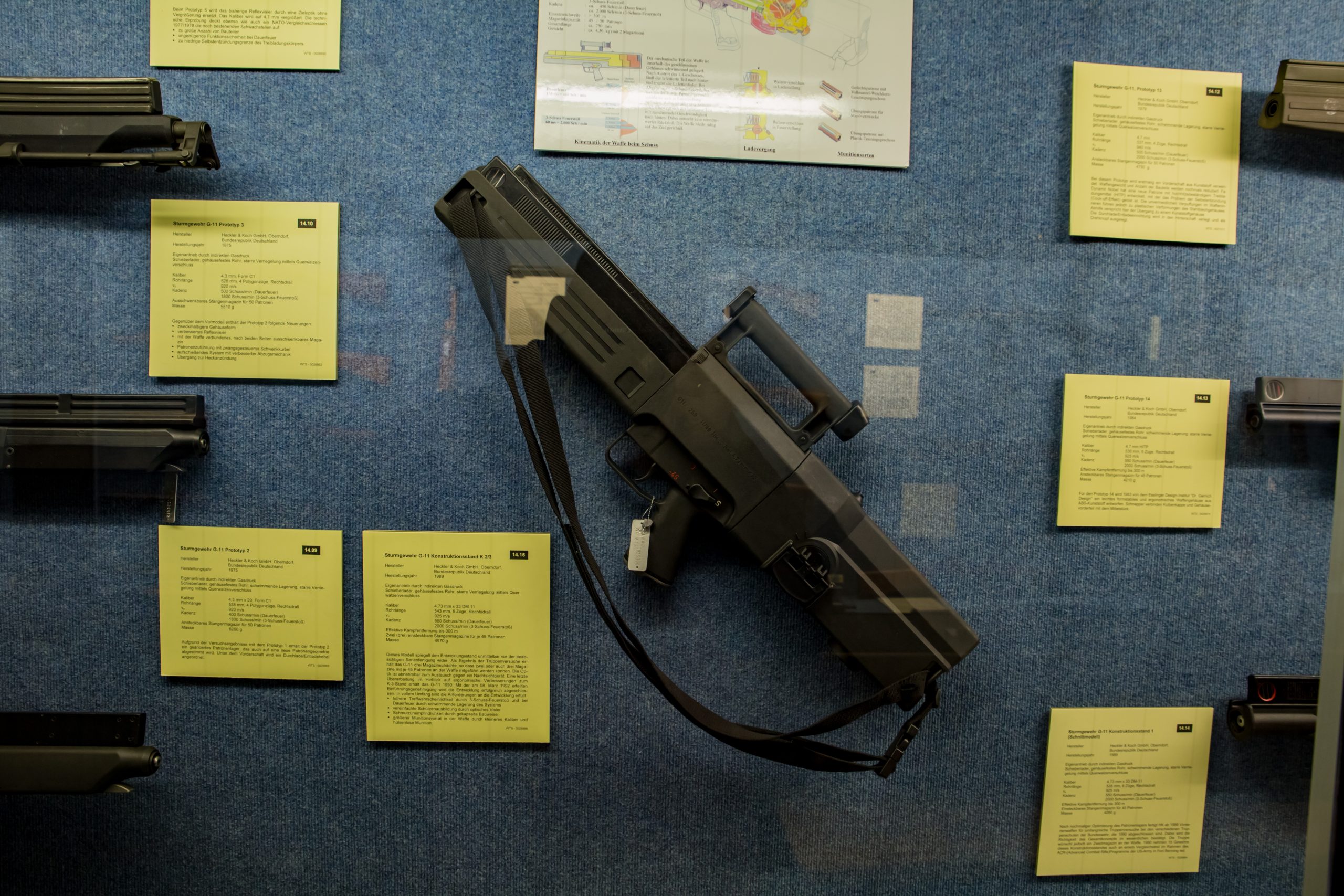
The G11’s ammunition arrangement also changed how magazine capacity was approached. Early versions used a 50-round magazine, while later designs adopted a 45-round configuration. The final arrangement allowed additional magazines to be carried horizontally alongside the one feeding the rifle, creating an unusual integrated storage system. This high capacity reduced the need for immediate magazine changes compared with a rifle carrying a standard 20- or 30-round magazine. Yet capacity introduced its own trade-offs: a long magazine could complicate handling and equipment placement. The G11’s solution reflected its broader philosophy of redesigning the complete infantry weapon rather than modifying one component at a time.
6. An Integrated Optical Sight Replaced the Usual Open-Sight Layout
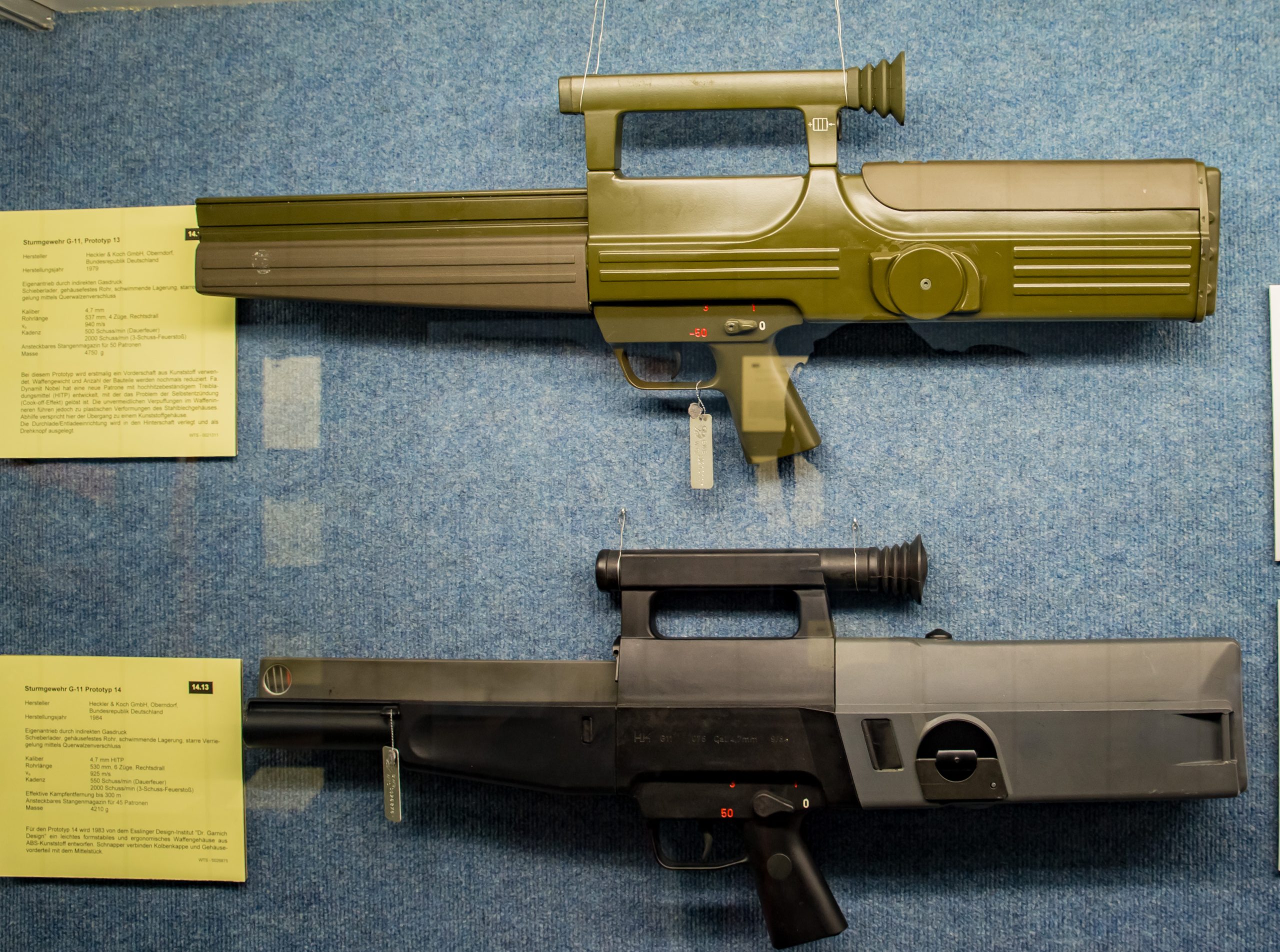
The G11 incorporated an optical sight into its distinctive carrying-handle assembly, giving the rifle a futuristic appearance compared with many service weapons of the 1980s. Rather than depending solely on traditional iron sights, it offered a built-in aiming system intended to support rapid target acquisition. The sight was designed around practical infantry engagement distances, with contemporary descriptions identifying approximately 300 metres as its intended range. Integrating the optic made the rifle look like a complete weapons system rather than a conventional rifle with an accessory added later. However, an integral sight also raised questions about replacement, repair and the long-term practicality of maintaining specialized equipment in military service.
7. A Compact Body Hid an Exceptionally Complex Mechanism

Despite its unconventional operating system, the G11 remained relatively compact. Figures published in a 1989 Heckler & Koch brochure listed an overall length of about 75 centimetres and an unloaded weight of approximately 3.8 kilograms. Its barrel measured around 54 centimetres, leaving a substantial barrel within a short overall package. These dimensions demonstrated how the designers tried to balance handling, ballistic performance and an advanced internal mechanism. The compact exterior, however, concealed many specialized components that required precise coordination. The G11 therefore illustrated an important engineering challenge: creating a rifle that was physically manageable while remaining mechanically complicated enough to demand careful development and testing.
8. Heat Management Became a Major Challenge for Caseless Ammunition

Removing the metal cartridge case also removed a component that normally carries heat away from the chamber after firing. That made heat management a central concern for the G11, particularly during rapid firing. Excessive chamber temperatures can cause ammunition to ignite before the intended firing sequence, a problem known as cook-off. Dynamit Nobel developed specialized propellant formulations to help address this risk, and the ammunition went through extensive testing as the project matured. Nevertheless, caseless ammunition demanded solutions that conventional cartridge designs already handled differently. The G11 showed that eliminating a familiar component could save weight while creating an entirely new set of engineering problems that had to be solved together.
9. The Rifle Reached Advanced Testing but Faced a Changing Military Landscape

The G11 progressed well beyond an experimental drawing board. Development stretched from the late 1960s into around 1990, with extensive trials and multiple design revisions. The later G11K2 became the most mature version, and the West German military accepted the design for service around 1990. However, acceptance did not lead to widespread issue. German reunification brought major economic and military changes, while NATO’s interest in ammunition standardization created another challenge for a rifle built around a proprietary cartridge. The project had demonstrated that caseless technology could be developed into a serious military system, but technical achievement alone could not guarantee procurement.
10. The G11’s Legacy Outlasted Its Military Career

The G11 never became a standard-issue rifle for a large military force, but its technology continued to attract attention. In the late 1980s and around 1990, a related version participated in the United States Army’s Advanced Combat Rifle evaluation, which explored ways to improve infantry hit probability. The program did not produce a replacement for the M16. The G11 was ultimately abandoned amid financial pressures, changing strategic priorities, and the difficulties of introducing a completely new ammunition system. Its significance lies in the questions it raised about rifle design, not in widespread service. More than 20 years of development showed both the possibilities and the limits of radical weapons engineering.