Fire changed everything, but making it on demand was the real breakthrough. The bow drill stands out because it turned a difficult skill into a repeatable system.
A Simple Machine With a Huge Payoff
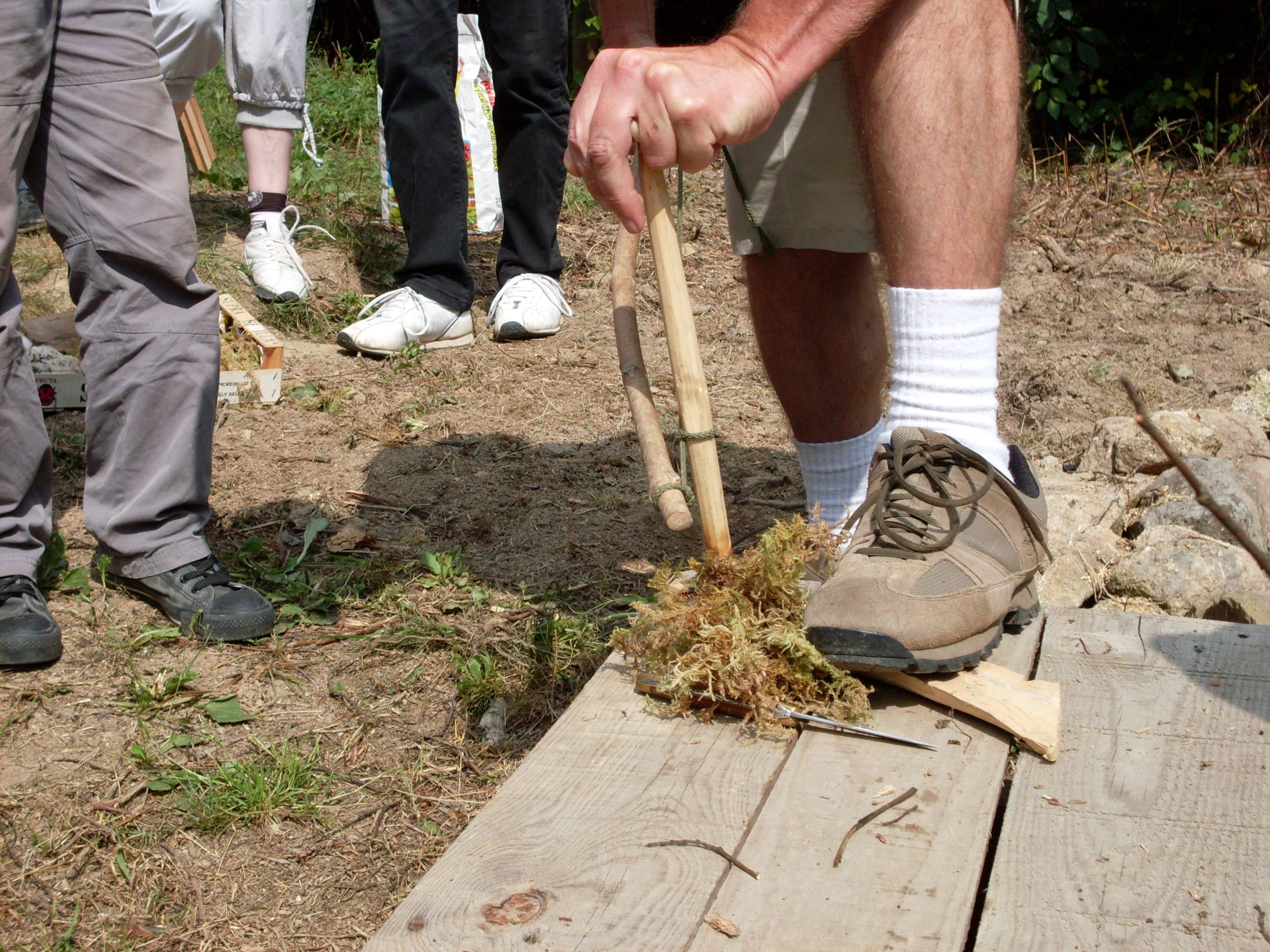
The bow drill looks humble, yet it solves a serious problem: how to spin a wooden shaft fast enough, long enough, and with enough downward pressure to create an ember. Instead of relying on bare hands, it uses a bow and cord to keep the spindle turning smoothly.
That extra control matters. The U.S. National Park Service explains that friction-fire methods began with hand drills, which were reliable but labor intensive and difficult to master. Adding a bow and a top handle let users rotate the spindle continuously with less effort and more speed.
In practical terms, the bow drill is a small mechanical advantage system. It converts a back-and-forth arm motion into rapid rotary motion, while the bearing block stabilizes the spindle from above.
Where It Likely Came From
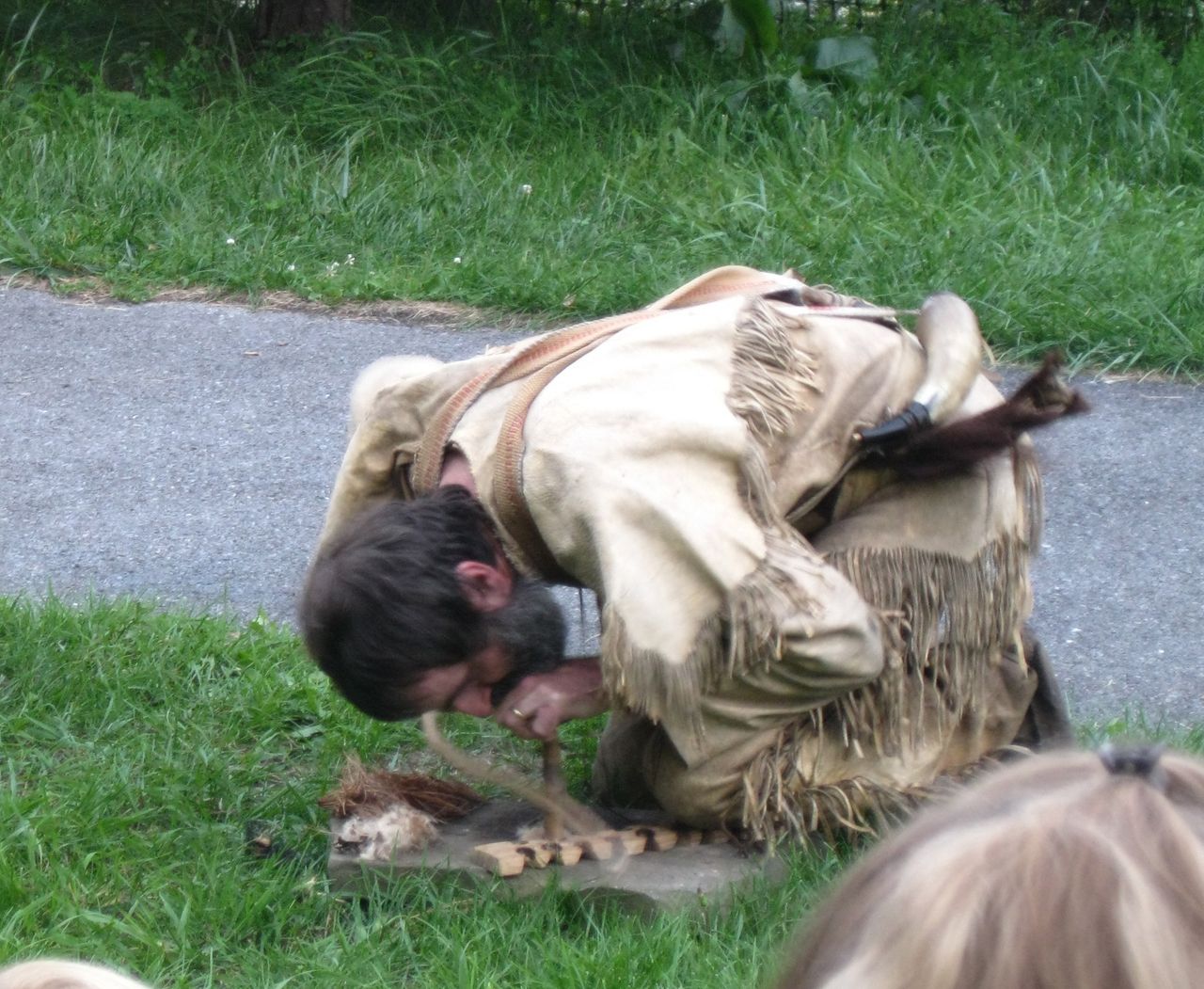
No one can point to a single inventor, but the bow drill clearly emerged as an improvement on older friction-fire methods. National Park Service material on the Archaic period says people first used hand-spun wooden drills, then later improved the system by adding the bow and handle.
That shift is important because it shows technological refinement, not just accident. A culture that depends on warmth, cooking, light, and protection has every reason to improve fire making until it becomes faster and more dependable.
The tool also had a second life beyond fire. According to the National Park Service, bow drills were used for boring holes in wood, bone, antler, and even stone when fitted with an appropriate bit, which helps explain why the design spread and endured.
Why Friction Becomes Fire
At first glance, rubbing wood on wood sounds too simple to work. In reality, the spindle grinds fine wood dust from the fireboard, and repeated friction heats that dust until it chars and begins to smolder.
Research summarized by the U.S. Forest Service shows that as wood heats, it undergoes thermal degradation and pyrolysis, producing char and combustible gases. Different studies place wood ignition-related temperatures across a broad range, often above about 200°C, depending on conditions, moisture, and the type of ignition involved.
A bow drill does not create an open flame directly. It creates a hot ember first, and that ember is then transferred into a dry tinder bundle and coaxed into flame with oxygen and careful handling.
Why Some Sets Work and Others Fail
The bow drill’s reputation for difficulty usually comes down to materials and preparation. Successful users typically pair a slightly harder spindle with a softer hearth board, keep the tinder extremely dry, and carve a notch that lets hot dust collect into a compact ember.
Moisture is the enemy. Green wood wastes energy driving off water instead of building heat, which is why seasoned, dead, non-resinous wood is usually preferred for classic friction-fire sets.
Technique matters just as much as wood choice. Skilled users often start with lighter, faster strokes to establish powder, then increase pressure once the notch begins producing dark dust and steady smoke. What looks primitive is actually highly tuned process control.
Why It Lasted for So Long
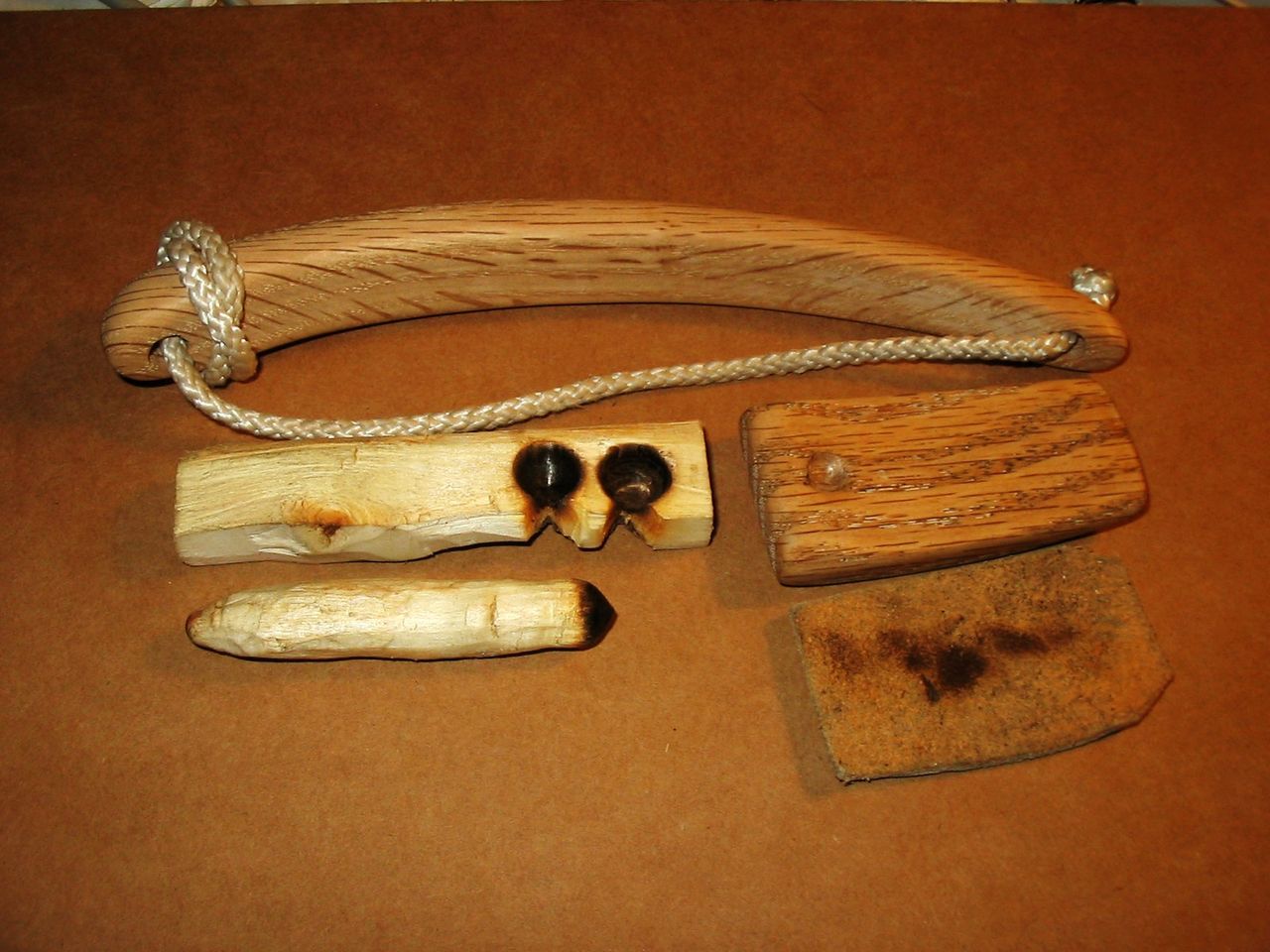
The bow drill endured because it balanced portability, repairability, and effectiveness. A curved stick, cord, spindle, hearth board, bearing block, and tinder bundle could all be improvised from local materials, which made the system resilient in many landscapes.
It also lowered the skill barrier compared with a hand drill. National Park Service educational materials explicitly note that the bow drill made fire starting much easier, which helps explain why it remained part of everyday life in many traditional settings.
Just as important, it taught repeatable body mechanics. Once a user learned posture, pressure, rhythm, and material selection, the method became less about luck and more about practiced consistency.
What the Bow Drill Still Teaches Us
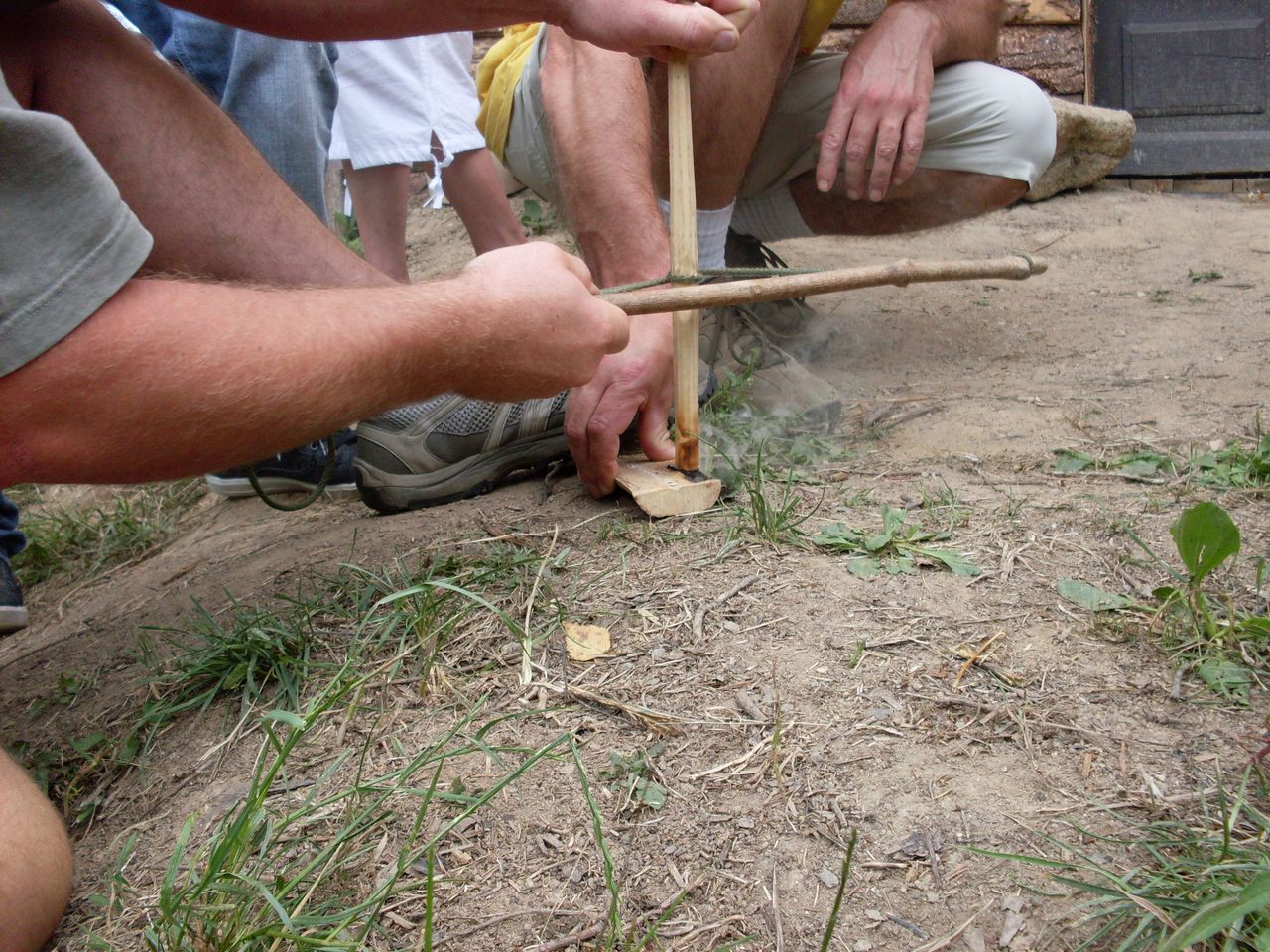
Today, the bow drill survives in bushcraft, survival training, historical interpretation, and archaeology education because it demonstrates more than nostalgia. It shows how observation, iteration, and physics can be folded into a tool simple enough to build by hand.
Modern users still discover the same lessons early peoples did: friction alone is not enough, materials matter, and fire begins before the flame ever appears. The glowing coal is proof that process beats force.
That is the bow drill’s real legacy. It transformed fire making from a desperate act of rubbing sticks together into a dependable technique rooted in design, discipline, and an unusually elegant understanding of wood, heat, and motion.