Some guns look impressive on a rack. Far fewer still make sense once you factor in training time, recoil, maintenance, and the way civilians actually use them.
Glock 19 Gen5
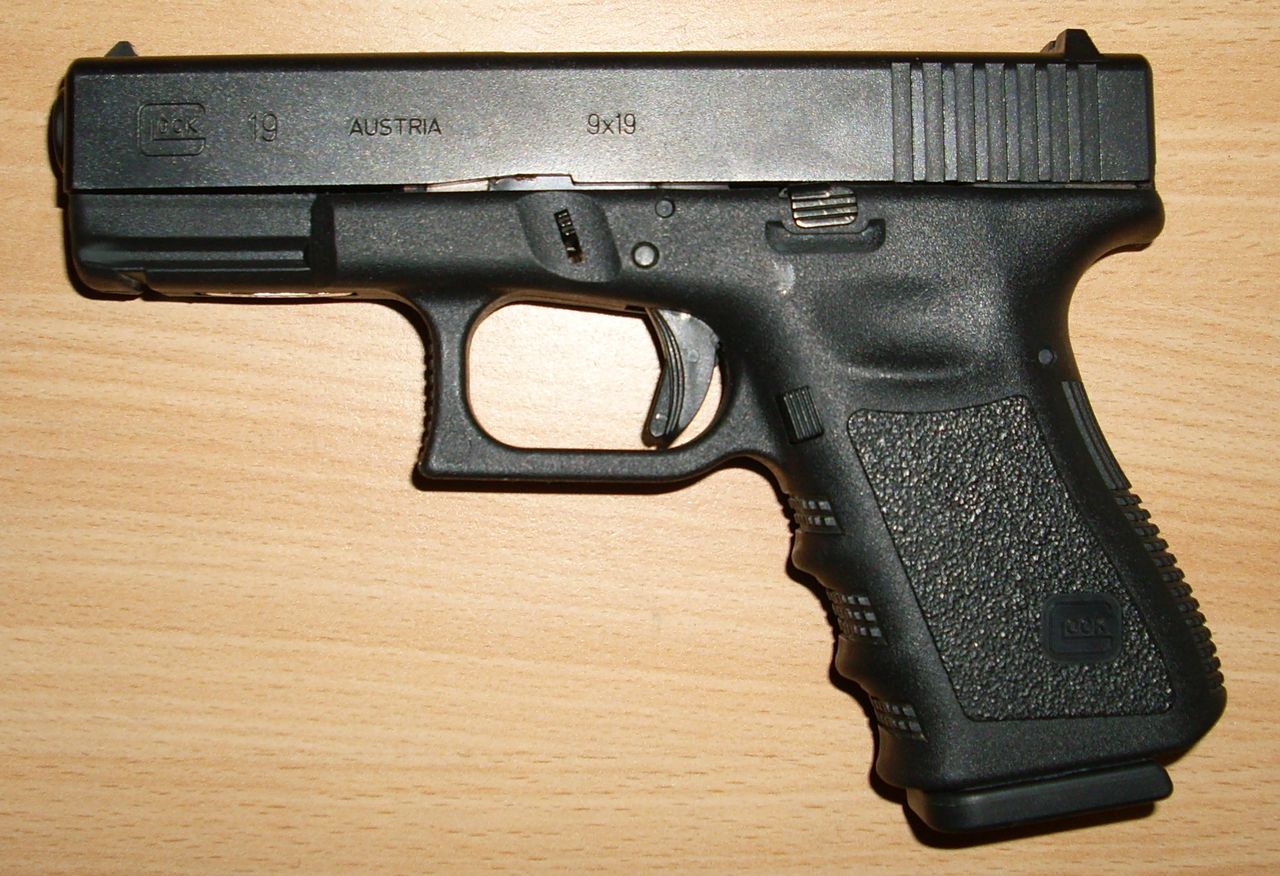
If you ask former military trainers to name one handgun that covers the most civilian needs, the Glock 19 usually shows up early. That is not because it is glamorous. It is because it is compact enough to carry, large enough to fight with, and common enough that magazines, holsters, sights, and spare parts are everywhere. Glock’s current Gen5 model keeps the standard 15-round capacity, adds an ambidextrous slide stop, and uses a simplified striker-fired system that is easy to learn and easy to keep running.
Military instructors also like guns that forgive average practice habits. The Glock 19 does that better than many pistols because its manual of arms is straightforward and its reliability record is deeply established across law enforcement, private training schools, and defensive shooting circles. According to Glock’s own specifications, the pistol weighs about 23.6 oz unloaded with an empty magazine and carries a 4.02-inch barrel, which helps balance concealability with shootability.
For a civilian, the real advantage is logistical sanity. If you buy one handgun, you want something your local shop can support, and most instructors can teach around without drama. That is why so many experienced trainers steer newer shooters toward the Glock 19 instead of something exotic, oversized, or overly specialized.
Smith & Wesson M&P Shield Plus

Not every civilian wants, or can comfortably conceal, a compact double-stack pistol like the Glock 19. That is where former instructors often pivot to the M&P Shield Plus. Smith & Wesson built it around a familiar slim carry profile, but increased capacity to 10 or 13 rounds depending on magazine choice, which is a major improvement over older single-stack carry guns.
What makes the Shield Plus such a common recommendation is that it fills a realistic civilian role. It is for the person who is actually going to carry the gun, not just talk about carrying it. Many veterans who later teach civilians have learned that the best carry pistol is often the one a student will truly wear every day, and the Shield Plus lives in that sweet spot between concealment, shootability, and mainstream support.
There is also a practical recoil lesson here. Tiny guns are often hard to shoot well, especially under stress, but the Shield Plus has earned a strong reputation for being softer and more controllable than many micro-compacts in its size class. For civilians with limited wardrobe options, smaller hands, or a desire for a simpler daily carry routine, it makes a lot of sense as a recommendation grounded in reality rather than ego.
SIG Sauer P365
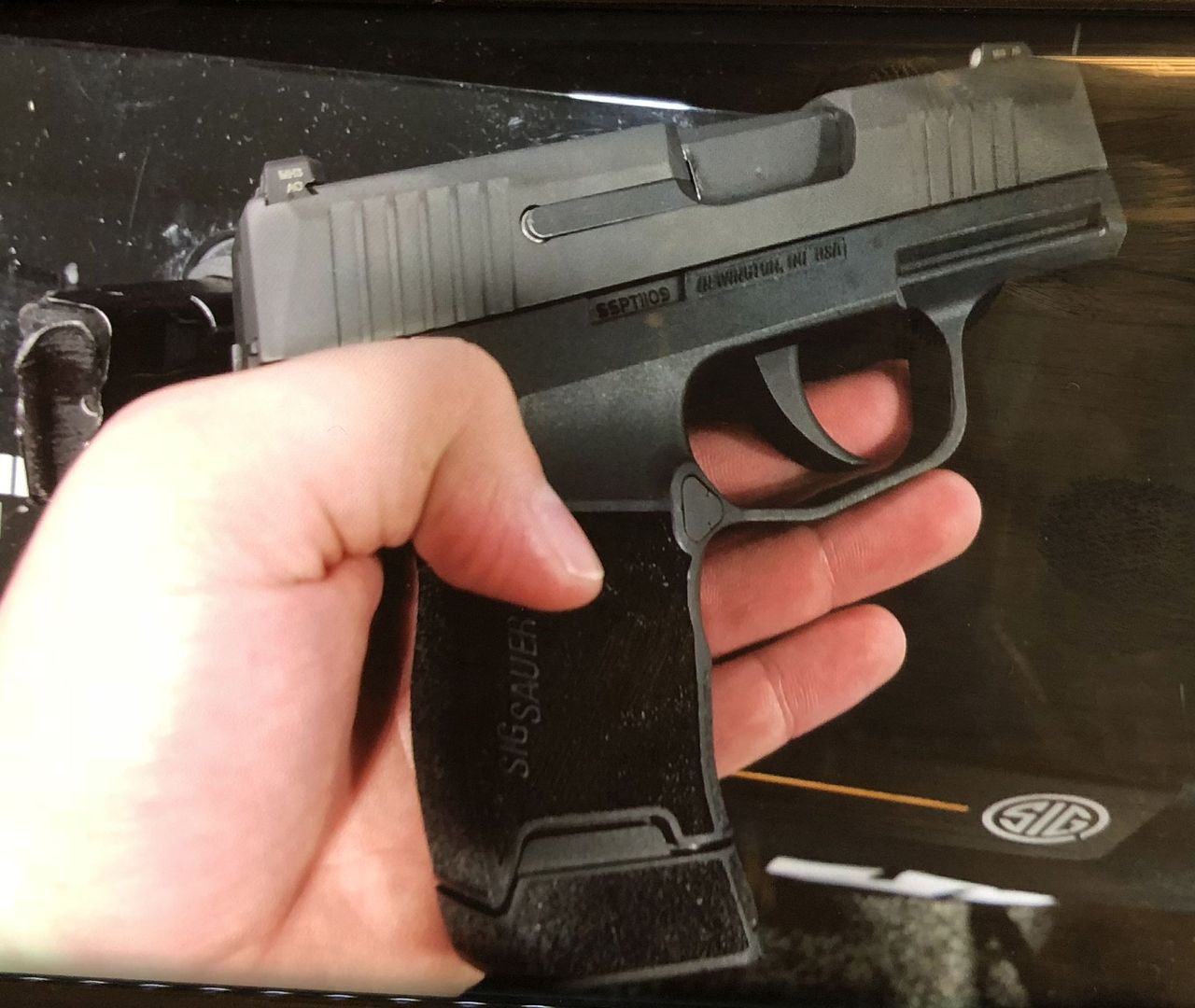
The SIG P365 changed the concealed-carry conversation because it proved a very small pistol could still hold 10+1 rounds in its flush-fit configuration. SIG’s own published specs put the standard model at 5.8 inches overall, 3.1-inch barrel length, and roughly 18.2 oz with magazine. In practical terms, that means a gun that disappears more easily than a service-size handgun while still offering capacity that once required a noticeably larger frame.
Former military instructors who recommend the P365 usually do so with one caveat: small guns demand serious practice. The benefit is portability, not magic. Still, the P365 remains one of the easiest answers for civilians who want a modern defensive handgun with credible capacity, solid aftermarket support, and a footprint that works for pocket carry in some setups, ankle carry in niche roles, or very discreet waistband carry.
The reason it stays on recommendation lists is simple. Civilians live civilian lives. They sit in cars, work in offices, wear light clothing, and often need a gun they can hide without rebuilding their wardrobe. The P365 serves that mission exceptionally well, which is exactly why experienced instructors keep mentioning it when students ask for a carry gun they will actually keep on them.
Ruger 10/22
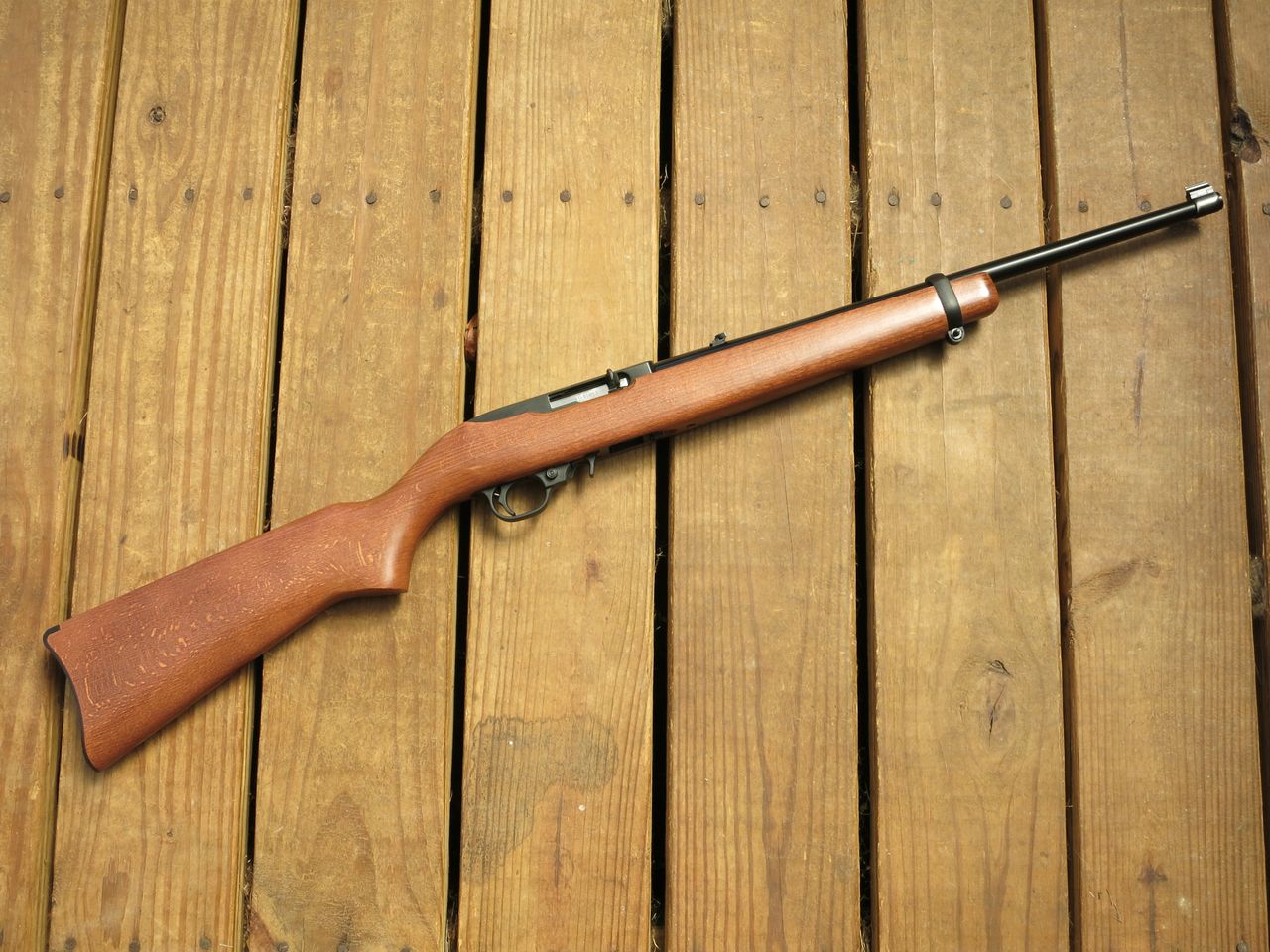
Former military instructors do not only recommend defensive guns. A lot of them strongly believe a civilian should own a rimfire rifle first, or at least early, because it builds marksmanship, gun-handling discipline, and confidence at a far lower cost per shot. That logic explains the near-universal respect for the Ruger 10/22, a rifle Ruger says has sold in the millions over more than half a century.
The 10/22 is recommended because it lets people learn without punishment. Low recoil helps new shooters focus on sight picture, trigger press, and follow-through instead of flinching. The detachable 10-round rotary magazine is one of the platform’s signature strengths, and the rifle’s long popularity means optics mounts, stocks, triggers, and magazines are easy to find if the owner wants to upgrade over time.
For civilians, this rifle is often the gateway to competence. It is useful for training kids, introducing hesitant adults to shooting, handling small game in the right setting, and sharpening fundamentals between centerfire range trips. Instructors know that flashy gear does not replace reps, and few firearms are better for building those reps than a dependable .22 that people genuinely enjoy shooting.
AR-15 Pattern Rifle, Especially the IWI Zion-15

Ask a former infantryman or military small-arms instructor what rifle makes the most sense for a prepared civilian, and the AR-15 platform usually dominates the answer. Not because it is trendy, but because it is modular, accurate, relatively soft-shooting, and easy to support. Among factory options, the IWI Zion-15 has earned respect because it sticks close to a sensible formula: 16-inch barrel, mid-length direct impingement system, 1:8 twist, and a weight around 6.8 lb without magazine according to IWI’s published specifications.
That combination matters more than flashy furniture. A mid-length gas system generally gives a smoother shooting impulse than some carbine-length setups, and a plain 16-inch 5.56 rifle is one of the easiest centerfire rifles for ordinary people to learn well. Former military instructors often tell civilians to stop overcomplicating the AR and start with a reliable, correctly assembled baseline gun. The Zion-15 fits that advice.
It is also a strong recommendation because the AR-15 is the Honda Accord of serious rifles in America. Parts are common, magazines are common, and every competent rifle class in the country knows how to support the platform. For home defense, range work, practical competition, or basic preparedness, it remains the most adaptable rifle many civilians can buy.
Mossberg 590A1
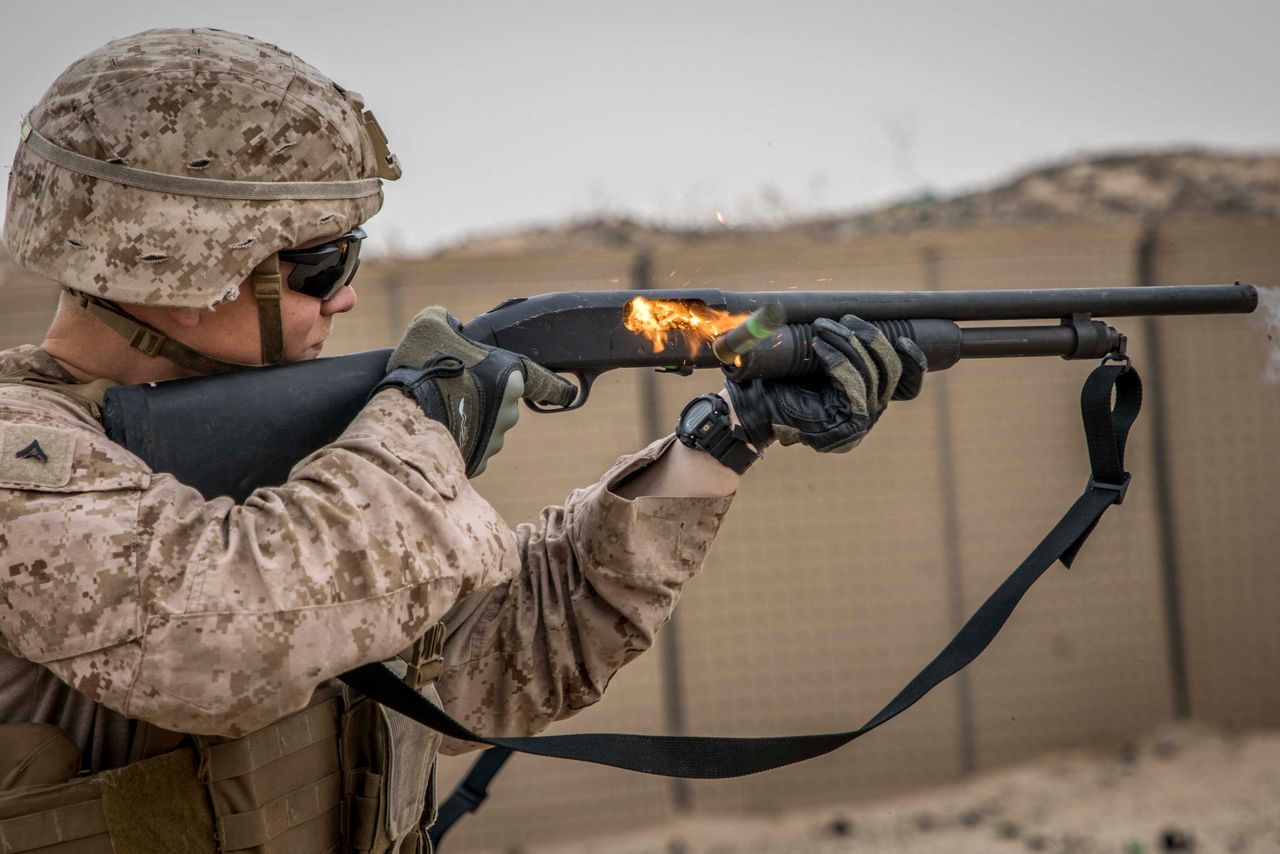
Pump shotguns still get recommended by former military instructors, but usually with more nuance than they once did. The Mossberg 590A1 is the version that tends to earn the most respect because it was built around hard use. Mossberg’s published materials and product literature emphasize its heavy-wall barrel, metal trigger guard, metal safety, and military-spec pedigree, all of which make it feel like a fighting shotgun rather than a fragile sporting tool.
What makes the 590A1 attractive to experienced trainers is not nostalgia. It is the gun’s ruggedness, simple controls, and strong record in institutional use. The tang safety is naturally ambidextrous, and the pump action offers broad ammunition flexibility. In current configurations, Mossberg has listed 8+1 capacity on 20-inch Professional Series variants, which gives the gun meaningful onboard ammunition for defensive roles.
That said, good instructors also know shotguns are not beginner cheat codes. They recoil harder, hold fewer rounds than rifles, and demand more practice for rapid loading and recoil management. When they still recommend the 590A1, it is usually to civilians who understand those tradeoffs and want a brutally durable platform with real stopping power inside a disciplined training plan.
Beretta 1301 Tactical Mod.2
If a former military instructor recommends a semiauto shotgun to a civilian, the Beretta 1301 Tactical Mod.2 is exactly the kind of gun that comes up. Beretta’s current materials describe it as the next evolution of the 1301 Tactical line, with oversized controls, an ambidextrous stock geometry, M-LOK-compatible forend sections, and an extended magazine setup capable of 10+1 with 2 3/4-inch shells.
The key advantage over a pump gun is speed with less user-induced error. A quality semiauto shotgun can cycle faster, reduce the chances of short-stroking, and soften perceived recoil enough to help average shooters stay on target. That matters because civilians are rarely training as often as dedicated military or police units. A system that reduces complexity under stress has real value if it remains reliable, and the 1301 has built a strong reputation on that front.
Former instructors usually recommend this gun to people who are committed enough to invest in a premium shotgun and then actually train with it. It is not the cheap option, but it is one of the most refined defensive shotguns a civilian can own. In experienced hands, it is fast, forgiving, and far more practical than the old stereotype that all tactical shotguns are clumsy recoil monsters.
Henry Big Boy X Model in .357 Magnum
Not every recommendation from seasoned instructors is purely tactical in the modern black-rifle sense. Some recommend a lever gun like the Henry Big Boy X Model in .357 Magnum because it offers a blend of legal friendliness, low intimidation factor, and practical utility that fits certain civilians extremely well. Henry introduced the X Model series to modernize the company’s lever guns with synthetic furniture, threaded muzzles, and accessory-ready features, all while keeping the familiar lever-action layout.
For a civilian in a restrictive local environment, or one who simply prefers a simpler manual platform, a .357 lever gun makes more sense than many people expect. Recoil is manageable, magazine capacity is respectable for the format, and .357 Magnum gains useful velocity out of a rifle barrel while also allowing .38 Special for softer practice. That two-load flexibility is a major reason experienced shooters keep returning to the caliber.
Former military instructors who recommend this style of rifle usually do so for home, ranch, trail, or truck-gun roles rather than as a pure substitute for an AR. It is not the fastest platform to reload, but it is handy, reliable, and approachable. For civilians who want one rifle that is versatile without looking overtly tactical, this is a smart, grounded choice.
Ruger American Ranch in 5.56
A lot of former military trainers appreciate semiauto rifles, but they also know a bolt gun teaches discipline in a way few other rifles do. That is why a practical bolt-action like the Ruger American Ranch in 5.56 often earns quiet approval. It is compact, straightforward, and well suited to shooters who want accuracy, low maintenance, and compatibility with common ammunition without stepping into a more politically or socially charged platform.
The appeal for civilians is broader than many assume. A compact 5.56 bolt gun can serve for predator control, range work, land use, and general marksmanship training while keeping recoil mild and operating costs reasonable. In many communities, it also draws less attention than an AR-pattern rifle, which can matter for new shooters, neighbors, or family members who are still warming up to gun ownership.
Former instructors tend to recommend a rifle like this to people who value precision and simplicity over volume of fire. It rewards deliberate shooting, makes positional practice more meaningful, and gives owners a rifle they can hand to a new shooter without a complicated controls lecture. Sometimes the best recommendation is not the most dramatic one. It is the one the civilian will actually learn, maintain, and use well.