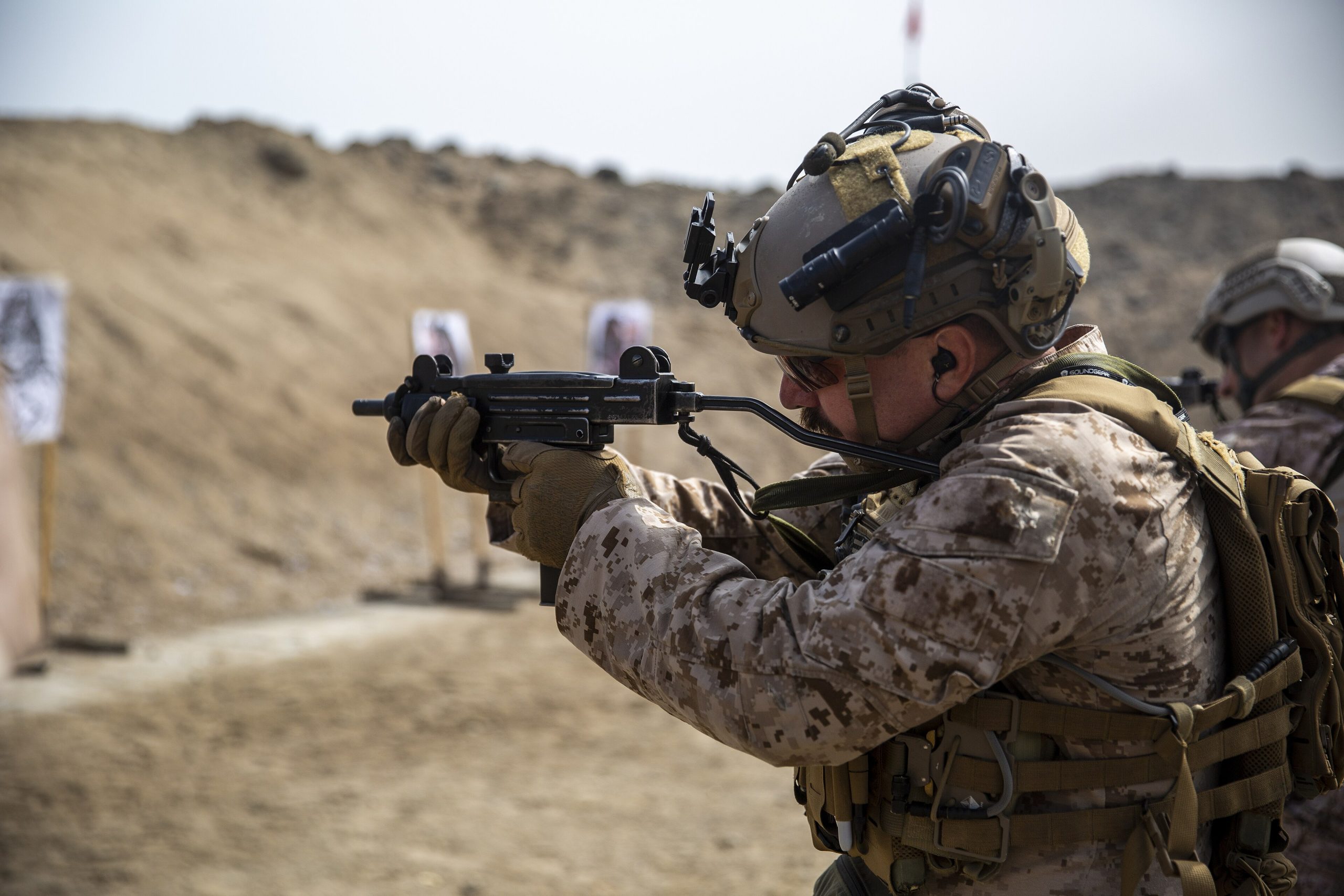
Some guns are famous within military history. The Uzi broke out of that niche and became a global symbol almost everyone could identify at a glance.
It Arrived At Exactly The Right Historical Moment
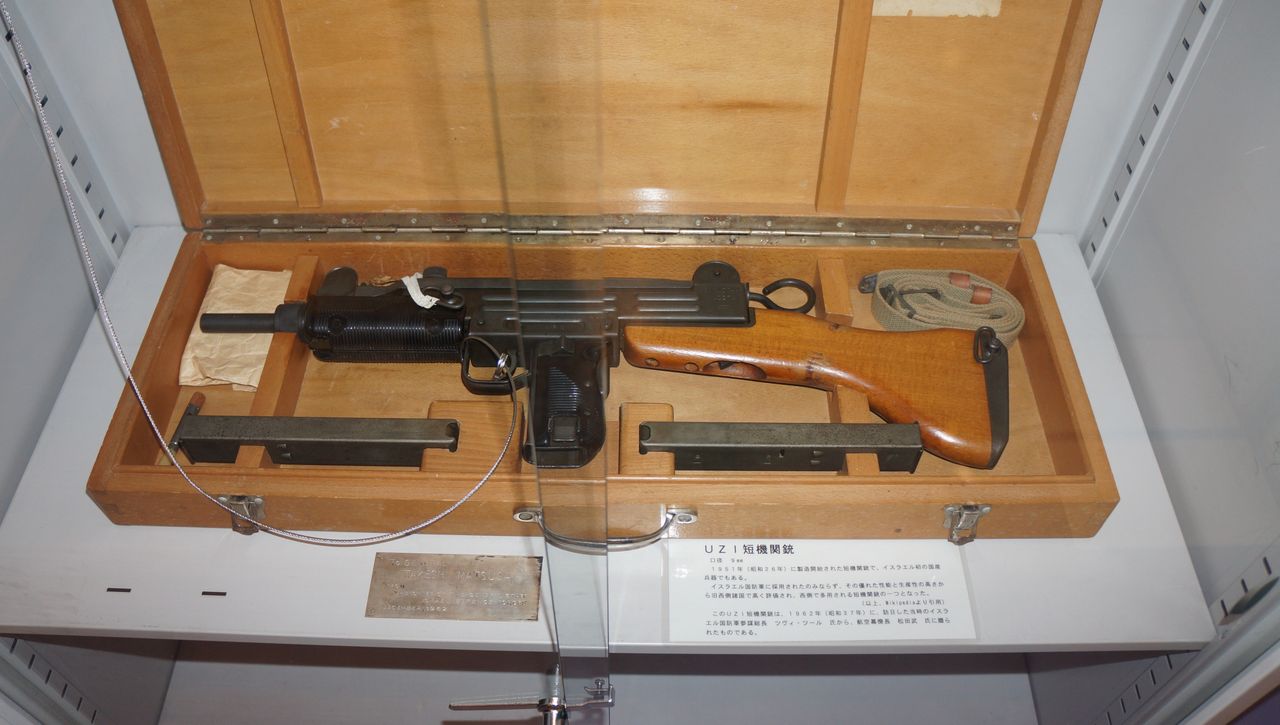
The Uzi was born in the early years of Israel, when the new state needed compact, reliable arms that could be built domestically and issued fast. Designed by Uziel Gal in the late 1940s and refined in the early 1950s, it entered Israeli service during the 1950s, with Israel Weapon Industries and IDF historical material placing it in service by 1956. That timing mattered because armies everywhere were rethinking close-range firepower after World War II.
Submachine guns were not new, of course. The Thompson already had legend status, and Europe had produced wartime designs like the MP40 and Sten. But many earlier guns looked like products of another era: wood furniture, long receiver tubes, and less efficient packaging. The Uzi looked modern, compact, and stripped down to essentials.
That visual break helped it immediately. Even someone who knew nothing about firearms could see that it represented a new generation. According to museum and historical writing from the Smithsonian, Britannica, and major firearms historians, the Uzi stood out because it looked purpose-built for mechanized troops, paratroopers, guards, and special units operating in tight spaces.
The Design Was Simple, Clever, And Instantly Distinctive
A huge part of the Uzi’s recognizability comes from engineering you can see. Its most famous technical feature is the telescoping bolt, which wraps around the rear of the barrel. That let designers shorten the overall length without making the gun awkward or underpowered. In practical terms, it gave users a compact weapon with better balance than many rivals.
The magazine-in-grip layout also mattered. “Hand finds hand” became the famous logic behind it: the shooter naturally reaches for the grip, and that is where the magazine goes. Under stress, especially in low light or confined spaces, that made reloads intuitive. Plenty of later weapons used unusual layouts, but the Uzi made this one iconic.
Its mechanism was also straightforward enough to support a reputation for reliability and ease of manufacture. Open-bolt, blowback operation meant fewer complexities than many more refined designs. For countries building arsenals, police stocks, or licensed production lines, simplicity was not a compromise. It was a selling point that reinforced the gun’s worldwide presence.
Soldiers, Police, And Security Teams Put It Everywhere
Fame inside the gun world does not guarantee public recognition. The Uzi crossed that barrier because it showed up in the hands of many different users, not just one elite military force. Israeli service gave it a powerful launch, but export success is what turned it into a global object. By the Cold War decades, it had spread widely among militaries, police forces, and security services.
That broad issue pattern mattered more than people realize. Some submachine guns become beloved by specialists but remain obscure to the public. The Uzi was different because it appeared with tank crews, paratroopers, bodyguards, airport security personnel, police tactical units, and protective details. The more contexts a weapon appears in, the more likely it is to become a visual shorthand.
In other words, the Uzi was not a local success story. It became a standard answer to a common problem: how do you arm troops and guards who need something smaller than a rifle but more controllable than a pistol? Once enough institutions asked that question, the Uzi kept appearing in the answer.
It Became A Security Icon, Not Just A Battlefield Gun
One reason the Uzi became more recognizable than some technically superior rivals is that ordinary people saw it in peacetime settings. The gun became strongly associated with executive protection, embassy security, anti-terror teams, and airport defense. Those are highly visible jobs, and visibility creates symbolism. A gun on a battlefield may be photographed; a gun around heads of state gets broadcast.
The U.S. Secret Service connection is a perfect example. During the 1981 attempted assassination of President Ronald Reagan, television cameras revealed an agent drawing a Uzi from a specially modified briefcase. That image had enormous cultural impact. It told the public that this was the compact weapon trusted for protecting the most powerful people in the world.
That kind of exposure was amplified by the era’s rise in international terrorism concerns. Through the 1970s and 1980s, security forces wanted weapons suitable for vehicles, terminals, stairwells, and crowded buildings. The Uzi fit that role well enough that it became visually linked to counterterror and VIP protection in the public imagination.
Hollywood And Television Turned It Into A Visual Shortcut
Once a firearm enters movies, it can become larger than its service record. The Uzi arrived in cinema at the perfect time: the late Cold War, when action films, crime thrillers, and television dramas wanted weapons that looked compact, dangerous, and contemporary. Directors loved silhouettes audiences could read instantly, and the Uzi’s profile was practically made for the camera.
It showed up in the hands of bodyguards, villains, commandos, gangsters, and undercover agents. That versatility mattered. The same weapon could signal elite professionalism in one film and urban menace in another. Few guns work equally well as props for state power and criminal chaos. The Uzi did, and that flexibility kept it on screen.
There was also a language effect. For a period, “Uzi” became one of those brand-like names people used loosely, sometimes to describe any compact automatic gun. That only happens when an object crosses into general culture. It stops being just a product and becomes a category in the public mind, even when the usage is technically wrong.
It Balanced Real Performance With Myth
The Uzi’s legend is not pure fiction. By the standards of its era, it was rugged, compact, and effective for close-range work. It packed manageable 9 mm firepower into a platform suited to vehicle crews, special units, and security teams. Its stamped construction and relatively simple operating system also helped keep production practical, which encouraged widespread adoption.
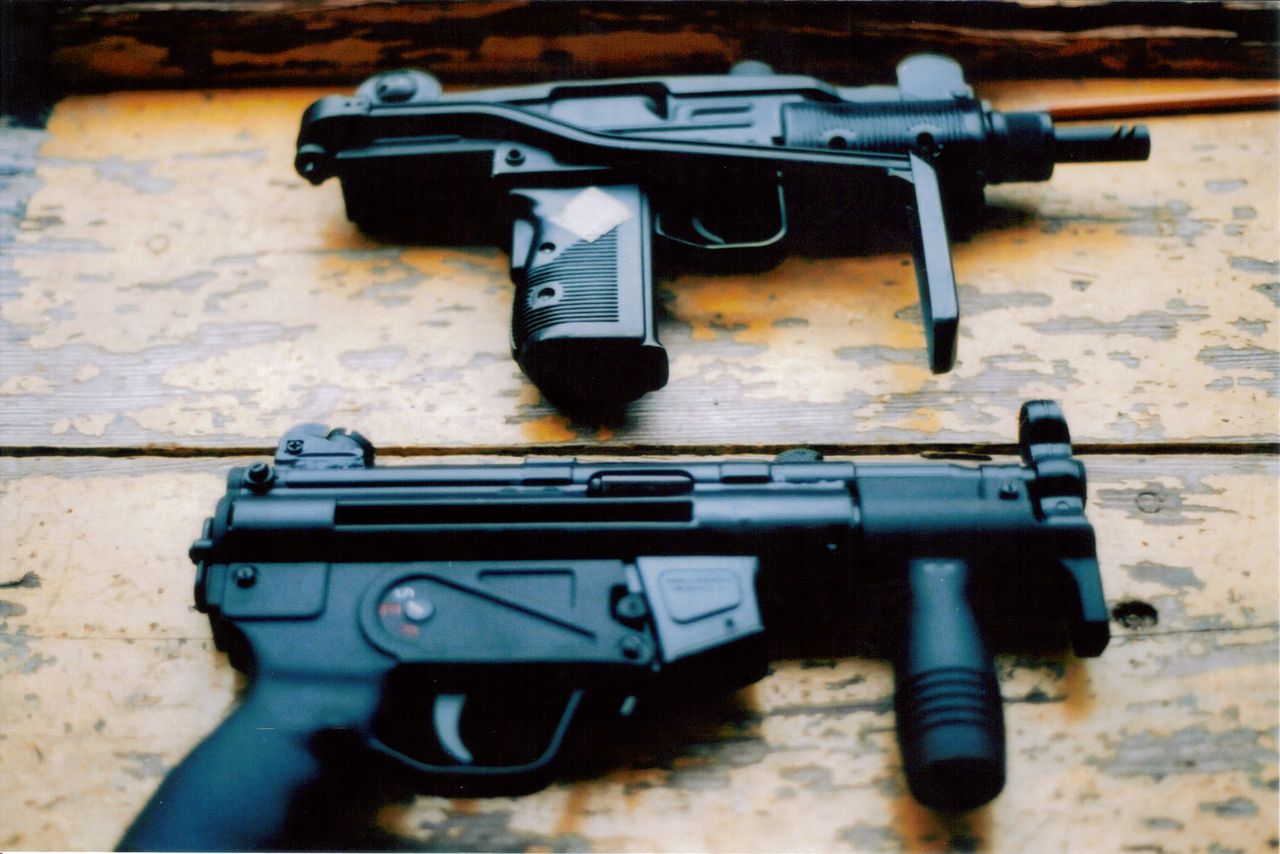
At the same time, its myth sometimes outgrew its actual tactical niche. As body armor improved and carbines became more compact, many organizations moved toward rifle-caliber platforms or newer personal defense weapons. The Heckler & Koch MP5 gained prestige for refinement and controllability, and later compact carbines changed the whole category again. The Uzi was no longer automatically the best answer.
That is actually part of why it stayed recognizable. The gun existed long enough to prove itself, and then long enough after that to become nostalgic, cinematic, and historical all at once. It accumulated layers of meaning instead of fading when frontline doctrine changed.
The Uzi Became Bigger Than The Category It Came From
The final reason the Uzi became the world’s most recognizable submachine gun is simple: it combined innovation, timing, mass visibility, and a memorable name. “Uzi” is short, sharp, easy to pronounce, and tied directly to its designer, Uziel Gal. Compare that with more technical designations and you can see why it stuck in memory so easily.
It also represented a broader story people could grasp. The Uzi was not just a gun; it was a symbol of postwar military modernization, Israeli industrial ingenuity, and Cold War security culture. It appeared in wars, on guard details, in police armories, in museums, and on movie posters. Few firearms have lived so many parallel lives at once.
In the end, the Uzi became famous because it did everything an icon needs to do. It worked, it spread, it looked distinctive, it appeared in dramatic places, and it arrived when the modern media age was ready to turn hardware into legend.