Public land still offers freedom that many hunters can’t find anywhere else. But the modern public-land hunt is asking for a different set of skills, expectations, and patience than it did even a decade ago.
More boots on the ground means less solitude
One of the biggest changes is simple: public ground is busier. Federal agencies say recreation on public lands has stayed above pre-pandemic levels, with the Forest Service reporting more than 160 million recreation visits in fiscal 2024 and the Bureau of Land Management saying its lands hosted nearly 81 million recreation-related visits in 2024.
That growth matters to hunters because hunting no longer competes only with other hunters. It also shares space with hikers, campers, trail riders, shed hunters, bird-watchers, and off-road users, especially on western landscapes where multiple-use access is the rule rather than the exception.
Crowding has been a known issue for years, but it is now layered onto a much larger outdoor recreation boom. NSSF-backed access research found ratings of hunting access fell over the last decade, with excellent or good ratings dropping to 47 percent in 2021 from 56 percent in 2010, a sign that hunters are feeling the squeeze.
Access is public on paper, but not always easy in practice

A parcel can be legally public and still be difficult to hunt. Road conditions, gated routes, seasonal closures, checkerboard ownership, and landlocked acreage all shape whether a hunter can realistically reach a spot without burning a full day just getting there.
Infrastructure is part of the problem. GAO reported in 2024 that deferred maintenance rose across major federal land agencies from 2019 through 2022, and roads plus transportation assets made up the largest share of deferred maintenance for both BLM and the Forest Service.
That has a direct effect in hunting season. A washed-out road, a closed bridge, or a parking area that cannot handle modern traffic can funnel hunters into the same easy-access zones, concentrating pressure even when a map makes an area look huge and open.
Habitat problems are turning good maps into tougher hunts
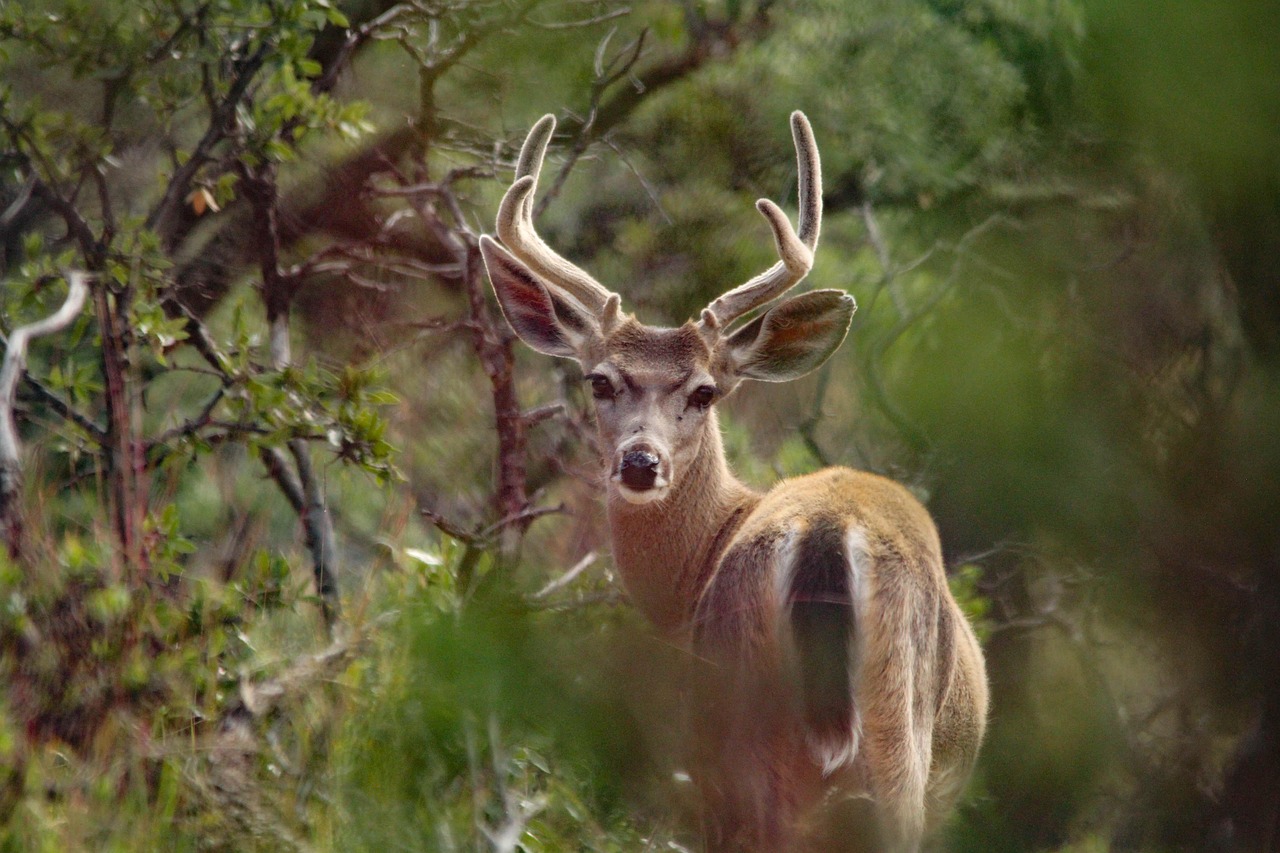
The challenge is not just reaching public land. It is finding public land that still holds animals in predictable ways when drought, wildfire, invasive plants, and shifting forage conditions are changing how deer, elk, and pronghorn use the landscape.
Federal land managers have been blunt about that pressure. The BLM has said drought, larger fires, invasive species, and extreme weather are making public-land management harder, while Drought.gov reported widespread drought across much of the West during water year 2025, including statewide drought in Arizona and Utah.
Wildlife movement is changing too. USGS research shows that development and disturbance inside migration corridors can alter behavior, and one western mule deer study found use drops sharply once surface disturbance exceeds about 3 percent of an area, which helps explain why a unit can look intact but hunt very differently on the ground.
Technology has made hunters smarter and competition sharper
Public-land hunters have never had better tools. Satellite imagery, ownership layers, trail data, harvest statistics, and mobile navigation apps have made it easier to find overlooked access, avoid trespass mistakes, and plan hunts with far more precision than paper maps allowed.
But the same tools that help one hunter help everyone else too. Outdoor Life has described how digital mapping platforms changed the way hunters scout and travel, while modern app culture and hunting media have accelerated the spread of “secret” spots, productive access routes, and mobile tactics.
The result is not necessarily fewer animals. It is often more efficient pressure. Places that once took years of local knowledge to understand can now be identified in an evening of e-scouting, which means overlooked public parcels are staying overlooked for far shorter periods.
Disease and management rules now shape the hunt more than before
Hunters are also navigating a more regulated and biologically complex landscape. Chronic wasting disease is no longer a distant concern in just a handful of states; USGS says it had been documented in free-ranging or captive cervids in 37 states as of June 2026.
That spread changes behavior on both sides of the hunt. Agencies may expand surveillance, add carcass movement rules, create check requirements, or adjust season frameworks, and hunters increasingly have to think about testing, disposal, transport, and meat handling alongside tags and wind direction.
Closures matter too. BLM’s Dingell Act reporting shows temporary and permanent closures or restrictions to hunting, fishing, or shooting do happen each year, even if they affect a small share of total acreage, and wildfire restrictions can also change access quickly during western seasons.
Success now belongs to the most adaptable hunters

The modern public-land hunter still has opportunity, but the formula is changing. Success depends less on simply finding public acreage and more on understanding pressure patterns, backup access routes, weather swings, fire restrictions, habitat quality, and how other users influence animal movement.
That is why hunters who adapt are still finding excellent seasons. They are hunting weekdays, embracing smaller parcels, walking farther when it makes sense, checking agency alerts constantly, and treating digital scouting as only the first step rather than the whole plan.
Public-land hunting is not dying. It is evolving into a more competitive, information-heavy, and access-sensitive game, and for American hunters, that means the toughest challenge may no longer be the animal itself, but everything that happens before the first call, glassing session, or sunrise sit.