Most people think they already understand hollow points. Forensic ballistics experts know the story gets much stranger once bullets hit real bodies, real barriers, and real crime scenes.
Hollow points are designed for consistency, not movie-style destruction.

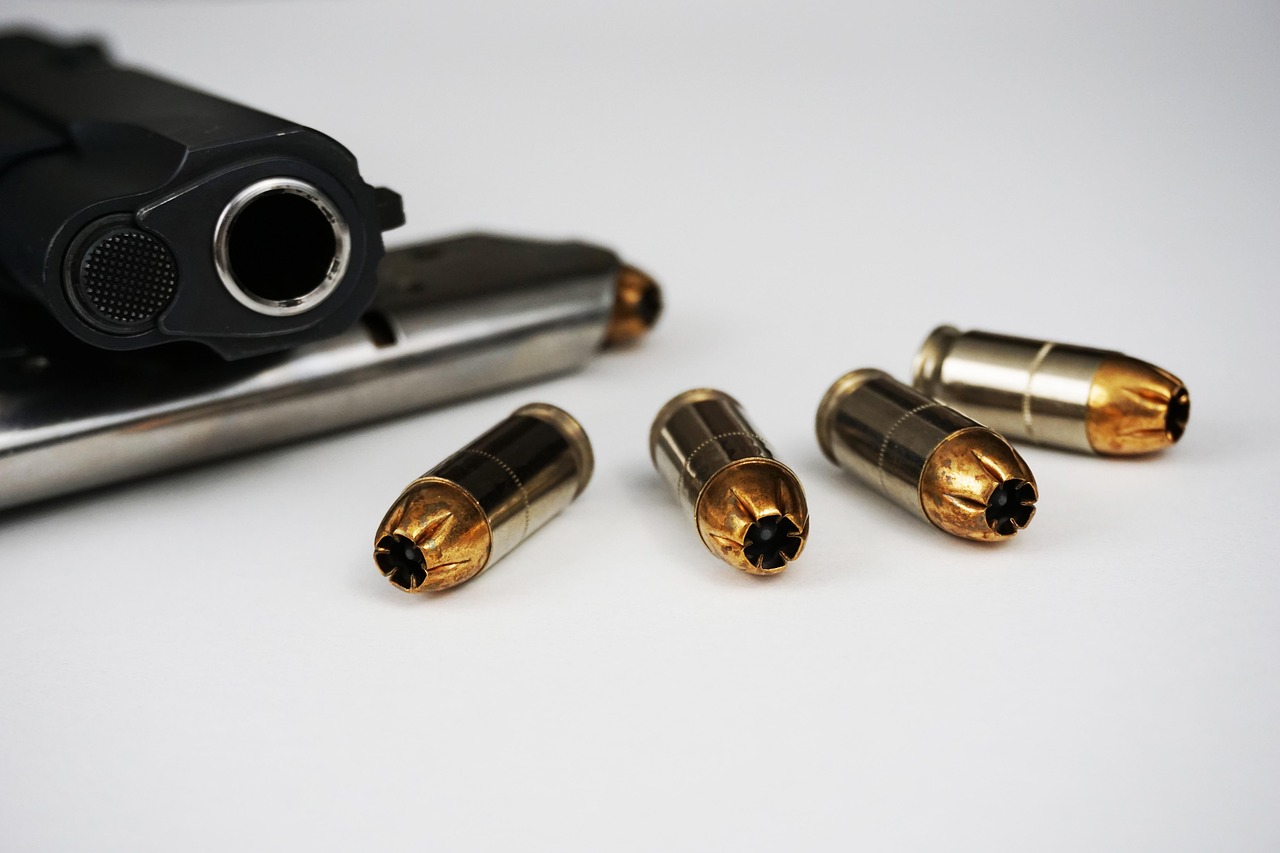
A lot of gun owners picture a hollow point as a bullet built to explode dramatically on contact. In forensic practice, that idea falls apart fast. The cavity in the nose is there to encourage controlled expansion, not chaotic fragmentation in every case. Examiners spend a lot of time documenting how often a bullet behaved in a boring, predictable way rather than a cinematic one.
That matters because the most respected defensive ammunition is engineered around repeatable performance. Labs often evaluate penetration, retained weight, recovered diameter, jacket separation, and path stability through standardized media. The point is not maximum visible damage. The point is to achieve enough penetration while reducing the chance of over-penetration compared with some non-expanding designs.
Forensic specialists also know that expansion is never guaranteed. Heavy clothing, wallboard, auto glass, plywood, or even intermediate bone can clog the cavity and turn a hollow point into something acting much closer to full metal jacket. When recovered bullets fail to expand, that is not always proof of a bad round. Sometimes it is simply proof that the bullet met conditions outside ideal lab expectations.
In actual casework, examiners compare recovered projectiles with known test rounds to see whether the bullet performed within a normal range. They are cautious about sweeping claims. A bullet can expand beautifully in gelatin and still act very differently after passing through denim, a windshield, or an arm before entering the torso.
The cavity shape tells experts more than most shooters realize

To many buyers, a hollow point is a hollow point. To forensic examiners, cavity diameter, cavity depth, jacket skiving, core hardness, and nose profile can all leave clues about intended use and likely behavior. Even heavily damaged bullets can preserve enough geometry to suggest a specific design family.
Some projectiles are built with deep, wide cavities meant to open reliably at lower velocities, especially from compact carry pistols. Others have narrower openings and tougher jackets to avoid breaking apart when driven fast from longer barrels. That distinction matters because recovered bullets can show whether expansion failure was due to impact conditions or because the projectile was being used outside its ideal velocity window.
Experts also watch for petal formation patterns. A recovered hollow point may show symmetrical mushrooming, partial opening, folded petals, or petals sheared off by barrier impact. Each pattern can hint at what the bullet struck before or after entering a body. In some investigations, those details help reconstruct the shot sequence and relative positions.
Manufacturing differences matter too. Bonded hollow points, mechanically locked jackets, and monolithic copper designs tend to leave different signatures after impact. A forensic examiner may not identify the brand from a mangled slug alone, but they can often narrow the field and explain why one bullet held together while another shed jacket fragments and changed course.
Real tissue is not ballistic gelatin, and experts never confuse the two
Ballistic gelatin is useful because it gives laboratories a repeatable medium. Forensic professionals appreciate that value, but they also know gelatin is only a model. Human bodies are mixtures of skin, fat, muscle, lung tissue, dense organs, fluid spaces, and bone. Bullets do not pass through that complexity in a neat, textbook way.
A hollow point can expand rapidly in soft tissue, then slow dramatically after hitting heavy bone. It can also yaw, deform asymmetrically, or veer after striking ribs, the sternum, vertebrae, or the pelvis. Medical examiners and firearms examiners often compare wound tracks with recovered bullet condition to understand how the projectile really behaved, not how marketing material says it should behave.
One of the least appreciated forensic realities is that the temporary cavity is not the whole story. In handguns especially, the permanent crush path, final penetration depth, and interaction with bone often matter more than dramatic claims about hydraulic shock. Experts look for measurable tissue destruction and anatomical disruption, not advertising language.
This is why two people struck by the same ammunition can show very different outcomes. Angle, distance, clothing, body size, intervening limbs, and impact velocity all matter. Forensic analysts are trained to resist easy conclusions because bullet behavior in living tissue is shaped by variables most range discussions ignore.
Hollow points often fail in ordinary ways, and that failure becomes evidence.

Gun owners usually discuss hollow point failure as if it is rare and shocking. Investigators see several routine failure modes. The cavity can clog with fabric. The jacket can peel unevenly. The core can separate. The bullet can under-expand, over-expand, or break up after striking glass or metal. None of that is exotic to a forensic lab.
These failures matter because they create traceable evidence patterns. A jacket fragment found separate from a lead core can indicate barrier interaction or a high-stress impact before final entry. A deformed bullet with one flattened side may suggest ricochet or contact with bone. Tiny copper and lead deposits along a path can help reconstruct whether the bullet stayed intact or came apart progressively.
In officer-involved shootings and self-defense investigations, these details can become crucial. Suppose a shooter says a round went straight through a car door and then hit the target. Recovered bullet condition, wound path, and impact marks may support or contradict that sequence. Hollow point behavior is not just terminal performance. It is physical evidence with a story attached.
Forensic experts also know that a failed hollow point is not necessarily ineffective. A bullet that did not mushroom may still penetrate deeply enough to be lethal. Conversely, a bullet that expanded perfectly may stop short of vital structures. The recovered shape alone never tells the whole story, which is why experts combine projectile analysis with anatomy and scene reconstruction.
Barrel length and velocity change everything more than marketing admits

One thing forensic ballistics experts notice quickly is how often shooters assume a premium hollow point will perform the same from every handgun. It will not. A round fired from a 5-inch duty pistol may impact hundreds of feet per second faster than the same load from a short concealed-carry gun. That difference can decide whether the cavity opens properly at all.
This is especially important in calibers that already operate near the lower edge of reliable expansion. A bullet tuned for service-length barrels may underperform in subcompact pistols. On the other hand, a lighter, faster hollow point may expand violently from a longer barrel and lose penetration after encountering intermediate barriers. Examiners look at firearm type because it shapes the bullet’s behavior before impact ever occurs.
Real cases have shown this repeatedly. Investigators sometimes recover ammunition advertised as high-performing, only to find minimal expansion because it was fired from a very short barrel through layered clothing. In other cases, rounds marketed for compact pistols show ideal mushrooming and retained weight because their cavity geometry was specifically tuned for lower velocities.
Forensic reports often avoid dramatic conclusions and focus on measurable facts such as barrel length, estimated impact velocity, bullet weight, and recovered diameter. That technical discipline is useful for ordinary owners, too. The box label tells you what the manufacturer hopes for. The gun in your hand determines what is actually possible.
Crime scene reconstruction often depends on hollow-point behavior quirks.
Many people assume bullet identification is mainly about rifling marks. That is only part of the job. Hollow points can provide reconstruction clues through deformation patterns, fragment spread, penetration depth, and the way they interact with surfaces. A projectile that was plugged with drywall and then failed to expand may tell a very different story from one that struck a target cleanly.
For example, shots through auto glass often produce distinctive deformation. The bullet may lose petals, flatten at the nose, and deflect from the original line of aim. Investigators compare vehicle damage, glass fracture, blood evidence, and recovered bullet condition to estimate direction and sequence. Hollow points are especially interesting here because barrier performance varies dramatically between designs.
Indoor shootings can reveal similar quirks. A bullet passing through a hollow-core door, insulation, or furniture may arrive destabilized. If it then enters a body sideways or partly expanded, the wound characteristics can seem confusing unless the examiner accounts for intermediate obstacles. What looks inconsistent at first often becomes coherent once the bullet’s pre-impact journey is reconstructed.
This is one reason forensic experts dislike simplistic claims about any ammunition being universally superior. The same design can perform elegantly in one scenario and unpredictably in another. Their job is to track the evidence left by those differences and explain, as precisely as possible, what the bullet likely did from muzzle to recovery.
The biggest lesson is that hollow points are evidence first and opinions second.
The average gun debate about hollow points usually revolves around brand loyalty, caliber arguments, or internet folklore. Forensic professionals work in the opposite direction. They start with measurable evidence: penetration, deformation, retained mass, wound track, recovered fragments, scene geometry, and the known characteristics of the firearm and ammunition involved.
That mindset leads to a more sober view of bullet performance. Hollow points are not magic fight stoppers, and they are not automatically safer simply because they are marketed for defense. They are engineered compromises meant to balance penetration and expansion under likely conditions. Whether they succeed depends on design, velocity, barriers, anatomy, and pure chance.
What most gun owners never hear is that experts are less impressed by bold claims than by consistency across bad conditions. The ammunition that earns respect in forensic discussion is the ammunition that behaves predictably after denim, glass, sheet metal, and bone, not just in pristine test blocks. Predictability is the hidden virtue behind the best hollow point designs.
That is the forensic view in a nutshell. Hollow points are not mysterious, but they are far more conditional than popular talk suggests. Once you see them the way examiners do, as physical systems leaving recoverable clues, the conversation shifts from hype to evidence, which is exactly where it belongs.