Combat pistols are supposed to work when nothing else does. Israeli designers built that reputation the hard way, under pressure, and the results changed the handgun world.
Jericho 941
The Jericho 941 is where a lot of modern conversations about Israeli combat pistols really begin. Launched by IMI in 1990, it arrived as a steel-framed, service-sized handgun built around the proven CZ-75 pattern, but tuned for Israeli preferences in durability, controllability, and practical fighting use. According to IWI’s own company history, the Jericho was introduced in 1990, and it quickly became one of the signature Israeli handguns exported around the world.
What made the Jericho stand out was not that it reinvented the wheel. It was that it refined a familiar formula into something exceptionally confidence-inspiring. Early models were associated with 9mm and .41 AE, which is where the “941” name came from, and the pistol earned a reputation for soft recoil, solid balance, and tank-like construction. IWI later noted that the gun was imported into the United States under several different names, including Baby Eagle, which helped broaden its reach beyond military and police circles.
In practical terms, the Jericho helped popularize the idea that a combat pistol could be both rugged and shootable. Its low bore axis, heavy frame, and double-action/single-action layout gave users a sidearm that rewarded training without punishing less experienced shooters. For police units and security services, that mattered.
The Jericho also shaped perception. It looked purposeful, felt substantial, and projected seriousness. In a market crowded with lighter pistols, it reminded shooters that controllability and reliability are often more important than marketing trends. That basic lesson still holds up.
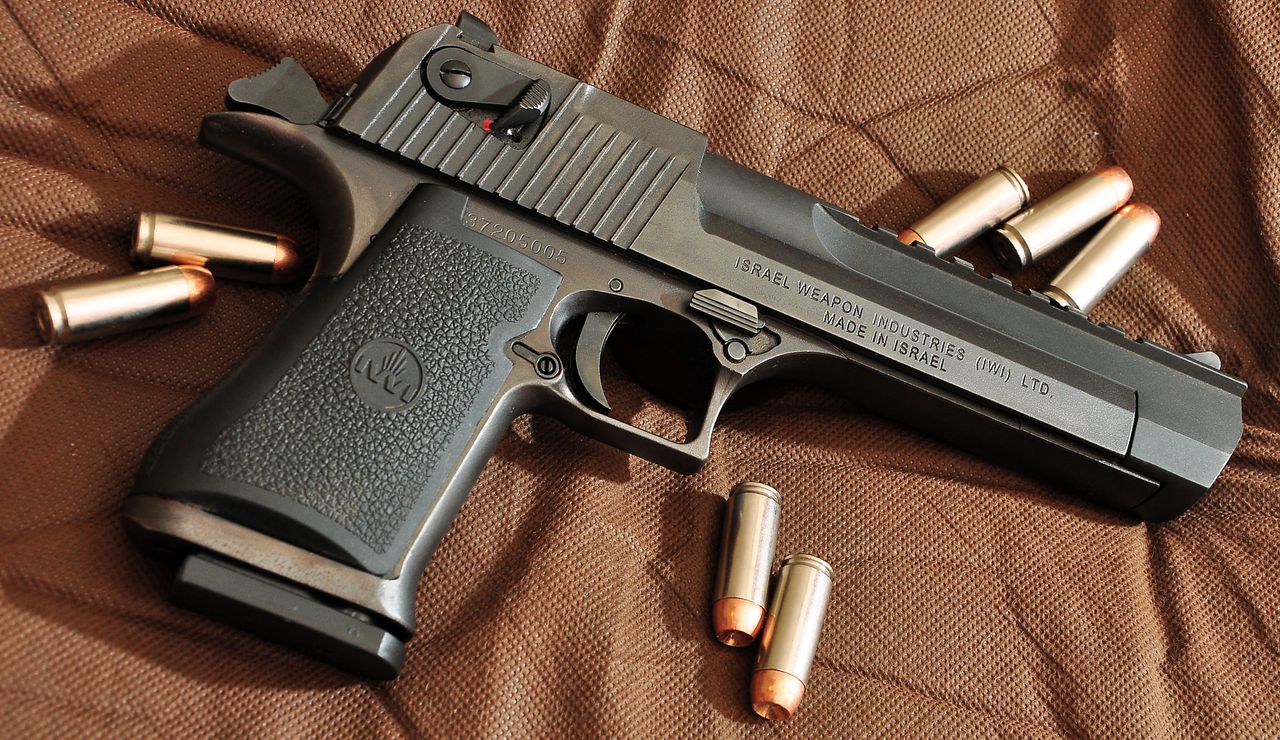
Desert Eagle

No Israeli-linked handgun has a bigger public image than the Desert Eagle, even if its design story is more complicated than many people realize. Magnum Research has long stated that the intellectual property belongs to Magnum Research, while the pistols were originally manufactured in Israel by IMI and later IWI before production moved fully to the United States in 2019. That still makes it an essential part of the Israeli pistol manufacturing story because Israeli industry helped turn the design into a global icon.
Mechanically, the Desert Eagle changed how people thought about what a semi-automatic pistol could even be. Its gas-operated system and rotating bolt were far outside the mainstream pistol recipe. Magnum Research says the Mark XIX platform offers interchangeability among major magnum calibers, including .357 Magnum, .44 Magnum, .429 DE, and .50 AE, a level of power and modularity that made the gun feel almost outrageous.
Of course, the Desert Eagle was never a standard duty sidearm in the way a Jericho or Masada could be. But that is exactly why it mattered. It pushed the combat-pistol conversation into the realm of raw power, materials engineering, and cinematic intimidation. It proved that a handgun could be designed more like a compact rifle action than a traditional service pistol.
Its influence was cultural as much as technical. Even people who know nothing about firearms recognize it. That kind of visibility changed expectations worldwide, making Israeli manufacturing synonymous, for many observers, with bold, unconventional handgun engineering.
UZI Pro Pistol
The UZI name is usually associated with submachine guns, not pistols, but the UZI Pro Pistol deserves a place on this list because it blurred categories in a way that influenced close-protection and compact-firepower thinking. IWI says the UZI Pro Pistol is a modernized Micro UZI semi-auto pistol, built around the famous platform that has sold more than 2 million units worldwide in various forms since 1963.
In its current pistol form, the design uses blowback operation from a closed bolt, a noteworthy detail because closed-bolt operation improves practical accuracy compared with the old open-bolt submachine-gun stereotype. IWI’s published specifications list a 4.5-inch cold hammer-forged barrel, an overall length of 9.5 inches, and 20- and 25-round magazines. Those are serious numbers for a compact package.
Why did it matter? Because it challenged the neat line between pistol and personal-defense weapon. Security teams, vehicle crews, and specialized users have long wanted handgun portability with greater stability, capacity, and intimidation value. The UZI Pro Pistol sits right in that space.
It also reflects a distinctly Israeli design instinct: adapt the mission to the threat environment instead of worshipping categories. In that sense, the UZI Pro Pistol helped shape modern thinking about compact defensive firearms, even among people who would never carry one as a conventional sidearm.
Masada

If the Jericho represented old-school steel confidence, the Masada represented Israeli entry into the modern striker-fired era. IWI introduced the Masada family to the U.S. market in November 2017, with commercial availability following in early 2018. From the start, IWI positioned it as a pistol for military, law-enforcement, and civilian users, not just as a range toy or niche export product.
The feature set showed that Israeli designers understood exactly where the global service-pistol market had gone. IWI emphasized a fully ambidextrous slide stop and magazine release, passive safeties, a takedown system that does not require pulling the trigger, and a low barrel axis to help reduce recoil and improve sight recovery. Official technical data lists a 17-round magazine, 4.1-inch barrel, and unloaded weight of roughly 23.5 ounces.
Those specs put the Masada directly into the hottest class of duty pistols in the world. But what made it important was not just that it entered the striker-fired race. It entered with a distinctly combat-oriented approach to ergonomics and left-right usability. For agencies training large numbers of shooters, ambidextrous controls are not a luxury. They are a practical advantage.
The Masada showed that Israeli firms were not stuck living off legacy reputations. They could compete in the exact space dominated by polymer-framed, optics-ready, high-capacity service pistols, and do it with a design language rooted in field practicality.
Baby Eagle
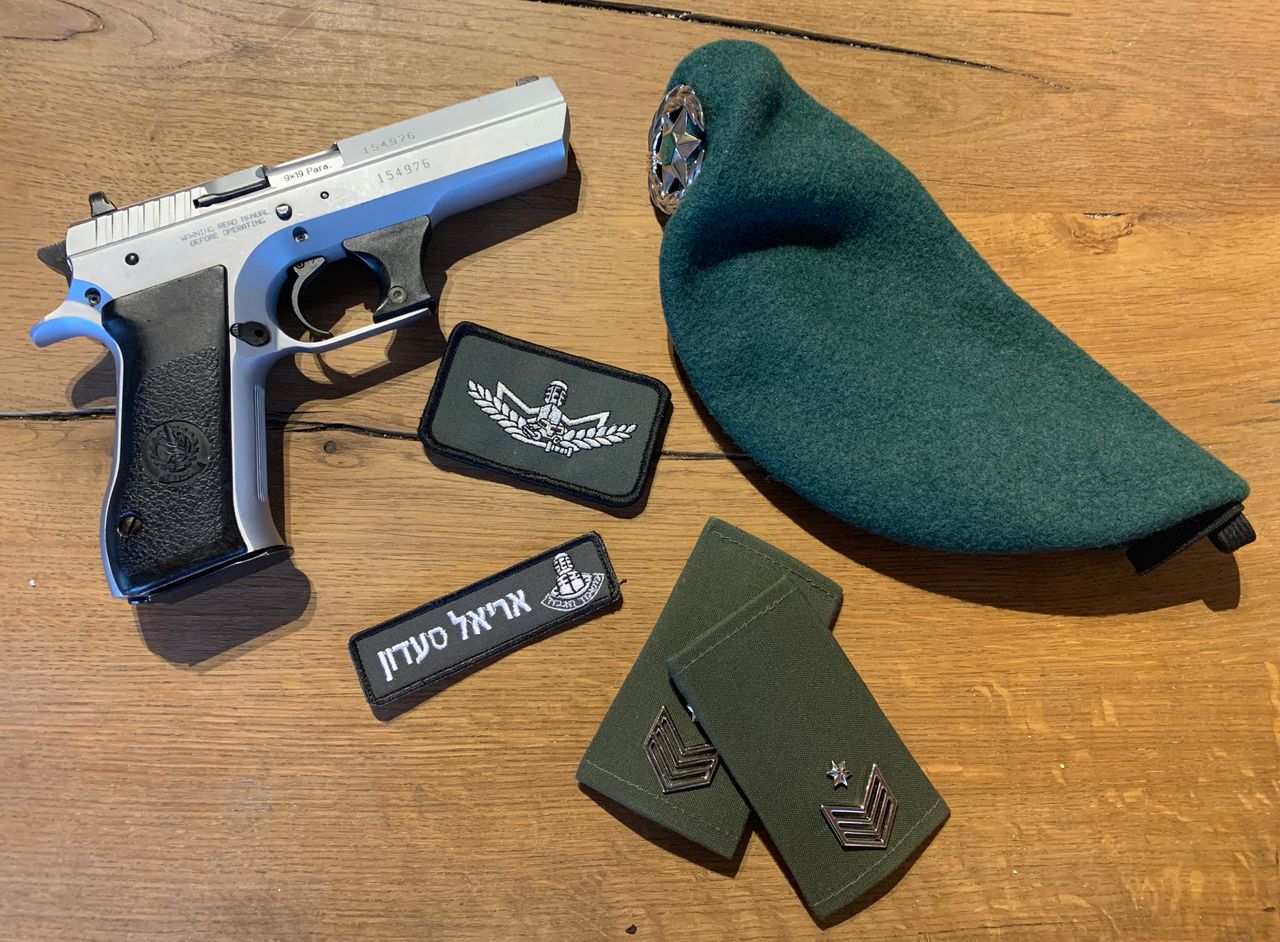
The Baby Eagle is often treated as just a rebranded offshoot, but that undersells its role in spreading Israeli pistol design to a wider commercial and defensive market. Magnum Research has described the Baby Eagle line as descending from the Jericho pistol, with later Baby Eagle III variants manufactured in Israel by BUL. That means the pistol became a bridge between Israeli service-handgun DNA and international consumer demand.
Its importance comes from accessibility. The full-size Jericho had a serious-duty aura, while the Baby Eagle branding made the platform more approachable for many buyers, especially in the United States. Shooters got the same broad virtues: a slide-inside-frame layout, strong all-steel or polymer-frame options depending on generation, and a shooting character known more for stability than snappiness.
In practical shooting terms, that matters a lot. Many so-called combat pistols are excellent on paper but feel abrupt in the hand. The Baby Eagle earned praise over the years for delivering the kind of controllability that makes fast follow-up shots easier. That is a real combat trait, not just a comfort feature.
It also helped normalize Israeli pistols outside elite or military contexts. Instead of being seen only as specialist hardware, Israeli-designed handguns started becoming ordinary carry, home-defense, and enthusiast purchases. That broader acceptance changed perceptions just as much as any battlefield reputation.
BUL Cherokee
BUL Armory does not always get the same name recognition as IWI or the UZI brand, but the company has had real influence in the evolution of Israeli handgun design. The Cherokee series showed that Israeli makers could build modern polymer-framed pistols aimed at the practical defensive market without simply copying larger European or American identities. Even today, BUL’s technical materials continue to list the Cherokee alongside its better-known competition-oriented lines.
The Cherokee mattered because it arrived in a world where polymer service pistols were already the norm. That meant it had to compete on execution, not novelty. Israeli designers responded with a pistol built around light weight, duty-caliber practicality, and simple handling. It was not trying to be theatrical. It was trying to be useful.
That may sound less glamorous than the Desert Eagle or UZI Pro, but it is arguably more important for how people think about combat pistols. Most sidearms in serious use are not statement pieces. They are working tools. A pistol like the Cherokee reinforced the idea that Israeli design could deliver mainstream defensive handguns tuned for reliability and modern carry needs.
In that sense, the Cherokee helped broaden the definition of Israeli pistol excellence. It was no longer just about iconic silhouettes or wartime lore. It was also about mature, practical product design for everyday professional use.
BUL SAS II and the Israeli 2011 Influence
Purists will correctly point out that the 1911 was born in America, not Israel. But BUL Armory’s SAS II family deserves inclusion because it shows how Israeli designers helped reshape modern fighting-pistol expectations through refinement rather than invention. BUL’s current technical materials prominently position the SAS II line among its flagship handgun offerings, and competitive shooters have increasingly treated the platform as a serious performer.
Why does that matter to combat-pistol thinking? Because the modern 2011-style pistol sits at the crossroads of speed, capacity, trigger quality, and recoil control. Israeli manufacturing has played a growing role in proving that double-stack, premium-performance pistols do not have to remain tiny-batch curiosities. A wider audience now associates these features with serious defensive and professional use, not just competition.
The SAS II also highlights something often missed in discussions of Israeli firearms. Israeli designers are highly pragmatic. If a proven system exists, they refine it for modern demands. That is exactly what happened here: better capacity, better ergonomics, better manufacturing consistency, and a cleaner fit with optics-era expectations.
So while the SAS II is not a classic service pistol in the old military sense, it changed minds in another way. It helped push the idea that a fighting handgun can offer elite shootability without abandoning reliability or real-world practicality.
What Israeli Pistol Design Changed
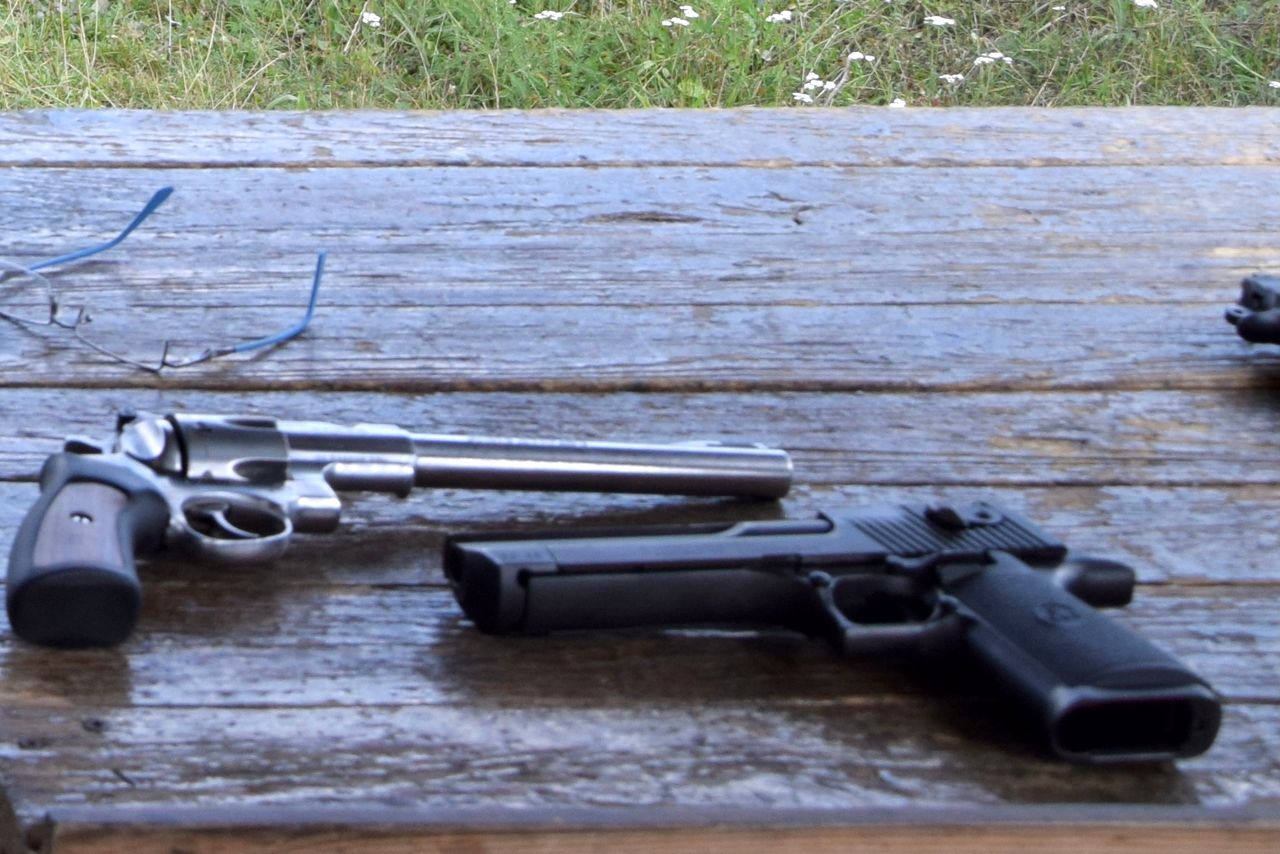
Looking across these firearms, a pattern becomes obvious. Israeli-designed pistols and pistol-adjacent weapons were shaped by a security culture that values immediacy, adaptability, and hard-use function above romance. IWI’s own corporate history openly ties its product development to the unique combat conditions faced by the IDF and the changing realities of terrorism and close-quarters threats. That design pressure produced guns with a very particular personality.
One major shift was the emphasis on practical controllability. The Jericho and Baby Eagle families showed that a duty handgun should be easy to shoot well, not just easy to issue. Another was ambidextrous, field-friendly operation, something the Masada embraced from the start. Then there was category-blurring firepower, seen clearly in the UZI Pro Pistol and the larger mythology around Israeli-made Desert Eagles.
These guns also changed perception internationally. Israeli pistols came to represent seriousness, toughness, and a refusal to separate engineering from operational need. That image was reinforced by military use, police adoption, export success, and sheer cultural visibility.
In the end, that is the real legacy. Israeli designers helped teach the world that a combat pistol is not just a sidearm. It is a compressed response to threat, training, logistics, and human stress, all packed into something that has to work right now.