A good revolver usually feels simple. A great one hides clever engineering inside that simplicity.
Why the Webley stood out immediately
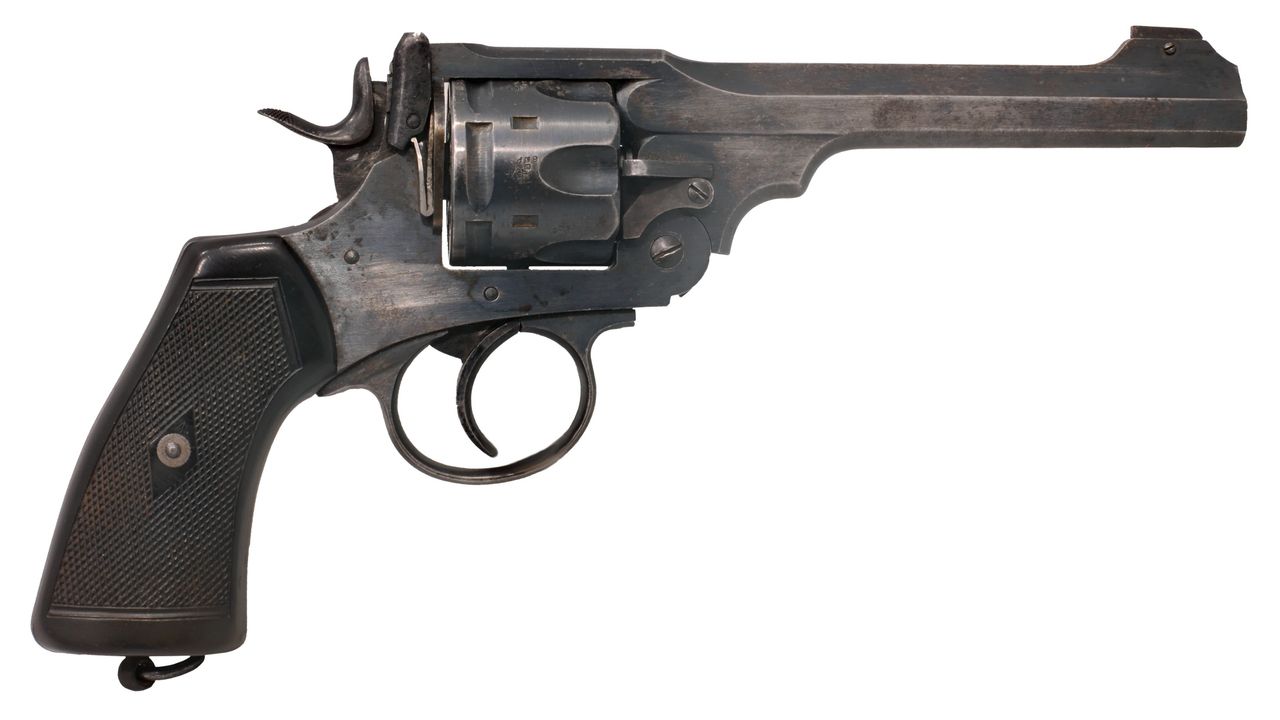
The big hook with a classic Webley top-break revolver was speed. Instead of opening a side-loading gate and poking out empty cases one at a time, the shooter pressed the latch, tipped the revolver open, and the mechanism lifted all six spent cases together. In practical terms, that was a huge advantage when seconds mattered.
This was not a gimmick or a range trick. The Royal Armouries notes that Webley top-break revolvers served British forces in various forms from 1887 to 1963, and the Webley Mk VI kept the automatic extraction feature that had already become a hallmark of the design. That long service life says plenty about how useful the concept really was.
The phrase “eject all six shells in one motion” describes what made the gun feel modern long before many of its rivals caught up. A shooter broke the frame open on its hinge, and the extractor rose automatically. Empty cases were thrown clear together, leaving the cylinder ready to be reloaded.
That combination of reliability, speed, and mechanical drama gave the Webley a reputation that has lasted well beyond its military era. Even today, when people handle one for the first time, the action is usually what they remember most.
How the top-break system actually worked
The Webley used a hinged frame, often called a top-break action. When the latch was released, the barrel and cylinder assembly pivoted downward from the frame. As that happened, a star-shaped extractor rose from the rear of the cylinder and pulled the cartridge cases back in unison.
That is the key distinction. On many older revolvers, extraction was a repetitive chore done chamber by chamber. On a Webley top-break, the mechanical sequence did most of the work for you in one continuous opening movement. It was quick, intuitive, and easy to teach.
According to the Royal Armouries, the Webley Mk VI was a six-shot revolver chambered in .455 and officially adopted by the British military from 1915 to 1923. The museum also highlights the revolver’s automatic extraction feature as one of the enduring traits carried over from earlier versions. In other words, the design was already mature by the time the Mk VI arrived.
The elegance of the system is that it reduces unnecessary hand motion. Open, eject, reload, close. That rhythm made the revolver feel efficient in a way many contemporary handguns did not. It is one reason the Webley remains such a favorite among collectors and firearms historians.
The military value of clearing six empties at once
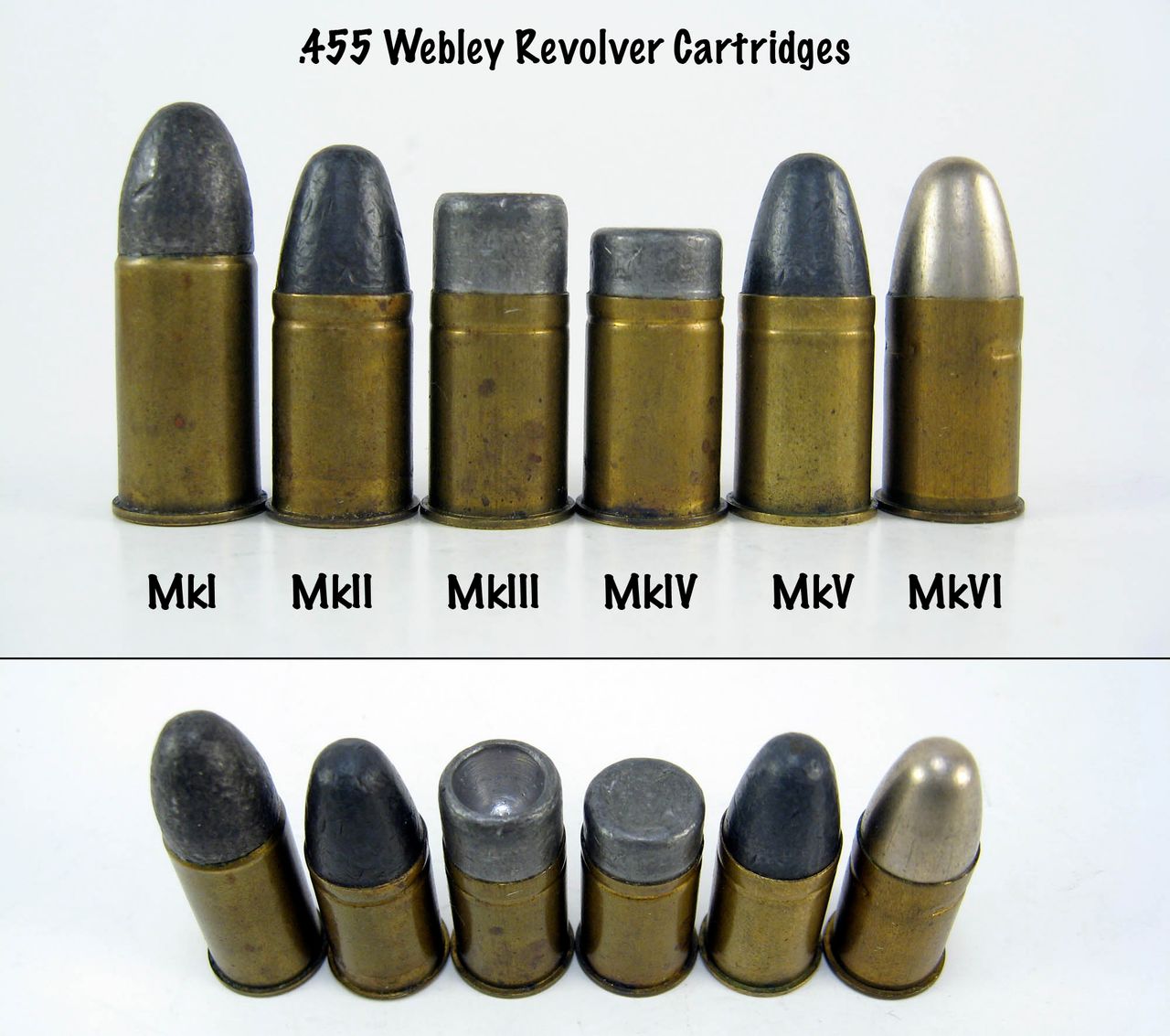
Fast extraction matters most when a handgun is not your primary weapon but may suddenly become your only one. That was exactly the sort of world the Webley inhabited. Officers, artillerymen, mounted troops, and others who carried sidearms needed something robust and quick to bring back into action under stress.
The British military’s long relationship with Webley suggests the design answered that need well. Royal Armouries describes the Mk VI as the iconic form of the service Webley, with a six-round capacity and a reputation for manageable rapid fire. The same source also notes that accessories like the Prideaux speed-loader helped cut reloading time even further.
That pairing is important. Automatic extraction only solves half the reloading problem. Once all six empties are out, the next step is getting six fresh cartridges in with minimal fumbling. With a speed-loader, the Webley system became even more impressive for its era.
In real use, this meant less time staring at the gun and more time staying aware of the surroundings. That practical edge helps explain why the top-break Webley was not just admired, but trusted. It offered a real battlefield advantage in a package that remained straightforward and durable.
From early service revolvers to the famous Mk VI
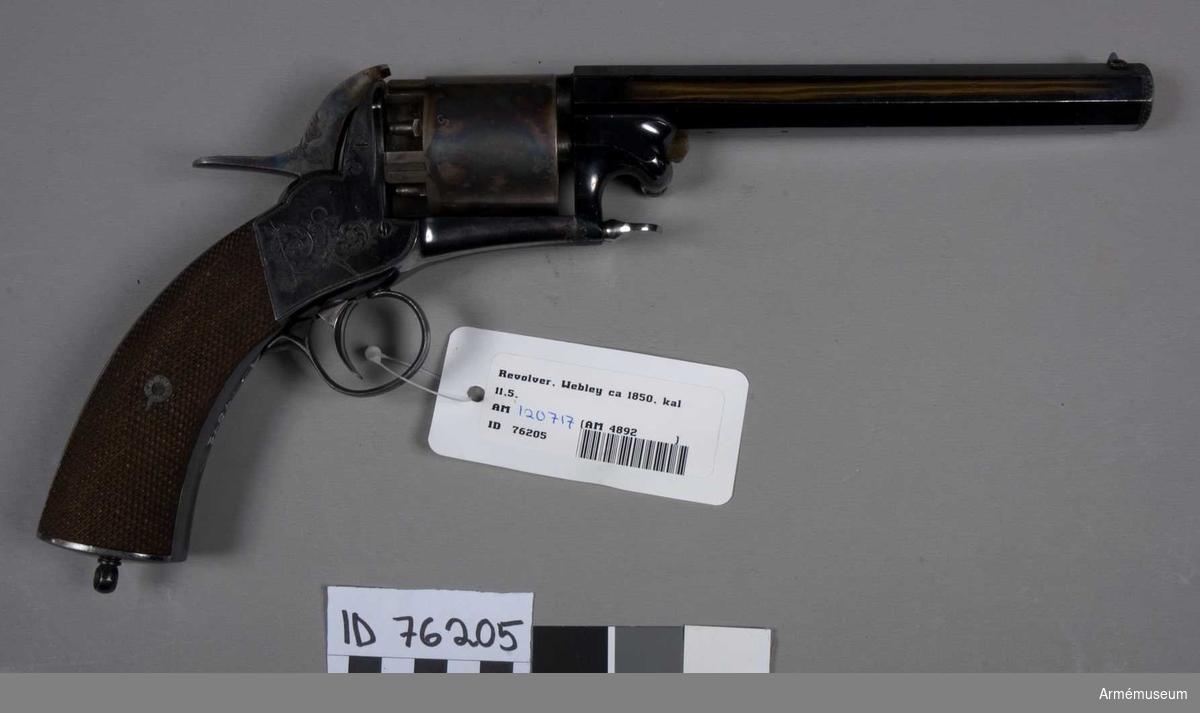
Webley did not appear fully formed with the Mk VI. The company’s revolver development in the late 19th century gradually pushed toward the top-break format that would define the brand. Forgotten Weapons, in its discussion of Webley history, points to the 1887 adoption of the first British top-break Webley service revolver as a major turning point.
By the time the Mk VI appeared in 1915, the concept had been refined into its best-known military form. Royal Armouries describes improvements that included a more squared grip, a longer 6-inch barrel, and removable front sights. Those changes made the revolver more shootable and more practical without abandoning the extraction system that made Webley special.
The Mk VI is the model most people picture when they hear the name Webley. It has the broad, unmistakable silhouette of a First World War service revolver, and it reflects a mature design philosophy. The gun is substantial, but it is also balanced around speed of operation.
That matters for historical memory. Plenty of firearms served in wartime, but only a few became visual shorthand for an era. The Mk VI did, in part, because its operation was so distinctive. Break it open once, and the reason becomes obvious.
Why shooters and collectors still love the mechanism

Part of Webley’s appeal is that it performs a mechanical task with satisfying clarity. There is no mystery when the action opens. You can see the hinge work, the extractor rise, and the cases pop free. For anyone who appreciates old machinery, it is hard not to admire.
Collectors also value the Webley because it represents a high point in service revolver design before self-loading pistols took over. The gun bridges two eras. It still has the reassuring simplicity of a revolver, but it speeds up one of the revolver’s oldest weaknesses, which is slow extraction and reloading.
There is also a historical romance to it. The Mk VI, in particular, is tied to British military service in the First World War, and the Imperial War Museums identifies the Webley .455 Mark VI military revolver in its collections as a 1915 production-era piece. That kind of institutional preservation reinforces the revolver’s status as a serious artifact, not just a curiosity.
Modern enthusiasts often remember the Webley not just for being flashy, but for being keen and purposeful. Every movement seems designed to save time. That sense of intent is what keeps the revolver interesting long after newer handgun systems replaced it in service.
The Webley was clever, but not magic
It is easy to romanticize the one-motion ejection system, but it has limits. Automatic extraction worked best with fired cases because spent brass came out cleanly when the revolver snapped open. Live rounds, being longer and still loaded with bullets, might not always clear in the same dramatic way.
That distinction is important because people sometimes overstate what the action did. The Webley did not turn a revolver into a self-loading pistol. It simply made the unloading stage far faster and more efficient than older gate-loaded designs. That may sound modest now, but at the time it was a significant ergonomic improvement.
The revolver also remained a large steel sidearm firing a heavy .455 cartridge. Royal Armouries notes a muzzle velocity of 229 m/s, with an effective range in the 30 to 40 meter class. This was a close-range military sidearm, built for practical stopping power and dependable handling rather than finesse or high capacity.
So yes, the Webley was clever, but its genius was disciplined rather than extravagant. It improved exactly the part of revolver use that needed improving the most. That is often what separates lasting designs from dead-end inventions.
What the one-motion ejector says about good gun design

The Webley’s extraction system is a reminder that truly useful innovation does not always look revolutionary at first glance. It may simply remove friction from a familiar task. In this case, that task was getting six empty cases out of a revolver quickly enough to matter.
According to Royal Armouries, British Webley top-break revolvers remained in service, in one form or another, for decades. Designs do not last that long on style alone. They last because users find them trustworthy, easy to operate, and meaningfully better at their job than what came before.
That is why the Webley still earns attention today. Its signature move, breaking open and clearing all six cases in one smooth action, captures the whole philosophy of the gun. It is sturdy, direct, and intelligently engineered for the real world.
For a general audience, that may be the best way to understand the Webley. It was not merely an old British revolver. It was a practical answer to a real problem, and it solved that problem with a motion so neat and efficient that people are still talking about it more than a century later.