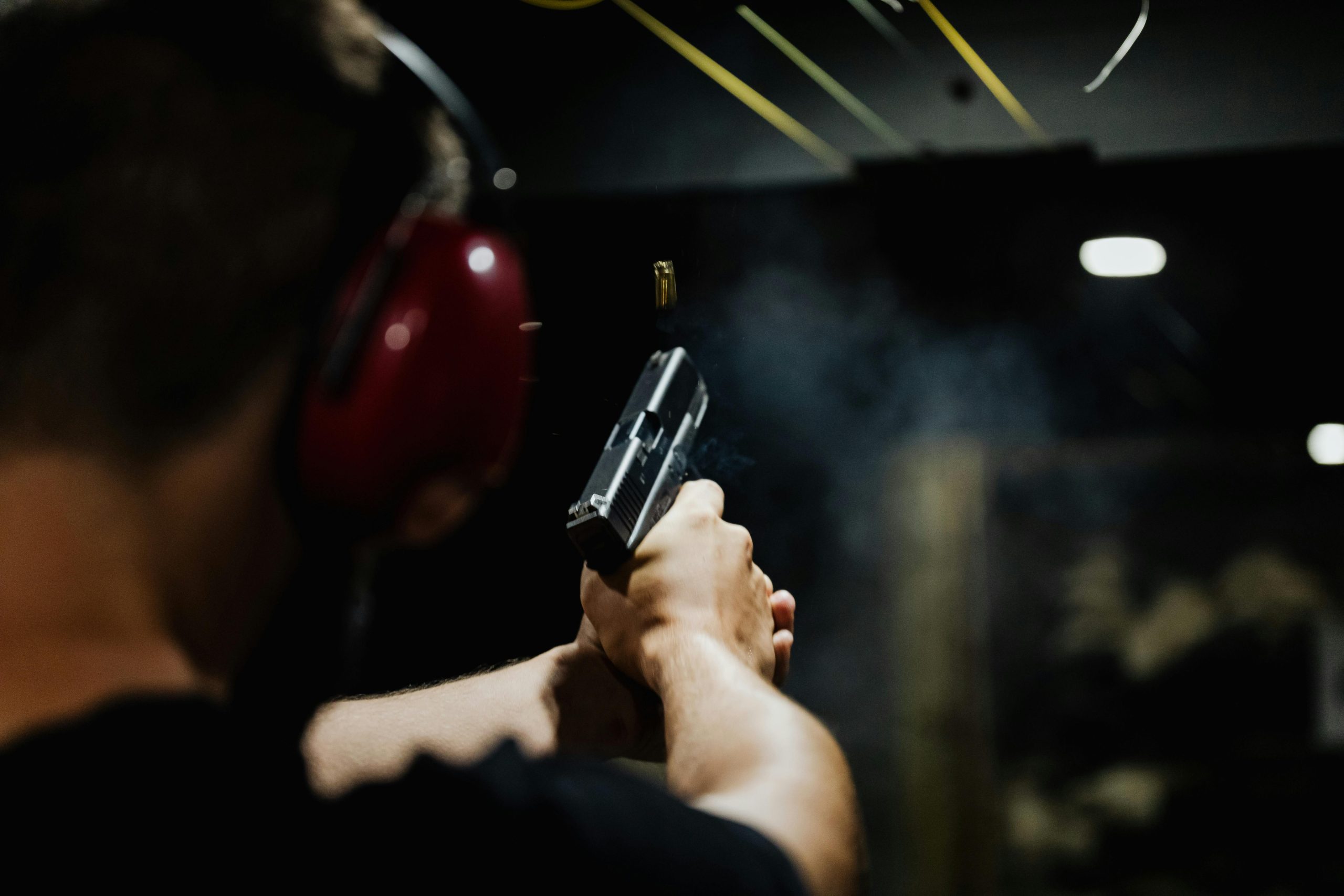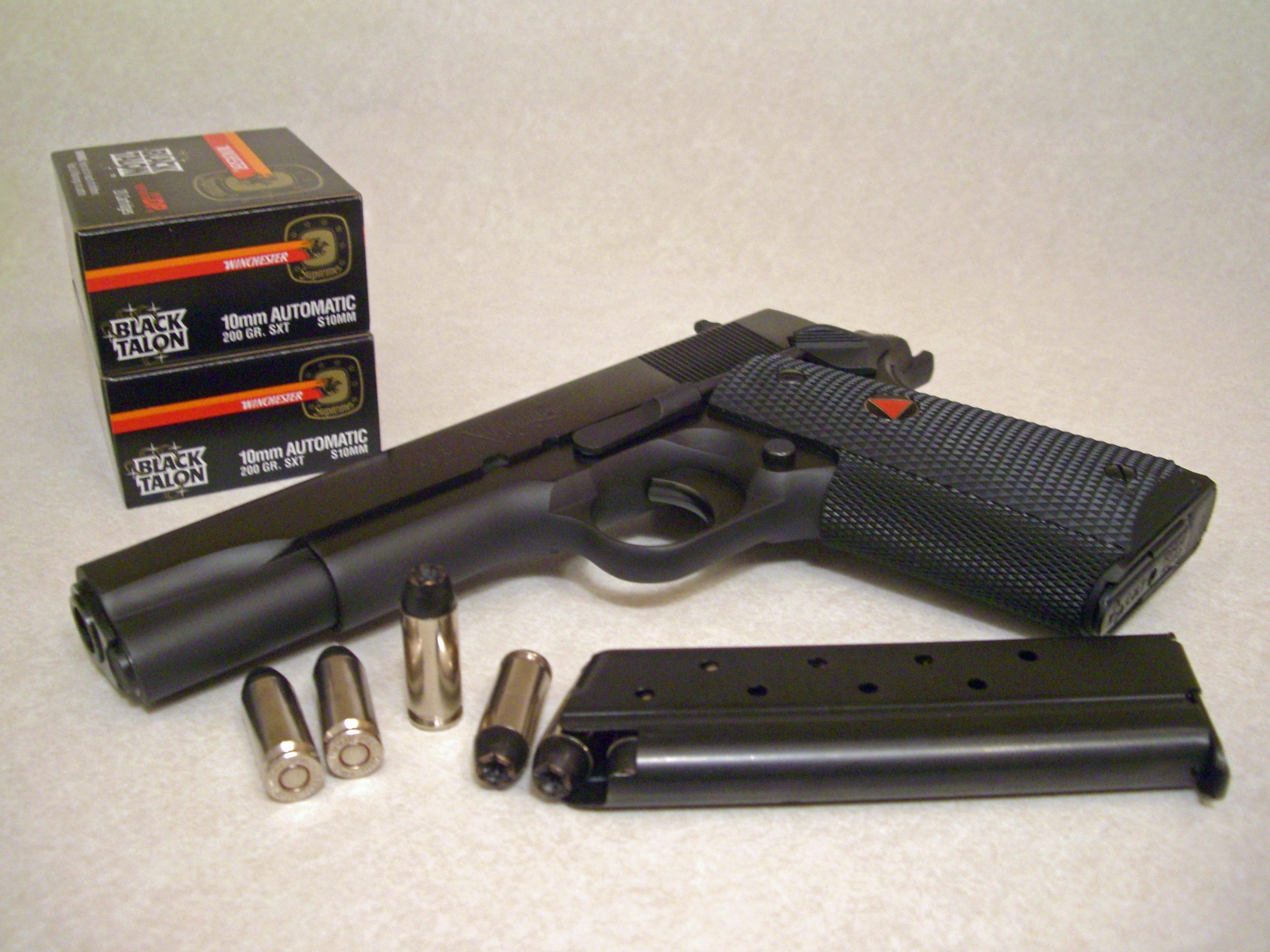
Big, loud, and unapologetically powerful, the 10mm Auto has never been a cartridge for the timid. Its story is one of ambition, backlash, and a comeback nobody saw lasting this long.
It Started as a Dream of a Better Fighting Pistol
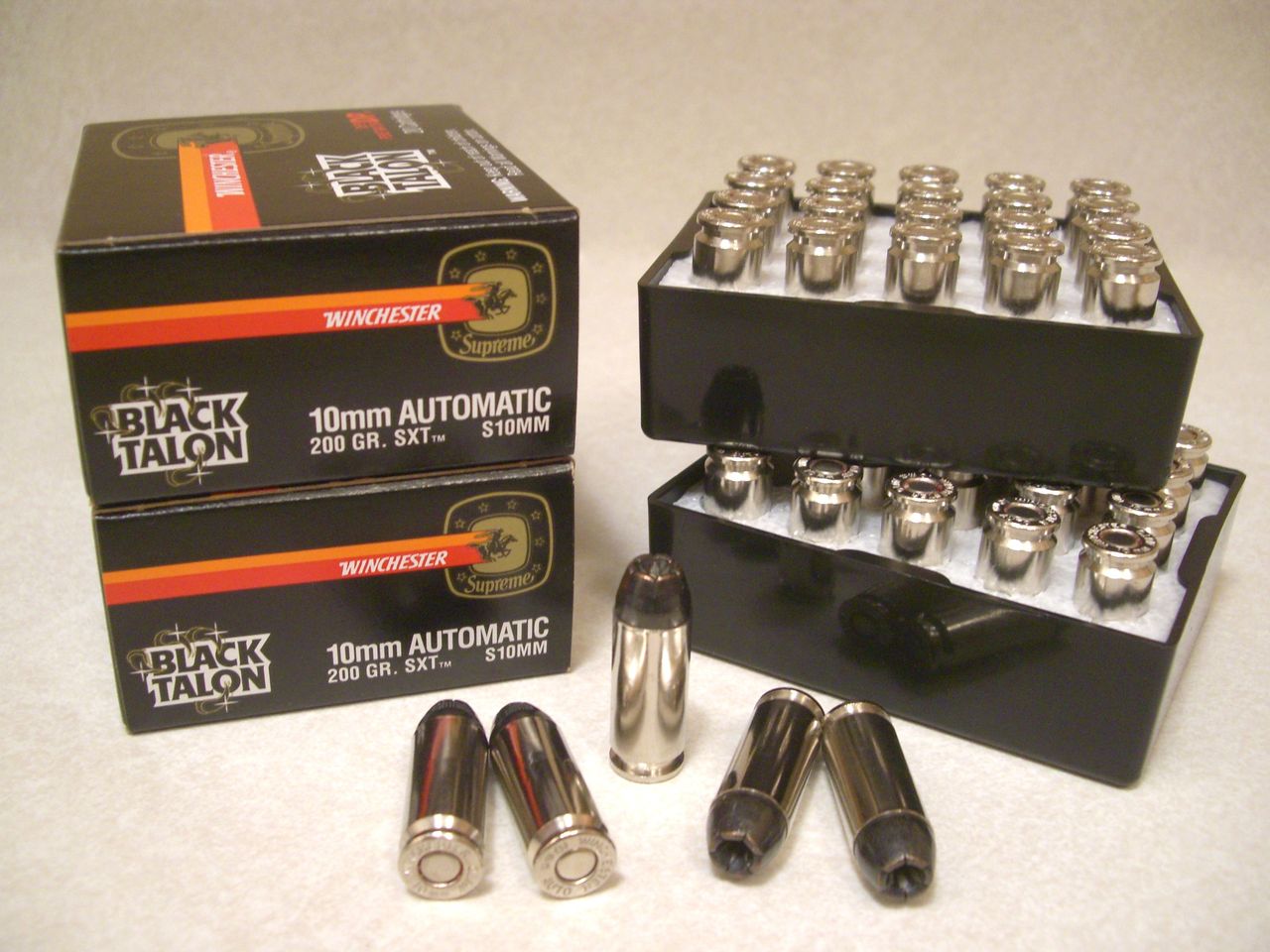
The 10mm Auto did not begin inside a federal lab or police armory. It grew out of the late-1970s practical shooting world, where designers wanted a semi-auto cartridge that hit harder than 9mm and offered more reach than .45 ACP.
According to American Rifleman, the cartridge’s early development centered on the Bren Ten pistol, introduced in 1983 by Dornaus & Dixon. The idea was simple: combine serious velocity with a flatter trajectory and magnum-like authority in an autoloading handgun.
That original formula was hot by service-pistol standards. American Rifleman notes early 10mm loads pushed 170-grain bullets to about 1,400 f.p.s. and 200-grain bullets to about 1,300 f.p.s., which gave the round a reputation for power long before it earned broad market acceptance.
The trouble was that the gun world loved the concept more than the execution. Bren Ten production problems and company failure nearly sank the caliber before it ever found stable footing.
The FBI’s Interest Came After a National Wake-Up Call
The 10mm’s most famous chapter starts with tragedy. On April 11, 1986, two FBI agents were killed, and five others were wounded in the Miami shootout, one of the deadliest gun battles in Bureau history, and the FBI later said the event drove major changes in weapons, armor, and training.
In the aftermath, the Bureau studied handgun effectiveness with unusual seriousness. The FBI’s own historical accounts make clear that the Miami firefight forced a hard look at whether existing sidearms and ammunition gave agents enough penetration and stopping potential in extreme conditions.
That testing eventually elevated the 10mm Auto. A 1989 FBI Law Enforcement Bulletin article explained that the Bureau liked the cartridge’s terminal performance, even while acknowledging that full-power commercial loads brought heavy recoil and substantial muzzle blast.
This is the key pivot in the 10mm legend. It was not adopted because it was trendy. It was adopted because the FBI, under pressure to improve survivability, believed it offered a real ballistic advantage.
The Cartridge Won, but the Full-Power Version Didn’t

Here is the irony at the center of the 10mm story: the FBI liked the caliber, but not in its original, full-throttle form. American Rifleman reports the Bureau settled on a reduced load that pushed a 180-grain bullet at about 950 f.p.s., trimming recoil while preserving the penetration profile it wanted.
That reduced round became known informally as “10mm Lite.” It delivered much of the practical effect the FBI wanted without asking every agent to manage the blast and recoil of the original Norma-style loads.
Smith & Wesson then built the Model 1076 around the FBI contract, and American Rifleman says the Bureau announced that selection in January 1990. The pistol was stainless, double-action, and purpose-built to meet the Bureau’s detailed requirements.
In other words, the 10mm had technically won. But the winning version was already being softened, which opened the door for something smaller, easier, and cheaper to dominate the duty market.
The .40 S&W Took the Job the 10mm Created
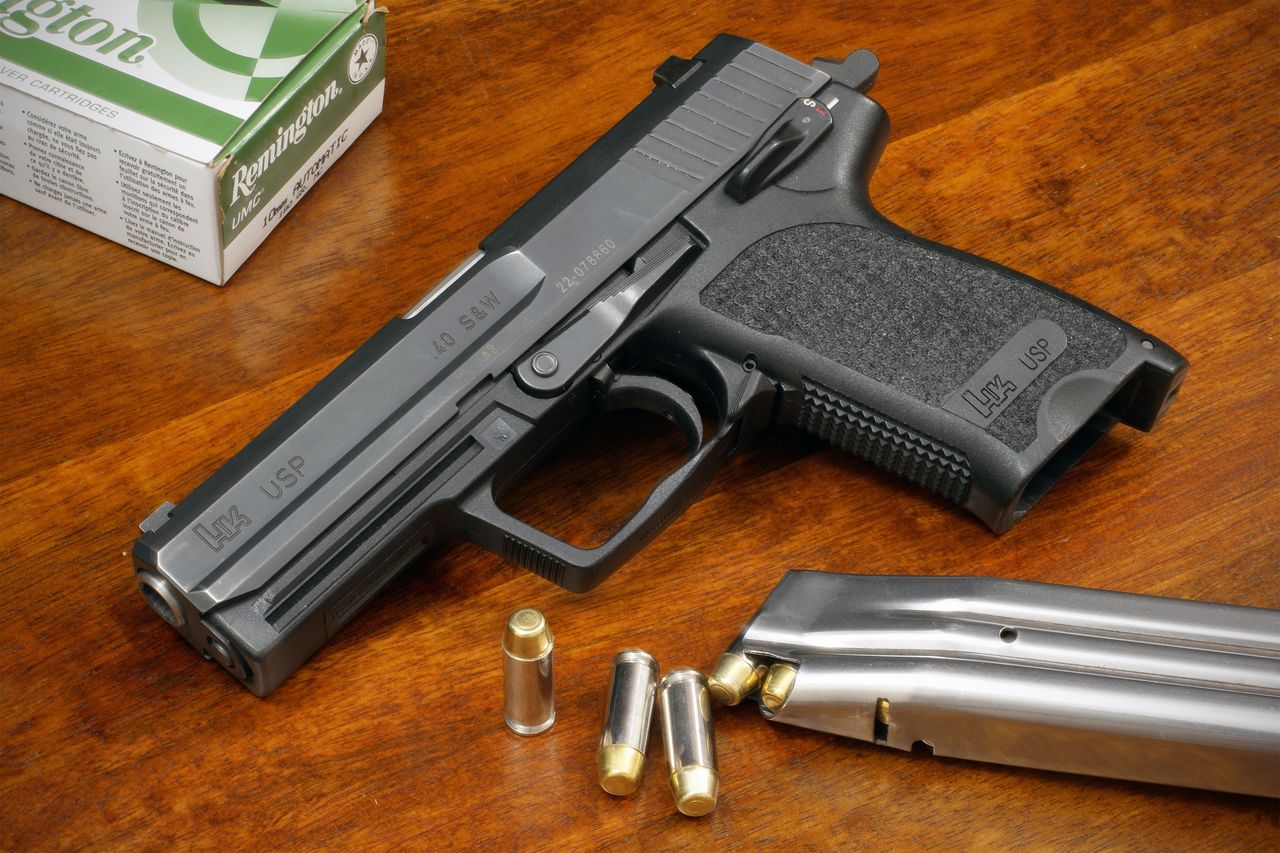
The .40 S&W exists because the FBI proved there was demand for mid-bore semi-auto performance. Once Smith & Wesson and Winchester realized the reduced 10mm load could fit into a shorter case, the logic was obvious: duplicate that performance in a pistol sized more like a 9mm.
American Rifleman describes the .40 S&W as essentially a shortened answer to the FBI’s downloaded 10mm concept. It was introduced in 1990 and rapidly became the law-enforcement sweet spot because agencies could get useful power in smaller guns with higher capacity and more manageable recoil.
The FBI’s 10mm pistols also had reliability trouble. American Rifleman reports that the Bureau recalled its 1076s in 1991 after problems involving the mechanism, magazines, extractors, and springs, and much of the remaining order was ultimately canceled.
That combination sealed the 10mm’s fate in uniformed service. It had inspired the future, but the future chose the .40 instead.
Colt, Glock, and the Civilian Market Kept It Alive
If the FBI made the 10mm famous, civilian shooters kept it from dying. Colt helped rescue the cartridge when it launched the Delta Elite in 1987, and Colt later said the model was widely seen as one of the guns that saved 10mm from obscurity.
Glock added another major lifeline with the G20 in 1990, giving shooters a durable, high-capacity platform for a cartridge that had already earned a reputation for beating up lesser designs. That mattered because reliability, not just ballistics, became central to the 10mm’s long-term credibility.
By the late 1990s, the caliber looked nearly finished as a mainstream choice. Yet a small, stubborn user base kept buying it for hunting, woods carry, handloading, and sheer enthusiasm for a cartridge that still did things 9mm, .40, and .45 ACP did differently.
That is how cult followings are born. A product stops being standard issue and starts becoming personal.
Why the 10mm Feels More Relevant Now Than Ever
Today’s 10mm revival makes sense once you stop judging it by police-duty standards from 1990. Modern shooters value it as a backcountry sidearm, a hog-hunting pistol round, and a legitimate semi-auto option for defense against animals where deeper penetration matters.
Its appeal is partly ballistic and partly cultural. SAAMI’s current standard still recognizes the 10mm Auto as a high-pressure cartridge, and that fundamental design gives ammunition makers room to load it from mild practice fodder to serious field-ready hunting ammunition.
The result is a caliber that never became truly mainstream, but never really disappeared either. It went from elite institutional pick to outsider favorite, and that may be the best possible ending for a round with this much attitude.
For many shooters, the 10mm is no longer the handgun cartridge of the future. It is something better: a proven specialist with enough power, history, and personality to keep earning converts the old-fashioned way.