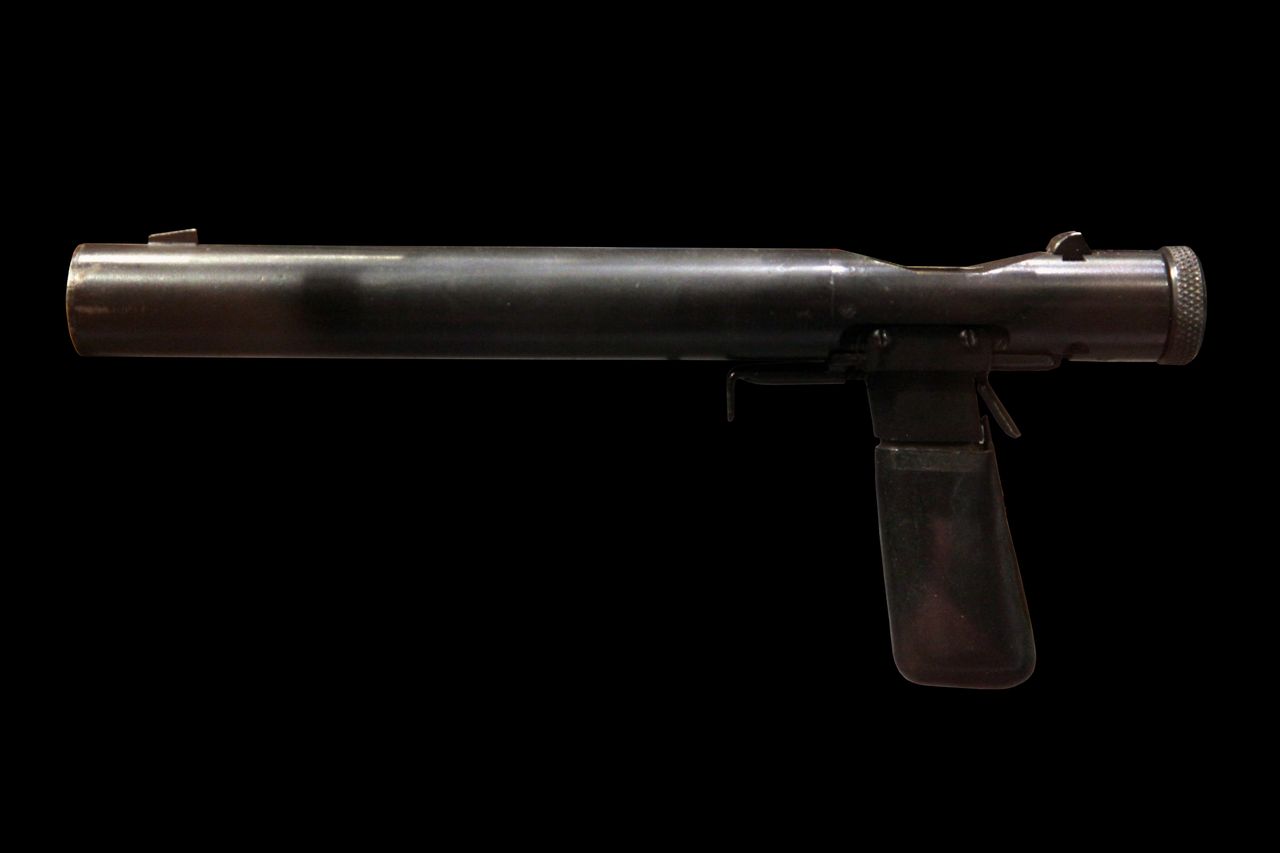
It looks more like a workshop prototype than a famous wartime firearm. That rough, almost improvised appearance was exactly the point.
A pistol built for the shadows
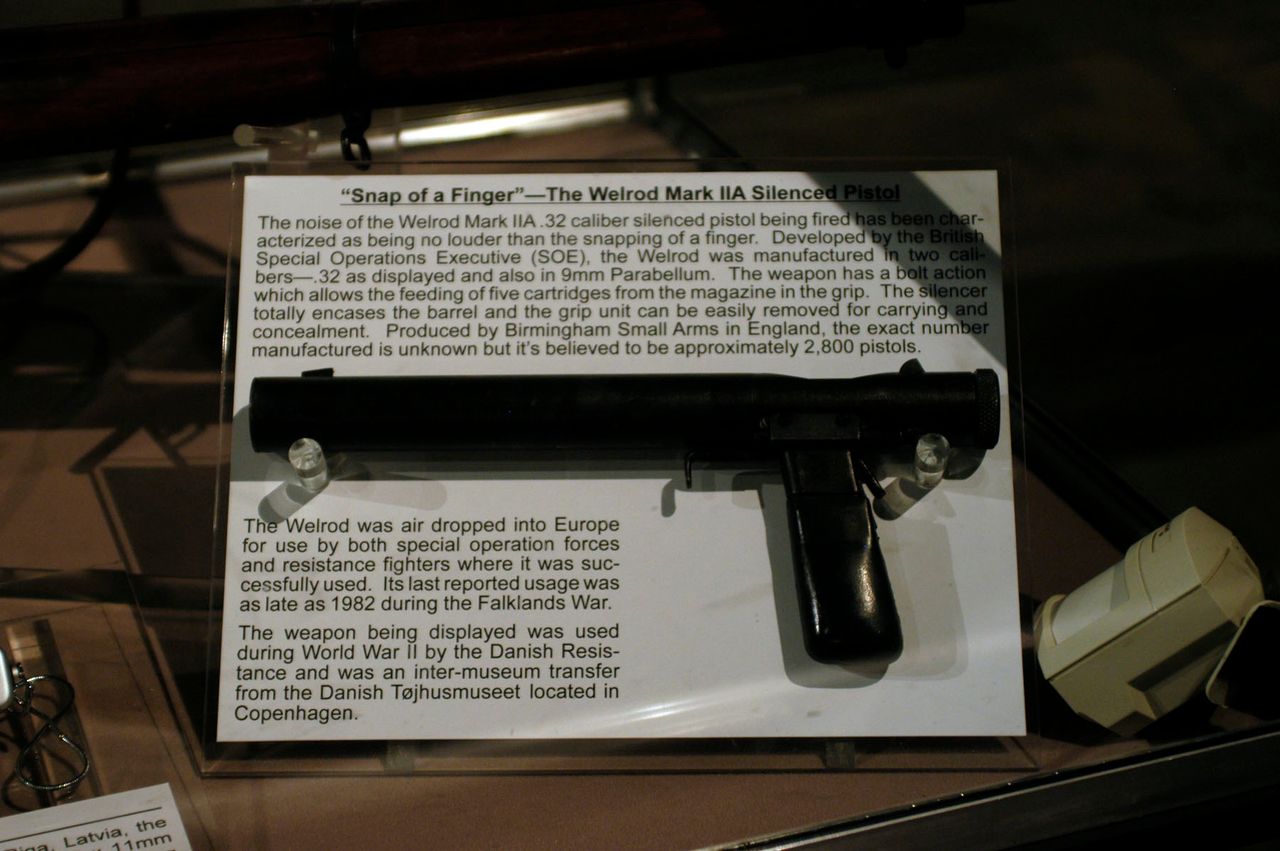
The Welrod was a British suppressed pistol created during World War II for covert work, not conventional battlefield fighting. It is widely associated with the Special Operations Executive, the secret organization that armed saboteurs, resistance networks, and undercover operatives behind enemy lines. Contemporary museum records and later technical histories consistently describe it as a purpose-built silent weapon for special operations. According to the Australian War Memorial and Royal Armouries material, it was a bolt-action pistol with a permanently attached suppressor.
That alone made it unusual. Most handguns of the era relied on self-loading actions that created extra noise and mechanical movement. The Welrod avoided that problem by stripping the concept down to the bare essentials: fire one shot, work the bolt by hand, chamber the next round, and keep the sound signature as low as possible.
The weapon is generally linked to late-1942 development for British clandestine services. Some histories tie its creation to Hugh Reeves and the research establishment later known as Station IX, while surviving archival details remain incomplete because so much special-weapons work was classified or poorly documented.
Why silence mattered so much
The Welrod existed for one grim task: getting close and eliminating a sentry, collaborator, or specific target without sparking a wider firefight. In occupied Europe, that mattered enormously. A noisy pistol shot could expose an agent, end a sabotage mission, or trigger a sweep by German security forces before demolition charges were even planted.
Its integral suppressor was not an afterthought. The whole pistol was designed around quiet firing, which is why the barrel sat inside a tubular silencer assembly and the action stayed manually operated. That helped reduce both muzzle blast and the clatter normally associated with semi-automatic pistols. The result was a weapon with an outsized reputation for quietness, even if no firearm is literally silent.
This made the Welrod a specialist tool rather than a general sidearm. It was effective at very short range, where stealth mattered more than speed, magazine capacity, or stopping power. In other words, it was built for sabotage and assassination-style missions, not for holding a trench line or fighting through a town.
The strange design that made it work
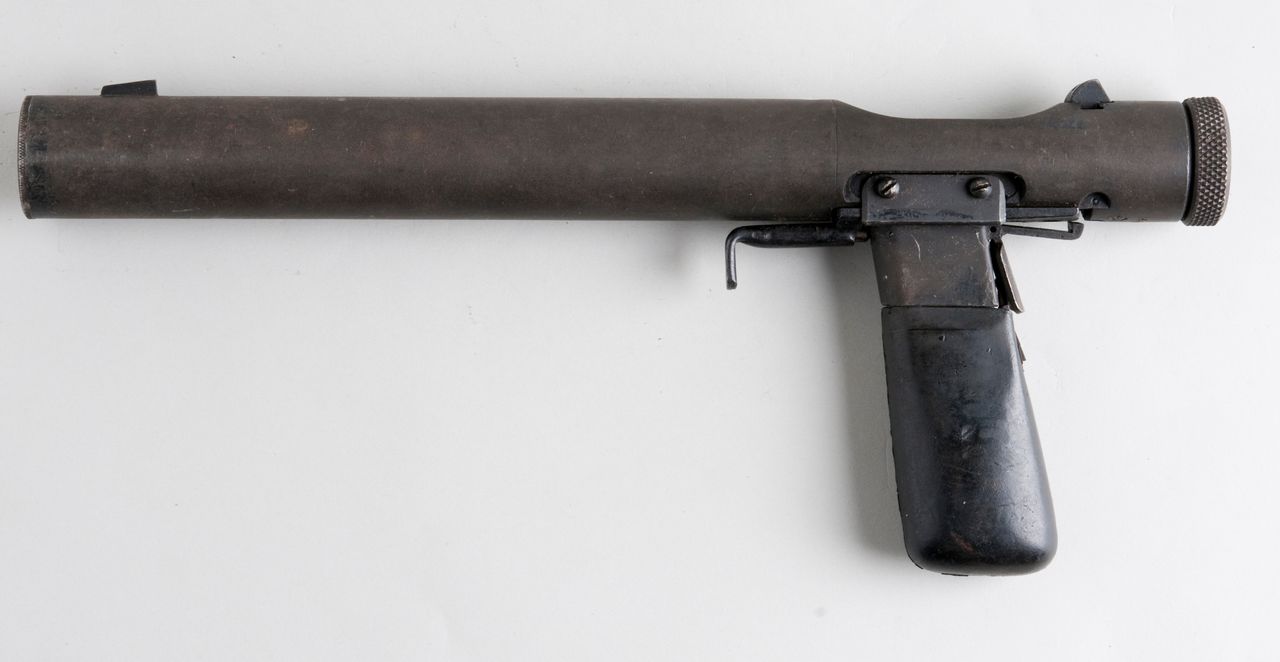
The Welrod’s layout still startles first-time viewers. The grip doubled as the magazine housing, and on some descriptions the detachable grip-and-magazine assembly helped the pistol look less recognizable when broken down for concealment. That sanitised, low-profile concept fit clandestine work perfectly.
Royal Armouries describes a .32 prototype with a one-piece steel suppressor tube, a simple bent spur trigger, and a bolt activated by twisting the breech 90 degrees before drawing it back. The same record notes that the prototype used a magazine from a Webley 7.65 mm automatic pistol and measured about 312 mm overall, weighing roughly 1.085 kg.
That all sounds awkward, and by modern standards it absolutely was. But awkward was acceptable if the gun was concealable, reliable enough for a few crucial shots, and exceptionally discreet. The Welrod was built with mission-specific logic, not ergonomic elegance.
Calibers, variants, and practical tradeoffs
The Welrod is most often discussed in .32 ACP and 9 mm versions. Researchers generally note that the .32-caliber guns were quieter, while the 9 mm models offered more authority on target. That tradeoff sits at the center of the Welrod story: stealth versus terminal effect.
The prototype trail is messy, which is typical for secret wartime programs. Royal Armouries holds a .32 Mk.IIA prototype dated 1943 and identifies BSA Guns Ltd. of Birmingham as the maker of that example. Other historical accounts describe early developmental models with different magazine arrangements and trigger concepts before the weapon settled into its better-known form.
The suppressor itself also involved compromise. Some technical histories note that the internal wipes and baffle materials were highly effective but wore out after limited use. That was acceptable for clandestine service, where a weapon might only need to perform flawlessly for a handful of shots in one operation.
Who used it and how far it traveled
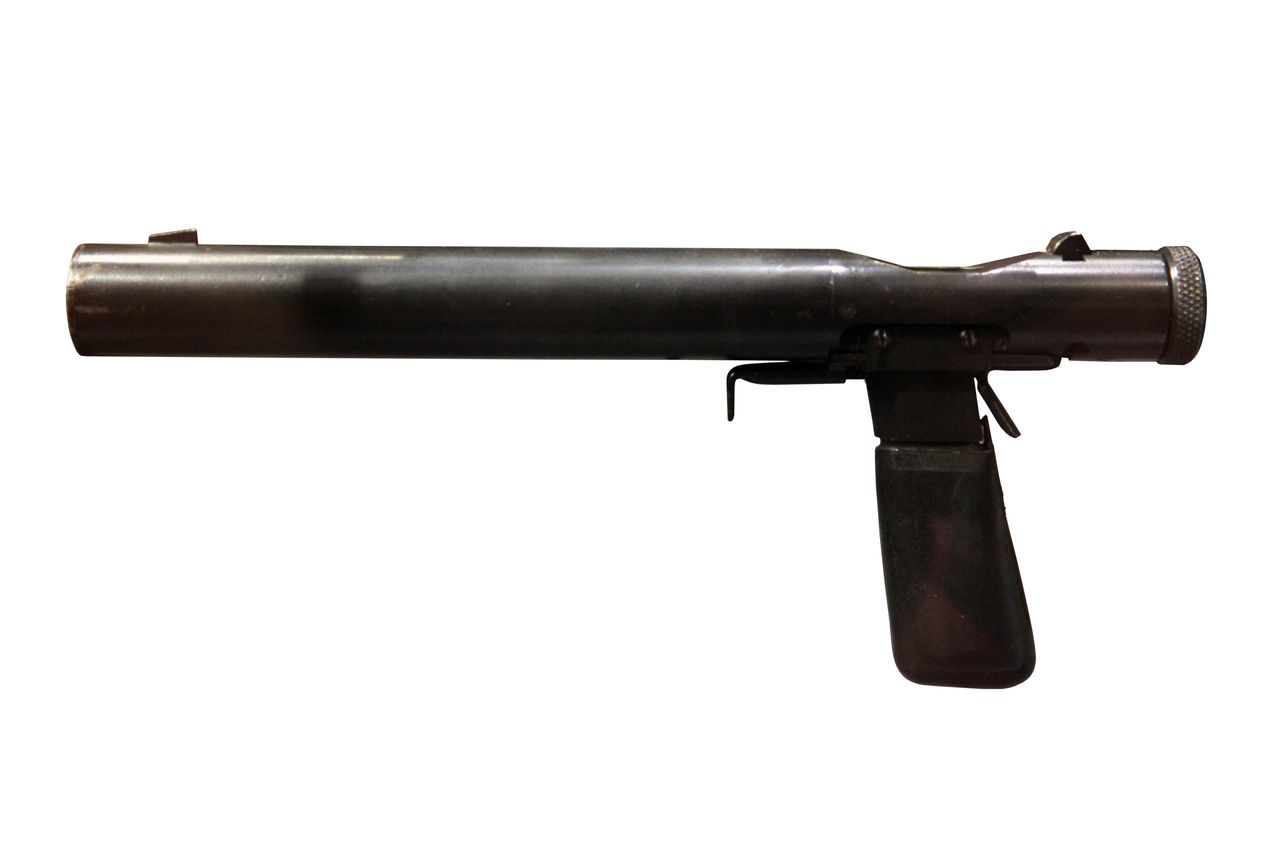
The Welrod was not just a British curiosity. Historical accounts indicate it was used principally by British special-operations elements, but examples and knowledge also reached the American OSS and resistance groups in Europe. American Rifleman reports that U.S. evaluators examined the weapon in Washington in 1943 and accepted it for special applications.
That spread makes sense. Allied clandestine organizations were desperate for tools that could do one thing extremely well, and the Welrod did. It complemented other suppressed British designs, especially the De Lisle carbine and special-purpose Sten variants, but remained the compact option for agents working at handshake distance.
Even after the war, the Welrod’s mystique lingered. American Rifleman notes that it appeared in classified CIA catalogs for special missions years later, suggesting that the basic concept retained value long after 1945. Whether widely issued or tightly held, it clearly left a long institutional memory.
Why the Welrod still fascinates people
Part of the fascination is mechanical. The Welrod is one of those rare firearms where every odd feature has a cold, practical answer. It looks crude because refinement was less important than concealment, suppression, and dependable performance during a mission that might last only seconds.
Another part is moral and historical. This was not a soldier’s everyday sidearm or a sporting pistol. It was a weapon shaped by sabotage, occupation, and close-range killing in one of history’s darkest wars. That gives it a different kind of gravity than a standard service revolver or automatic pistol.
Today, surviving examples in museum collections such as the Royal Armouries and the Australian War Memorial help anchor the legend in hard facts. Strip away the spy-fiction aura, and the Welrod remains what it always was: a deeply specialized wartime instrument, engineered to be quiet when quiet could mean survival.