Sometimes the most revealing military rifle story is about a gun that never got its turn. In the long, messy history of arms trials, a few designs were judged so questionable that the real drama happened before the first shot.
A Rifle Eliminated by Its Own Concept
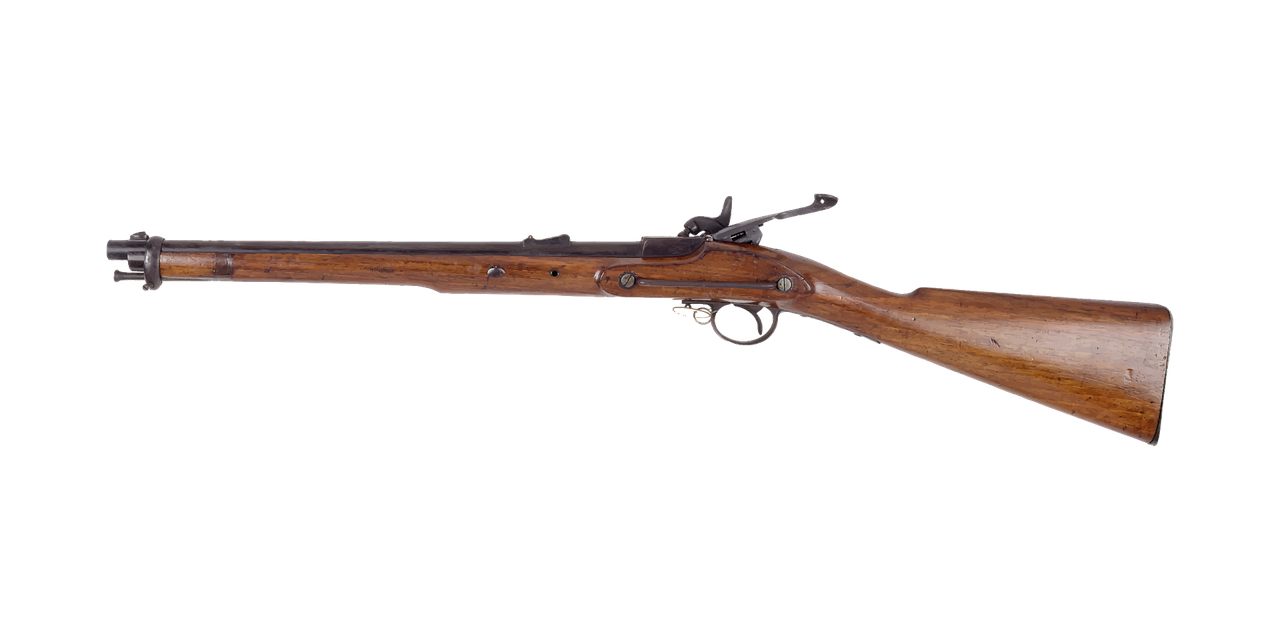
The best candidate for this strange distinction is the Barnekov rifle, entered for the U.S. Army’s 1872 rifle trials. According to trial summaries discussed by Forgotten Weapons, records show the Barnekov entry was withdrawn from the testing process and never resurfaced in any meaningful way.
That alone would make it obscure. What makes it memorable is how radical the mechanism was for a service arm in that era.
Barnekov’s design used an open-bolt, single-shot system. The shooter cocked the rifle open, inserted a cartridge by hand, and then, when the trigger was pulled, the action slammed shut and fired in one motion.
For a machine gun, that kind of thinking can make sense. For a shoulder-fired infantry rifle in the 1870s, it was a deeply awkward idea.
Why Army Testers Likely Lost Confidence

Military trial boards are not just looking for innovation. They are looking for a weapon that ordinary soldiers can carry, load, fire, and survive with under stress.
The Barnekov system raised obvious concerns before any glamorous range performance could redeem it. An open-bolt firing sequence on a full-power single-shot rifle invites worries about safe carry, disturbance of aim, and consistency from shot to shot.
Forgotten Weapons notes exactly those problems in broad terms, describing real issues with safe carrying and accurate shooting. In other words, the rifle’s liabilities were not hidden defects waiting to appear after 500 rounds. They were baked into the operating idea itself.
That matters because trial boards often killed designs early when the concept looked wrong for service use, even if the craftsmanship was clever.
The Context of the 1872 U.S. Rifle Trials
The United States was trying to settle on a practical post-Civil War service rifle. The eventual direction favored simpler, more familiar systems, culminating in adoption of the Allin trapdoor concept as the next standard U.S. service rifle.
That broader environment did Barnekov no favors. Competing against more conventional breechloaders, an experimental open-bolt rifle had to overcome an immediate trust deficit.
It also arrived at a moment when armies valued ruggedness, predictable handling, and ease of instruction. A trial piece that looked mechanically unusual could be tolerated, but only if it offered overwhelming advantages.
There is no sign the Barnekov rifle cleared that bar. Instead, the historical record points to withdrawal, not perseverance.
What “Before It Fired a Shot” Really Means
Strictly speaking, historians cannot always prove a prototype literally never discharged anywhere. A designer almost certainly tested a mechanism privately before submitting it.
But in the language of military trials, the more important point is that the rifle appears to have exited the official process before meaningful formal firing evaluation made any impact on its fate. That is the heart of the story.
It was not remembered for endurance. It was not remembered for accuracy scores. It was not even remembered for a dramatic blowup on the range.
It was remembered because the concept itself seems to have doomed it first. That is rarer, and in some ways more revealing, than a spectacular failure under fire.
Not the Only Failure, but a Different Kind
Other trial rifles were dropped after ugly performances. The Woodhull light rifle, for example, suffered reliability and extraction problems and was rejected after testing despite later improvements, according to Forgotten Weapons.
The Thompson Model 1923 autorifle also fell out of contention after poor results in U.S. semiautomatic rifle trials. Those rifles failed the usual way: they went out, shot, disappointed, and were discarded.
The Barnekov case stands apart because the design seems to have lost institutional confidence almost immediately. That makes it less famous than a rifle that exploded or jammed nonstop, but historically it may be even more instructive.
Armies do not merely test what fires. They first decide what is worth trusting.
Why This Forgotten Story Still Matters

Prototype weapons tell us what armies feared as much as what they wanted. In the Barnekov rifle, you can see the limits of acceptable experimentation in a period when militaries were modernizing fast but not blindly.
A service rifle had to be more than inventive. It had to feel safe, logical, and soldier-proof to the officers evaluating it.
That lesson still applies today. The most advanced design in the room can be dead on arrival if its manual of arms, safety profile, or practical handling asks too much of the people expected to use it.
So the rifle dropped from trials before it ever fired a shot was not just a curiosity. It was a quiet reminder that bad fit can kill a weapon before recoil ever does.