A firearm can look like a simple machine, but its history is really a chain of hard-won solutions. Between the early 1800s and the late 1800s, those solutions arrived fast enough to transform the gun from a handcrafted black-powder tool into the recognizable modern arm.
The flintlock world at the century’s opening
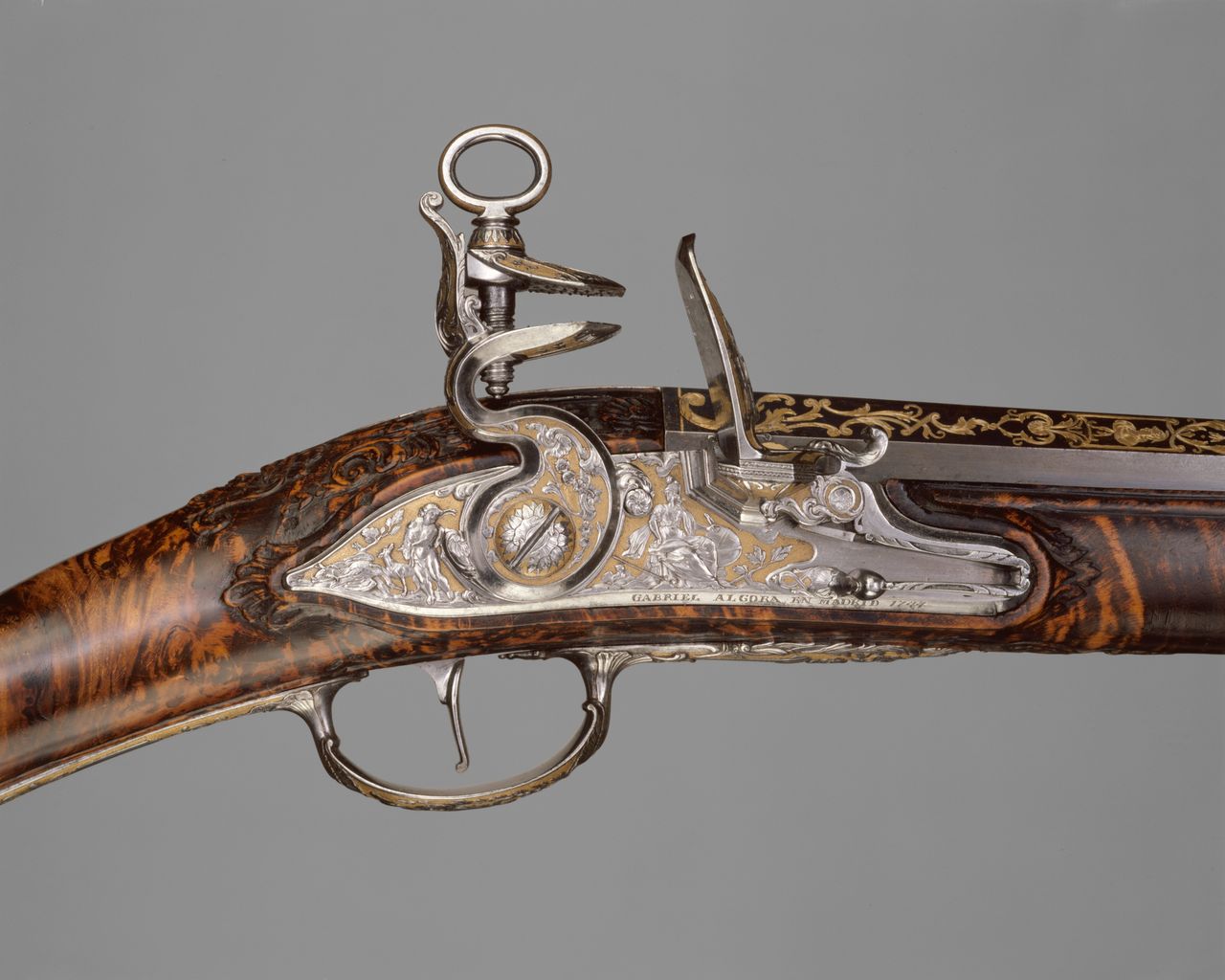
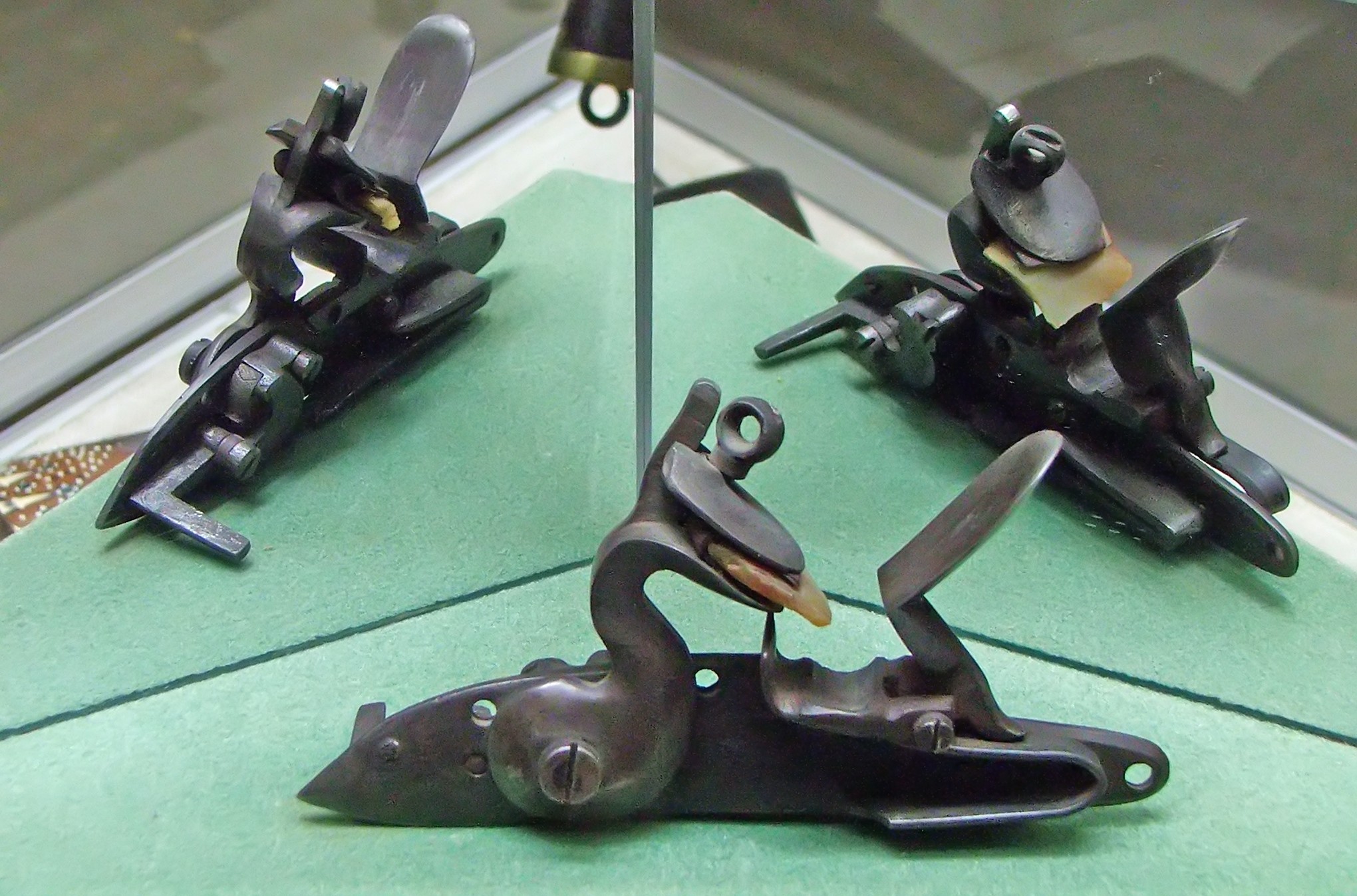
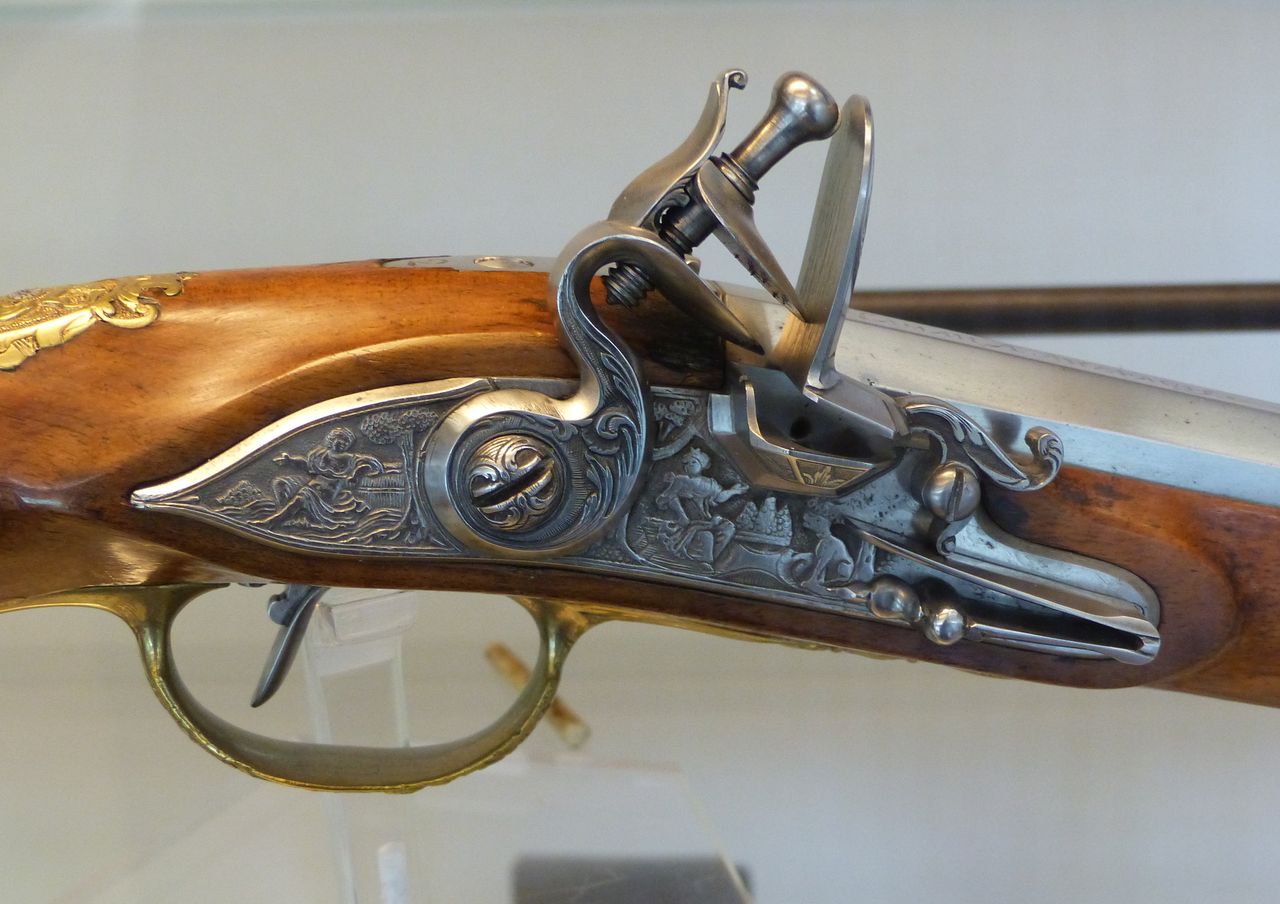
At the start of the 19th century, the flintlock still ruled. It worked by striking flint against steel to shower sparks into priming powder, which then flashed through a vent to ignite the main charge. That system was ingenious for its time, but it was never especially quick, weatherproof, or foolproof, as the Library of Congress notes in its overview of ignition systems.
Loading was also labor-intensive. A shooter had to measure powder, seat ball and patch or cartridge, ram everything down the barrel, and then prime the pan. In battle or under stress, every step invited delay or error.
Smoothbore muskets dominated military service because they were rugged and easier to load, even if they were not very accurate. Rifles offered better precision, but tight-fitting projectiles made them slower to reload, which limited widespread military use for decades.
Why percussion caps changed everything
The next great leap was ignition. According to the National Park Service, percussion systems replaced the exposed priming pan with a small cap placed on a nipple at the breech, where a hammer strike set off the charge. That made firearms faster to fire and much less vulnerable to rain, wind, and spilled powder.
This sounds like a small change, but it was revolutionary in the field. Soldiers no longer had to manage loose priming powder, and hunters gained a gun that was more dependable in rough conditions. Reliability is often more important than elegance, and percussion locks delivered exactly that.
The percussion era also opened the door to more practical repeating handguns. The Library of Congress identifies Samuel Colt’s percussion revolvers of the 1830s as a major step, because multiple loaded chambers could be indexed in sequence. That was a dramatic increase in sustained firepower over single-shot pistols.
The rifle, the Minié ball, and longer-range killing power
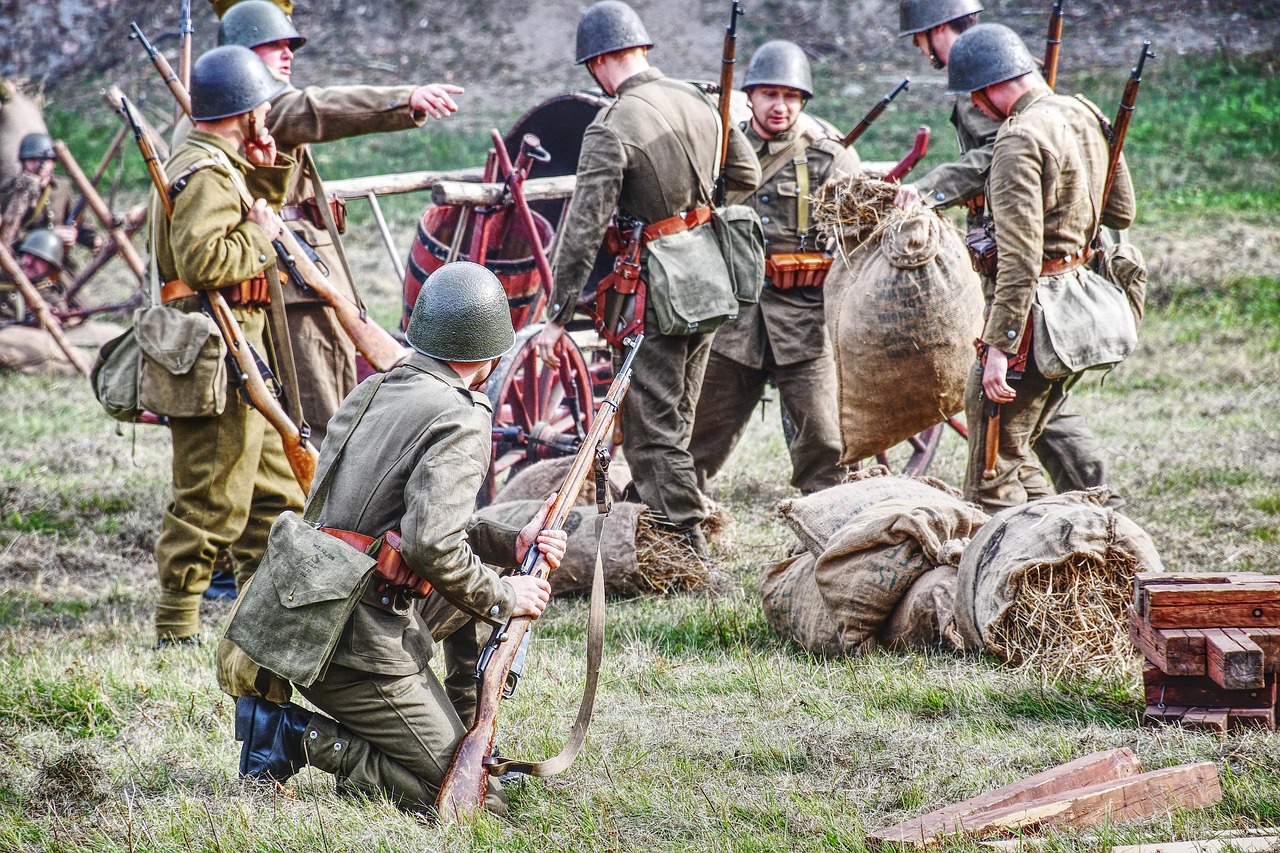
Ignition improved first, but projectile design changed the battlefield just as much. The National Park Service explains that the Minié ball, a conical bullet with an expanding base, let soldiers load quickly like a musket while still benefiting from rifling’s spin and stability. That solved one of the old rifle’s biggest problems.
The result was a major jump in effective range. One NPS interpreter notes that a rifled arm firing a Minié ball could hit opponents at 400 yards or more, compared with roughly 75 to 100 yards for a smoothbore musket. That was not a minor upgrade. It changed tactics, formations, and casualty patterns.
By the Civil War, rifled muskets such as the Springfield series had become standard infantry arms. They still loaded from the muzzle and still used black powder, but their reach and accuracy made older smoothbores feel like relics from a different age.
Breechloading solved the biggest problem muzzleloaders had left
Even with better bullets and percussion ignition, muzzleloaders still forced the shooter to reload from the front of the barrel. The National Park Service notes that this became especially troublesome once fouling built up, making it harder to ram a cartridge home after repeated firing. It also often required standing to reload, a dangerous habit under fire.
Breechloaders attacked that weakness directly by loading from the rear. But engineers had to solve a serious mechanical challenge: sealing the breech tightly enough to contain gas while still allowing rapid, repeatable operation. NPS material on experimental breechloaders emphasizes just how central that sealing problem was.
By the Civil War, breechloading systems such as the Sharps showed what the future looked like. They were quicker to reload, easier to handle from cover, and better suited to mounted troops and specialist marksmen. Once soldiers experienced that advantage, the muzzleloader’s days were numbered.
Repeaters turned firepower into a new kind of advantage
Breechloading was powerful enough on its own, but repeating firearms raised the stakes again. The National Park Service describes the Spencer carbine as a seven-shot repeating arm using .52 caliber rimfire metallic cartridges stored in the buttstock. That combination of speed, self-contained ammunition, and multiple ready rounds was a huge practical advance.
The Henry pushed even further with a 15-round tubular magazine, becoming the clear forerunner of later Winchester repeaters, according to NPS. For cavalry, scouts, and troops in fluid fighting, these arms compressed time. A shooter could deliver several aimed shots before an opponent finished reloading once or twice.
Repeaters did have tradeoffs. They were more mechanically complex, costlier to produce, and consumed ammunition quickly. But once industry could support them, the argument was over: higher sustained fire changed both tactics and expectations.
The metallic cartridge completed the transformation
The metallic cartridge tied the century’s innovations together. Instead of juggling separate powder, ball, and primer, the shooter now had a self-contained unit that combined them in one package. The Library of Congress and the National Park Service both point to cartridge development as the bridge from percussion-era arms to recognizably modern firearms.
That mattered for more than convenience. Metallic cartridges improved handling, simplified logistics, sped training, and made repeating and revolver systems far more practical. They also encouraged stronger actions, better sealing, and more standardized manufacturing.
By the 1870s, the basic path forward was set. Flint sparked powder in the open air; cartridges sealed ignition inside the gun. In one century, firearms became faster, more reliable, easier to mass-produce, and dramatically more lethal. That is the real story of this transformation: not one invention, but a cascade of improvements that permanently changed the technology of shooting.