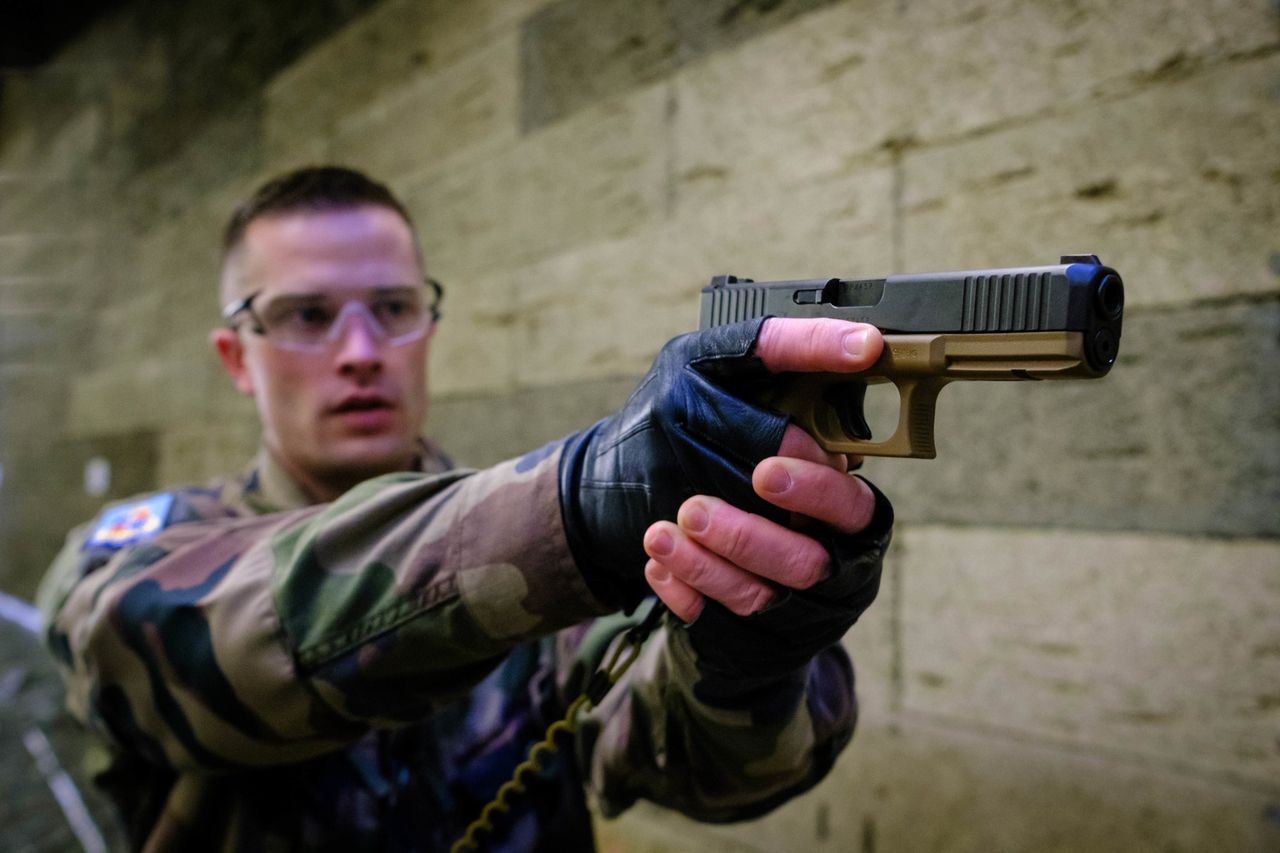
Some handgun debates never really die. The CZ 75 vs Glock 17 argument survives because both pistols do exactly what they were designed to do, just in very different ways.
Two icons built for different eras

The CZ 75 and Glock 17 are both 9mm service pistols, but they come from different design philosophies. The CZ 75 emerged in 1975 from Czechoslovakia as a steel-framed, double-action/single-action pistol with the kind of hand-filling ergonomics shooters still rave about. Glock introduced the Glock 17 in the early 1980s as a lighter, striker-fired pistol that pushed polymer frames from oddity to mainstream.
That difference matters because each gun reflects the priorities of its time. The CZ 75 was built in an era that still trusted steel, exposed hammers, and a more traditional control layout. The Glock 17 was built for institutional simplicity, low weight, fewer controls, and easy training across large agencies.
Even on paper, you can see the split. Official CZ materials list the CZ 75 B with a steel frame, a 114 mm barrel, 16-round magazine capacity, and weight around 1,170 g. Glock lists the G17 Gen5 with a 114 mm barrel, standard 17-round capacity, and weight of 625 g without a magazine. Same general size class, radically different feel.
Why the CZ 75 feels so good in the hand

Ask longtime CZ fans why they stay loyal, and the first answer is usually not ballistics or capacity. It is feel. The CZ 75 has a reputation for excellent ergonomics because the grip contour, angle, and frame shape seem to settle naturally into many hands, creating the impression that the pistol points almost by itself.
Part of that comfort comes from the gun’s all-metal construction. A steel frame gives the pistol reassuring density, but it also changes how recoil is perceived. Instead of a quick, snappy impulse, many shooters experience the CZ 75 as softer and more planted, especially during longer range sessions where comfort becomes more obvious than spec-sheet numbers.
The slide rides inside the frame rails, a signature CZ design trait that many enthusiasts associate with a smooth cycling feel and tight lockup. Some shooters also like the traditional DA/SA setup because it offers a long first trigger press followed by lighter single-action shots. For people raised on classic metal pistols, that combination feels intuitive rather than outdated.
Why the Glock 17 took over so much of the market

If the CZ 75 wins hearts, the Glock 17 often wins procurement contracts. Its success is tied to an extremely practical formula: lighter weight, fewer external controls, a consistent trigger pull, and straightforward maintenance. Glock’s official materials emphasize the Safe Action system with three passive mechanical safeties and the same basic trigger feel from the first shot to the last.
That consistency is a major institutional advantage. A DA/SA pistol asks the shooter to manage two trigger modes, plus whichever safety or decocker arrangement the model uses. A Glock keeps the manual of arms simpler, which is one reason it became enormously popular with police forces and security users around the world.
The Gen5 Glock 17 also shows how the design matured without abandoning its core identity. Glock highlights the Marksman Barrel, nDLC finish, ambidextrous slide stop, front serrations on many models, and removal of finger grooves. None of that changes the central appeal. The gun is still about reliability, modularity, ease of use, and lower carry weight, all of which matter a lot for duty use.
Steel versus polymer in the real world
The real argument is not nostalgia versus progress. It is about tradeoffs. Steel-framed pistols like the CZ 75 are heavier, and that extra mass can make a noticeable difference in recoil control, muzzle movement, and overall shooting comfort. On the range, especially during rapid strings, many shooters find that a heavier metal frame tracks flatter and feels calmer between shots.
Polymer brings a different set of strengths. The Glock 17 is easier to carry for long periods, easier to issue across a wide user base, and less fatiguing on a duty belt. The lower unloaded weight also makes logistics simpler for people who prioritize everyday practicality over pure shooting comfort.
Durability is often framed as a steel advantage, but modern polymers are hardly fragile. Glock’s long reputation was built on proving that a polymer service pistol could handle harsh conditions, corrosion exposure, and heavy institutional use. Steel still carries emotional authority, though. Many shooters simply trust metal in a way that feels almost instinctive, even when polymer has decades of service history behind it.
Trigger systems, controls, and confidence

Much of the loyalty to the CZ 75 comes down to how people think a pistol should operate. Traditionalists often like having an exposed hammer, a manual safety on some variants, or a decocker on others. They appreciate being able to thumb-check the hammer, understand the gun’s status visually, and choose between hammer-down double action or cocked-and-locked carry depending on the model.
Glock users usually value the opposite. The Safe Action system removes extra levers and makes the manual of arms highly repeatable. There is no transition from a heavier first pull to lighter follow-ups, and no separate decocking step. For many shooters, especially newer ones, that consistency builds confidence faster than a more traditional control scheme.
Neither system is automatically better for everyone. A practiced DA/SA shooter may run a CZ 75 with great precision and feel completely at home with the first-shot transition. A striker-fired shooter may pick up a Glock 17 and immediately appreciate how little there is to think about under stress. In that sense, platform loyalty is often really training loyalty wearing a brand name.
Culture, competition, and the romance of metal guns
The CZ 75 has something the Glock 17 cannot fully replicate: romance. It looks like a classic service pistol, feels substantial in the hand, and carries the appeal of old-world machining and design continuity. It also became enormously influential, with a design that inspired clones and descendants across the handgun world, helping cement its reputation far beyond its country of origin.
Competition helped deepen that loyalty. The CZ family earned a strong following in practical shooting circles, where weight, balance, and a crisp single-action feel can be major advantages. Even shooters who do not compete often borrow that mindset, valuing the way a metal gun settles on target and rewards patient trigger work.
Glock built a different culture, one centered on utilitarian excellence. It is the pickup truck of handguns: simple, common, durable, and endlessly supported by holsters, sights, magazines, and aftermarket parts. But the very traits that made Glock dominant can also make it feel emotionally neutral. The CZ 75, by contrast, inspires attachment. People do not just use them. They admire them.
Which one makes more sense today
For a buyer choosing between them today, the answer depends less on brand mythology than intended use. If you want a lighter, easier-to-maintain, easy-to-source full-size 9mm with massive aftermarket support and a simple manual of arms, the Glock 17 remains one of the clearest benchmark choices in the category. There is a reason so many duty pistols are judged against it.
If you care most about shootability, weight-soaked recoil control, classic ergonomics, and the tactile satisfaction of a steel-framed handgun, the CZ 75 still makes a compelling case. Its defenders are not clinging to the past by accident. They are responding to qualities that polymer does not completely replace: balance, heft, and a kind of mechanical intimacy.
That is why traditional metal frames still have loyal defenders in a polymer world. The Glock 17 may represent where service pistols went, but the CZ 75 represents what many shooters still love. One is optimized for efficiency. The other reminds people that efficiency is not the only reason a firearm earns a permanent place in the safe.