The debate over gun laws in America usually sounds modern. In truth, some of its deepest roots run straight through the country’s oldest racial hierarchies.
The First Gun Restrictions Grew Out Of Slavery
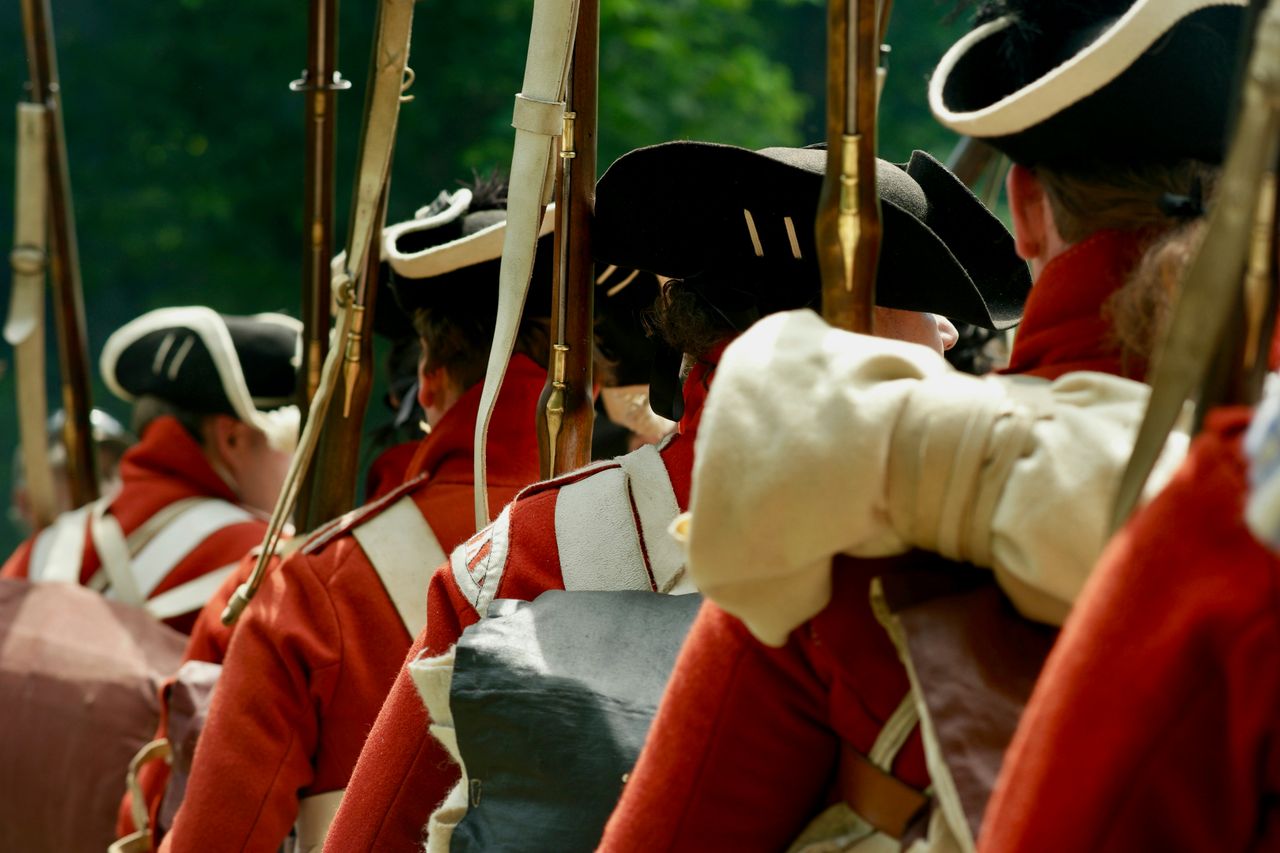
Long before the United States existed, colonial lawmakers were already tying weapons policy to racial control. In Virginia, a 1680 law aimed at preventing slave uprisings made it illegal for enslaved people to carry “club, staffe, gunn, sword or any other weapon,” a revealing sign that firearm regulation often began as a tool of domination rather than neutral public safety. Colonial slave codes in Virginia and other Southern colonies expanded that logic, treating Black mobility, assembly, and self-defense as threats to white order.
These laws did not stand alone. They were part of a wider system that restricted movement, punished literacy, and criminalized resistance. North Carolina history sources note that slave codes across the colonies commonly barred enslaved people from owning firearms, linking weapon bans to the maintenance of bondage. The point was not subtle: an armed enslaved population would be harder to terrorize, recapture, or keep in forced labor.
That history matters because it reveals an early pattern. Gun restrictions were not always designed for everyone equally. At the beginning of American law, weapons policy often drew a bright line between who counted as a full political person and who did not.
Dred Scott Exposed The Racial Logic Beneath Citizenship
The Supreme Court made that hierarchy brutally plain in 1857. In Dred Scott v. Sandford, Chief Justice Roger Taney argued that if Black Americans were recognized as citizens, they would be entitled to rights including the right “to keep and carry arms wherever they went.” The National Archives version of the opinion preserves the Court’s insistence that Congress could not deny “the right to keep and bear arms” to “the people” in federal territories, while the case itself denied Black people entry into that political community.
That passage is important because it exposed what many white elites feared. Arms were not just objects; they were symbols of citizenship, autonomy, and equal standing. If Black people could lawfully possess weapons, then the entire racial order of the slave republic became harder to defend. In that sense, disarmament was never only about safety. It was also about preserving status.
Taney did not invent the idea, but he said the quiet part out loud. The opinion showed that many 19th-century power brokers understood gun rights and racial equality as linked questions, which helps explain why Black possession of arms so often triggered legal backlash.
Reconstruction Brought Freedom On Paper And Disarmament In Practice
After the Civil War, the clash over guns and race became even more visible. The National Archives records show that the Freedmen’s Bureau was created in March 1865 to help formerly enslaved people secure basic civil rights in the postwar South. At the same time, Southern states passed Black Codes meant to reassert white power. History’s overview of those laws describes how they restricted African Americans’ freedom, labor, and everyday movement, while archival records show they also limited legal protections and access to justice.
Weapons were central to that struggle. The Supreme Court’s 2022 Bruen decision itself cited Reconstruction-era evidence showing freedmen wanted firearms for self-defense because white mobs, ex-Confederates, and hostile local authorities often would not protect them. The opinion also referenced the Freedmen’s Bureau Act of 1866, which promised the “full and equal benefit” of laws concerning personal security, including the constitutional right to keep and bear arms.
In practice, though, equal protection was fragile. Bureau reports and congressional investigations described officials seizing guns from freedmen or leaving them defenseless against racial terror. The formal end of slavery did not mean the end of racial disarmament. It simply changed the legal language around it.
Courts Often Failed The People Most Vulnerable To Racial Terror
One of the most consequential failures came from the Supreme Court itself. The Law Library of Congress notes that in United States v. Cruikshank in 1875, and later in Presser v. Illinois in 1886, the Court held that the Second Amendment restricted only the federal government, not the states. That mattered enormously in the Reconstruction South, where state and local authorities were often the very actors tolerating or enabling racial violence.
Cruikshank followed the Colfax Massacre, one of the bloodiest acts of white supremacist terror in Reconstruction Louisiana. Federal prosecutors had tried to punish the attackers, but the Court’s narrow reading of federal power gutted a key avenue for protecting Black citizens. In practical terms, this meant African Americans could be denied meaningful protection when local regimes disarmed them directly or allowed vigilantes to do the work.
So while modern arguments often frame gun rights as a shield against tyranny, 19th-century Black Americans learned that constitutional promises meant little without enforcement. The law could recognize liberty in theory and still abandon vulnerable people in reality. That gap is one of the most important themes in the history of American gun regulation.
Race Shaped Not Only Southern Laws But Urban Gun Politics Too
The racial story of gun control did not end with Reconstruction. In Northern cities, firearms policy was often entangled with fear of immigrants, minorities, and urban disorder. Historians still debate the precise motives behind particular statutes, but the broader pattern is clear: lawmakers frequently sold gun restrictions to anxious majorities by connecting armed marginalized groups with criminality and unrest.
New York’s early 20th-century Sullivan Law is often discussed in that context. It emerged during a period of intense hostility toward Italian immigrants and other newcomers, and critics have long argued that discretionary licensing systems gave police wide latitude to decide who counted as respectable enough to carry a weapon. Even where statutes appeared race-neutral on paper, enforcement could mirror the prejudices of the day.
That distinction matters. American gun control history is not simply a tale of openly racist laws and then neutral ones. It is also a tale of selective enforcement, political messaging, and unequal policing. A law may never mention race and still operate inside a racial hierarchy shaped by who gets stopped, searched, arrested, licensed, or believed.
The Black Panthers Changed The Optics Of Armed Self-Defense
By the 1960s, armed self-defense again became a flashpoint when Black activists used firearms not as hidden tools, but as visible political statements. The Black Panther Party monitored police activity while openly carrying weapons, relying on California’s then-existing public carry rules. Their actions challenged a national image that treated white armed citizens as rugged individuals and armed Black citizens as existential threats.
California lawmakers responded quickly. The state’s reparations report notes that Assemblyman Don Mulford introduced legislation after Panthers carried loaded firearms at the Capitol in 1967. The resulting Mulford Act banned loaded open carry in public. Supporters described it as public safety legislation, but the political timing made the racial context impossible to miss.
This episode remains one of the clearest modern examples of how race influenced gun policy. When Black Americans asserted a right associated with citizenship and self-protection, the legal atmosphere changed fast. That does not mean every supporter of the Mulford Act was motivated only by racism. It does mean race helped determine whose gun carrying was tolerated and whose was treated as intolerable.
This History Still Shapes Today’s Fights Over Guns And Equality

Current legal fights increasingly return to this record. In Bruen, the Supreme Court highlighted evidence that Black Codes disarmed freedmen and acknowledged that Reconstruction lawmakers treated self-defense as vital to the security of newly freed people. More recent opinions and dissents, including a 2026 Supreme Court dissent in Wolford v. Lopez, show that judges still argue over how to interpret a gun law history deeply marked by racial exclusion.
That debate creates tension for both sides. Advocates of gun rights point to racist disarmament as proof that the right to bear arms protected vulnerable minorities. Advocates of gun regulation answer that some public-carry restrictions were also supported by officials trying to curb racist violence and lawlessness. Both claims have historical support, which is why simplistic slogans usually fail.
The clearest conclusion is not that all gun control is racist or that all gun rights claims are emancipatory. It is that race has been woven into the making, enforcement, and justification of American gun laws from the colonial era forward. Any honest discussion of firearms policy has to start there, because the history is not peripheral. It is foundational.