Some cartridges win people over with speed, others with history. The .450 Bushmaster built its reputation by doing something simpler: delivering serious thump from an AR-style rifle in a package hunters could actually use in the field. For deer, hogs, and straight-wall states, it quickly became the answer for shooters who wanted familiar controls with much more authority on target.
It brought big-bore power to the AR platform

The biggest appeal of the .450 Bushmaster was obvious from the first shot. It gave hunters a true big-bore option in the familiar AR-15 format, combining heavy bullets with the ergonomics, modularity, and fast follow-up potential that made the platform so popular.
For many shooters, that felt like the best of both worlds. Instead of switching to a completely different rifle system for hard-hitting hunting work, they could keep the controls and handling they already knew. That comfort translated into confidence, especially in thick woods where quick shots and reliable authority mattered most.
It was not subtle, and that was exactly the point.
It was built to hit hard at real hunting distances
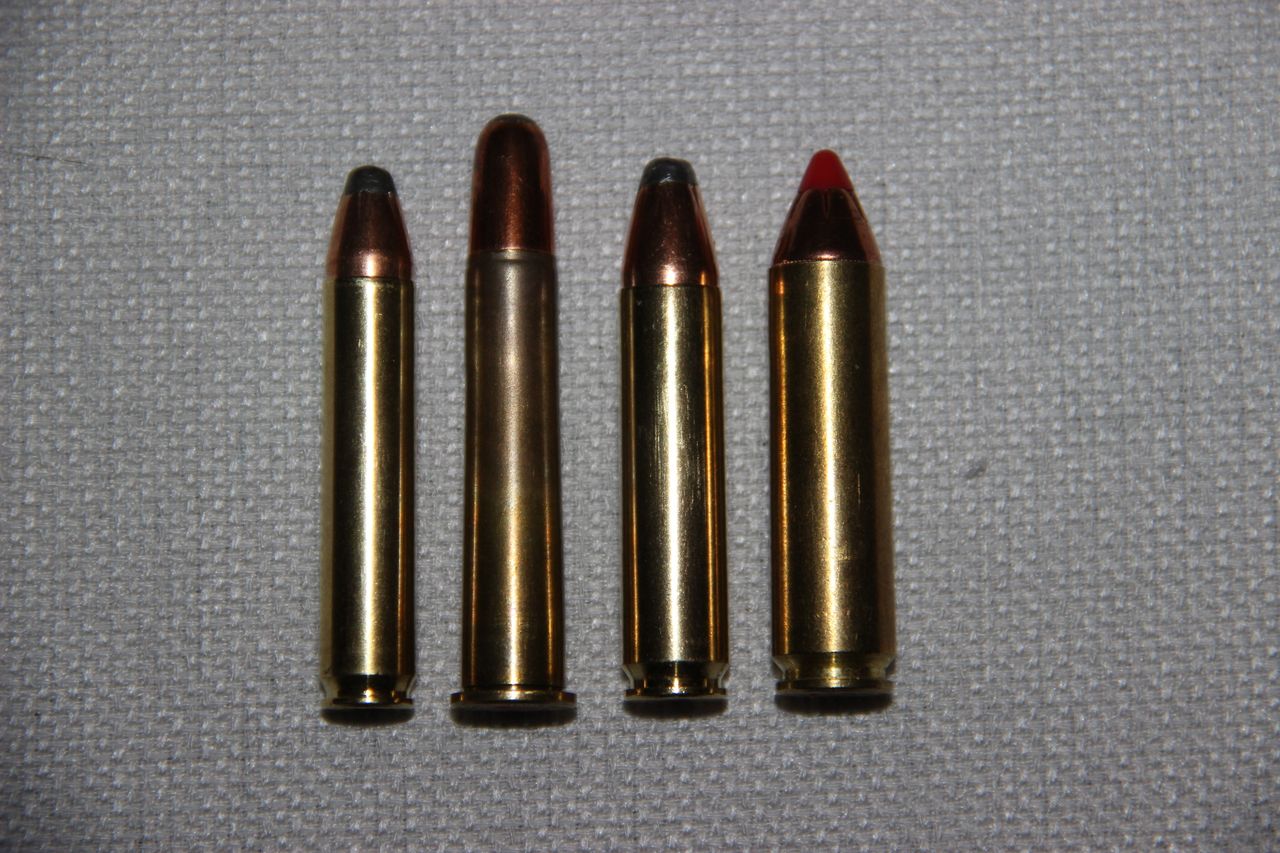
The .450 Bushmaster was never meant to be a long-range specialist, and hunters appreciated its honesty. Inside the kinds of distances where many deer and hogs are actually taken, it offered a lot of energy and a reputation for emphatic impact.
That made it especially attractive in timber, brush, food plots, and edge habitat. In those environments, shots often come quickly and well inside 200 yards, where the cartridge is very much in its comfort zone. It is a round that rewards realistic expectations rather than fantasy-yardage bragging rights.
For practical hunting, that focus turned into one of its greatest strengths.
It became a favorite in straight-wall cartridge states

One of the biggest reasons the .450 Bushmaster surged in popularity had less to do with marketing and more to do with regulation. In states that allowed straight-wall cartridges for deer hunting, it quickly stood out as a powerful, modern option that fit the rules.
That gave hunters a compelling alternative to slug guns and some older straight-wall choices. They could hunt legally with a cartridge that offered solid accuracy, strong terminal performance, and the familiar shooting experience of a rifle instead of a shotgun.
In many places, that changed the conversation almost overnight. The round was not just interesting. It was genuinely useful.
It delivered strong performance on deer and hogs

Hunters gravitated to the .450 Bushmaster because it was not just big on paper. In the field, it earned a reputation for decisive performance on medium and large game, particularly whitetails and feral hogs where penetration and bullet weight can matter a great deal.
That kind of downrange authority gave people peace of mind. When animals were quartering, moving, or encountered in heavy cover, many hunters liked having a cartridge that felt purpose-built for hard, reliable hits rather than minimal margins.
No cartridge makes shot placement optional, of course. Still, the .450 Bushmaster built trust by pairing practical ranges with impact that hunters could see and respect.
It offered quick follow-up shots without giving up authority

Part of the charm of the AR platform is speed, not just in terms of cycling, but in how naturally many shooters can stay on the gun. The .450 Bushmaster preserved much of that advantage while still bringing far more punch than the smaller calibers usually associated with the platform.
That mattered for hog hunting, for groups of animals, and for moments when the first shot did not end the encounter immediately. A hunter could run a familiar rifle, reacquire the target quickly, and make a second shot without fighting a completely different manual of arms.
It was a powerful blend of familiarity, control, and force that few traditional setups matched quite the same way.
It worked with a platform hunters could customize easily
Another reason the .450 Bushmaster caught on is that it lived in a world of options. Hunters could configure AR-style rifles with preferred stocks, triggers, optics, slings, and barrel lengths, then tailor the setup to dense woods, blinds, or mobile spot-and-stalk hunting.
That flexibility gave the cartridge a wider appeal than many niche hunting rounds. A shooter could build a compact brush gun, a comfortable deer rifle, or a practical hog rig without reinventing everything from scratch. The cartridge felt specialized, but the rifle around it could still be deeply personal.
For modern hunters, that combination was hard to ignore.
It produced recoil hunters could manage with practice

Nobody picks a .450 Bushmaster expecting a soft, dainty range experience. It has real recoil, and that is part of the bargain. But for many hunters, especially in a reasonably weighted AR with a good stock and brake or pad, it remained manageable enough to shoot well.
That distinction mattered. A cartridge can be powerful and still fail if people dread practicing with it, but the .450 Bushmaster generally stayed on the usable side of that line. It had enough shove to feel serious without pushing most prepared shooters completely out of their comfort zone.
In other words, it kicked, but it kicked with a purpose hunters were willing to accept.
It carved out a clear identity in a crowded market

Plenty of cartridges promise versatility, but the .450 Bushmaster succeeded because its mission was easy to understand. It was the choice for hunters who wanted an AR that hit much harder than standard intermediate rounds, especially where short-to-medium range power mattered more than flat trajectory.
That clarity helped it stand apart. It was not trying to be everything for everyone. It was trying to solve a specific problem, and for a lot of deer and hog hunters, it solved it convincingly. That is often how lasting favorites are made.
In the end, its popularity came from usefulness, not novelty. Hunters found a lane for it, and the cartridge stayed there for good reason.