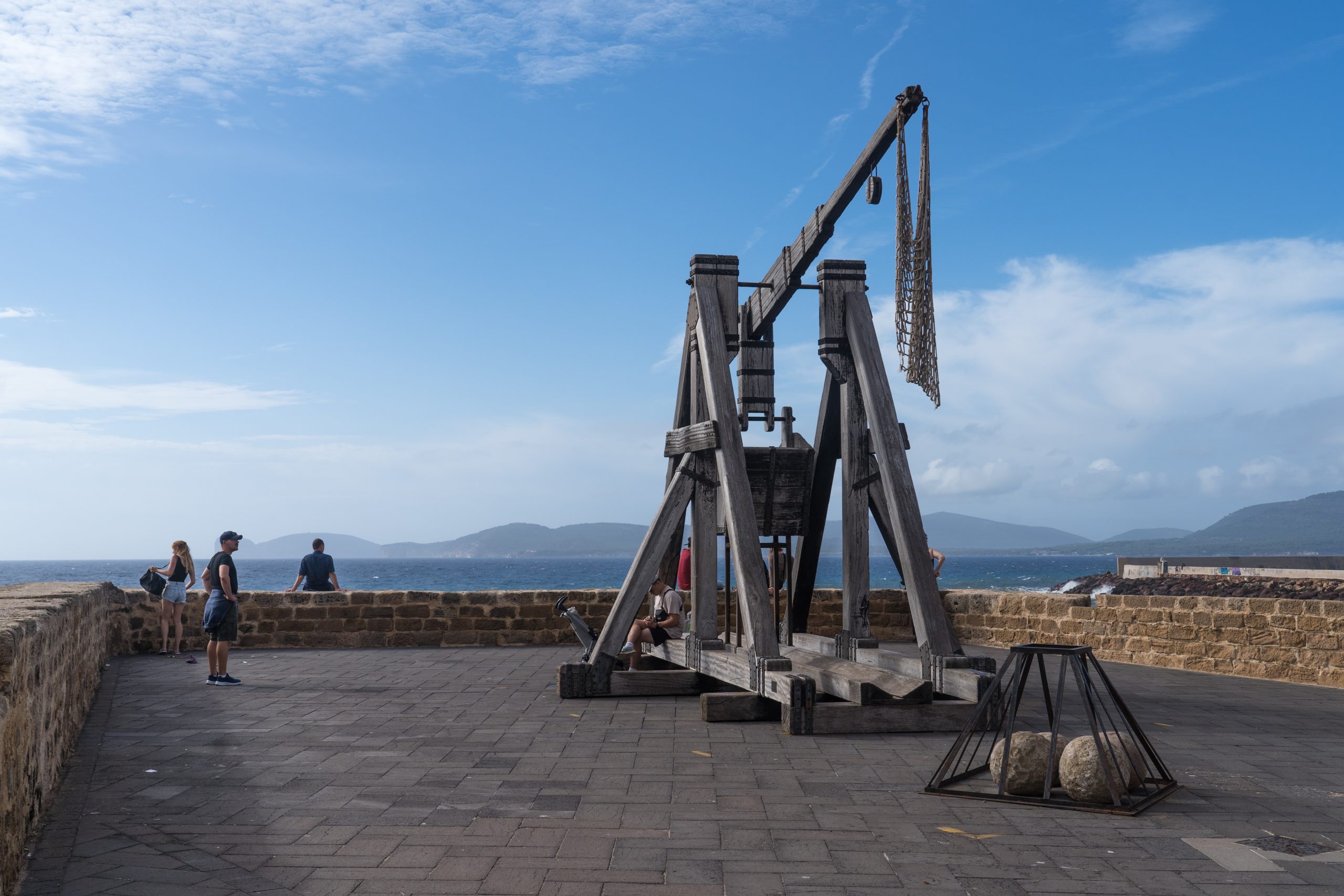
The trebuchet is often remembered as a gigantic medieval stone-thrower, but its real strength was more subtle: repeatability. Unlike early gunpowder cannons, which could suffer from crude barrels, inconsistent powder, and poorly matched ammunition, a well-tuned counterweight trebuchet used a predictable mechanical system. That did not make it perfectly accurate, and it would be misleading to claim every trebuchet outperformed every cannon. Its advantage was that crews could understand, adjust, and repeat its throwing motion. The eight sections below examine the engineering choices that made that possible.
1. The Counterweight Made Every Shot More Repeatable
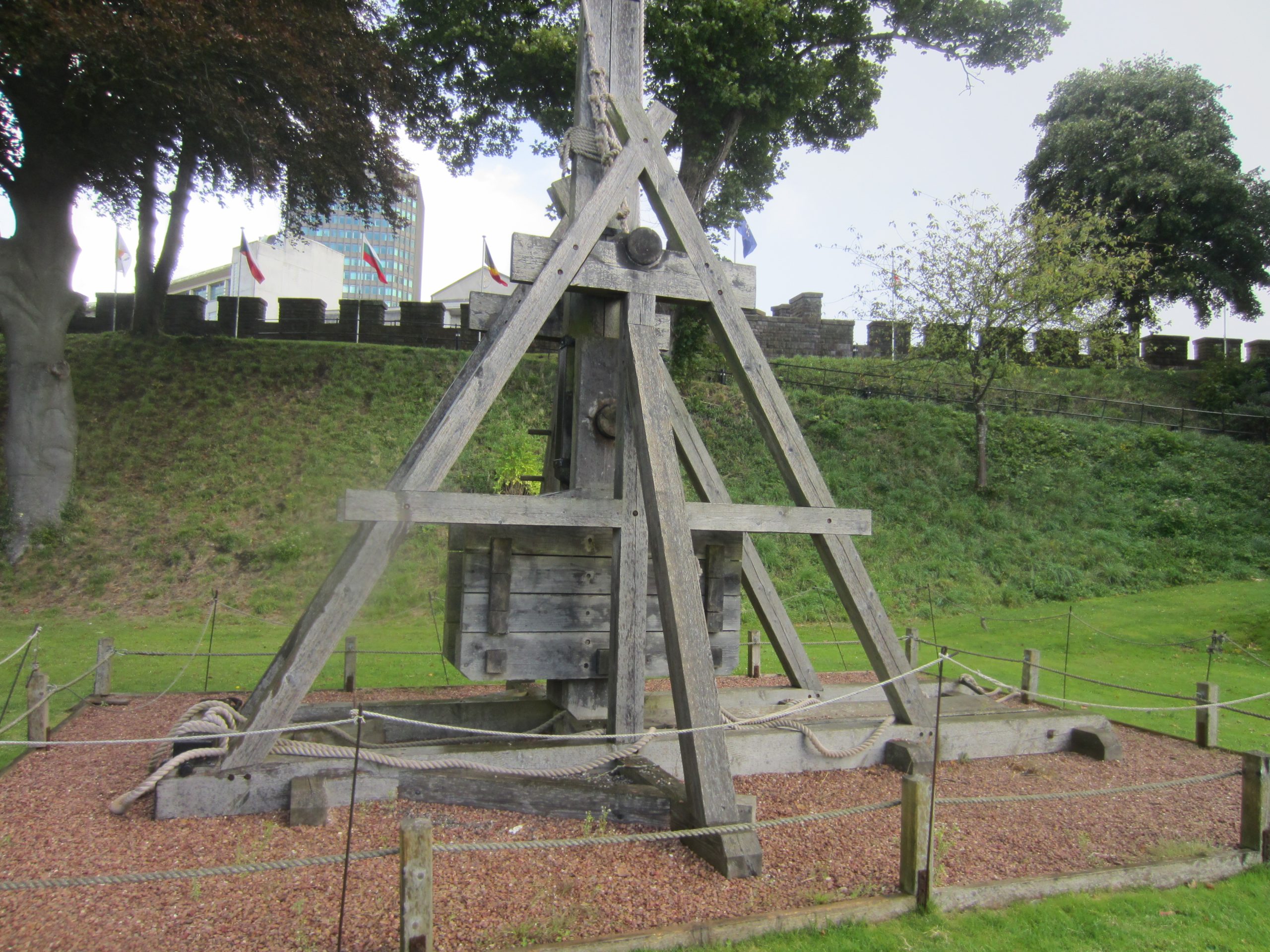
Unlike a traction catapult, a counterweight trebuchet relied mainly on gravity rather than a crew pulling ropes. That mattered for consistency. Human pullers could vary their effort from one launch to the next, while a fixed mass supplied a far more repeatable source of energy. Medieval machines varied enormously, but a famous modern reconstruction grouped shots inside a 6 m by 6 m area at 180 m. That is not rifle-like precision, yet it shows why the trebuchet could repeatedly work against a chosen section of a wall. The key number is 180 m: at that distance, repeatability was more valuable than pinpoint aim. That helped crews repeat corrections.
2. Its Long Sling Added a Useful Final Boost
The sling was more than a simple holder for the stone. A long sling effectively extended the throwing arm and kept the projectile accelerating through a larger part of the swing. As the beam rotated, the sling also released the stone at a carefully chosen point, turning rotational motion into a long, controlled flight. Historical machines differed in size and proportions, so there is no single universal sling length or range. Still, the engineering principle was consistent: increasing the effective throwing radius could improve both reach and release speed. That gave crews more room to tune a machine without depending entirely on brute force.
3. The Hinged Weight Reduced Violent Recoil
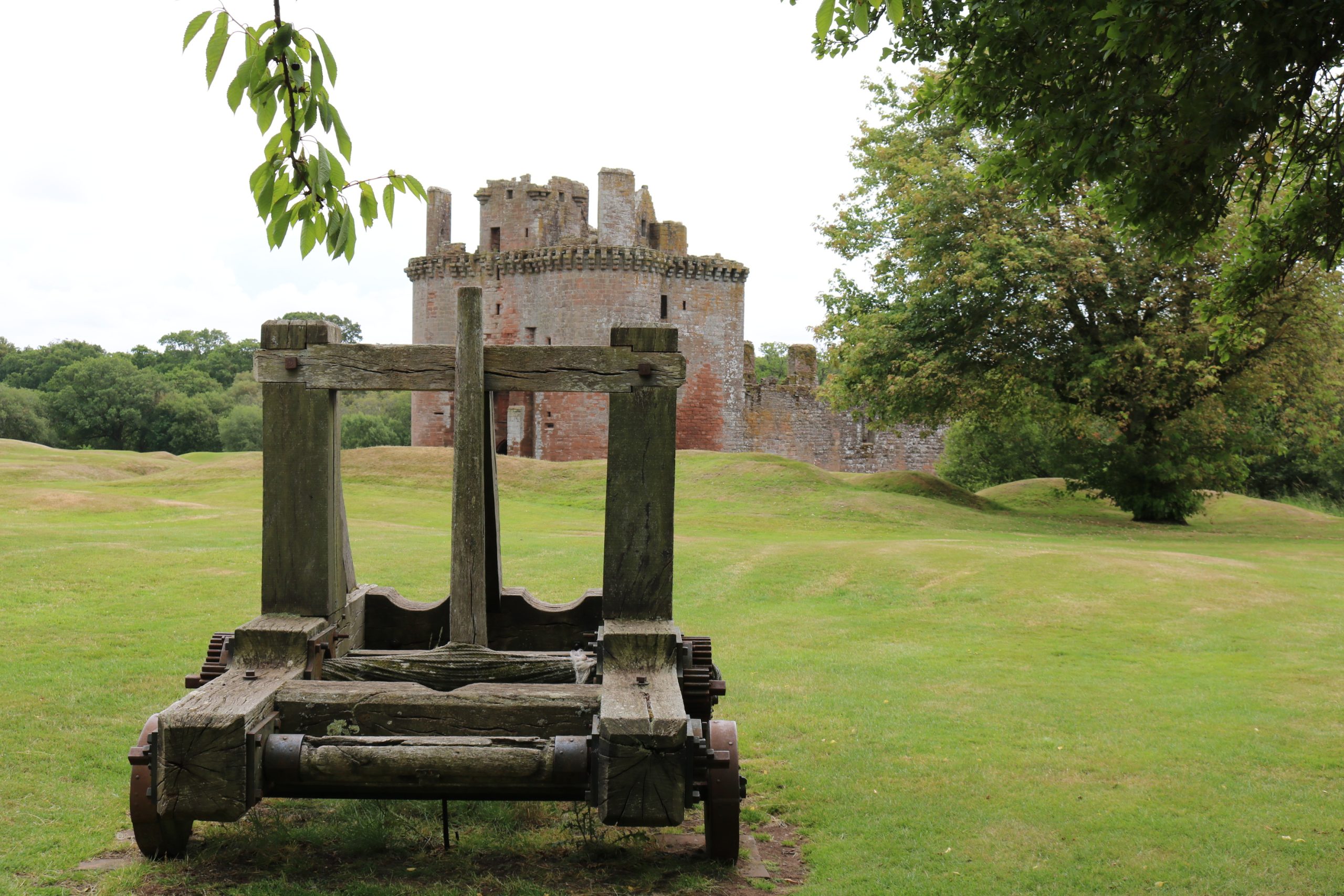
A major refinement was replacing a rigidly attached counterweight with a hinged one. The weight could move more naturally as the beam rotated, allowing gravity to contribute more efficiently while reducing some of the violent reaction forces transmitted through the frame. That mattered for accuracy because a machine that lurches unpredictably can disturb its own alignment. Modern testing has shown how carefully designed counterweight systems can produce repeatable trajectories, but historical performance cannot be reduced to one exact figure. The important comparison is mechanical: a controlled motion meant less unwanted movement of the launcher and a better chance of repeating the same shot.
4. The Beam Worked Like a Giant Lever
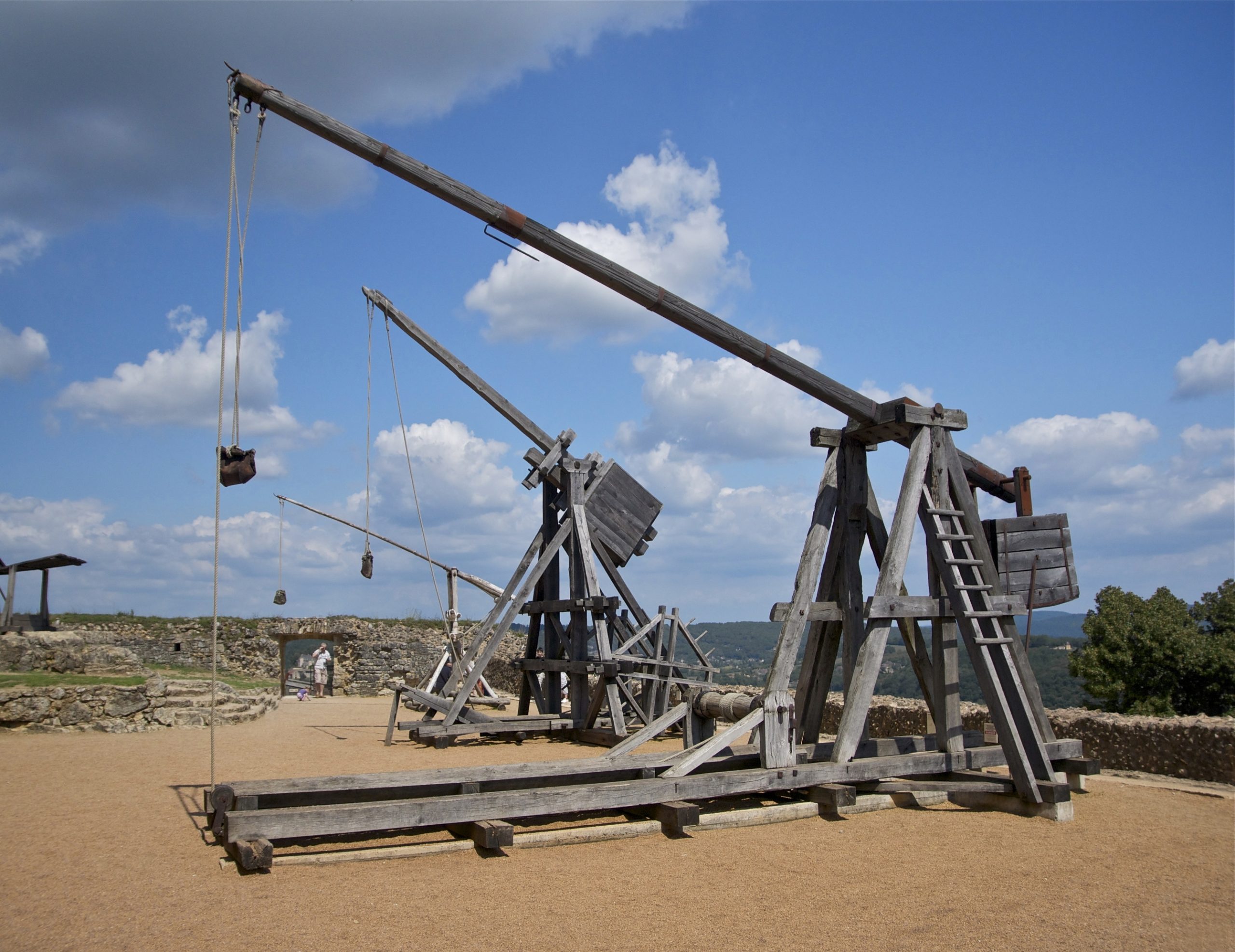
At its heart, the trebuchet was a lever with unequal arms. A shorter counterweight arm carried the heavy mass, while the much longer throwing arm moved the projectile through a wide arc. Historical drawings show striking proportions; one late medieval design records a beam with a 46-foot-long arm and an 8-foot short arm. Those dimensions illustrate the basic strategy rather than a standard blueprint. By carefully choosing the pivot position, builders could balance power, speed, and control. That mechanical predictability helped crews adjust elevation and ammunition while keeping the machine’s basic throwing geometry unchanged from shot to shot.
5. Matching the Ammunition Improved Consistency
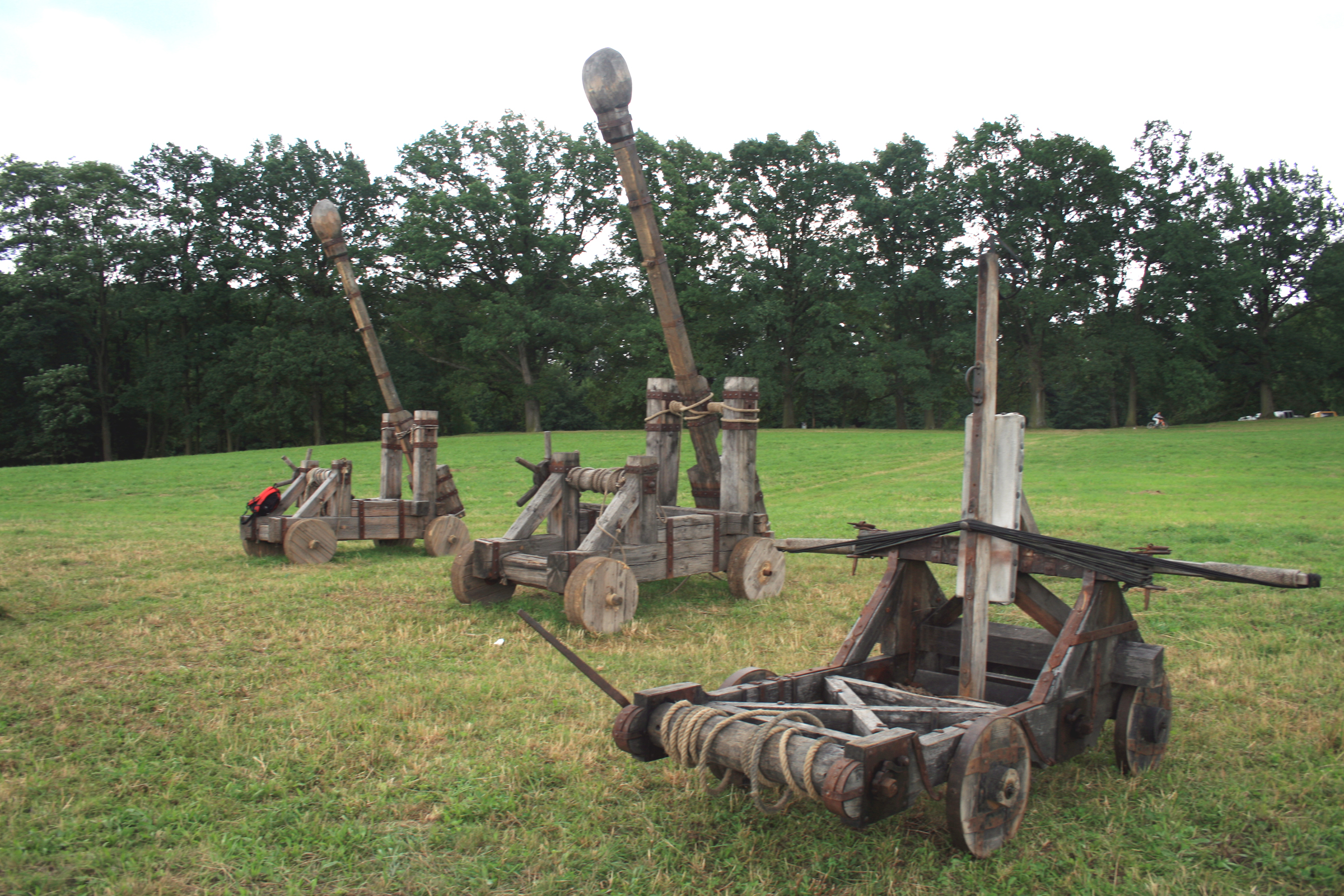
Accuracy depended on the projectile as much as the machine. Stone ammunition was not perfectly uniform, but crews could sort or prepare stones so that their size and weight better matched a particular engine. That reduced one major source of variation. Historical evidence shows some trebuchets launching stones weighing hundreds of kilograms, while other machines handled much smaller loads. Modern experimental work likewise shows that projectile mass affects performance and trajectory. The useful number is consistency. When the same machine repeatedly throws ammunition of similar mass and shape, its operators can make useful corrections instead of chasing a different flight.
6. Operators Could Learn the Machine’s Rhythm
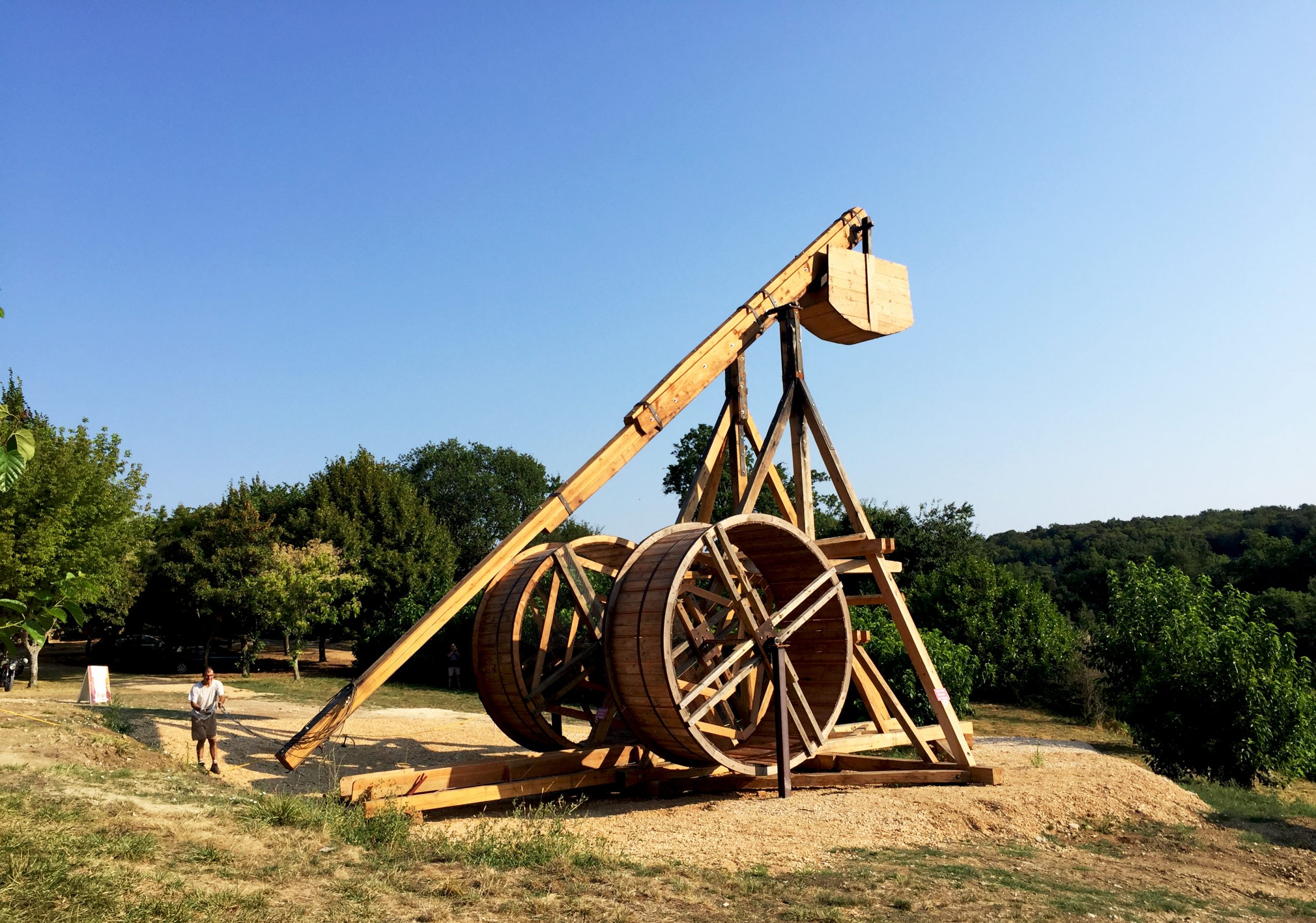
A trebuchet was not a fire-and-forget device. Skilled crews observed where each projectile landed and adjusted the machine or its ammunition for the next attempt. Unlike early gunpowder artillery, whose shots could be strongly affected by inconsistent powder charges, primitive cannon also faced problems from crude barrels, ammunition fit, and uneven construction. A trebuchet’s slower cycle could therefore be an advantage when the goal was deliberate siege bombardment. One reconstruction cited by engineers achieved a 6 m by 6 m grouping at 180 m. That result came from a tuned machine and practiced operation, showing that accuracy was partly a matter of disciplined repetition.
7. Early Cannons Had Their Own Accuracy Problems
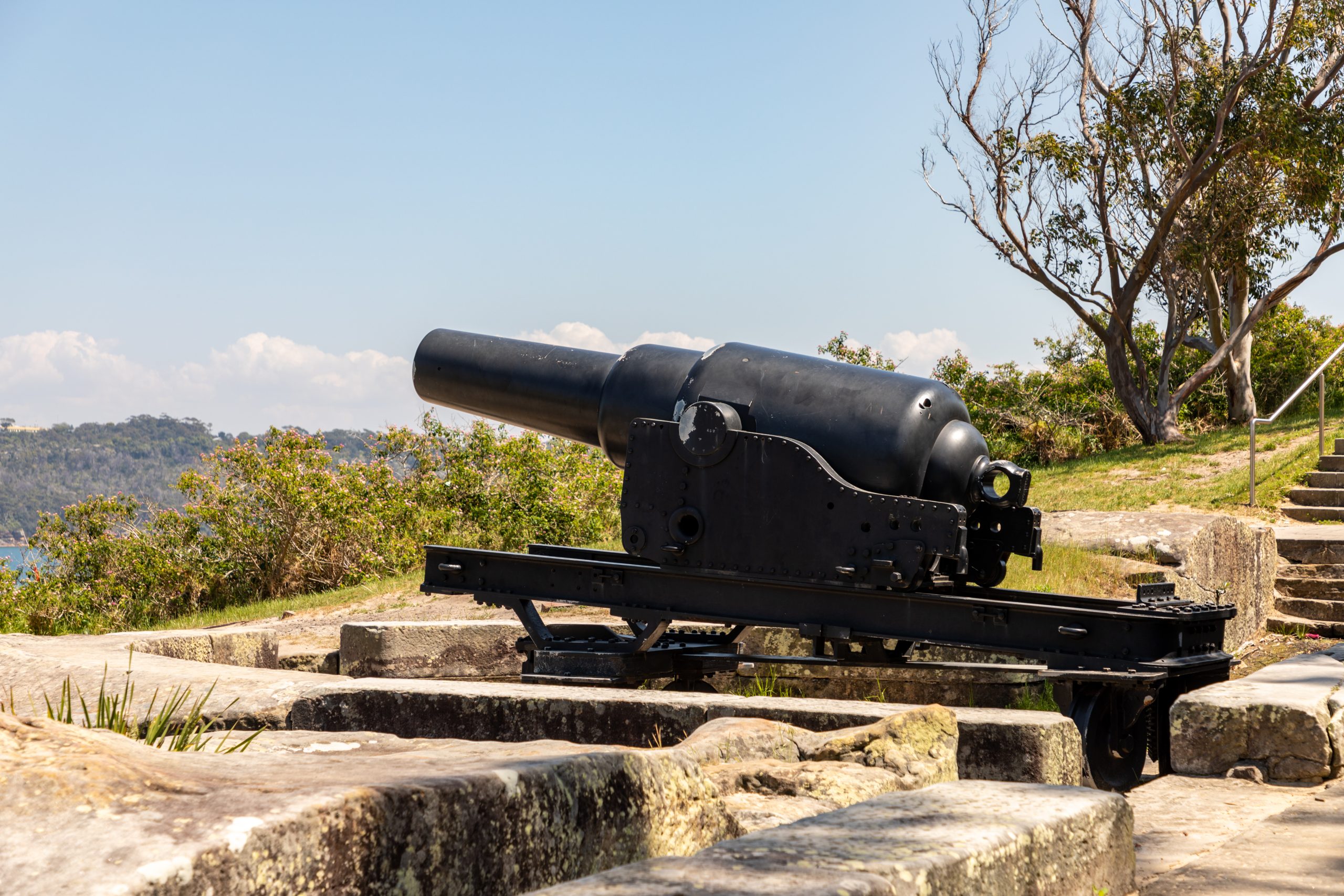
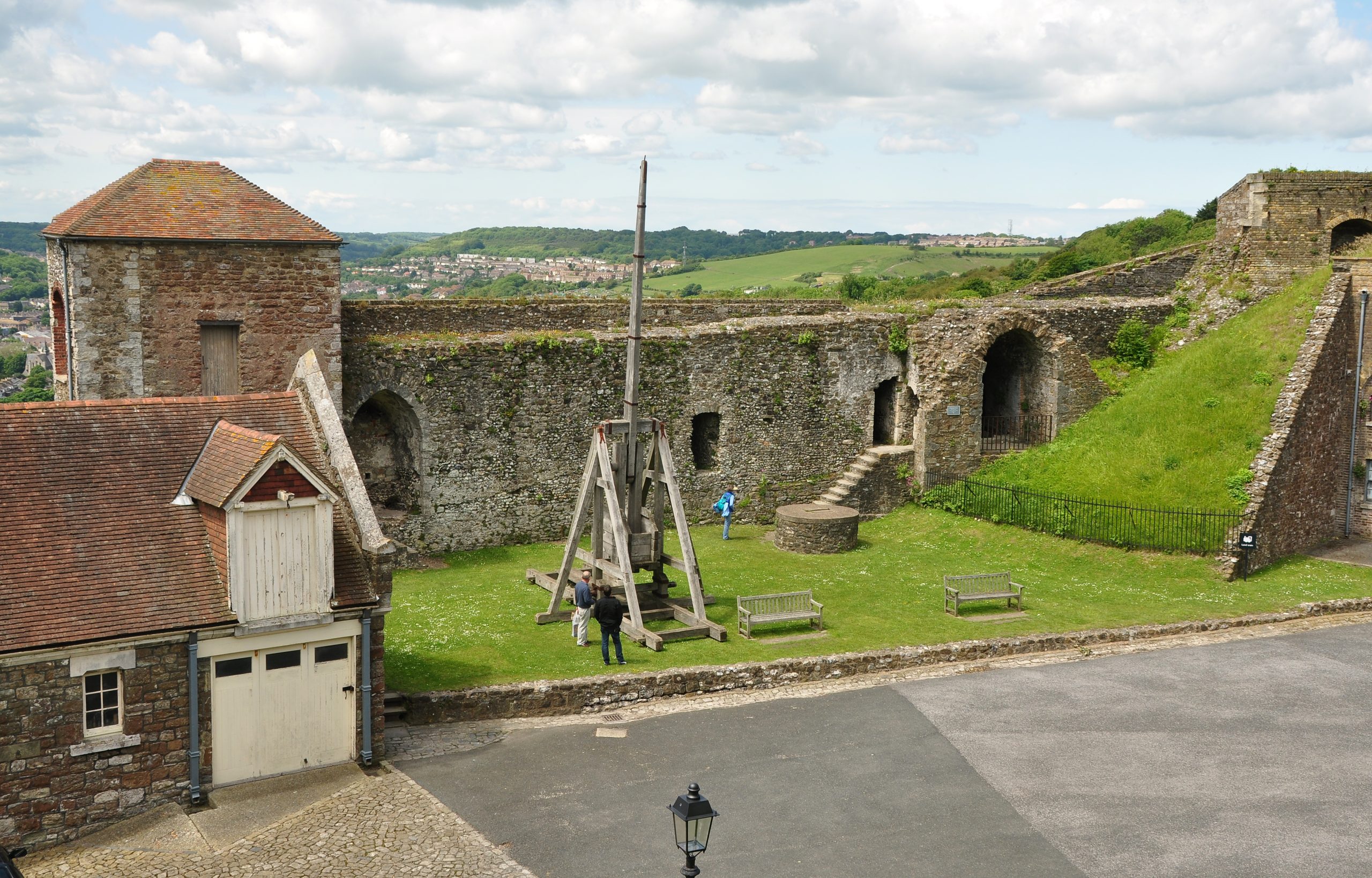
The comparison with early cannon needs a qualification: trebuchets were not universally more accurate; no single accuracy ranking covers every medieval machine. Early cannon suffered from rough manufacturing, variable powder, inconsistent shot, and limited elevation control. It still faced wind, sling release, and structural movement. Yet its mechanics were comparatively visible and adjustable. Crews could alter the throwing geometry and use repeated test shots to correct their aim. The important figure is the 13th-century period, when counterweight trebuchets became established in European warfare. For a time, their predictable mechanical behavior made them formidable siege artillery.
8. It Was Accurate Enough for Siege Warfare
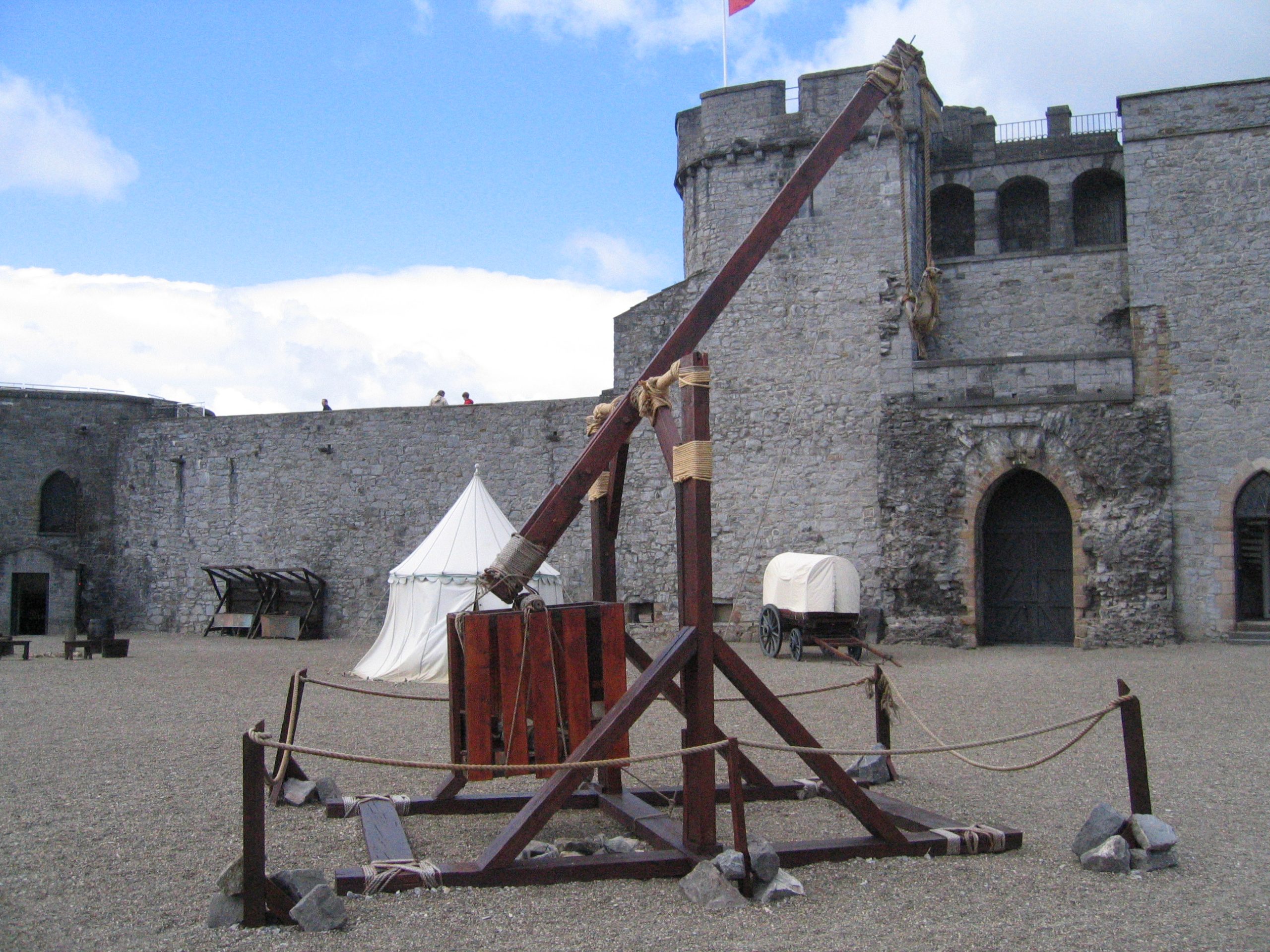
The trebuchet’s real target was rarely a tiny object. It was usually a wall, tower, gate or another large fixed position, so useful accuracy was judged differently from modern artillery. A machine that could repeatedly place heavy stones near the same section of masonry could gradually damage a defensive structure. Modern reconstruction work has demonstrated surprisingly tight groupings, while historical sources describe machines throwing stones hundreds of meters. One study notes that some replicas have achieved a 6 m by 6 m grouping at 180 m. That does not make the trebuchet perfectly accurate, but it explains its battlefield reputation: consistency was good enough to matter
9. The Release Point Could Be Tuned With Care
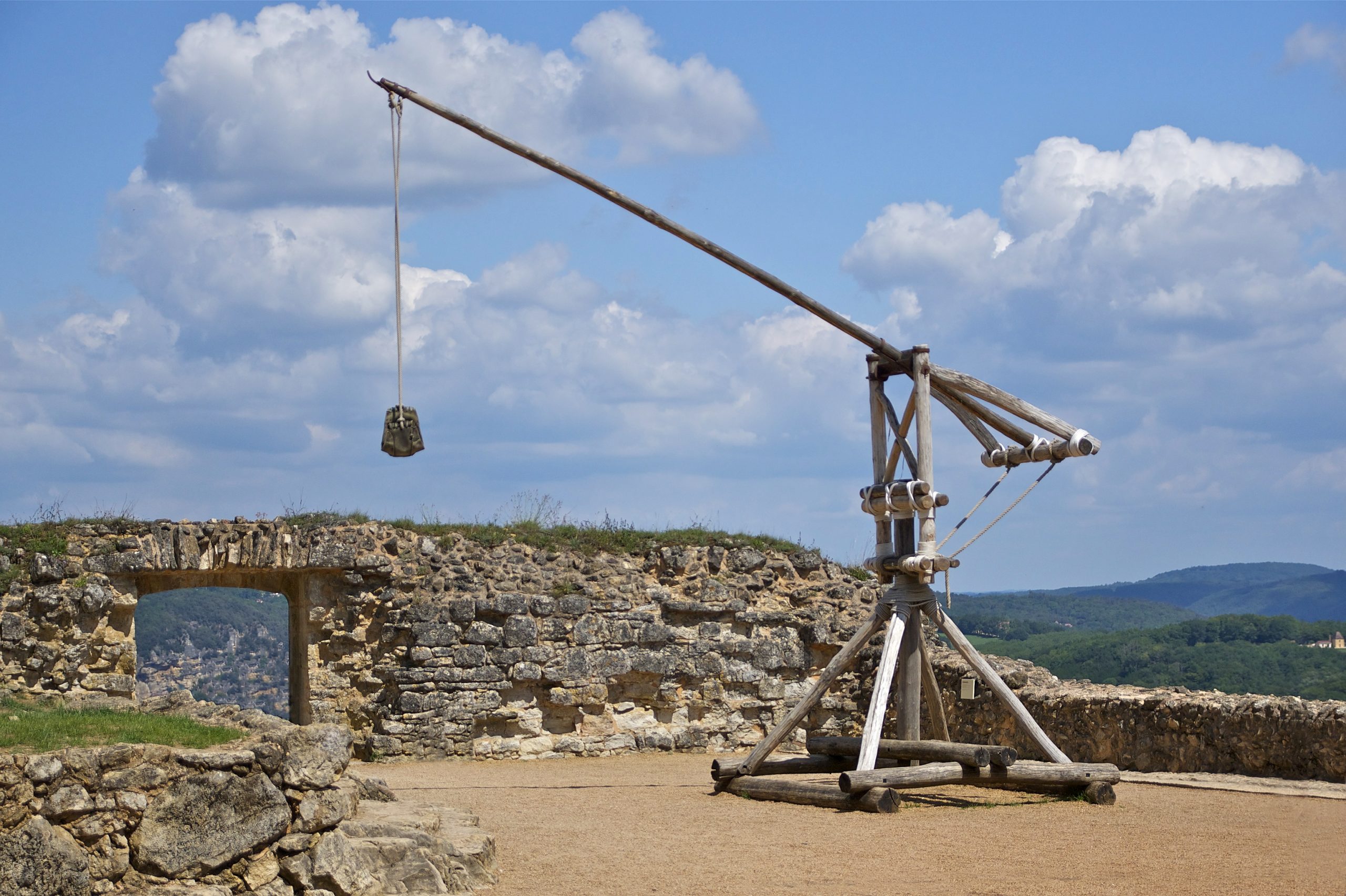
One of the trebuchet’s most important accuracy controls was the release point. The sling did not simply let go at a random moment; its attachment and release geometry determined the angle at which the projectile left the machine. Even a small change could shift the landing position substantially, so crews could experiment with the release arrangement when trying to reach a particular section of a fortress. Medieval machines varied widely, but the principle remained the same: alter the release timing, observe the result, then repeat. That made the trebuchet surprisingly adjustable for its era. Its accuracy came less from precision instruments than from simple mechanics, careful tuning, and repeated testing by experienced crews.