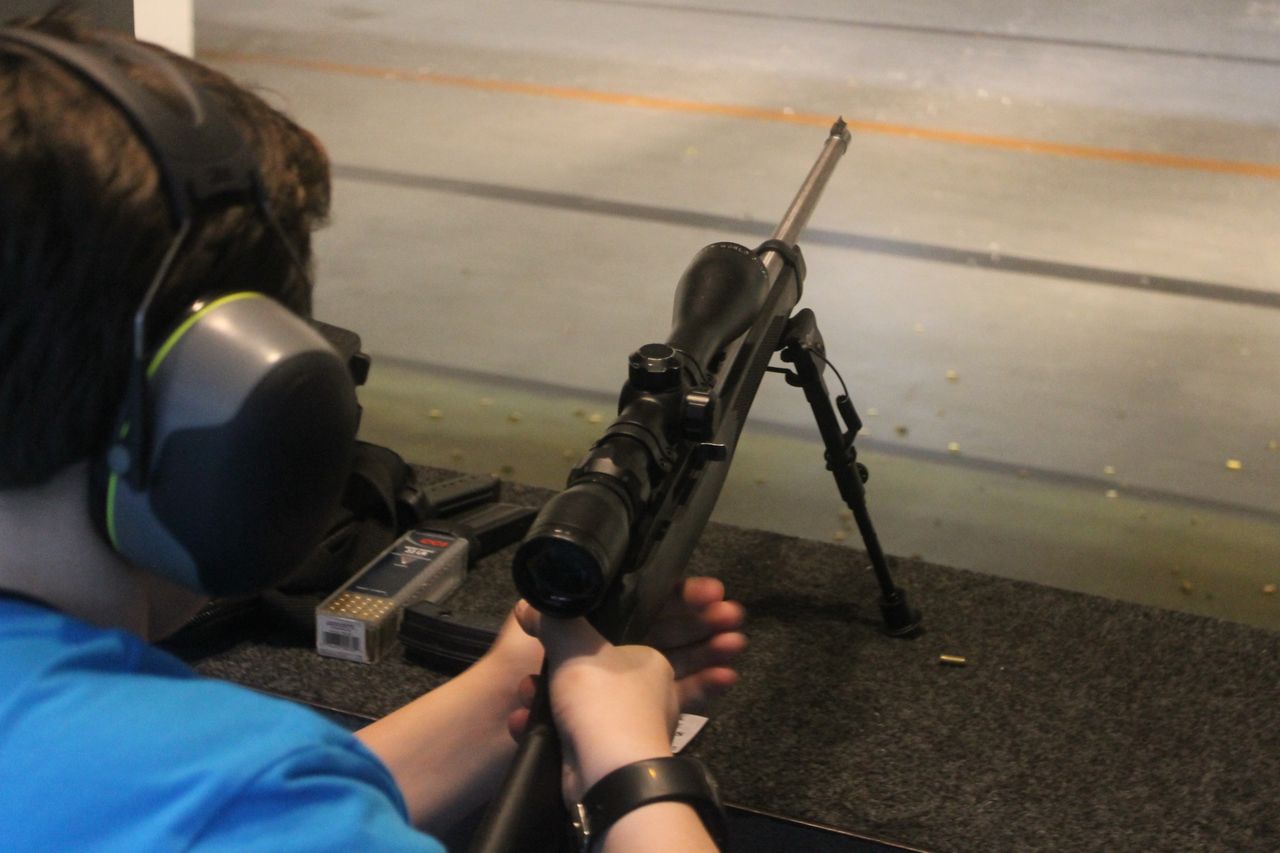
The fight over guns in America rarely stays still for long. Now, a fresh federal shift has put one number 18 right back in the middle of the argument.
What Changed in Federal Policy

The immediate trigger is the Justice Department’s new position that the federal ban on licensed dealers selling handguns to adults ages 18 to 20 is unconstitutional. According to the Associated Press, the opinion says the long-standing federal restriction cannot be enforced because it conflicts with the Second Amendment.
That is a major departure in practical terms, even though the underlying statute remains on the books. For decades, federal law required buyers to be 21 to purchase a handgun from a federally licensed dealer, while still allowing many 18- to 20-year-olds to acquire handguns through private sales, depending on state law.
The result is a policy change that is both legally narrow and politically explosive. It does not settle the issue nationwide, but it instantly sharpens the long-running question of whether adulthood at 18 should carry the full bundle of constitutional rights, including access to handguns.
Why Age 18 Matters So Much
The age of 18 has always been a pressure point because American law treats it as the threshold of adulthood in many ways. At 18, citizens can vote, sign contracts, serve on juries, and enlist in the military, which makes age-based limits on firearm purchases especially controversial for gun-rights advocates.
Supporters of the old restriction argue that constitutional adulthood does not automatically eliminate all age-based safety rules. They point to crime and injury data showing that late-teen and young-adult males are overrepresented in violent offending, and they argue that handguns, in particular, are closely tied to impulsive acts, street crime, and suicide.
That is why this debate never lands as an abstract legal seminar. It cuts straight into two competing instincts: equal rights at 18 on one side, and risk reduction during a volatile life stage on the other.
The Courts Have Been Moving Toward This Clash
Recent court decisions have made this conflict impossible to ignore. In January 2025, the 5th U.S. Circuit Court of Appeals ruled in Reese v. ATF that the federal handgun sales ban for 18- to 20-year-olds violated the Second Amendment, reasoning that this age group is part of “the people” protected by the amendment.
But the judiciary has not spoken with one voice. In June 2025, the 4th U.S. Circuit reached the opposite conclusion in McCoy v. ATF, upholding the restriction and relying in part on historical analogies involving age, contracts, and the regulation of commercial sales.
That split matters because divided appeals courts are often the prelude to Supreme Court review. Even where the justices decline one case, the legal disagreement keeps building pressure until a broader rule becomes unavoidable.
The Supreme Court’s Bigger Gun Test Is Coming
That broader rule may emerge in a different but related dispute. The Supreme Court is set to hear arguments on December 2, 2026, in Viramontes v. Cook County, a case challenging a semiautomatic firearms ban in the Chicago area after the justices agreed on June 30, 2026, to review it.
On paper, Viramontes is about so-called assault weapons, not the age of handgun buyers. In reality, the case is likely to test how aggressively the court applies its modern Second Amendment framework developed through Heller, McDonald, Bruen, and later cases involving firearm regulation.
That matters for the age-18 dispute because the court’s reasoning about text, history, and tradition could either strengthen or weaken age-based gun limits too. A ruling that sharply constrains modern regulations would almost certainly energize fresh challenges to age thresholds across the country.
What Gun-Rights and Gun-Control Advocates See
Gun-rights groups see the new federal stance as a correction of an obvious contradiction. Their argument is simple: if an 18-year-old can serve in uniform and is counted among the political community, the government should not block that same adult from purchasing a lawful handgun from a licensed dealer.
Gun-control advocates see something different: a dangerous rollback that could widen access at the exact age when judgment is still developing, and violence risks are statistically elevated. They also note the oddity of expanding handgun access while many communities are still grappling with youth violence, trafficking, and illegal resale concerns.
Both sides are speaking past each other more than it may appear. Each is asking the same basic question: what does responsible citizenship require at 18, but answering it through completely different ideas about liberty, maturity, and public safety.
Where This Debate Goes Next
The next chapter will unfold in legislatures, lower courts, and likely the Supreme Court. States will continue testing different age rules, advocacy groups will keep filing challenges, and judges will keep wrestling with whether history from the Founding era can cleanly answer modern questions about firearms and age.
For ordinary Americans, the important point is that this is no longer a side issue. The federal government’s new position has moved age 18 from the margins to the center of gun policy, where it now overlaps with constitutional law, public safety research, and election-year politics.
Expect the fight to intensify, not fade. Once the law starts asking whether 18-year-olds are full Second Amendment adults, the answer will not stay limited to one handgun rule for very long.