
The Accuracy International AX is often described through its futuristic chassis, multi-caliber design, and British pedigree. But its real story is more interesting: it grew from a rifle family that had already earned military credibility, then entered a U.S. competition against some of America’s best-known precision platforms. The AX did not simply sweep aside American rifles, yet its presence in that contest showed how far British precision engineering had traveled. Here are nine details that explain why the AX family continues to attract serious attention.
1. A British Design That Reached America

The Accuracy International AX grew from a distinctly British design philosophy, but its story became international through demanding military trials. Accuracy International was founded in 1980 by competitive shooters and engineers, and its earlier PM rifle won the British Army’s L96A1 competition in 1985. The AX later carried that lineage into a modern chassis system built for modularity and harsh service. Its American connection became especially notable when the AX PSR entered the U.S. SOCOM Precision Sniper Rifle competition, showing that a British platform could stand beside established American designs. Its American appeal came from engineering discipline rather than national labels.
2. The AX Was Built Around Modularity

One of the AX family’s defining ideas is that the rifle should adapt without abandoning its basic precision architecture. The AX PSR was developed around a requirement for rapid caliber changes among 7.62mm, .300 Winchester Magnum, and .338 Lapua Magnum. That concept was significant because a single platform could cover different ranges and missions rather than forcing units to maintain several unrelated rifle designs. The newer AXSR continues the idea, supporting multiple long-action cartridges and using a quick-change barrel system. The result is a rifle family designed around flexibility rather than one fixed specification. That flexibility became a defining characteristic.
3. Its Chassis Replaced Traditional Stock Thinking
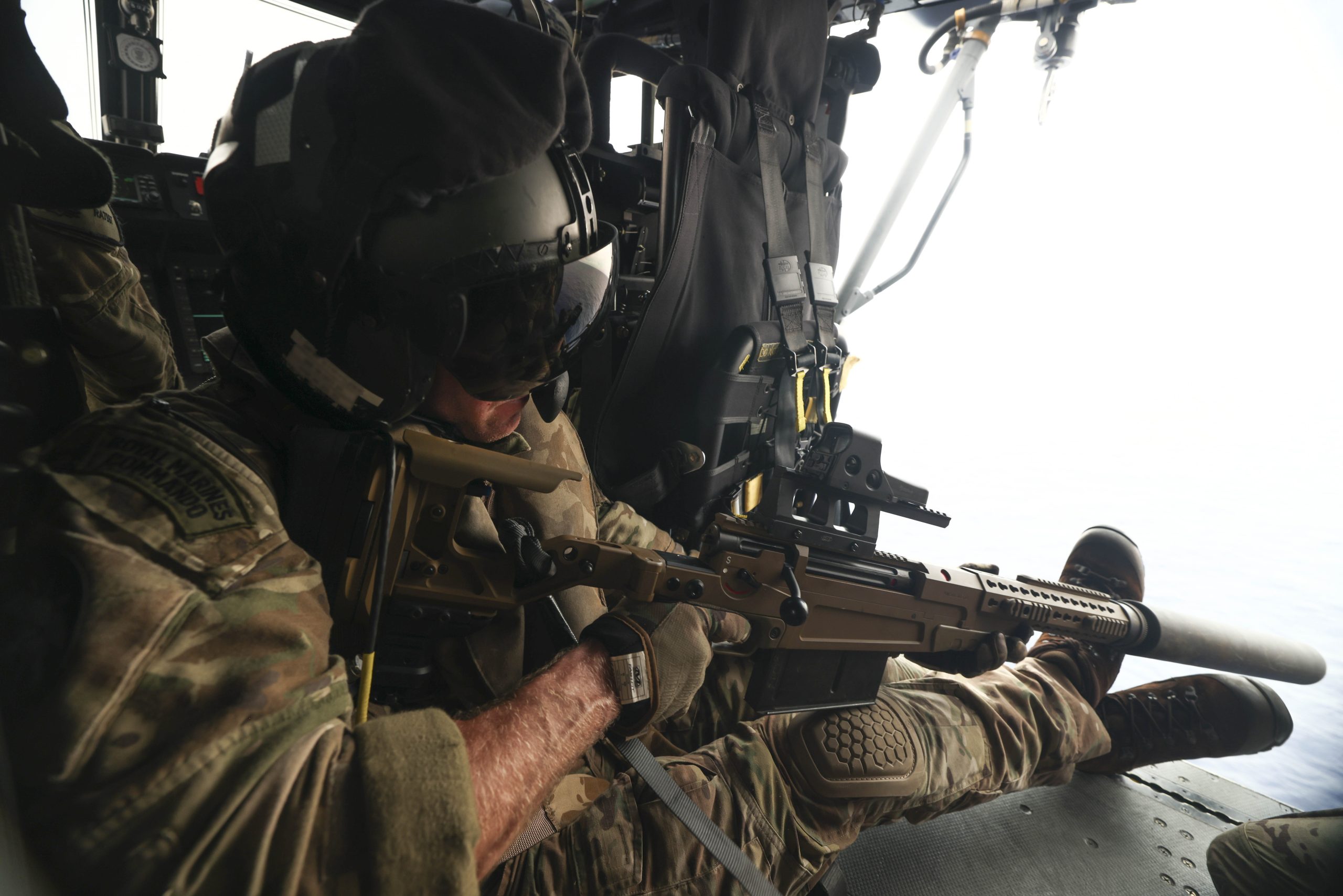
The AX’s appearance is more industrial than a conventional hunting rifle because its structural heart is an aluminum chassis. That approach descends from Accuracy International’s earlier rifles, whose alloy chassis helped isolate the action from stresses associated with a traditional stock. AX adds extensive adjustment and accessory mounting around that foundation. On the current AXSR, the chassis incorporates an Arca-Swiss-style interface, KeySlot mounting points, and an adjustable stock. This architecture gives the rifle a consistent mechanical backbone while allowing the shooter to configure external components around it. It also simplifies configuration for different users and equipment.
4. The Bolt Action Is Deliberately Simple
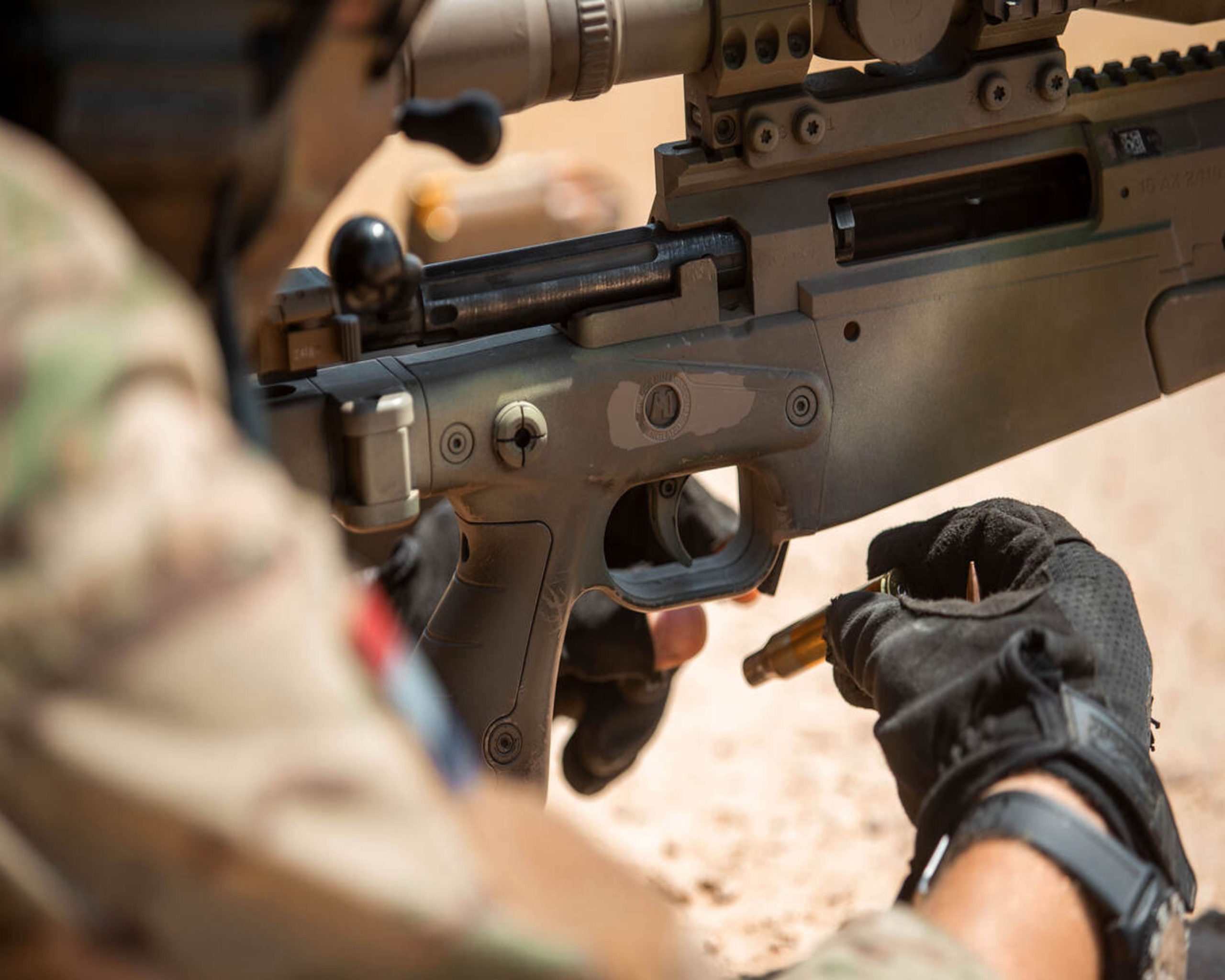
Despite its advanced chassis, the AX remains a manually operated bolt-action rifle, a choice that prioritizes mechanical consistency over rapid semiautomatic fire. The current AXSR uses a six-lug bolt with a 60-degree lift, while its action and bolt components are built from high-strength steels. That short bolt throw helps keep the operating movement compact and predictable. The design also uses an Accuracy International extractor and a two-position safety. These details may sound ordinary, but precision rifles depend heavily on repeatable lockup and dependable cycling, especially when equipment must function in difficult environments. That repeatability can matter more than complexity.
5. Accuracy Is About the Whole System

The AX’s reputation cannot be reduced to a single accuracy number because precision depends on the barrel, ammunition, optic, shooter, and environmental conditions working together. Earlier Accuracy International rifles were documented as capable of sub-MOA performance with suitable ammunition, while the AX family continued the company’s emphasis on rigid actions and match-grade barrels. The current AXSR specification lists stainless match-grade barrels and a two-stage trigger set at 2.5 pounds. Those figures illustrate the design’s priorities: controlled trigger movement, consistent barrel construction and a platform intended to preserve repeatability shot after shot.
6. The American Connection Came Through a Competition

The phrase “US snipers trust it over their own” needs some qualification. The AX PSR did not simply replace America’s established sniper rifles. Instead, Accuracy International entered the rifle into the U.S. SOCOM Precision Sniper Rifle competition that sought a modular system capable of handling three major cartridges. The AX PSR became a serious contender, but the competition ultimately selected the Remington Modular Sniper Rifle. Even so, the episode matters because it demonstrated that a British precision-rifle design could compete directly in a demanding American military procurement program. That result makes the AX story more interesting, not less impressive.
7. The AXSR Shows How the Family Evolved
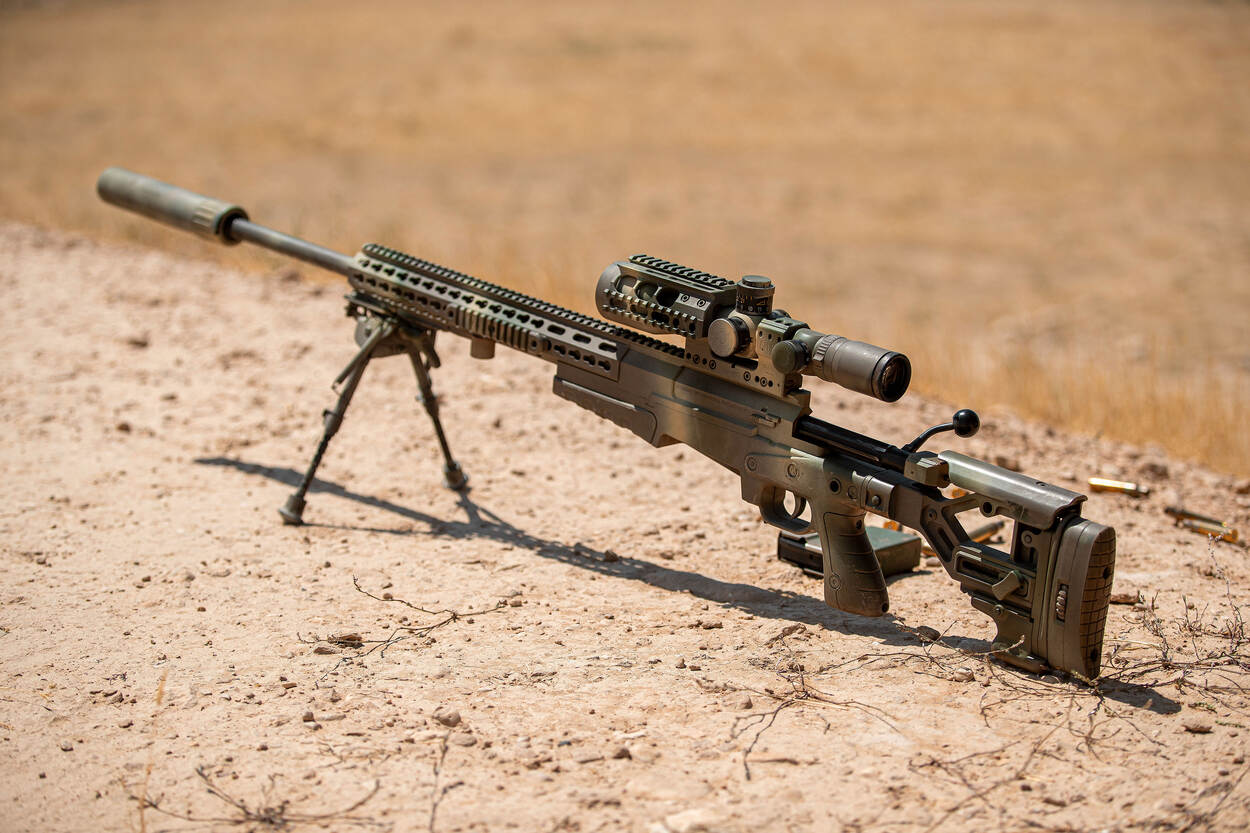
The AXSR represents a later development of the AX concept, expanding its multi-caliber capability while refining the chassis and controls. Accuracy International’s current specification lists .338 Lapua Magnum, .338 Norma Magnum, .300 Norma Magnum, .300 PRC and .300 Winchester Magnum, with additional configurations including .308 Winchester and 6.5 Creedmoor. A standard long-action version weighs about 16.2 pounds with a 27-inch barrel and no optic or bipod. That substantial weight reflects a design focused on stability, strength, and long-range precision rather than lightweight field carry. It is a clear example of how the original AX idea was expanded for modern requirements.
8. It Carries a Remarkable British Service Legacy

The AX makes more sense when viewed as part of Accuracy International’s longer military history. The company won the British Ministry of Defence L96A1 contract in 1985, later supplying the Arctic Warfare family to several nations. Its lineage eventually reached the L115A3, the British Army’s .338-caliber long-range rifle, which entered Afghanistan in 2008. The L115A3 is not simply an AX rifle, but the connection is important: the AX belongs to a design tradition refined through decades of military use. That heritage helped establish Accuracy International as a major name in precision rifles worldwide. That history gives the AX family considerable credibility among precision-rifle users.
9. Its Real Secret Is Consistency
The most important AX feature may be less dramatic than its caliber options or futuristic chassis: consistency. Accuracy International’s rifles are built around a repeatable action-and-chassis relationship, adjustable ergonomics and components intended to maintain performance under demanding conditions. The company says its rifles have been supplied to more than 70 countries, reflecting a long record of international adoption. The AX therefore stands out not because it is magically superior to every American rifle, but because it combines British engineering, modular construction and a mature service heritage. Its real appeal is a system designed to behave predictably when precision matters.