Military history is full of weapons that looked promising on paper but failed to win support from their home governments. Sometimes the reason was politics, existing production lines, ammunition choices, or simple timing rather than a lack of ability. Several of these rejected designs found a second chance overseas, where foreign armies saw advantages their creators’ own military had overlooked. A small clarification: a few examples below were formally adopted abroad, while others were officially purchased for military service without becoming a universal standard weapon.
1. M1941 Johnson Rifle
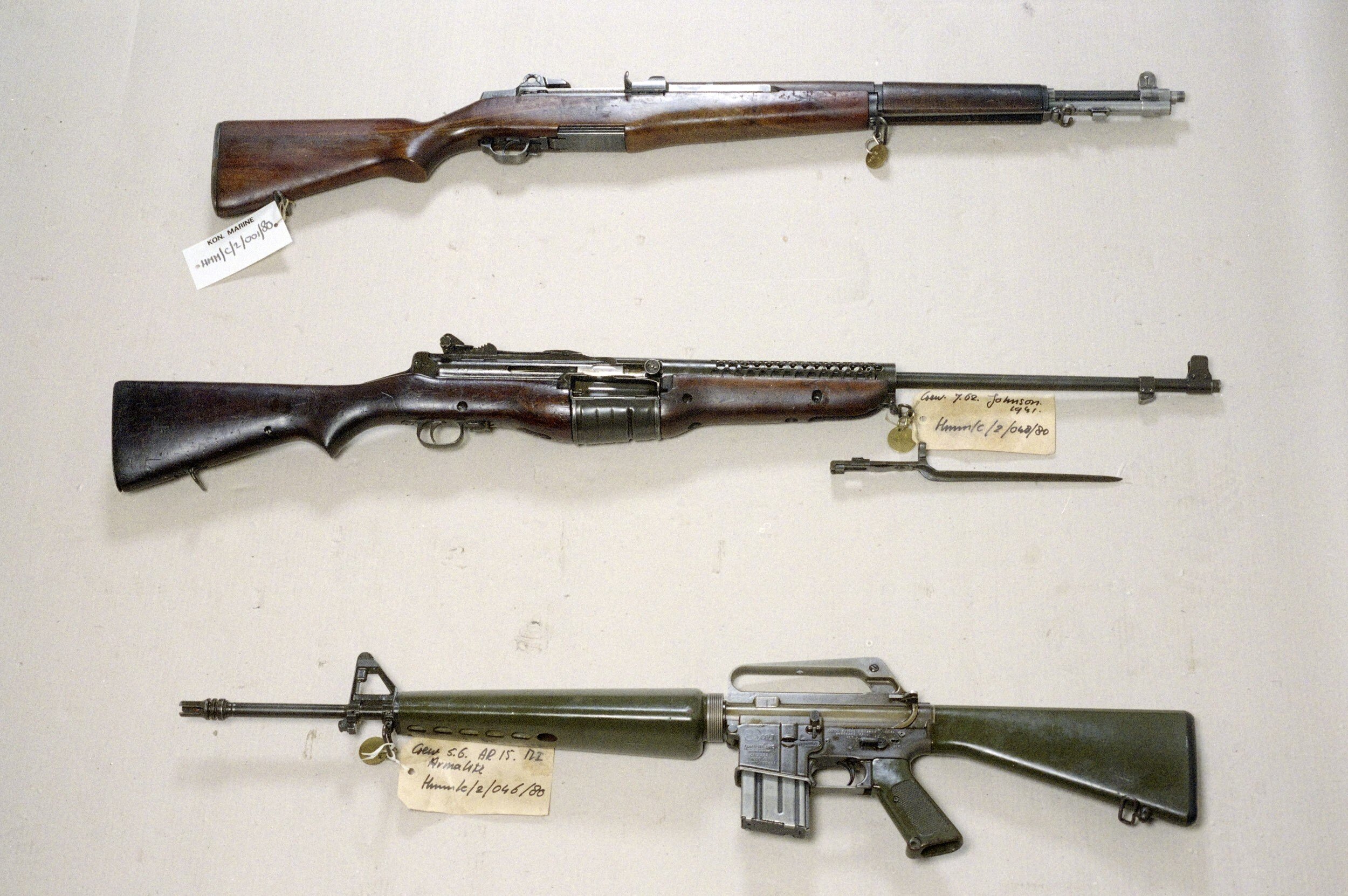
The M1941 Johnson is one of the clearest examples of a rejected American design finding an overseas customer. The U.S. Army chose the M1 Garand after testing, leaving Melvin Johnson’s recoil-operated rifle outside standard service. The Netherlands ordered about 10,000 for the Dutch East Indies, although only 1,999 arrived before the Japanese conquest. Chile later bought 1,000 rifles in 7x57mm. The Johnson used a 10-round rotary magazine and a detachable barrel, unusual features for 1941. Its recoil system also set it apart from the gas-operated Garand.
2. ArmaLite AR-10
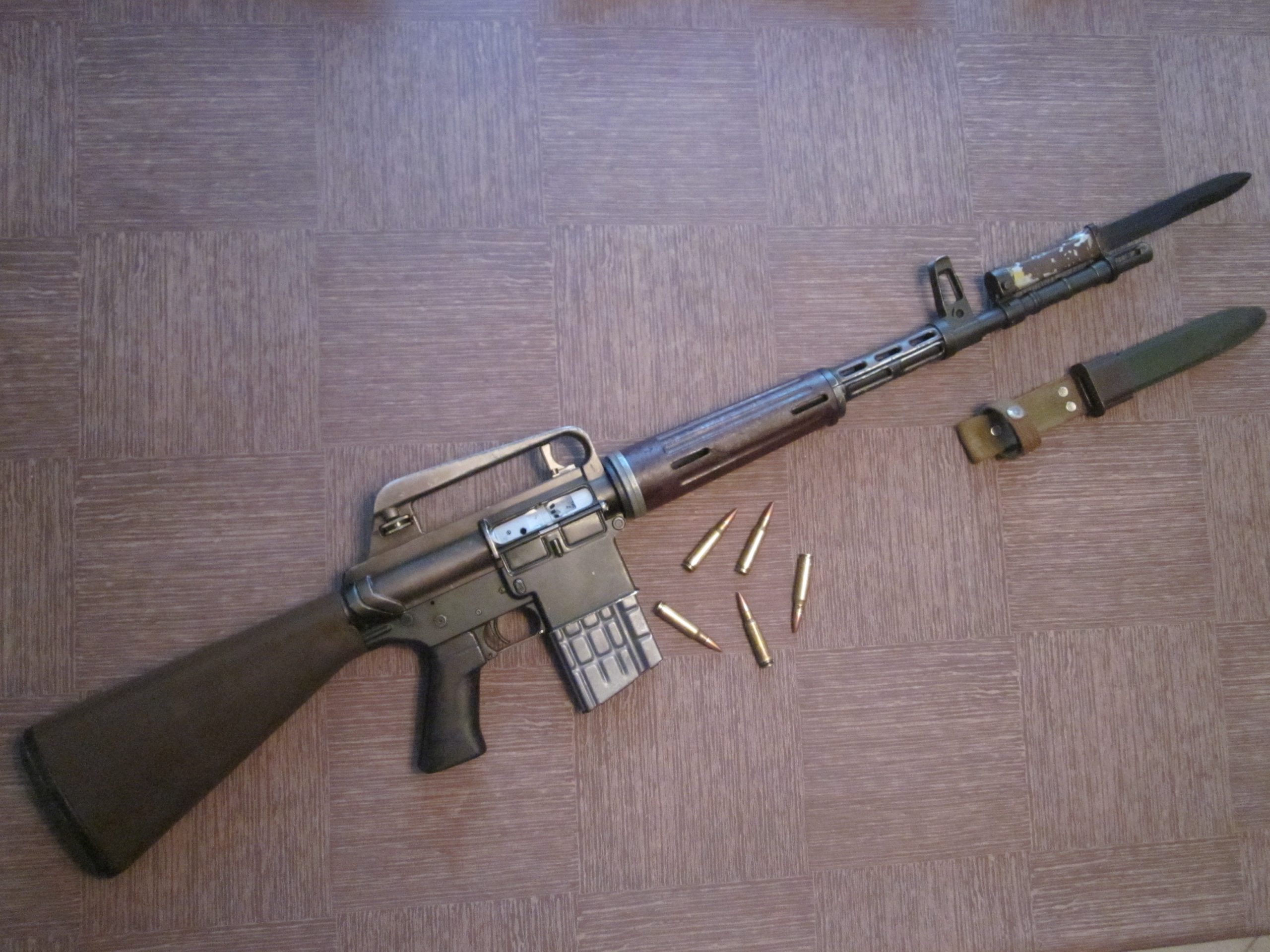
The AR-10 lost its American opportunity but found a real military niche abroad. The U.S. Army rejected the design in 1957 while moving ahead with the M14 program. Portugal became its most important operator, issuing AR-10s to paratroopers during the Colonial War from 1960 to 1974. Sudan received roughly 2,500 rifles, while smaller batches reached Guatemala and other users. Chambered in 7.62x51mm NATO, the lightweight rifle used direct gas operation and helped establish ideas later associated with the AR-15 family. Portugal’s use was sustained operational service, not just a trial.
3. Heckler & Koch HK33
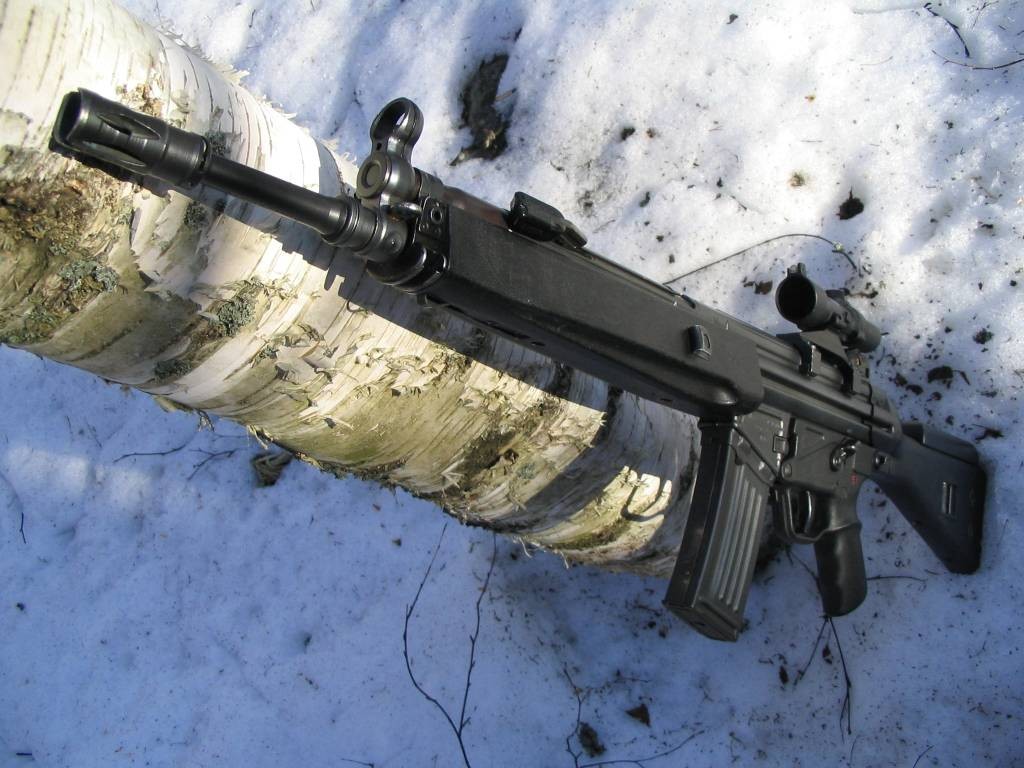
The HK33 is a German rifle that the Bundeswehr never selected as its standard 5.56mm service rifle. Its export career became the interesting part of the story. Thailand adopted it and bought about 40,000 rifles, while a license allowed another 30,000 to be manufactured locally. Malaysia also purchased about 55,000, and Turkey later produced its own licensed version. Introduced in 1968, the HK33 used the G3’s roller-delayed action in a smaller 5.56x45mm package, giving foreign buyers a familiar mechanism in a lighter caliber. Its standard magazine held 25 rounds.
4. Mauser C96
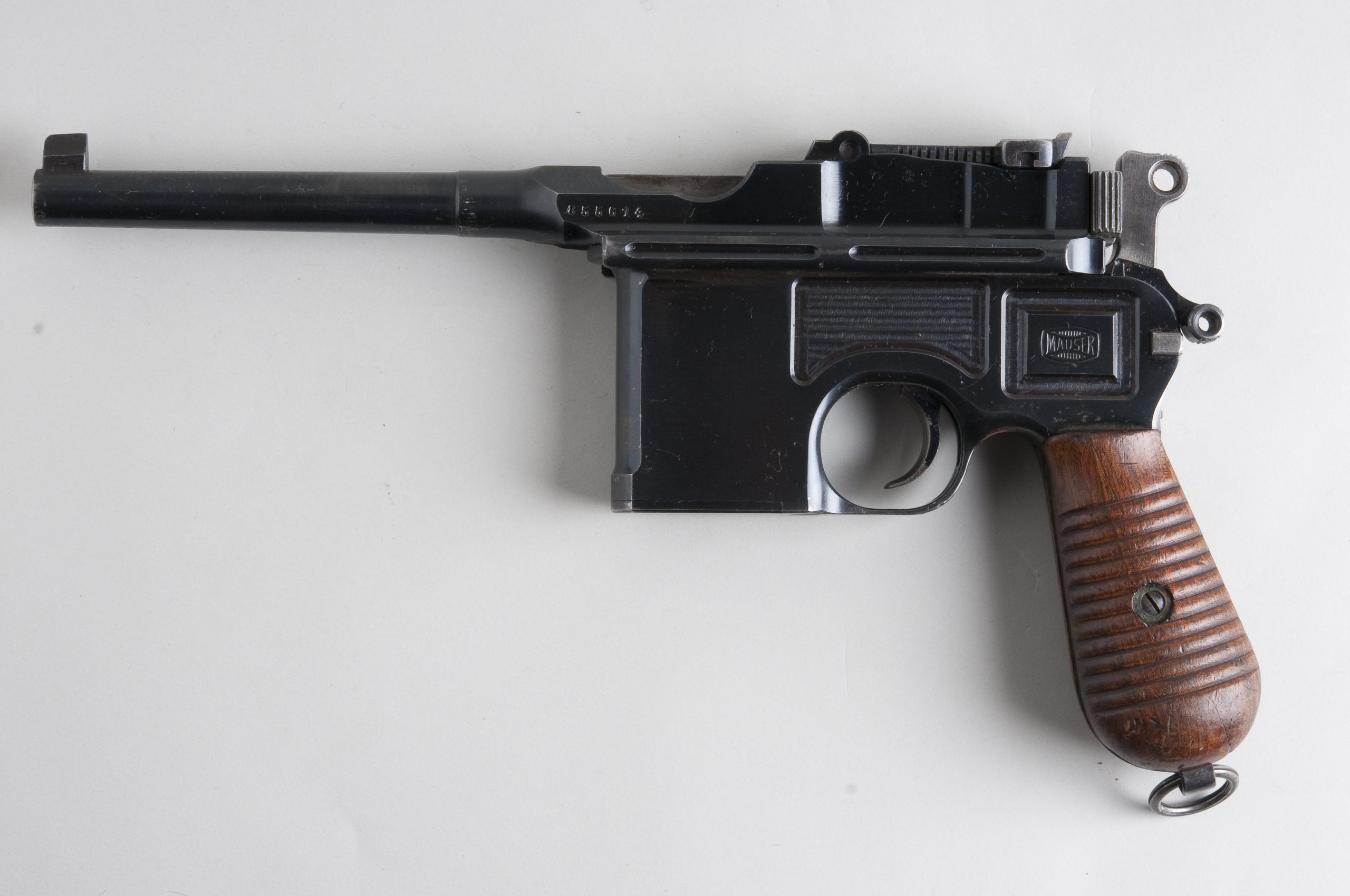
The Mauser C96 looked like a natural candidate for German military service, yet Germany chose the Luger P08 instead. That rejection did not stop the distinctive Broomhandle from becoming an international military handgun. China became its most important official military user, buying large quantities and producing local copies, including .45 ACP versions. More than 1 million C96 pistols were made by Mauser before production ended in 1937. Its 10-round magazine, stripper-clip loading and optional shoulder stock made it distinctive for a 1890s pistol. China gave it a lasting military legacy.
5. Savage Model 1907
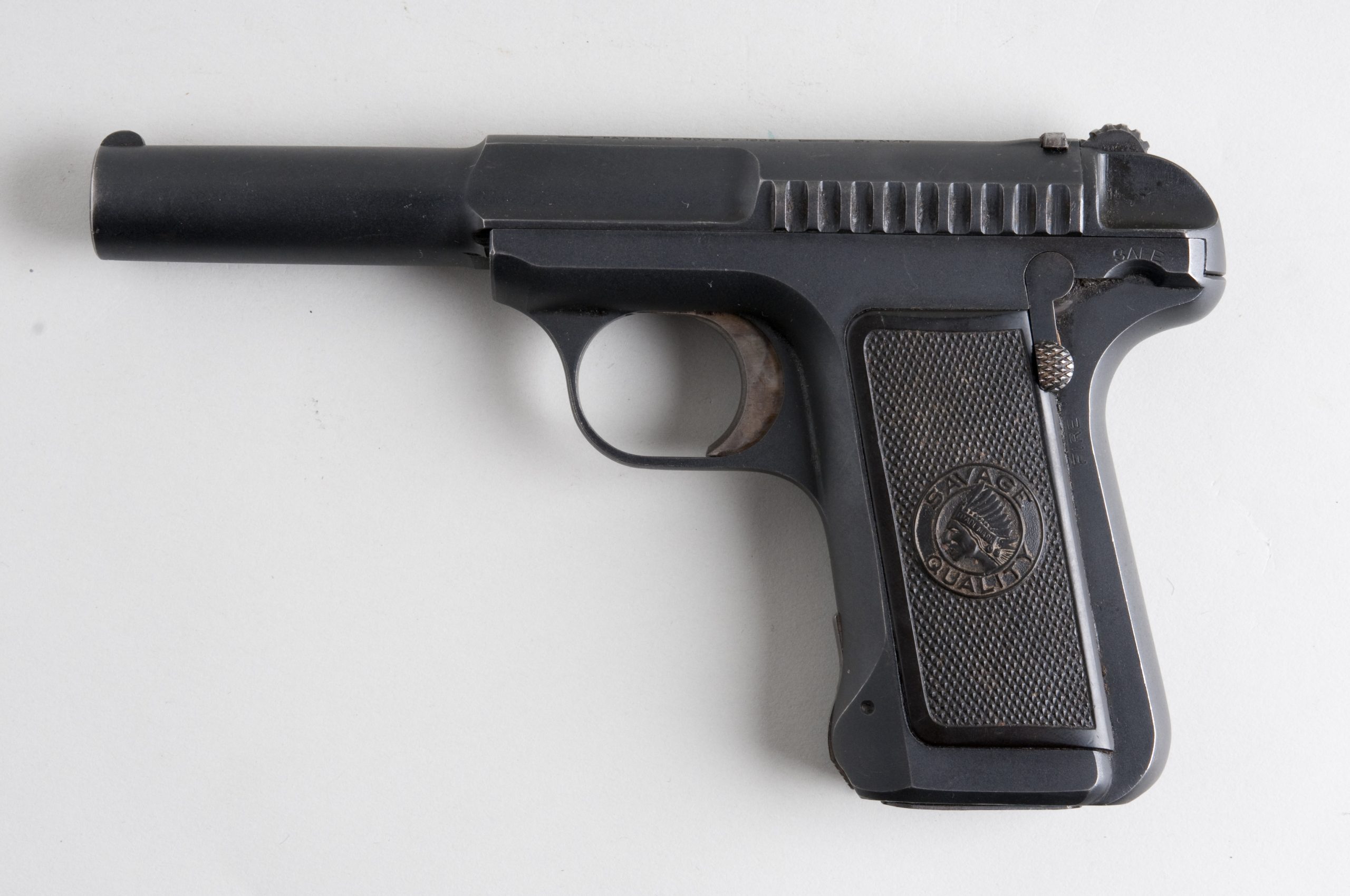
Savage’s Model 1907 competed for the U.S. Army’s new .45-caliber service pistol contract but lost to the Colt design that became the M1911. The rejection looked final until World War I created an unexpected market overseas. France bought more than 40,000 Savage pistols in .32 ACP for military use between 1914 and 1917, and Portugal ordered another 1,150. The compact pistol used a striker-fired system and a 10-round magazine, features that helped make the commercial design attractive when European armies urgently needed sidearms. French contract guns also received military fittings.
6. Mannlicher M1901
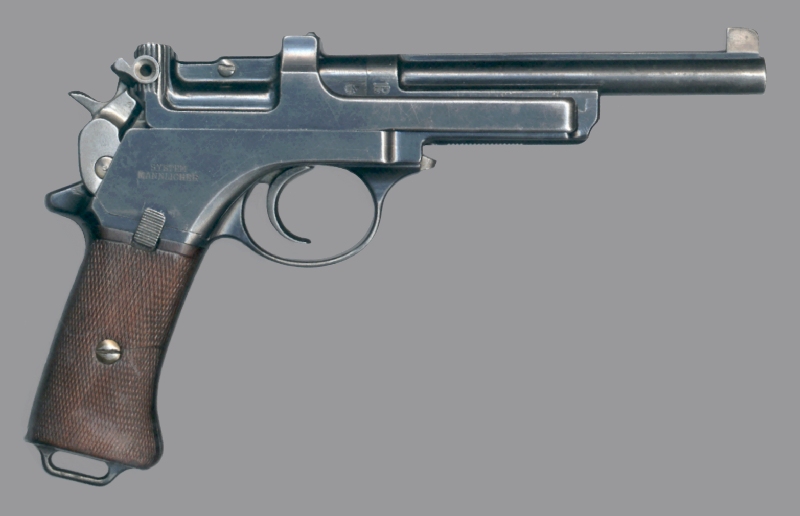
Ferdinand Mannlicher’s M1901 was built in Austria-Hungary, but the Austro-Hungarian Army rejected it after trials in 1904 and 1905. Officers could still buy the pistol privately, showing that rejection did not mean the design lacked interest. Argentina saw more potential and adopted a revised version as the Modelo 1905. About 6,000 were sold there, according to historical accounts. The pistol used a delayed-blowback action, an integral magazine and an 8-round stripper clip, making it an advanced design for the early 1900s. Its open-topped slide added to its distinctive appearance.
7. Bergmann-Bayard
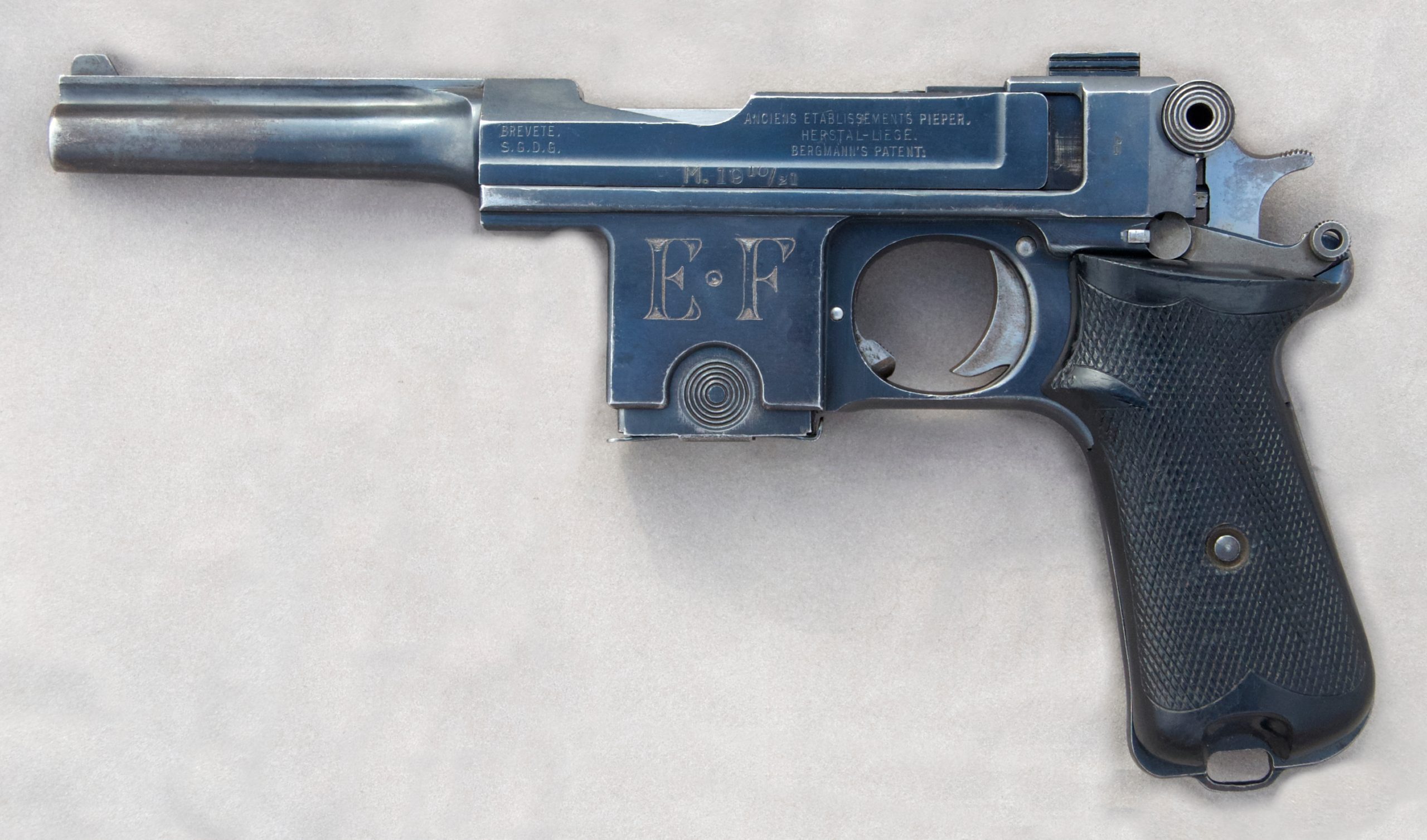
The German-designed Bergmann pistol family struggled to secure a home military role, but later versions found buyers abroad. Spain adopted the Model 1903 and later the improved 1908 version, while Denmark selected the Model 1910 as its service pistol. Denmark initially received 4,840 Belgian-made pistols and later produced more than 2,200 of the revised 1910/21 pattern at Copenhagen. The pistol used a locked-breech system, a detachable magazine and the 9mm Largo cartridge. Its story shows German engineering moving through Belgian production into foreign service. Denmark kept it until 1946.
8. Colt Model 1902 Military
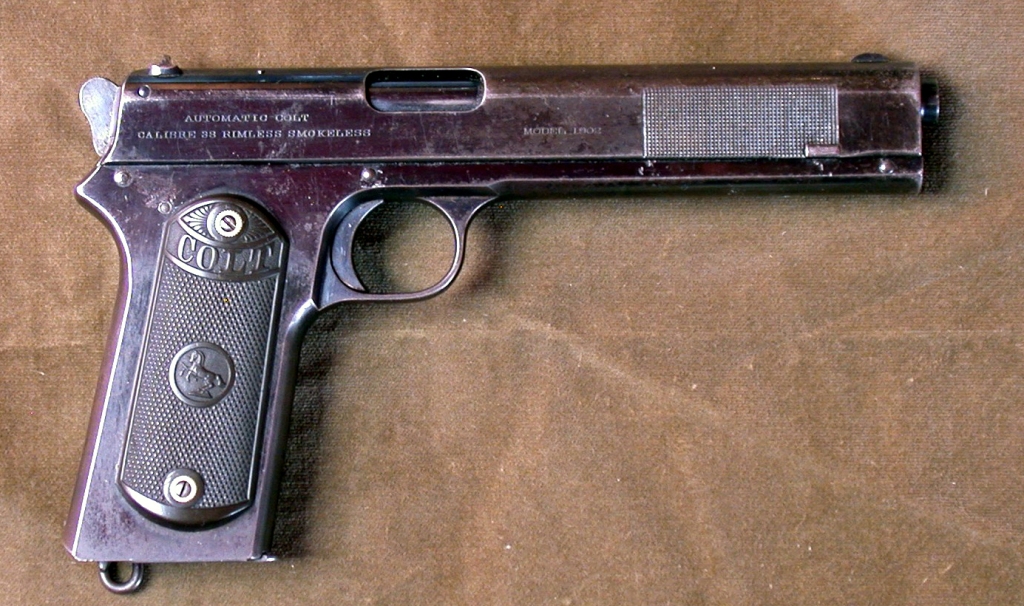
John Browning’s Colt Model 1902 Military was developed with American military needs in mind, but the U.S. Army did not adopt it as a standard sidearm. The .38 ACP cartridge and design limitations helped push American development toward the larger .45 ACP M1911. Overseas buyers still showed interest: Mexico purchased 800 marked Model 1902 Military pistols in 1908, while the Chilean Navy bought 500 in 1906. About 18,068 Military Model 1902 pistols were produced from 1902 to 1928, giving the rejected American design a surprisingly broad second life. These were military purchases abroad.
9. Mannlicher M1905
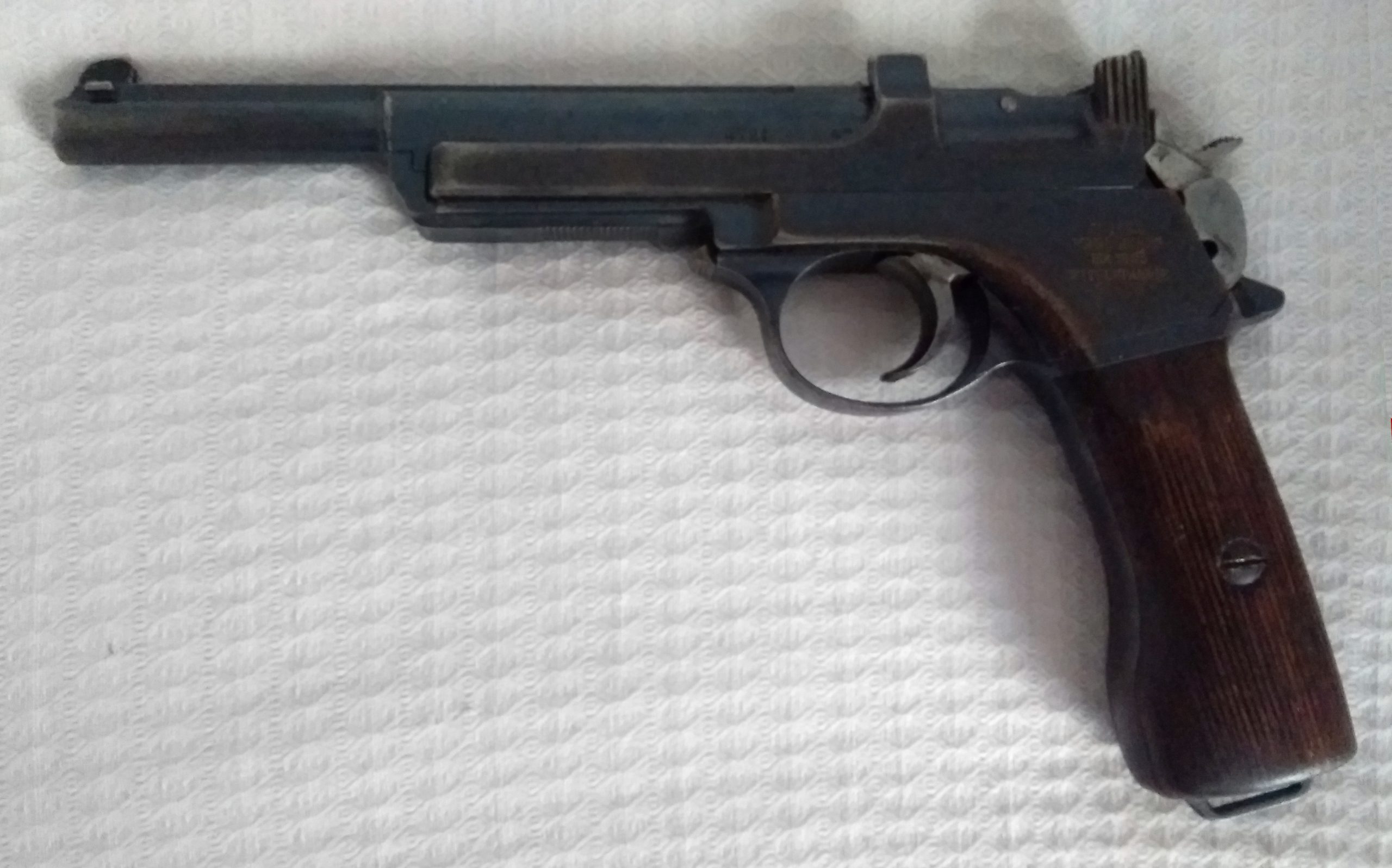
The Mannlicher M1905 shows how a rejected home design could be refined and accepted abroad. Austria-Hungary did not officially adopt the earlier M1901 after trials, but Argentina accepted the revised M1905 in 1905 as the Modelo 1905. Roughly 6,000 were sold to Argentina, a major share of total production. The pistol retained Mannlicher’s fixed magazine and stripper-clip loading system while increasing capacity to 10 rounds. Its Argentine service career gave the unusual design a clearer military legacy than it found at home. Some examples also reached Paraguay, extending its foreign use.