Clients love to talk about dream rifles. Guides, on the other hand, tend to talk about what still works when the weather turns ugly, the pack gets heavy, and something big suddenly needs killing.
The plain old .30-06 bolt action
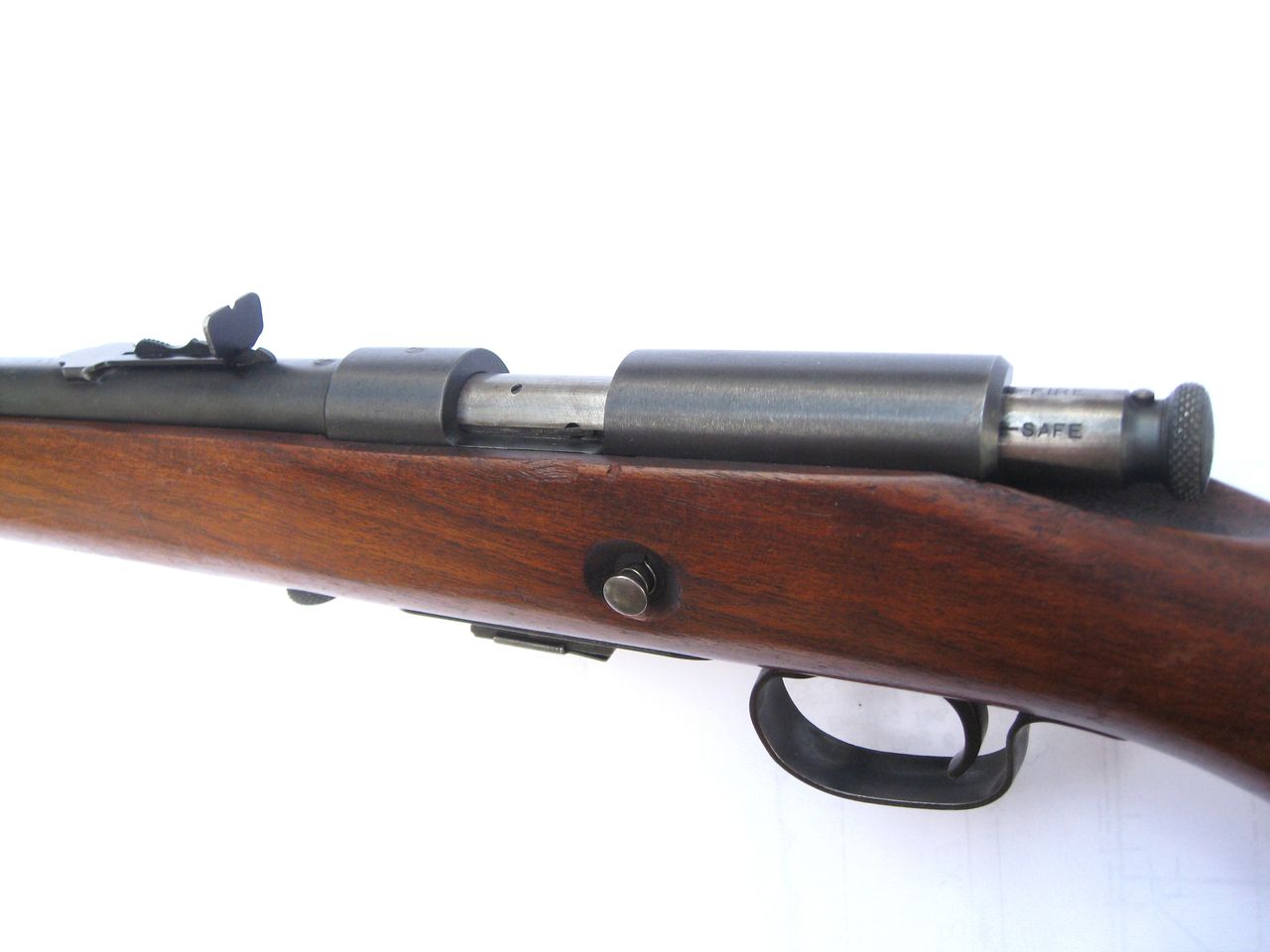
If you spend enough time around experienced guides, the .30-06 keeps showing up because it solves more problems than it creates. Alaska Department of Fish and Game has long made the same basic point: if a hunter can shoot a .270, .308, or .30-06 accurately, that matters more than showing up with a hard-kicking magnum they barely know. The agency even says many experienced guides would rather see a client with a .270 or .30-06 they shoot well than a shiny new magnum that has only been sighted in.
That logic applies even more strongly to a guide’s own rifle. A guide is not trying to impress the campfire crowd. He wants a cartridge with deep bullet selection, manageable recoil, and enough authority for deer, elk, moose, black bear, and a whole lot of bad angles in rough country.
The .30-06 also carries a practical field advantage that guides never ignore: ammunition is widely available, from 150-grain deer loads to 180-grain and 200-grain premium bullets for heavier game. When rifles get banged around in horse scabbards, floatplanes, trucks, and rain-soaked tents, common gear matters.
Most guides who favor the .30-06 are not making a nostalgic choice. They are making a professional one. It shoots flat enough for realistic hunting distances, hits hard without punishing the shooter, and keeps working across species lines. That is exactly the kind of boring excellence professionals quietly rely on.
The .300 Winchester Magnum for open country and elk work

When the terrain opens up, and animals get bigger, many guides step up to the .300 Winchester Magnum. It remains one of the most common answers for elk, moose, and western mixed-bag hunting because it adds reach and energy without jumping all the way into the recoil class of the true shoulder-thumpers.
This is the rifle a guide carries when long canyons, windy ridges, and a client who might wound an animal are all part of the day’s reality. The extra horsepower gives better margin on large-bodied game, especially when the shot is not textboo,k and the animal has to be anchored before it disappears into deadfall or across a drainage.
Even then, good guides are not magnum romantics. Alaska Department of Fish and Game specifically warns that big magnums are often harder for ordinary hunters to shoot well, and that poor shooting is a bigger problem than insufficient caliber. So when guides carry a .300, it is usually because they have truly mastered it, not because a catalog told them to.
That distinction matters. In competent hands, the .300 Winchester Magnum is a serious professional tool. In flinchy hands, it is a liability. Guides who choose it usually pair it with a straightforward scope, premium controlled-expansion bullets, and a rifle weight heavy enough to tame recoil but light enough to hump all day.
The .270 Winchester for mountain game and all-day carry

The .270 Winchester survives every trend cycle for one reason: it keeps killing game cleanly without beating up the shooter. Alaska’s game department explicitly lists the .270 among the cartridges fully capable of successful hunts when paired with quality bullets and accurate shot placement. That official view lines up with what a lot of guides already know from experience.
For sheep country, mule deer basins, antelope flats, and general mountain hunting, the .270 is still a guide’s kind of rifle. It is light enough to carry all day, flat-shooting enough for sane distances, and mild enough that most people can practice with it more often than they would with a magnum.
Guides also like what the .270 does not do. It does not produce the blast, weight, or recoil penalty that comes with bigger cartridges. In steep country, every extra ounce feels heavier by the hour, and every little bit of unnecessary punishment shows up in poorer field shooting.
The .270’s reputation sometimes suffers because it is so familiar that people forget how effective it is. But that familiarity is exactly why it endures. It is easy to find ammo, easy to shoot well, and deadly on deer-sized game while still being capable on larger animals with proper bullets and placement. Quiet confidence is a guide trait, and the .270 wears it well.
The .308 Winchester as the no-drama working rifle
The .308 Winchester is the kind of cartridge guides appreciate because it removes excuses. It is accurate, efficient, and usually found in compact rifles that carry easily in trucks, blinds, brush, and mountain timber. Alaska Department of Fish and Game groups the .308 with the cartridges hunters can use effectively on large game if they shoot them well and choose quality bullets.
In the field, that translates to a rifle that is hard to hate. Recoil is milder than a .30-06 in comparable guns, barrel lengths can stay shorter, and practical accuracy tends to be excellent. For a guide who may need to shoot from awkward positions or move fast through thick cover, those small advantages stack up.
There is also a logistical side to the .308 that professionals value. Ammo availability remains strong, bullet choices are broad, and the cartridge performs well out of rifles that are compact and weather-resistant. Stainless synthetic bolt guns in .308 have become modern mule tools for a reason.
The .308 is not flashy, and that is part of the appeal. Guides do not need a cartridge that wins internet arguments. They need one that works when a bull steps into a dark timber lane at 80 yards or when a backup shot has to happen fast. The .308’s whole personality is competence without drama.
The lever-action .30-30 for thick woods and short shots
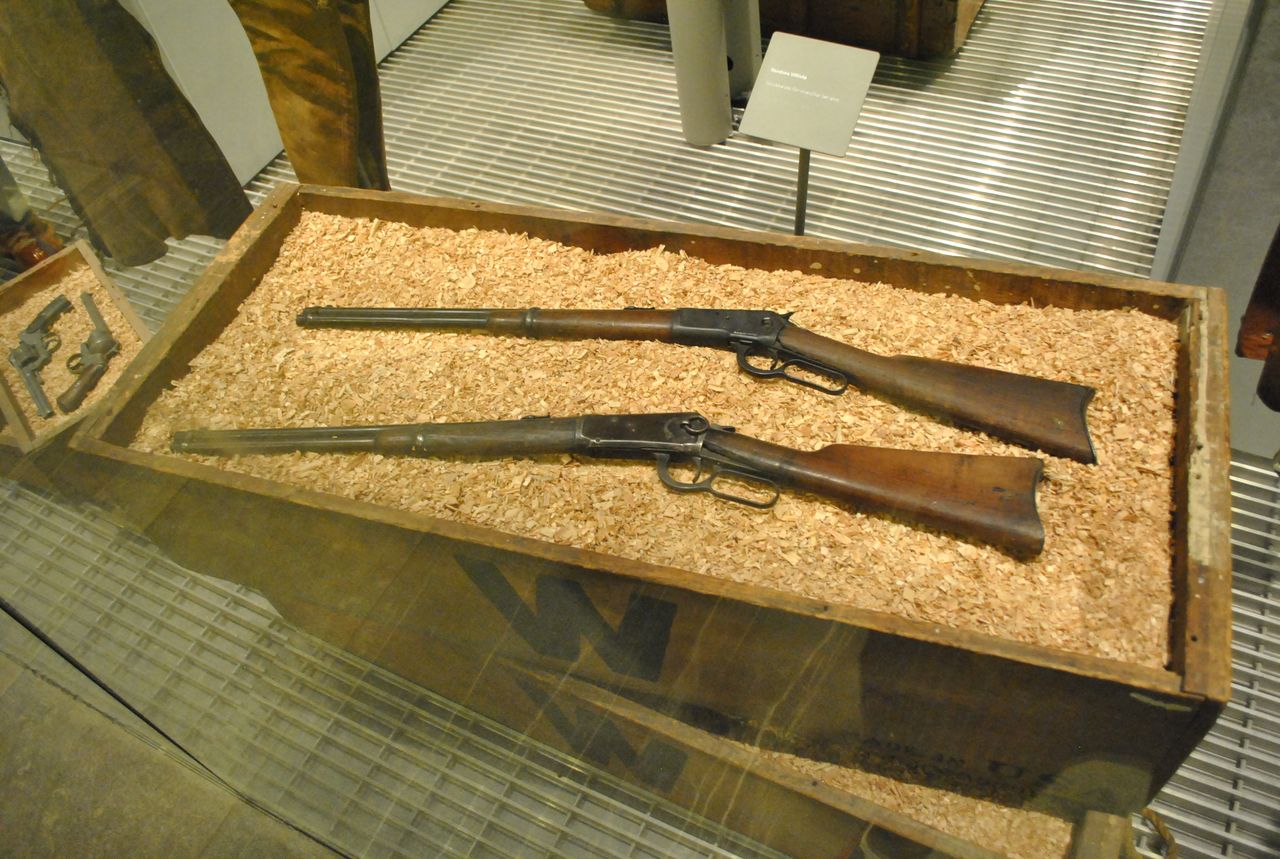
The farther you get from social media hunting, the more the .30-30 starts making sense again. Field & Stream recently noted that for half a century, the 30-30 lever action was the definition of a deer gun, and its editors still describe it as highly useful today, especially inside 200 yards. That is exactly the distance envelope where a lot of real guide work happens in timber, brush, and rolling whitetail country.
A guide carrying a .30-30 is usually telling you something about his terrain. He expects close encounters, quick target acquisition, and fast follow-up capability. In alder tangles, cedar swamps, and Appalachian hardwoods, a slim lever gun can be handier than a long-barreled scoped bolt rifle.
This is not a nostalgia act. Modern loads have kept the old cartridge relevant, and its mild recoil makes it easy to shoot well under pressure. Field & Stream has argued that within its limitations, few cartridges are the .30-30’s equal on deer, which tracks with decades of dead-simple field performance.
Clients may fantasize about dialing turrets at 500 yards. Guides in the brush often want a rifle that comes to the shoulder instantly and threads through branches without feeling like a fence post. A lever-action .30-30 still does that job as well as almost anything ever built.
The 12-gauge pump for birds, camp meat, and ugly surprises

A lot of guides keep a 12-gauge pump around because it is the Swiss Army knife of hunting guns. One day it may be loaded for grouse or ducks around camp. The next day it may be wearing slugs for a close-range bear backup role in dense cover. Very few firearms cover that much ground so simply.
The 12 gauge also remains the benchmark for turkey performance. MeatEater has noted that 12 gauges are still the most popular turkey guns and that they kill more efficiently at longer distances than smaller gauges. In recent shotgun testing, the outlet also reported standout 40-yard pattern counts from modern turkey setups, showing just how effective a tuned 12 can be.
Guides like pump guns because they are durable, intuitive, and less finicky about conditions than many shooters think. Mud, pine needles, horse hair, sleet, and camp neglect are part of the job. A proven pump keeps functioning long after prettier guns start acting delicate.
There is also a training advantage. Most outdoorsmen have spent time with a pump shotgun, so the manual of arms is familiar. When a gun must handle camp chores, predators, opportunistic birds, and the occasional high-stress moment near thick cover, the 12-gauge pump remains one of the smartest quiet choices a guide can make.
The 20-gauge turkey or upland gun that punches above its weight
If you still think every serious guide defaults to 12-gaugege, the modern 20-gauge deserves a second look. MeatEater has pointed out that advances in shotshells have narrowed the old performance gap, and that a 20 gauge is a strong choice for turkey hunting out to 40 yards. In more recent testing, the outlet even suggested the devastating patterns from some 20-gauge loads made sticking with the smaller gun an easy decision.
That matters to guides because recoil is cumulative. A man who shoots often, hikes hard, and may spend weeks in the field appreciates any gun that is lighter on the shoulder while still finishing the job cleanly. Less recoil usually means better shooting, especially from awkward seated or twisted setups against a tree.
The 20 gauge is especially attractive for turkey, upland birds, and mixed farm-country hunting where a guide may walk a long way and shoot little. It carries easier than many 12s, swings quickly, and has become far more lethal with modern loads than older hunters sometimes admit.
This is one of those cases where the “secret” gun is not exotic at all. It is a practical adaptation to improved ammunition. When lighter weight, quicker handling, and softer recoil meet genuinely effective terminal performance, guides notice. Then they keep that gun close while clients keep debating bigger bores.
The big-bore stopper for bear country, used by the people who can handle it
There is one category guides will quietly keep around even if they do not brag on it: the true stopper for places where things can bite back hard. In coastal Alaska and serious bear country, that often means a .338, .375, or a hard-hitting shotgun loaded for defense at bad-breath distance. But even here, the smart view is more restrained than outsiders assume.
Alaska Department of Fish and Game explicitly says the idea that a .300, .338, .375, or .416 magnum is required for personal protection and large Alaska game is simply not true. The agency stresses that many hunters shoot these rifles poorly and that shot placement remains the bigger issue. It also notes that some guides do not allow muzzle brakes because of the hearing-damage risk from blast.
That tells you something important about the guides who do carry true big bores. They are not carrying them because of macho mythology. They are carrying them because they work in very specific terrain with very specific risks, and they have put in the practice to run them correctly.
In other words, the big-bore guide gun is real, but it is not the universal answer. It is a specialist’s tool. The best guides know exactly when that kind of gun earns its place and exactly when a calmer, more shootable rifle is the better choice. That judgment, more than caliber alone, is what separates professionals from tourists.