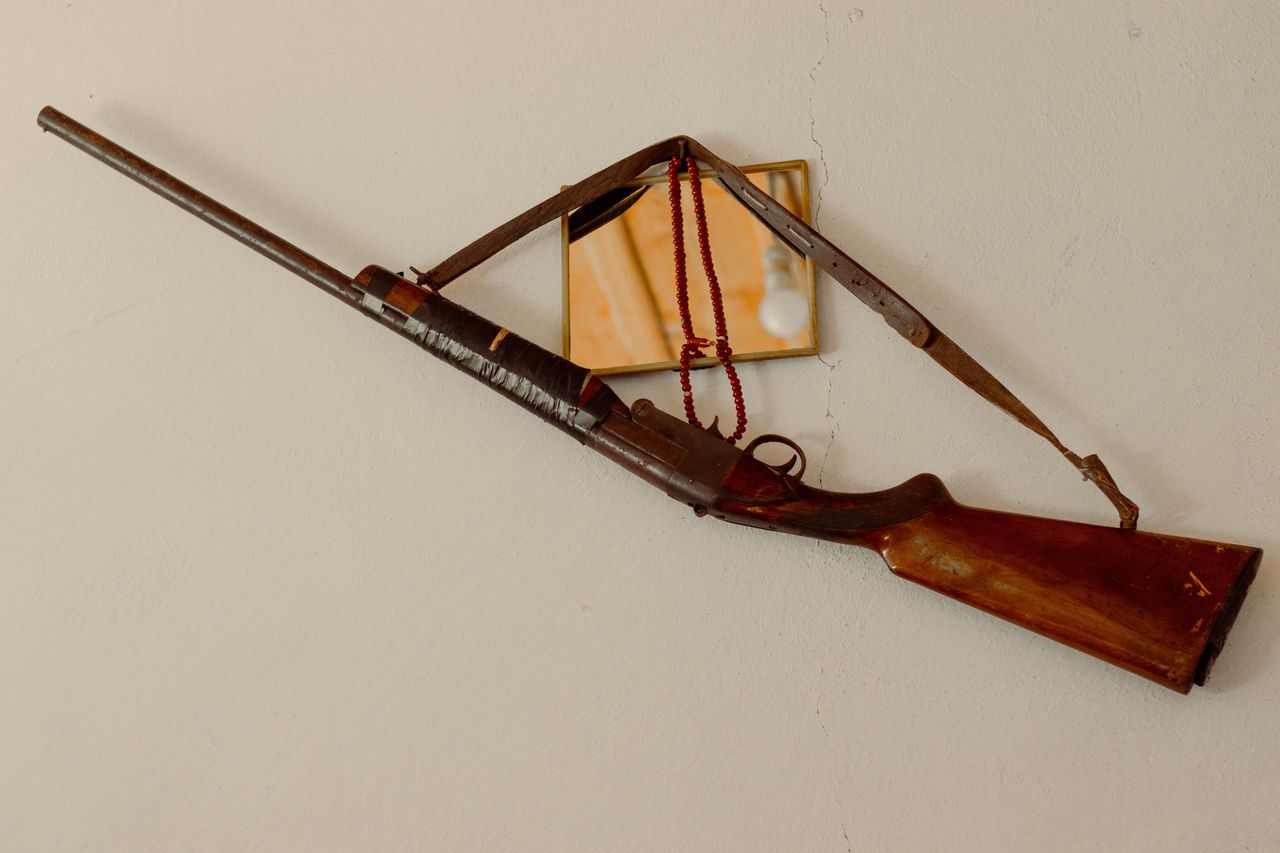
The American West was shaped by migration, conflict, commerce, and technology, and firearms were woven through all of it. From cap-and-ball revolvers to lever-action rifles and hard-hitting shotguns, these weapons influenced hunting, law enforcement, military campaigns, and everyday survival. This gallery explores 15 frontier-era firearms that became icons of a fast-changing region and the people who carried them.
Colt Paterson Revolver

When Samuel Colt’s Paterson revolver appeared in the 1830s, it introduced a bold idea to frontier arms: a practical repeating handgun. Earlier pistols usually offered a single shot, but the Paterson gave mounted users multiple rounds before reloading, a serious advantage in sudden fights or hunts.
It was delicate by later standards and not especially easy to operate under stress. Even so, the revolver’s use by the Texas Rangers helped establish its reputation and pointed the way toward the more rugged Colts that followed.
On the frontier, innovation mattered as much as raw power. The Paterson showed that repeating sidearms were not just possible, but potentially transformative.
Colt Walker

Built in 1847 as a collaboration between Samuel Colt and Captain Samuel Walker of the Texas Rangers, the Colt Walker was huge, powerful, and impossible to ignore. It fired a heavy .44 caliber charge that gave it tremendous stopping power, especially by handgun standards of its day.
That power came with trade-offs. The Walker was bulky enough that many users carried it in saddle holsters rather than on the belt, and its design had some early mechanical issues. Still, on a rough frontier where mounted combat was common, it offered fearsome firepower.
The Walker became a bridge between early revolvers and the more refined Colts that soon dominated the Western market.
Colt 1851 Navy

The Colt 1851 Navy earned one of the best reputations of any cap-and-ball revolver in the 19th century. Balanced, accurate, and more manageable than the giant Walker, it became a favorite with civilians, soldiers, lawmen, and outlaws alike.
Despite its name, the revolver saw broad use far from the sea. It appeared on trails, in river towns, and in mining camps, carried by people who needed a dependable sidearm that could still ride comfortably on the hip.
Its graceful lines made it handsome, but its real appeal was practical. The 1851 Navy helped normalize the idea that a repeating handgun was an everyday tool in the expanding West.
Colt 1860 Army

The Colt 1860 Army took lessons from earlier revolvers and delivered a more streamlined .44 caliber sidearm just as the country entered the Civil War. It was powerful without being as unwieldy as the Walker, and that balance made it extremely influential in the years that followed.
Surplus examples and civilian sales helped push the 1860 Army westward after the war. On the frontier, many users valued its solid stopping power and familiar Colt handling, especially in places where trouble could arrive quickly and without warning.
It also marked the mature form of the cap-and-ball military revolver. Before metallic cartridges fully took over, the 1860 Army stood near the peak of the type.
Remington 1858 New Model Army

The Remington 1858 New Model Army was Colt’s great rival, and many shooters considered it the sturdier design. Its solid frame gave it a reputation for strength, while its top strap offered durability that inspired confidence in harsh conditions.
Another advantage was its cylinder system, which made spare cylinder swaps more practical than with many competing revolvers. Whether that happened often in real frontier life is debated, but the gun’s reputation for toughness was very real.
Veterans, settlers, and lawmen all encountered Remington revolvers in the postwar West. In a region that punished weak equipment, the 1858 earned respect the hard way.
Smith & Wesson Model 3

The Smith & Wesson Model 3 represented the next major leap in revolver design: metallic cartridges and a top-break action that made reloading dramatically faster. On a frontier where a few seconds could matter, that convenience was more than a luxury.
These big revolvers appeared in several famous variants, including the Schofield. They were used by civilians and military buyers and became associated with a more modern age of handguns, one less tied to powder flasks, percussion caps, and loose loading steps.
Elegant but practical, the Model 3 showed that the West was not frozen in time. It was a place where new technology spread quickly when it offered a clear edge.
Colt Single Action Army

Few firearms are as closely linked to the American West as the Colt Single Action Army, introduced in 1873. Chambered most famously in .45 Colt, it became a standard sidearm for the U.S. Army and a favorite among ranchers, peace officers, gamblers, and gunfighters.
Its appeal came from durability, simplicity, and balance. The loading process was slower than with top-break rivals, but the revolver was rugged and dependable, qualities that counted for plenty in isolated country.
Hollywood later turned it into a near-mythic object, but its frontier reputation was earned long before the cameras arrived. The Peacemaker became iconic because it was genuinely useful.
Henry Rifle

The Henry rifle offered something frontier users immediately understood: a lot of shots without reloading. Introduced during the Civil War, this lever-action rifle could fire far more rapidly than most muzzle-loading arms, giving its owner a remarkable volume of fire.
It was expensive, and its tubular magazine and loading method had limitations. Even so, the Henry’s speed made a deep impression on soldiers and civilians, and stories of its battlefield effectiveness spread quickly.
On the frontier, where encounters could be chaotic and close, repeating firepower had real value. The Henry helped set the template for the lever-action rifles that would become enduring symbols of the West.
Winchester Model 1866

Nicknamed the Yellow Boy for its brass receiver, the Winchester Model 1866 refined the Henry concept into a more practical commercial rifle. It added a side loading gate and other improvements that made the repeating lever gun easier to live with on the trail.
The rifle was not the most powerful arm on the frontier, but it was fast, handy, and widely available. That combination made it popular with settlers, guards, and anyone who valued repeat shots over sheer range.
Its reputation grew internationally as well, but in the American West it helped cement Winchester as a defining name. The lever-action age was fully underway by the time the 1866 arrived.
Winchester Model 1873

The Winchester Model 1873 is often called the gun that won the West, a phrase more poetic than literal but powerful for a reason. Chambered in popular handgun cartridges like .44-40, it offered frontier users a practical, reliable repeating rifle with manageable recoil and useful range.
One major selling point was ammunition compatibility. A rider could carry the same cartridge for both a revolver and a rifle, simplifying life in places where supply lines were thin and resupply was never guaranteed.
The 1873 appeared in ranch country, mining camps, and law-and-order work. Its fame rests on myth, yes, but also on the fact that it fit frontier realities exceptionally well.
Winchester Model 1876
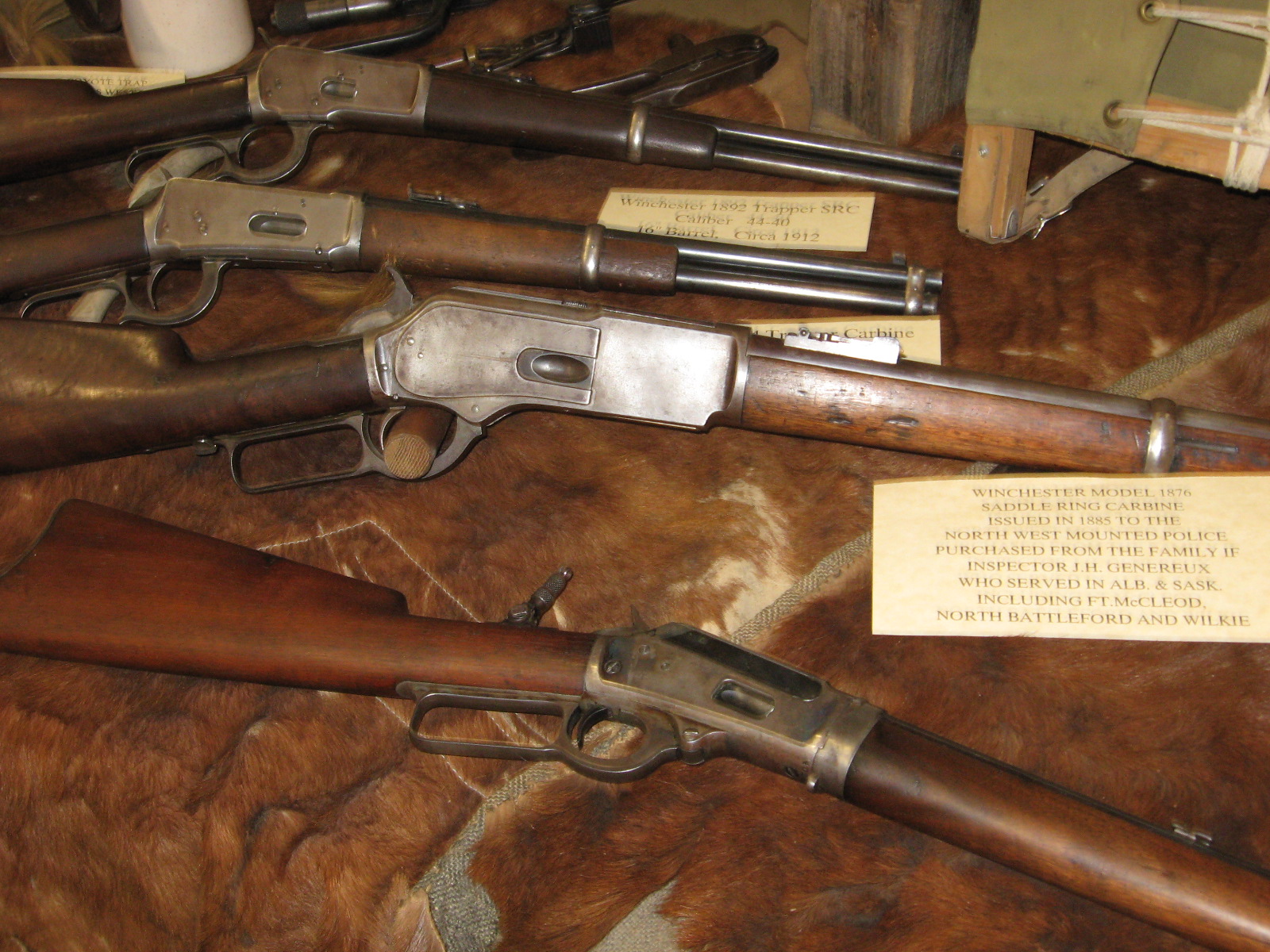
The Winchester Model 1876 was designed for shooters who wanted more power than the 1873 could deliver. Built on a larger frame, it handled bigger cartridges and appealed to hunters, frontiersmen, and others who needed a repeating rifle for heavier game and longer practical reach.
It became associated with notable Western figures, including Theodore Roosevelt in his ranching years. That kind of endorsement mattered, but so did the rifle’s plain usefulness in rough country where elk, bear, and open spaces demanded more authority.
The 1876 did not replace every other rifle on the frontier, nor could it do everything. But it expanded what a lever-action repeater could reasonably attempt.
Sharps Rifle
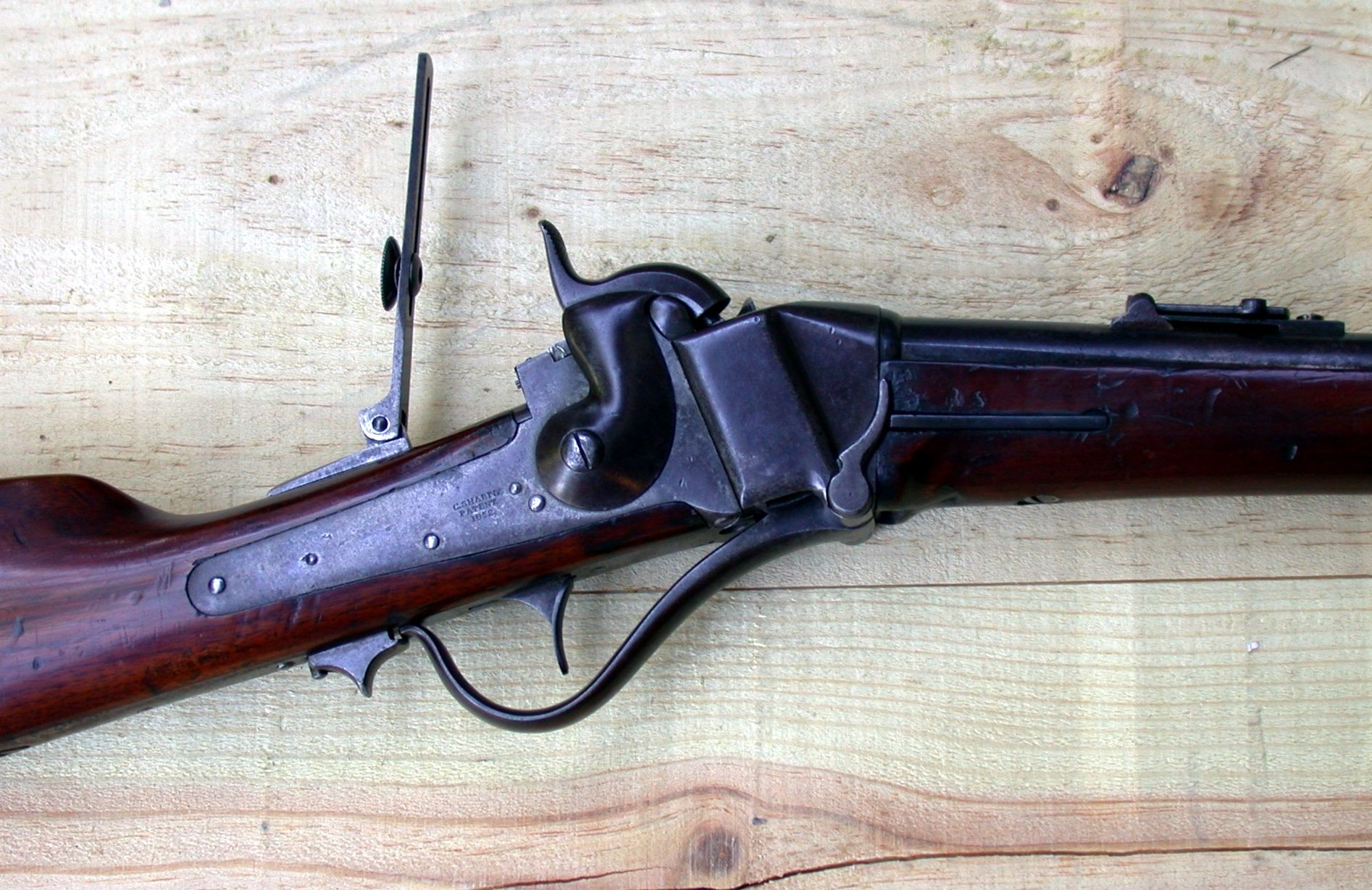
The Sharps rifle earned a formidable reputation for accuracy and power. In various models and calibers, it served soldiers, target shooters, buffalo hunters, and plainsmen who needed a serious long gun capable of hitting hard at substantial distance.
Its role in the buffalo trade was especially consequential. Sharps rifles became closely tied to the mass hunting that devastated bison herds, an ecological and cultural turning point for the West and for Indigenous nations whose lives were deeply connected to those animals.
It was not a rapid-fire repeater, and it did not need to be. The Sharps stood for reach, precision, and authority in an era when one well-placed shot could matter most.
Spencer Carbine

The Spencer carbine brought repeating firepower to mounted troops and frontier users who needed compact efficiency. First proven during the Civil War, it used metallic cartridges and a magazine in the buttstock, giving cavalry a much faster rate of fire than many opponents expected.
After the war, surplus Spencers moved west and remained relevant in a period of rapid change. For soldiers on the plains, a repeating carbine could offer a meaningful edge in mobile engagements where speed and reloading convenience were critical.
The Spencer was eventually overshadowed by newer Winchesters and other designs. Still, it helped prove that repeaters belonged not just in theory, but in daily frontier service.
Springfield Model 1873 Trapdoor

The Springfield Model 1873 Trapdoor became a standard U.S. military rifle during key years of Western expansion and conflict. A single-shot breechloader, it lacked the repeat-fire glamour of lever actions, but it offered strong cartridges, respectable range, and institutional reliability.
Its frontier story is inseparable from the Indian Wars, where it was carried by U.S. troops in campaigns across the plains and beyond. The rifle’s performance has been debated ever since, especially in connection with famous battles and logistical shortcomings.
What is clear is that the Trapdoor was central to federal power in the post-Civil War West. It symbolized an army extending reach into contested territory.
Coach Gun

The coach gun was less a single model than a frontier category: a short double-barreled shotgun built for close-range defense. It was ideal for stagecoaches, store counters, homesteads, and any setting where threats appeared suddenly and at short distance.
Its strengths were obvious. The gun was compact, easy to handle in tight quarters, and devastating with buckshot. On a bumpy coach seat or inside a cramped room, that mattered more than long-range precision.
The coach gun also became part of Western visual culture because it was so rooted in everyday danger. It was a working firearm, not a romantic one, and that practicality explains its staying power.