Maryland has become one of the sharpest battlegrounds in the national fight over public carry. Now the state’s tough rules for visitors and nonresidents are facing another serious test.
Why Maryland stands apart on out-of-state carry
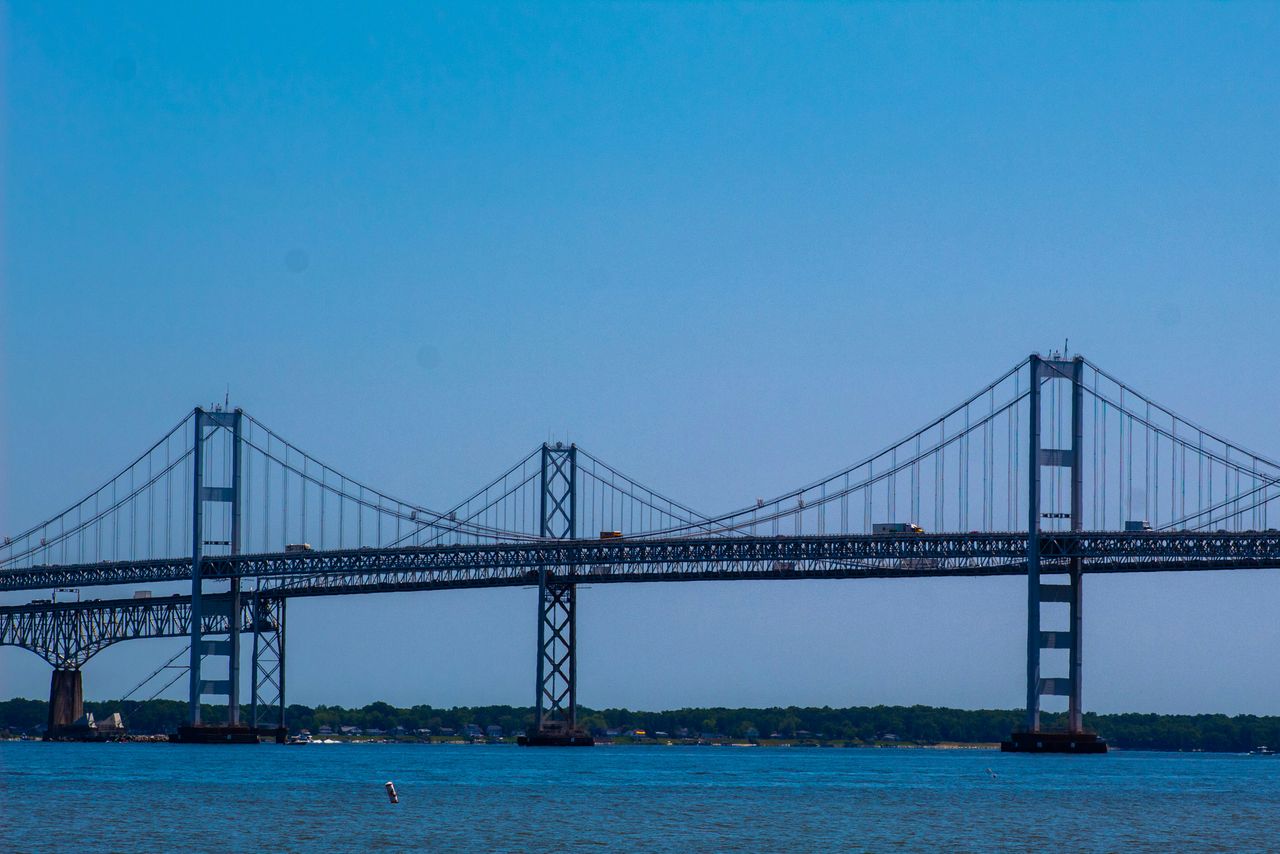
Maryland does not recognize concealed carry permits issued by any other state. That means a gun owner who can legally carry in Virginia, Pennsylvania, West Virginia, or Florida does not automatically gain that right after crossing into Maryland. For many travelers, that is the rule that matters most, because it turns an otherwise ordinary state line into a legal tripwire.
The practical effect is simple but severe. If you want to carry a handgun in Maryland, you generally need a Maryland Wear and Carry Permit, even if your home state has already vetted and licensed you. According to Maryland State Police guidance and recent summaries of the law, the state applies the same basic permit structure to residents and nonresidents, but it offers no reciprocity shortcut.
That makes Maryland different from much of the country. Many states either recognize at least some out-of-state permits or allow permitless carry. Maryland does neither. Instead, it insists on its own licensing system and overlays that system with an extensive map of restricted places where even permit holders can face limits.
For commuters around the Washington and Baltimore regions, that approach creates constant friction. A lawful carrier can move from one legal environment to another in minutes, and a mistake is not a paperwork issue. It can become a criminal case.
What the new challenge is really about

The latest challenge is not just a policy complaint about inconvenience. It is part of a broader constitutional campaign by gun rights organizations that argue Maryland’s system burdens the right to bear arms too heavily, especially for people traveling from other states. One major example is Gardner v. Maryland, a case presented to the U.S. Supreme Court in late 2025 that argued Maryland’s nonreciprocal carry regime leads to unconstitutional prosecutions of travelers.
The petition in that case framed the issue in broad terms. Its argument was that a state should not be able to criminalize ordinary bearing of arms by law-abiding visitors who are licensed elsewhere and simply passing through or entering the state. That challenge fits a wider strategy seen across the country after the Supreme Court’s Bruen decision in 2022.
Bruen changed the legal test for modern gun restrictions and triggered a wave of lawsuits. Since then, advocacy groups such as Maryland Shall Issue, the Firearms Policy Coalition, the Second Amendment Foundation, and NRA-backed litigants have pressed courts to reexamine permit systems and so-called sensitive-place restrictions. In Maryland, those fights have landed in both state and federal courts.
What makes the current pressure notable is timing. Maryland already spent the past three years defending multiple gun laws after Bruen, and each new lawsuit builds on the last. The out-of-state issue is now emerging as one of the next logical fronts.
The legal backdrop after Bruen and the Fourth Circuit rulings

To understand why this challenge matters, you have to start with what courts have already said. In January 2026, the U.S. Court of Appeals for the Fourth Circuit issued its opinion in Kipke v. Moore, a major case over Maryland’s sensitive-place carry restrictions. Maryland State Police later summarized the ruling by saying the court upheld restrictions in government buildings, mass transit facilities, school grounds, state parks and forests, museums, healthcare facilities, stadiums, racetracks, amusement parks, casinos, and certain demonstration-related areas.
That was a significant win for the state, but not a total one. The Fourth Circuit also left in place an injunction blocking enforcement of Maryland’s default ban on carrying in private buildings or private property without the owner’s consent. State Police guidance updated on July 10, 2026, also said enforcement remained blocked, pending Supreme Court review, for the private property rule, the carry ban in some locations selling alcohol, and the 1,000-foot demonstration restriction.
Those rulings matter because they show how Maryland’s carry rules are being narrowed and tested piece by piece, not all at once. Courts have not erased the state’s framework, but they also have not given it a blank check. Instead, judges are drawing lines around which restrictions look historically grounded and which look too broad.
For gun rights groups, that creates an opening. If some locational bans can be struck or paused, they argue, then the same constitutional logic can be used to question Maryland’s refusal to honor out-of-state permits or its treatment of nonresident travelers.
How Maryland’s nonresident permit system works in practice
Maryland’s answer to critics is straightforward: visitors are not shut out entirely, because nonresidents can apply for the same Wear and Carry Permit available to residents. In other words, the state does not say outsiders may never carry. It says they must first go through Maryland’s own process.
That process is still a real burden, especially for someone who only enters the state occasionally. First-time applicants generally must complete 16 hours of training, satisfy eligibility standards, undergo a background investigation, and submit fingerprints through Maryland-approved channels. Reporting on the nonresident application process in 2026 also noted a $125 initial application fee and a review period that can run up to 90 days.
There is also a logistics problem. Maryland requires LiveScan fingerprinting from approved providers, and state guidance has said out-of-state LiveScan providers are not accepted. So a nonresident from, say, North Carolina or Ohio may have to make a dedicated trip just to complete a required step before the application can even move forward.
Gun rights advocates say that burden is exactly the point of the challenge. In their view, a constitutional right should not depend on a costly, time-consuming second licensing process every time a traveler enters a nonreciprocal state. Maryland, by contrast, sees the permit as a public-safety screen that applies equally to everyone carrying within its borders.
The state’s public safety argument

Maryland officials and allied gun control groups have long defended the state’s carry rules as measured responses to public risk, not ideological barriers. Their basic argument is that densely populated jurisdictions, transit systems, schools, hospitals, entertainment venues, and protest zones present special dangers when more firearms are introduced into already tense or crowded spaces.
That position has found traction in court. The Fourth Circuit’s January 2026 decision largely accepted Maryland’s effort to classify many locations as sensitive places where carry can be restricted. The ruling gave the state a meaningful legal foundation for saying modern public carry limits can still survive under Bruen when they are tied to historical analogies and context.
Maryland can make a similar case on reciprocity. From the state’s perspective, honoring every other state’s permit would force Maryland to accept training standards, vetting rules, and eligibility thresholds set elsewhere. Some states have looser requirements than Maryland, and some have none at all for everyday carry.
So the state’s defense is likely to remain consistent: if you want to carry in Maryland, Maryland gets to decide the terms. That argument may sound formal, but in court it connects directly to the state’s claim that local conditions justify local screening.
What gun rights groups are likely to argue next

The challengers are likely to focus on ordinary, law-abiding interstate travel. That is a powerful fact pattern because it avoids the hardest cases and centers on people who are already licensed elsewhere, have no disqualifying criminal record, and say they want to carry for self-defense while commuting, visiting family, or driving through the state.
They also are likely to argue that Maryland’s no-reciprocity rule functions as a near ban for many visitors. A person who comes into the state only a few times a year may not realistically pursue a Maryland permit, especially when training, fingerprinting, fees, and wait times are stacked together. In constitutional terms, the challengers will say a right that exists only after that level of friction is not much of a right at all.
Expect them to lean heavily on Bruen’s history-focused framework. The central claim will be that founding-era tradition does not support forcing peaceable travelers to disarm merely because they crossed into another state. The Gardner petition previewed that position by portraying Maryland’s current regime as one that still permits unconstitutional prosecutions of out-of-state carriers.
Another likely angle is the uneven national map. Gun rights groups will point out that many states trust each other’s permits or skip permit requirements entirely. They will use that contrast to argue Maryland is an outlier imposing a uniquely harsh burden on constitutional conduct.
What this could mean for travelers, gun owners, and Maryland
In the short term, nothing changes unless a court orders it. As of July 24, 2026, Maryland still does not recognize out-of-state carry permits, and nonresidents who want to lawfully carry generally still need a Maryland-issued permit. At the same time, the larger web of carry restrictions remains fluid because parts of the state’s sensitive-place regime are still tied up in ongoing litigation and possible Supreme Court review.
For travelers, the safest takeaway is blunt. Do not assume your home-state permit travels with you into Maryland. Even experienced gun owners can misread the rules, especially when moving between neighboring states with drastically different laws.
For Maryland, this challenge is about more than one permit question. It goes to whether the state can continue treating public carry as a tightly managed privilege inside its borders, or whether courts will force more recognition of interstate carry rights. That is a major constitutional question, and it is not going away.
The next phase will likely depend on whether higher courts want to clarify how Bruen applies to nonresidents and travelers. If they do, Maryland could become the test case that defines how much control a state has when an armed citizen from somewhere else comes to town.