State gun laws do not just change what is legal. They change what actually sells, what sits in the display case, and what buyers end up walking away with.
That is why the American firearms market is not really one market at all. It is 50 different retail environments layered on top of one federal system.
Why the same gun can be hot in one state and dead stock in another
Federal law sets the floor for firearm sales, but state law often determines the real commercial outcome. A buyer in Arizona may be able to pick up a common semiauto rifle after the standard federal process, while a buyer in New York faces additional licensing rules just to acquire a semiautomatic rifle. New York State Police say a semi-automatic rifle license has been required for purchases since September 4, 2022, and the minimum age for buying one is 21. That single rule changes demand, dealer inventory, and buyer behavior overnight.
California offers another clear example. The state Department of Justice says a handgun generally cannot be sold by a dealer unless it appears on the official roster of certified handguns. So a pistol that is nationally popular can be a normal shelf item in Texas and nearly absent from ordinary retail channels in California.
That pattern repeats across the country. Washington restricts the sale, import, manufacture, and distribution of assault weapons under state law. Colorado passed a 2025 law that bars the sale and purchase of certain specified semiautomatic firearms beginning August 1, 2026. When statutes get that specific, the market does not merely slow down. It splits into entirely different worlds, according to official state sources and ATF guidance.
AR-15 pattern rifles

No firearm illustrates state-by-state market divergence better than the AR-15. In much of the country, it remains a standard sporting rifle platform sold in large volume, supported by a huge aftermarket, broad parts compatibility, and familiar manual of arms. Dealers in permissive states often treat it like a core category, not a niche product.
In ban states, that story changes completely. Washington law prohibits the sale and import of assault weapons, and Connecticut law still lists many named and feature-defined semiautomatic rifles under its assault weapon framework. Illinois also sharply changed the retail landscape with its Protect Illinois Communities Act, which restricted many rifles by name and features. The result is that a rifle that anchors showroom traffic in one state may be legally untouchable inventory in another.
That difference reshapes the business side too. Dealers in restrictive states often pivot to feature-compliant rifles, fixed-magazine designs, or entirely different product categories. Buyers adapt by chasing grandfathered guns, out-of-state transfers where lawful, or alternatives like Mini-14 variants, pistol-caliber carbines, or manually operated rifles. Same platform, completely different market behavior, depending on what side of a state line you are standing on.
AK-style rifles

AK-pattern rifles face many of the same legal pressures as AR-15s, but often with even more direct statutory attention. Several states identify Kalashnikov-pattern firearms by name or by family, which means dealers cannot rely on simple cosmetic compliance changes the way some buyers try to do with other rifles. In states with named bans, the platform can go from mainstream to nonstarter fast.
Connecticut’s statutory language has long called out Avtomat Kalashnikov AK-47 type firearms among specifically identified semiautomatic guns. California also maintains state resources addressing AK and AR series weapons, reflecting how central these platforms are to the state’s regulatory structure. That matters because named treatment removes a lot of retail flexibility. If the gun is banned by pattern or series, there is less room for store-by-store interpretation.
In freer states, AK rifles sell on entirely different strengths than ARs. Buyers often want simple controls, durability, 7.62×39 chambering, or a more traditional stamped-steel feel. But in restrictive states, the commercial question is often not price, quality, or brand reputation. It is whether the rifle can be stocked at all. That is about as dramatic a market split as any retailer can face.
Off-roster striker-fired pistols

Modern striker-fired handguns are America’s default sidearms, but California makes this category behave unlike almost anywhere else. The California Department of Justice says dealer sales to the public are generally limited to handguns listed on the state roster of certified models. That means a pistol that is standard issue in most gun shops nationwide can become scarce, expensive, or available only through narrow legal pathways inside California.
This has major commercial consequences. In states without a roster system, stores can stock the latest generation Glock, SIG Sauer, Smith & Wesson, Springfield Armory, or FN handgun as soon as distribution opens up. In California, dealers and buyers have to care not just about the brand and model, but about whether that exact version is roster-approved for retail sale.
The result is a warped market with premiums on certain configurations and unusually strong demand for older approved variants. Maryland also maintains its own handgun roster system through the Maryland Handgun Roster Board, though it works differently than California’s. Even that more limited extra layer affects what distributors ship and what consumers expect to find. For pistols, state approval systems do not just regulate selection. They rewrite it.
Compact handguns with threaded barrels

A threaded barrel can be a small design detail with outsized legal consequences. In permissive states, buyers often want threaded-barrel pistols for suppressor use, compensators, or future customization. The setup is common in home-defense builds, range guns, and tactical-style packages, and dealers in those states often treat it as a value-added feature.
In some restrictive jurisdictions, though, the same feature can trigger a completely different legal analysis. Feature-based assault weapon laws may sweep in semiautomatic pistols with detachable magazines plus specified features, and threaded barrels are often on that list. That means a handgun sold casually in one state may need to be avoided entirely by another dealer because the barrel threads alone change the legal category.
Colorado’s 2025 semiautomatic firearms law is another reminder that even handguns can be pulled into broader restrictions when lawmakers define regulated categories around detachable magazines and operating systems. So while buyers in one state see a suppressor-ready compact as a practical modern pistol, buyers in another may never see it on a shelf. The market difference is not subtle. It is built right into the barrel.
Semiautomatic rifles in New York

New York deserves its own category because it does more than ban certain configurations. It adds a licensing layer to the purchase of semiautomatic rifles themselves. According to the state’s official gun safety guidance, acquiring a semiautomatic rifle on or after September 4, 2022 requires a semiautomatic rifle license, and the minimum age is 21.
That one administrative rule changes the market in ways people outside the state sometimes miss. It does not just affect AR-style rifles. It can also influence sales of ordinary semiauto hunting rifles, rimfire trainers, and ranch guns that would be routine purchases elsewhere. Every extra step in the buying process filters out some buyers, delays others, and nudges first-time customers toward different platforms.
Retailers respond accordingly. Some stock deeper on manually operated rifles and compliant shotguns because those products face fewer friction points. Others keep semiautomatics in inventory but understand the customer pool is narrower and more paperwork-sensitive than in neighboring states with less layered regulation. That is why New York is not simply a “ban state” story. It is a demand-shaping state, where licensing changes what categories even move.
Short-barreled rifles
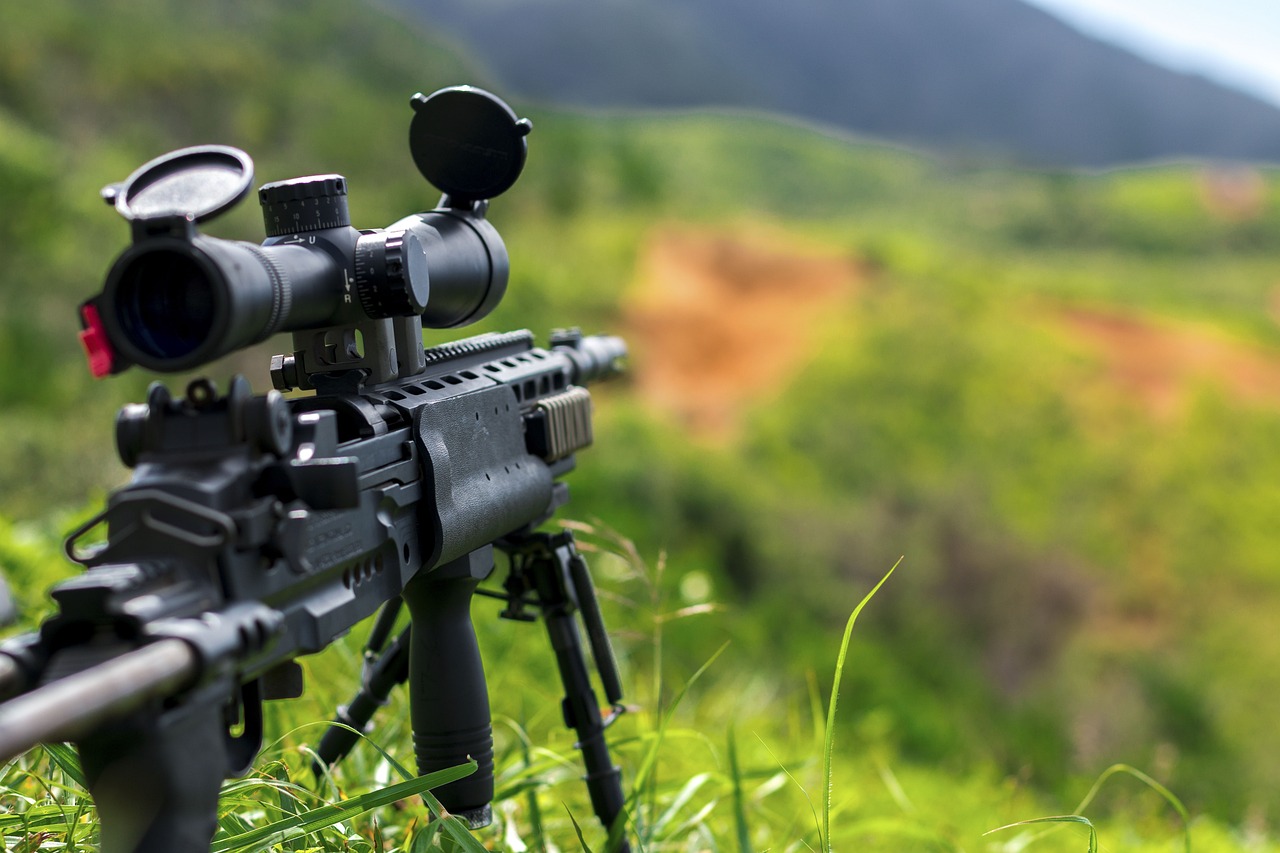
Short-barreled rifles are a classic example of a gun that can be legally imaginable in one state and practically nonexistent in another. At the federal level, they fall under the National Firearms Act, which already means added paperwork and federal approval. But state law is what often decides whether a dealer even bothers building a local market for them.
In states friendly to NFA ownership, SBRs have a real niche. Buyers want compact rifles for home defense, truck gun setups where lawful, training, or suppressed use. Dealers that understand the NFA process can build repeat business around them, especially as customers become more comfortable with tax stamps, trust paperwork, and wait times.
In restrictive states, the category may be barred outright or so heavily constrained that stores devote little shelf space or marketing effort to it. And when a state already dislikes semiautomatic rifles, barrel length flexibility is usually not where lawmakers get generous. The retail outcome is obvious. In one state, an SBR is a premium enthusiast item with healthy margins. In another, it is barely part of the conversation at all.
Suppressors

Suppressors may be the most striking example of legal geography driving consumer behavior. Nationally, sales have surged in recent years. NSSF recently described suppressor sales as booming and noted that 2026 could be the “Year of the Suppressor.” Its fact sheet says suppressors are legal in 42 states and legal for hunting use in 41 states, which already tells you the market is broad but far from universal.
Where suppressors are legal and culturally normalized, dealers market them as hearing protection gear, recoil-management tools, and quality-of-life upgrades for range and field use. Customers in those states often plan purchases around hosts, mounting systems, and caliber compatibility, just like they would with optics or lights.
But in states where suppressors remain prohibited, demand gets frozen at zero no matter how strong the product category becomes nationally. That distorts everything from pistol sales to threaded-barrel rifle builds because buyers may not value suppressor-ready features if the suppressor itself is off-limits. A product class that is booming in one state can literally not exist as a lawful retail channel in another. Few categories show the map effect more clearly.
Standard-capacity pistols with 15- to 17-round magazines
A polymer duty pistol with a 15- or 17-round magazine is routine in much of America. It is the most normal thing in the handgun case. But magazine-capacity laws turn that routine sale into a compliance puzzle in several states, and that changes what dealers order, how manufacturers package guns, and what buyers perceive as standard.
In restricted states, stores often stock special low-capacity versions of common pistols or sell guns with substitute magazines to meet state limits. Colorado has long had a large-capacity magazine restriction on the books, and the Colorado Bureau of Investigation still lists that law among the state’s core firearm rules. Other states, including New Jersey, Connecticut, and parts of the Northeast regulatory cluster, have similar capacity-sensitive retail environments.
That changes the economics more than many casual buyers realize. A pistol sold with 17-round magazines in one state may arrive with 10-round magazines in another, altering price, appeal, and even resale behavior. For national brands, “the same handgun” is often not actually the same SKU from one region to the next. The law changes the package, and the package changes the sale.
Shockwave-style and other gray-area firearms
Some firearms live in the space between familiar categories, and those are exactly the products that get treated wildly differently from state to state. Think of birds-head-grip pump firearms, non-NFA “other” firearms, and similar designs built to fit federal definitions in highly specific ways. In one market they are novelty bestsellers. In another,r they are compliance landmines.
These guns rely on careful classification. Federal treatment may say one thing, but states can adopt their own definitions, their own prohibited-features tests, or their own views on what counts as a shotgun, assault weapon, or concealable firearm. Washington’s and Connecticut’s increasingly detailed statutory language around component parts, definitions, and conversion concepts shows how little room there is for casual assumptions in this space.
Retailers that move a lot of these products tend to be in states where local law is stable and well understood. Elsewhere, many dealers simply avoid the category because the legal upside is too small compared with the risk of getting it wrong. When a product’s appeal depends on threading a definitional needle, state law can make it a hit or make it disappear.
Handguns in permit-heavy states like New Jersey

New Jersey is a great example of how a state can keep ordinary handguns legal yet still shape the market through process. The New Jersey State Police direct buyers to apply for a Permit to Purchase a Handgun and a Firearms Purchaser Identification Card through the state system. That does not ban common pistols, but it absolutely affects how often people buy, how long they wait, and how dealers structure customer service.
In practical terms, permit-heavy states tend to reward planned purchasing. Buyers are more likely to batch decisions, research longer, and treat each handgun acquisition as an event rather than an impulse range-day purchase. Dealers often spend more time walking customers through forms, approvals, and local administrative expectations than stores in lower-friction states do.
That changes what sells. In these environments, shoppers may lean toward versatile do-it-all handguns because each purchase feels more consequential. It also tends to favor established brands with strong reputations and easy compliance histories. The handgun itself may be perfectly ordinary. The sales environment around it is anything but. That is often enough to create a totally different retail culture.
Machine guns and ultra-rare transferable firearms.
At the far edge of the market sit transferable machine guns, where federal law already limits supply so dramatically that state law becomes an even stronger filter. ATF’s data center notes that the National Firearms Registration and Transfer Record includes hundreds of thousands of machine guns overall, but that total is not the same as the number possessed by ordinary law-abiding individuals. Scarcity is baked in before you even get to state rules.
In states that allow possession of federally registered machine guns, the market behaves like a collector and investment niche. Buyers think in terms of provenance, transferability, pre-1986 supply constraints, and long-term value. Prices can be astonishing because no newly transferable civilian machine guns are entering that pool.
In other states, the category is effectively irrelevant to ordinary retail because state law blocks ownership regardless of federal registration. Maryland, for instance, specifically maintains a machine gun registration function through state police administration. That sort of additional state layer tells you everything you need to know about how fragmented this market is. Here, more than anywhere else, geography determines whether the item is a luxury collectible or a legal impossibility.
What this patchwork means for buyers and dealers
The biggest takeaway is simple: firearms do not sell on features alone. They sell through the lens of state law, dealer risk, local culture, and compliance cost. ATF’s manufacturing data and firearms commerce resources show a huge national market, but once those products hit state lines, the path to the display case can diverge sharply.
For buyers, that means doing state-specific homework before falling in love with a platform. A threaded barrel, a folding stock, a 17-round magazine, or even the lack of a roster listing can transform a straightforward purchase into a dead end. For dealers, it means inventory planning is as much legal analysis as merchandising.
So when people ask why one gun is everywhere in one state and nearly invisible in another, the answer is not mysterious. It is the cumulative effect of licensing rules, roster systems, assault weapon definitions, NFA restrictions, and magazine laws. America has one firearms culture in broad strokes, but in retail terms it still operates like a patchwork of separate markets. That is why these 11 guns sell so differently depending on where you live.