Firearms history is full of ambitious ideas that looked promising on paper but failed to become industry standards. Designers experimented with caseless ammunition, rocket-powered projectiles, enormous magazines, unusual operating systems, and burst-fire mechanisms. Some worked surprisingly well, while others introduced new problems that conventional designs simply avoided. These seven firearms are particularly interesting because their unusual features were not minor additions. Each weapon was built around a central idea that its designers believed could change how firearms worked.
1. Heckler & Koch G11
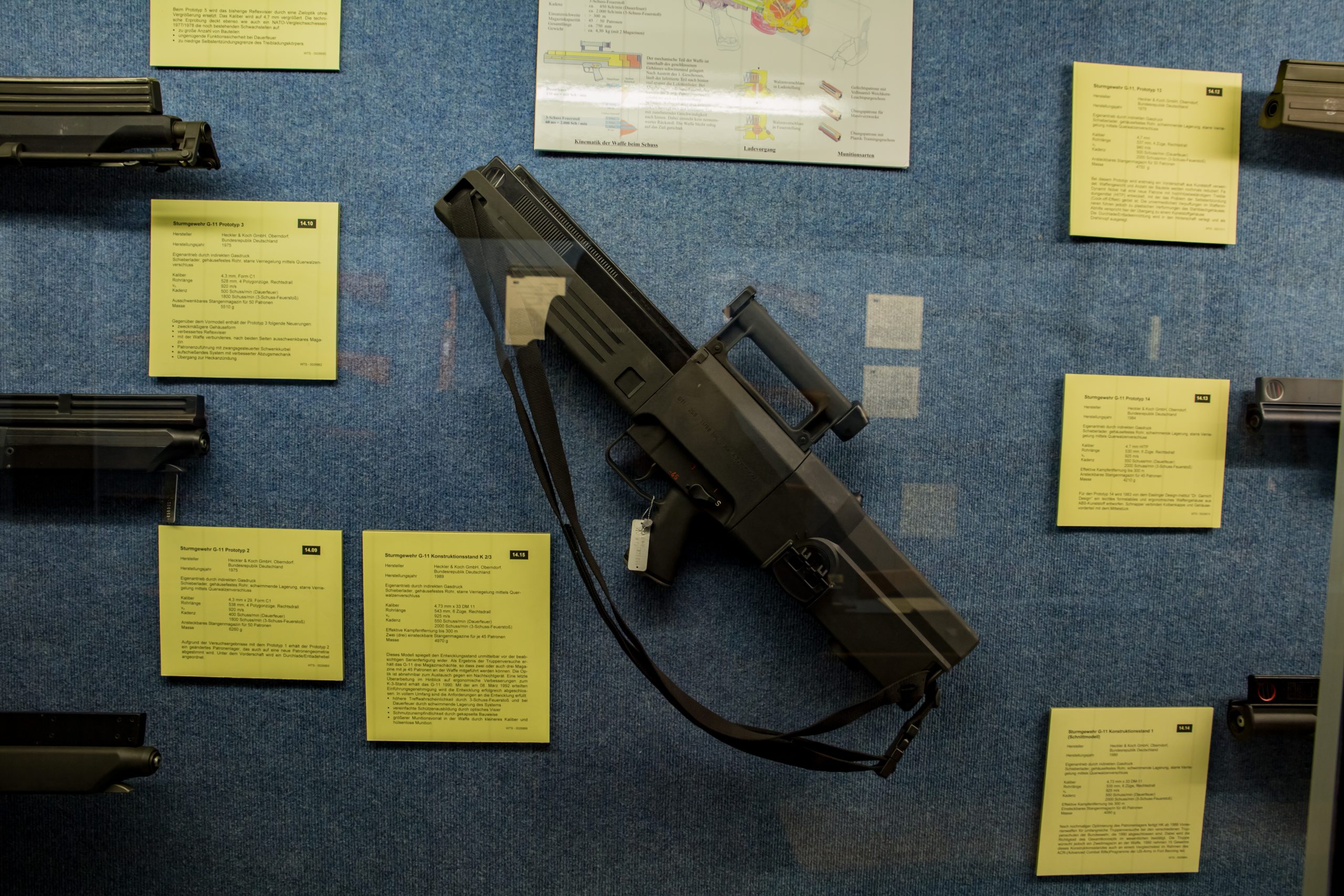
The G11 was built around an idea that seemed almost inevitable in the 1980s: caseless ammunition. Instead of a brass case, its 4.73×33mm round used a solid propellant block around the projectile, eliminating extraction and ejection. The rifle also used a rotating chamber and a very fast 3-round burst system. Test ammunition pushed a 51-grain bullet beyond 3,000 fps, while a 50-round magazine was envisioned. Heat management, ammunition handling, manufacturing cost, and changing military priorities prevented caseless ammunition from becoming mainstream. The G11 remains the clearest example of a firearm built around a feature the industry never adopted.
2. Gyrojet Pistol
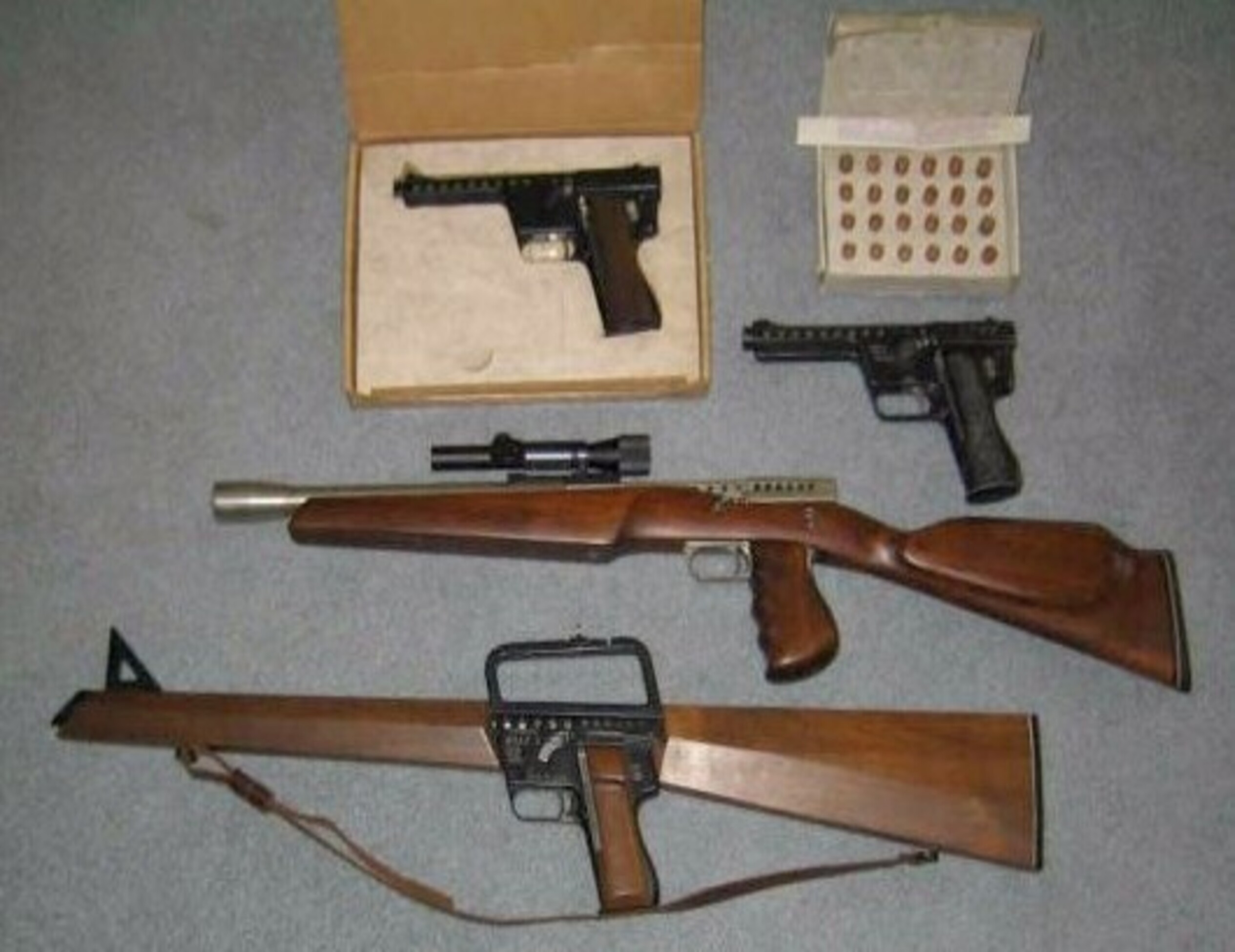
The Gyrojet fired a tiny rocket instead of a conventional bullet. Its 13mm projectiles contained solid propellant and used angled exhaust ports to spin for stability. That created a strange tradeoff. The projectile started relatively slowly and accelerated after leaving the muzzle, the opposite of what a normal handgun does. The weapon was tested during the Vietnam era, but limited reliability, ammunition cost, and poor short-range performance worked against it. Yet rocket-propelled handgun ammunition never became a practical mainstream alternative. Its unusual ammunition remains the main reason the Gyrojet is still remembered. The concept was simply too different from established handgun ammunition.
3. Calico M950
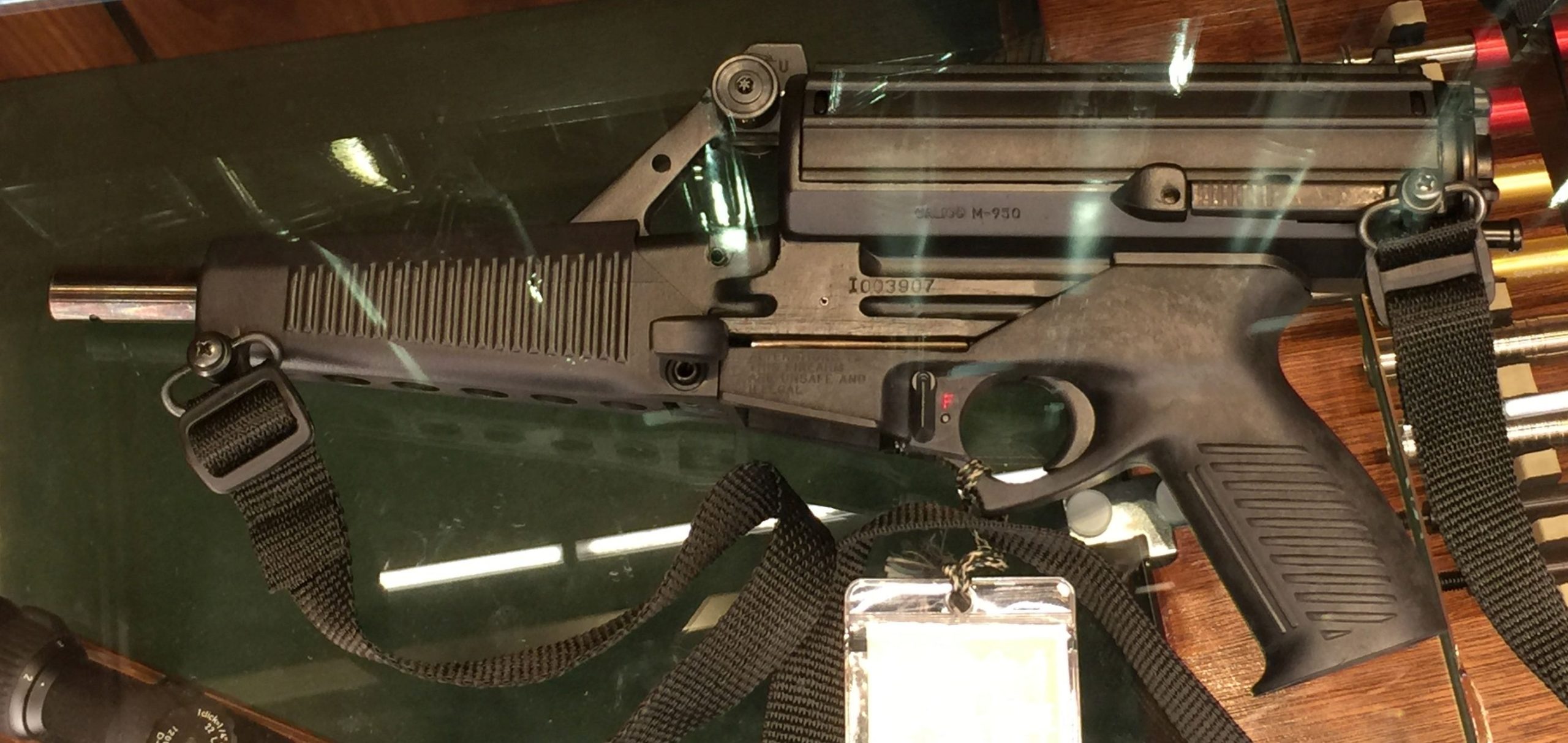
The Calico M950 revolved around a feature that looked ideal for compact firepower: a helical magazine above the receiver. Depending on configuration, the system could hold up to 100 rounds of 9mm ammunition, beyond the conventional pistol capacity of its era. The magazine fed cartridges through a rotating spiral path, giving the gun its distinctive profile. The idea solved one problem but created another: the unusual magazine was more complicated and less familiar than a conventional box magazine. Despite its impressive capacity, the system never became standard. Its 1980s-era design remains a fascinating example of capacity taking a different engineering path. The magazine was the star feature, but also the barrier to wider acceptance.
4. Heckler & Koch P7
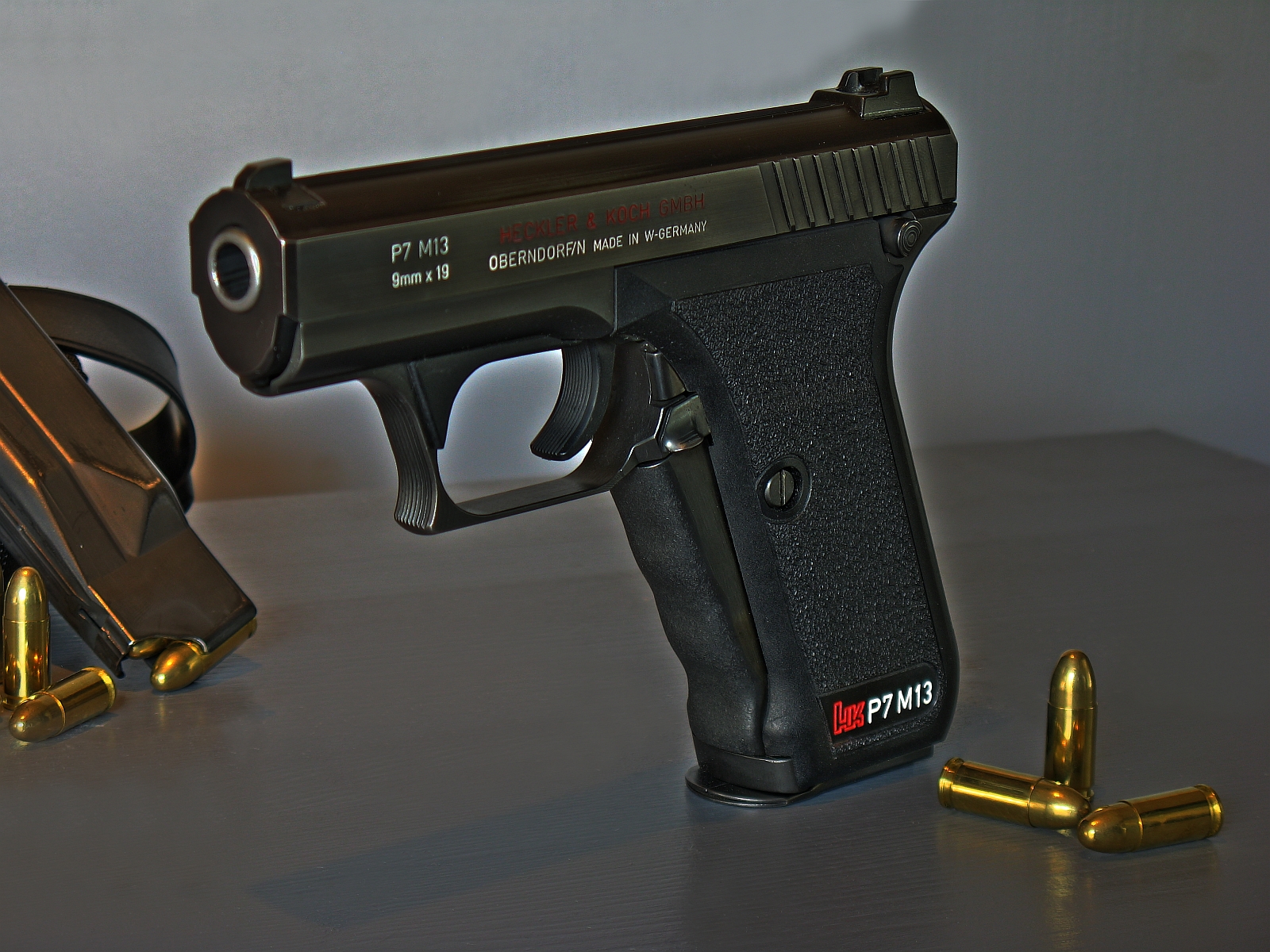
The P7 was built around gas-delayed blowback, a mechanism that avoided a conventional locked breech in a 9mm service pistol. Gas pressure from the barrel pushed against a piston beneath the slide, delaying rearward movement until chamber pressure fell. Its fluted chamber helped extraction, while the front squeeze-cocking lever made the pistol distinctive. The system produced a compact handgun, but it also generated considerable heat during extended firing. The P7 family was discontinued, and gas-delayed pistol actions never displaced simpler locked-breech designs. Its unusual operating system became its signature rather than a new industry standard. The design was clever, but its advantages did not outweigh the appeal of simpler mechanisms.
5. Steyr GB
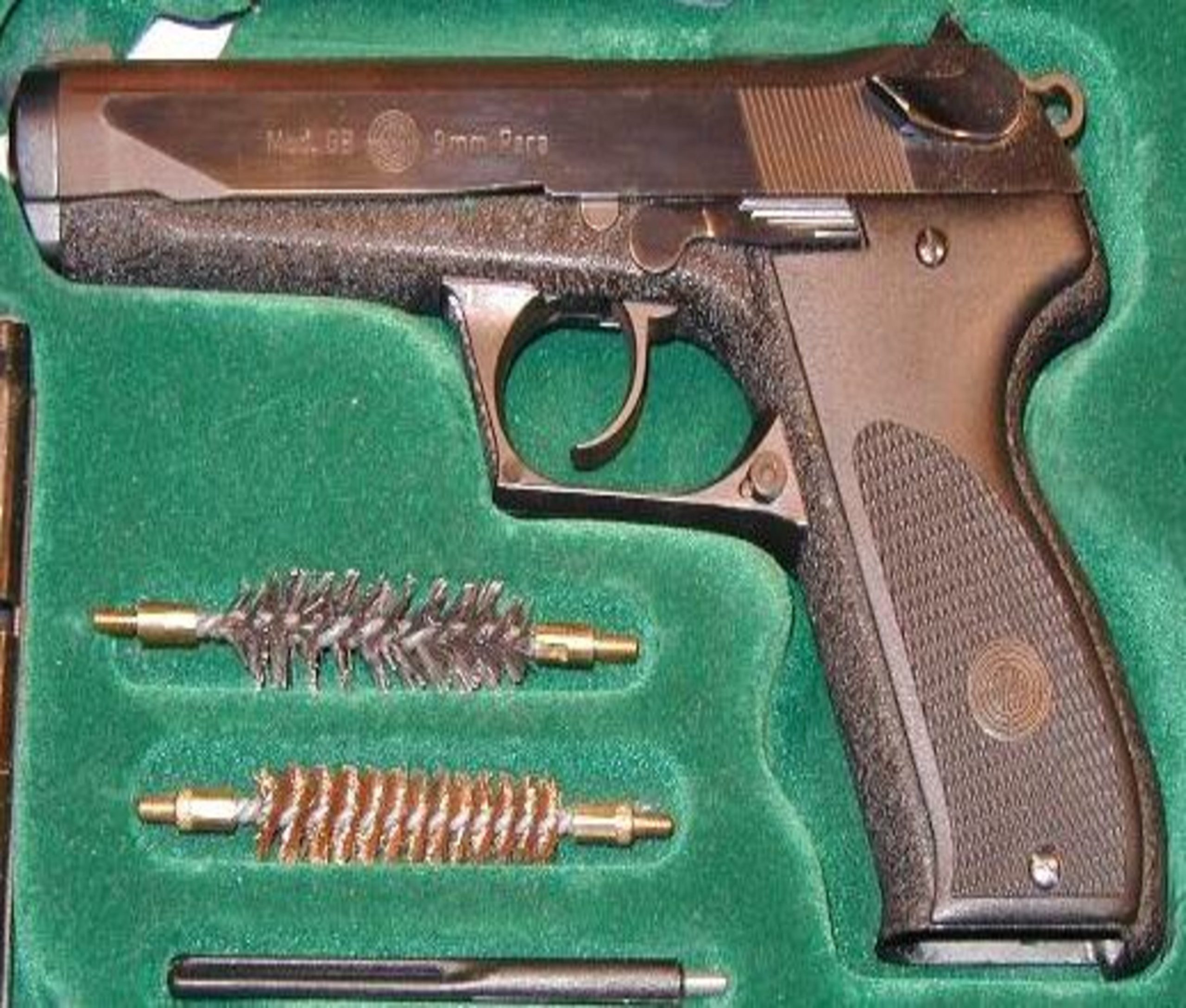
The Steyr GB pursued the same broad goal as the P7 but with an unusually large gas-delayed system built around a 9mm service pistol. Its design used a fixed barrel and gas piston, while an 18-round magazine gave it substantial capacity for its 1980s era. The pistol was also notable for its low bore axis and lack of a conventional locking system. Yet the mechanism was more complicated than the Browning-style locked breech used by many competitors, and the GB never achieved major military or commercial success. Steyr eventually stopped production after a relatively short run. Its gas system remains an interesting engineering detour that never became the dominant pistol mechanism. The feature was technically distinctive but commercially difficult to sustain.
6. Heckler & Koch VP70
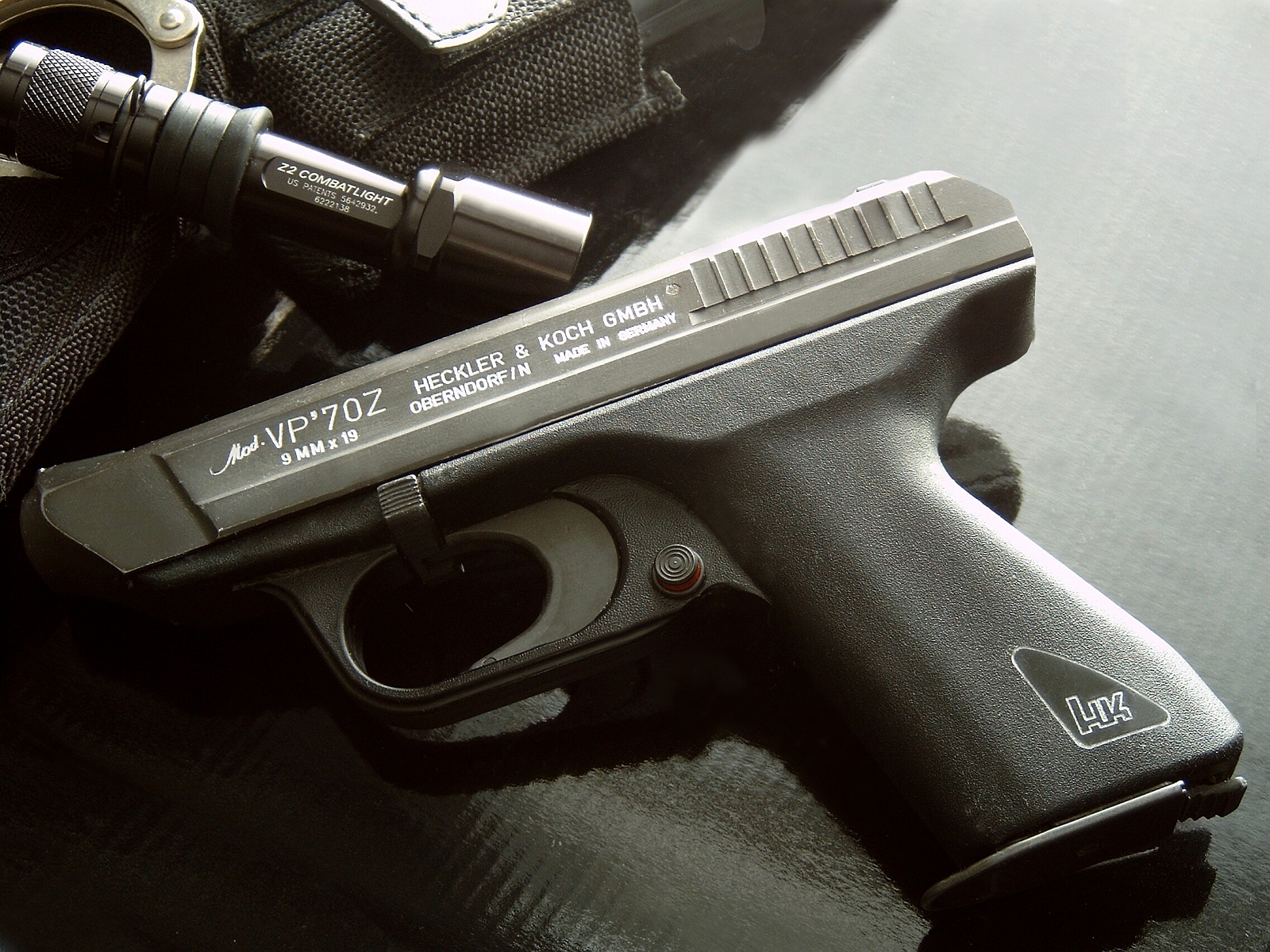
The VP70 was designed around several ideas that were years ahead of their time, including a polymer frame and a selectable 3-round burst on the VP70M. Its 18-round magazine was also generous for a pistol introduced in 1970. The weapon could be fitted with a shoulder stock that incorporated the fire-control mechanism, creating a compact burst-fire system. Yet the trigger was heavy, the stock arrangement was cumbersome, and the overall concept never became a mainstream service-pistol pattern. Polymer frames eventually became normal, but the VP70’s combination of features did not. It is an unusual case where one innovation succeeded while the larger package faded away. The pistol’s history shows that individual features can survive even when their original combination does not.
7. Dardick Model 1500
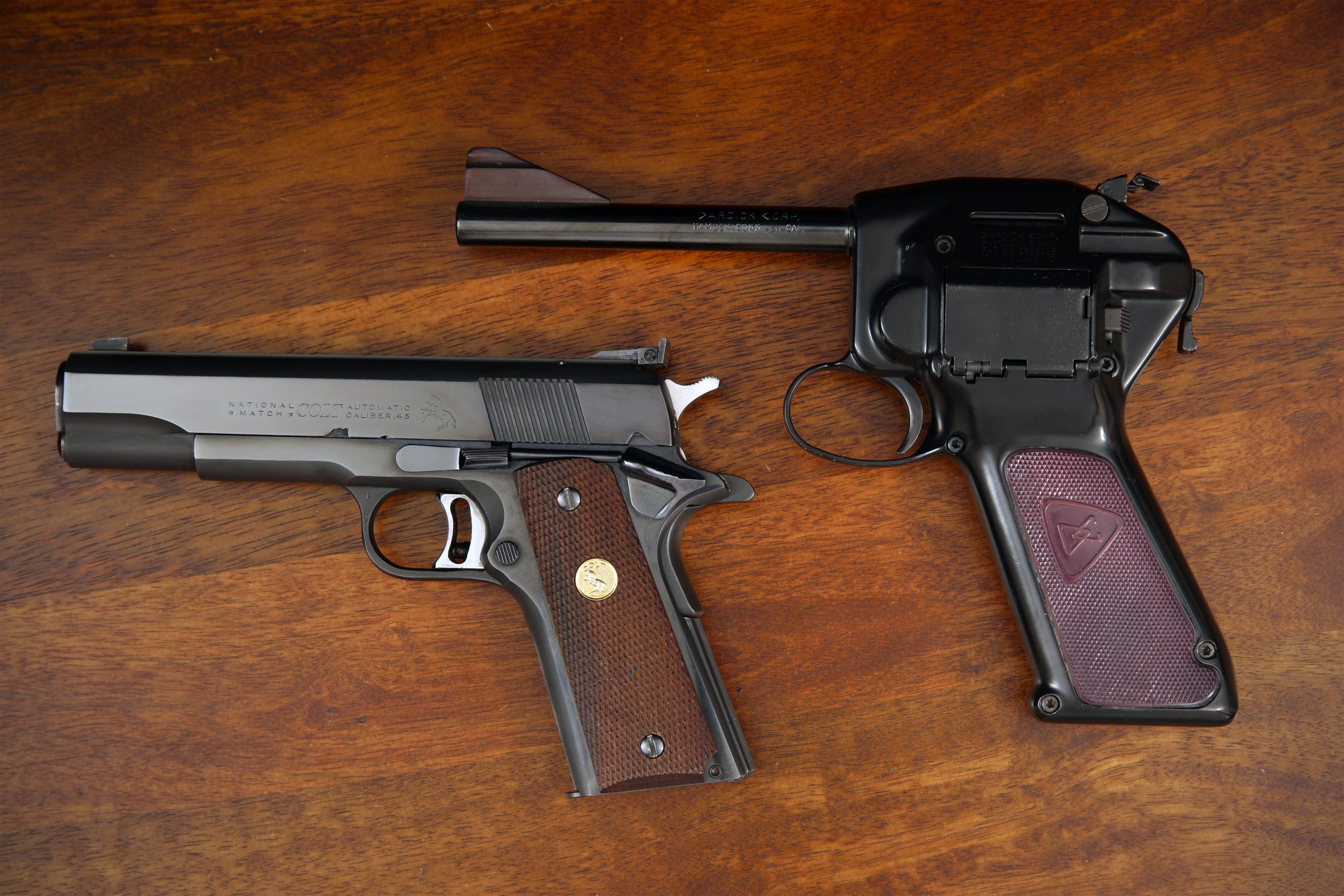
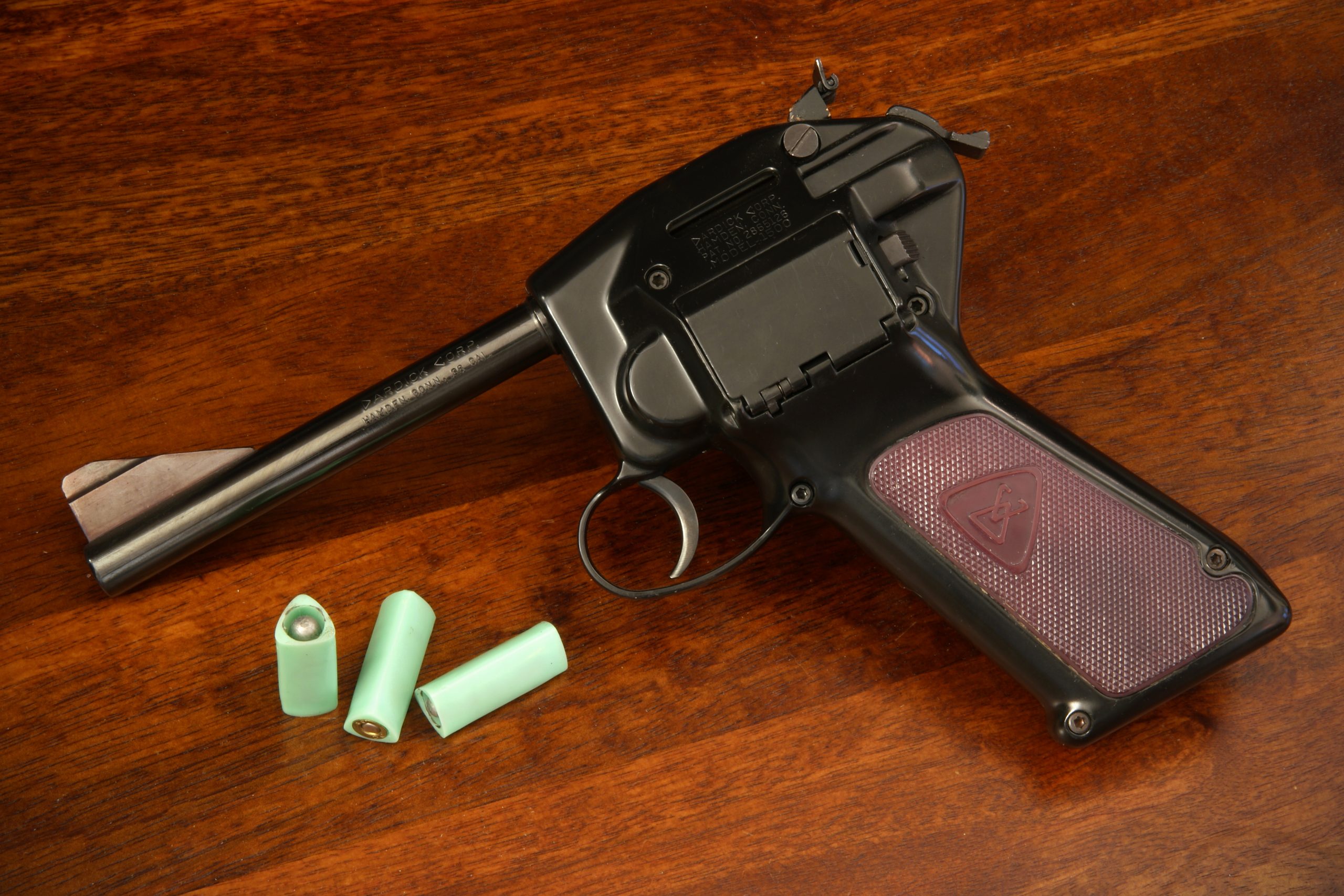
The Dardick 1500 was built around the Tround, a triangular cartridge intended to combine the compact storage of a magazine with the feeding advantages of a revolver. Its 1960s-era mechanism used an open-sided cylinder that accepted the unusual triangular ammunition and presented each round to the barrel. The 1500 could hold 11 Trounds, while other Dardick designs used different capacities. The concept promised flexible ammunition handling, but the ammunition itself was proprietary and never gained broad support. Once conventional cartridges and established feeding systems remained dominant, the Tround became an engineering curiosity rather than a new ammunition standard. Its unusual geometry ultimately limited the idea’s practical future