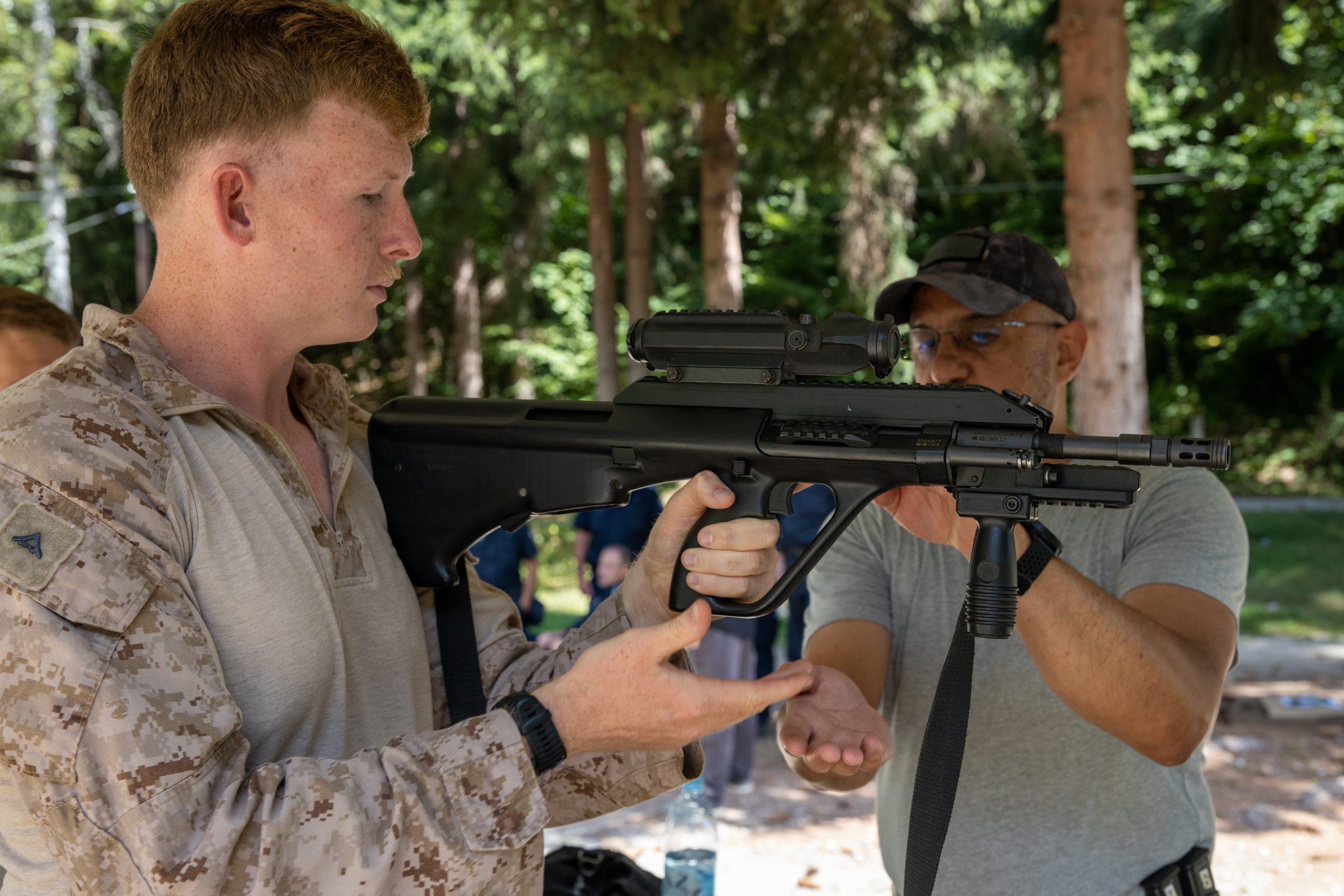
When the Steyr AUG entered service in the 1970s, it looked remarkably different from the rifles most soldiers were accustomed to carrying. Its compact bullpup layout, integrated optical sight, polymer construction, and modular design suggested a new way of thinking about military firearms. Developed in Austria, the AUG combined several features into one carefully planned system rather than treating each improvement as a separate accessory. Its influence extended well beyond its home country, making it one of the most recognizable rifle designs of the late 20th century.
1. Bullpup Layout
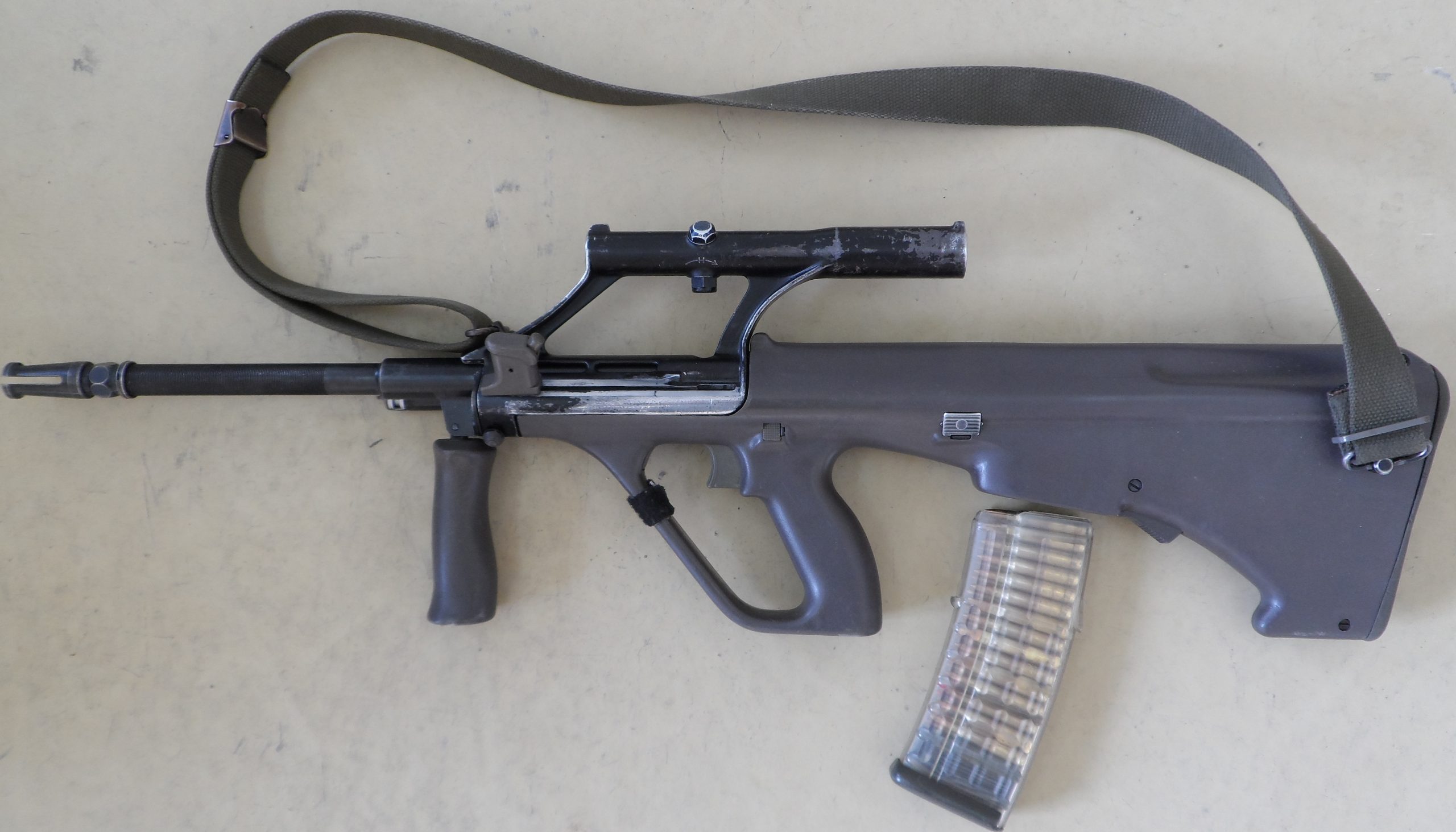
The AUG’s most striking feature was its bullpup layout, which places the magazine and action behind the trigger rather than ahead of it. That arrangement allowed the original rifle to use a 508 mm (20-inch) barrel while measuring about 790 mm (31 inches) overall. Conventional rifles of similar barrel length were generally longer. For soldiers moving through vehicles, buildings, or narrow passages, the compact profile was a meaningful design choice. Bullpup rifles existed before the AUG, but its successful service adoption helped bring the concept into wider view.
2. Integrated Optical Sight

The original AUG A1 arrived with a low-powered optical sight built into its carrying handle, rather than relying only on separate iron sights. Its roughly 1.5× magnification and simple ring reticle were intended to make aiming straightforward for ordinary service use. In the late 1970s, an optic supplied as part of a standard rifle was an unusual choice compared with the open sights common on many military weapons. The fixed sight also gave the AUG its distinctive profile, making the optic a functional feature and a defining part of its appearance.
3. Polymer Construction
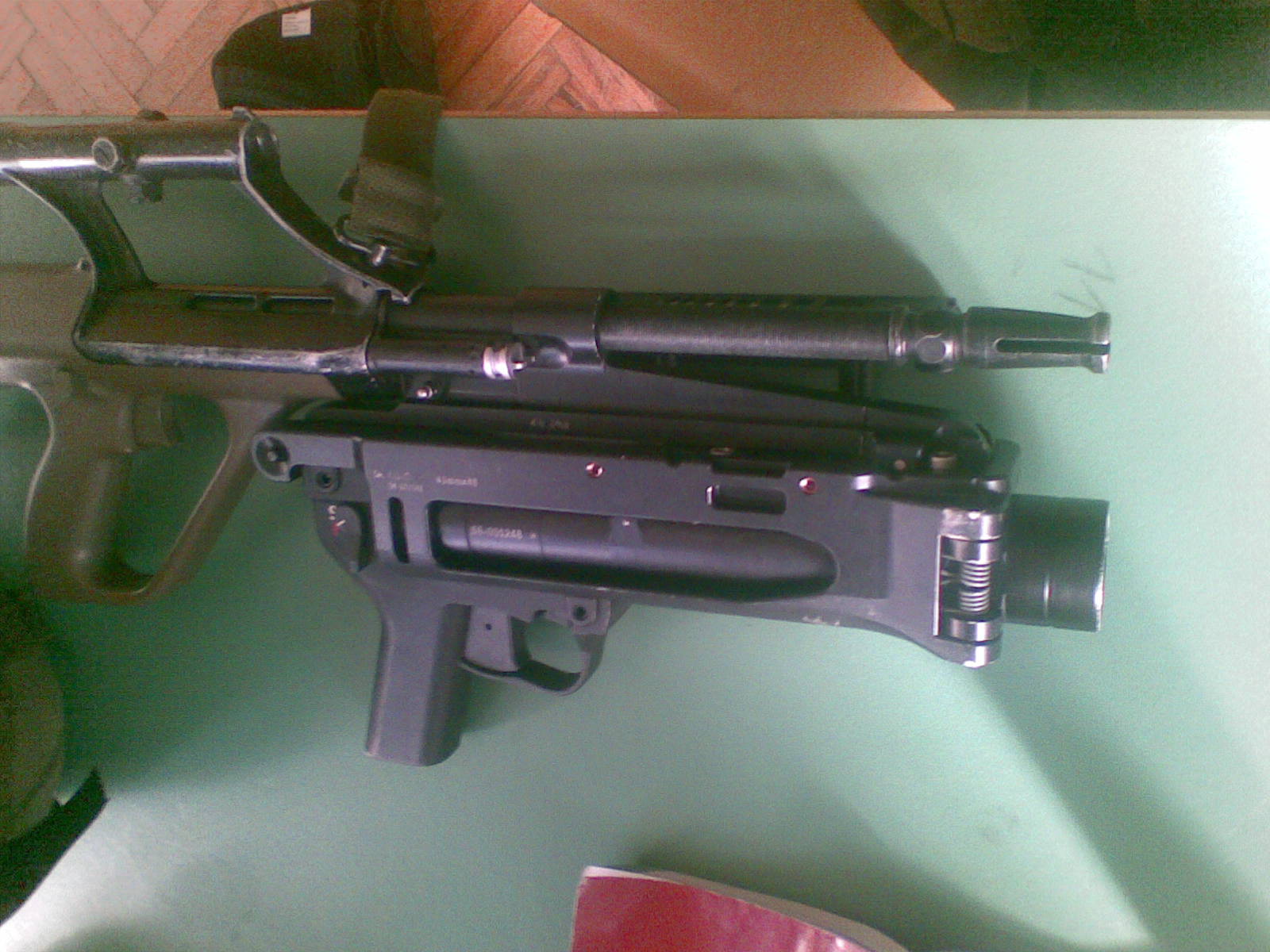
The AUG used a durable synthetic stock and polymer components at a time when many service rifles still looked dominated by wood or exposed metal. The material helped create a smooth, enclosed shape and reduced the need for separate furniture pieces. It was not an all-plastic firearm: important structural parts remained metal, including the barrel and receiver components. The combination was forward-looking because it treated polymer as a serious military material, not merely a cosmetic covering. Its pale green finish on early examples further strengthened the rifle’s futuristic appearance.
4. Modular Design
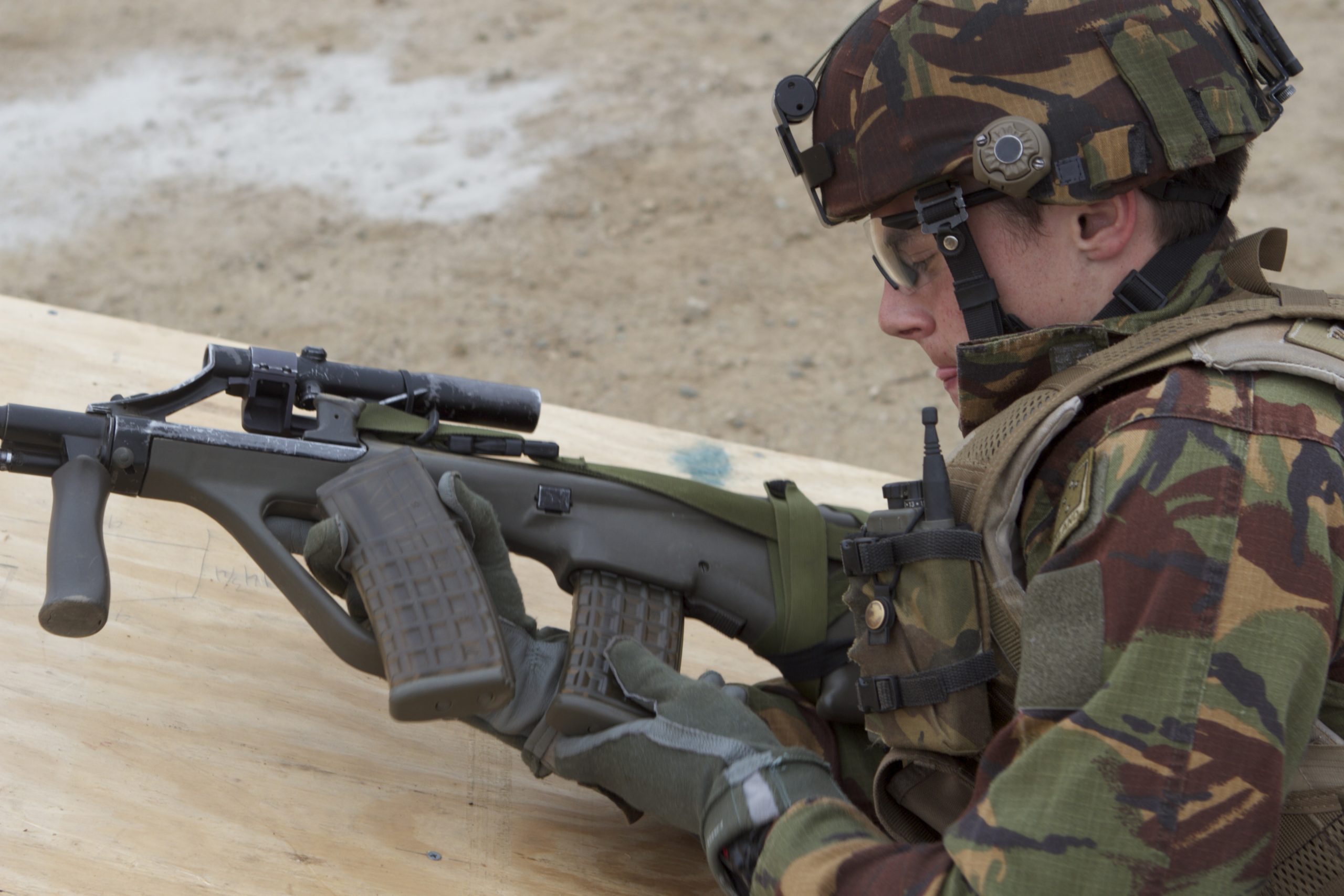
Steyr designed the AUG as a family of interchangeable assemblies rather than one fixed rifle. Its barrel group could be changed, and later configurations adapted the platform for different roles. The company describes the main groups as capable of being separated in seconds for field maintenance, without a collection of special tools. That approach anticipated the modular thinking now familiar in modern firearm design, where one base system can support multiple requirements. The AUG’s clean exterior made this flexibility less obvious, but modularity was central to its long service life.
5. Quick-Change Barrels

A quick-change barrel was built into the AUG concept from its early development, giving the platform more flexibility than a rifle with a permanently fitted barrel. Original A1 specifications listed barrel options of 382 mm, 417 mm, and 508 mm, depending on the version and intended role. The longer 508 mm barrel kept the rifle’s overall length to about 790 mm because of the bullpup layout. This was not simply a futuristic detail: it reflected an effort to make one basic weapon system adaptable for several different service roles.
6. Transparent Magazine
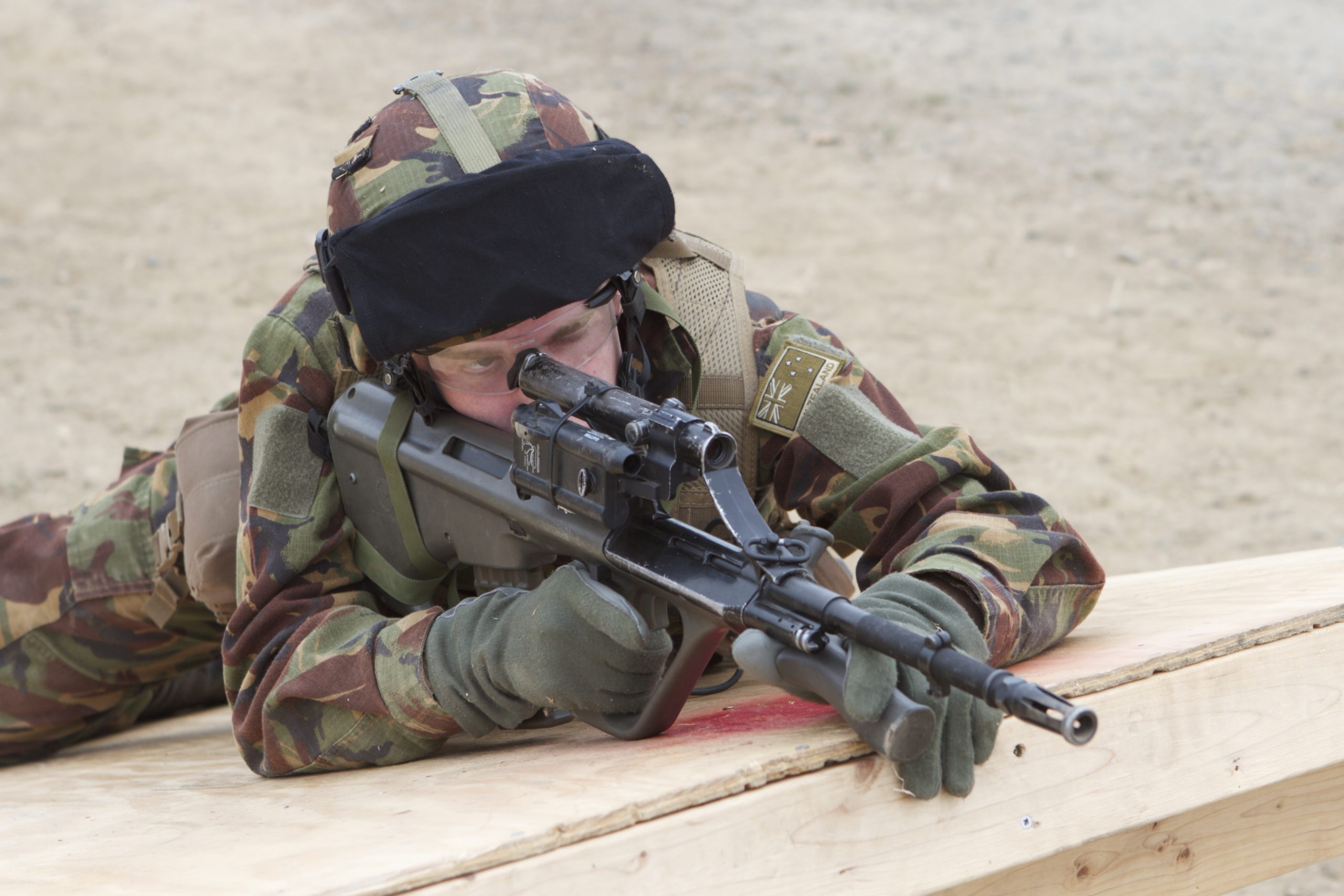
The AUG became famous for its translucent synthetic magazine, which let users estimate the remaining ammunition without removing the magazine. Standard versions commonly used a 30-round magazine, while a 42-round option was also offered. Transparent magazines were not entirely new, but using one as part of a major military rifle’s recognizable design was distinctive for the period. The magazine’s curved shape and visible cartridges added to the AUG’s science-fiction appearance, while also serving a practical purpose. Later versions and markets have included different magazine arrangements.
7. Progressive Trigger
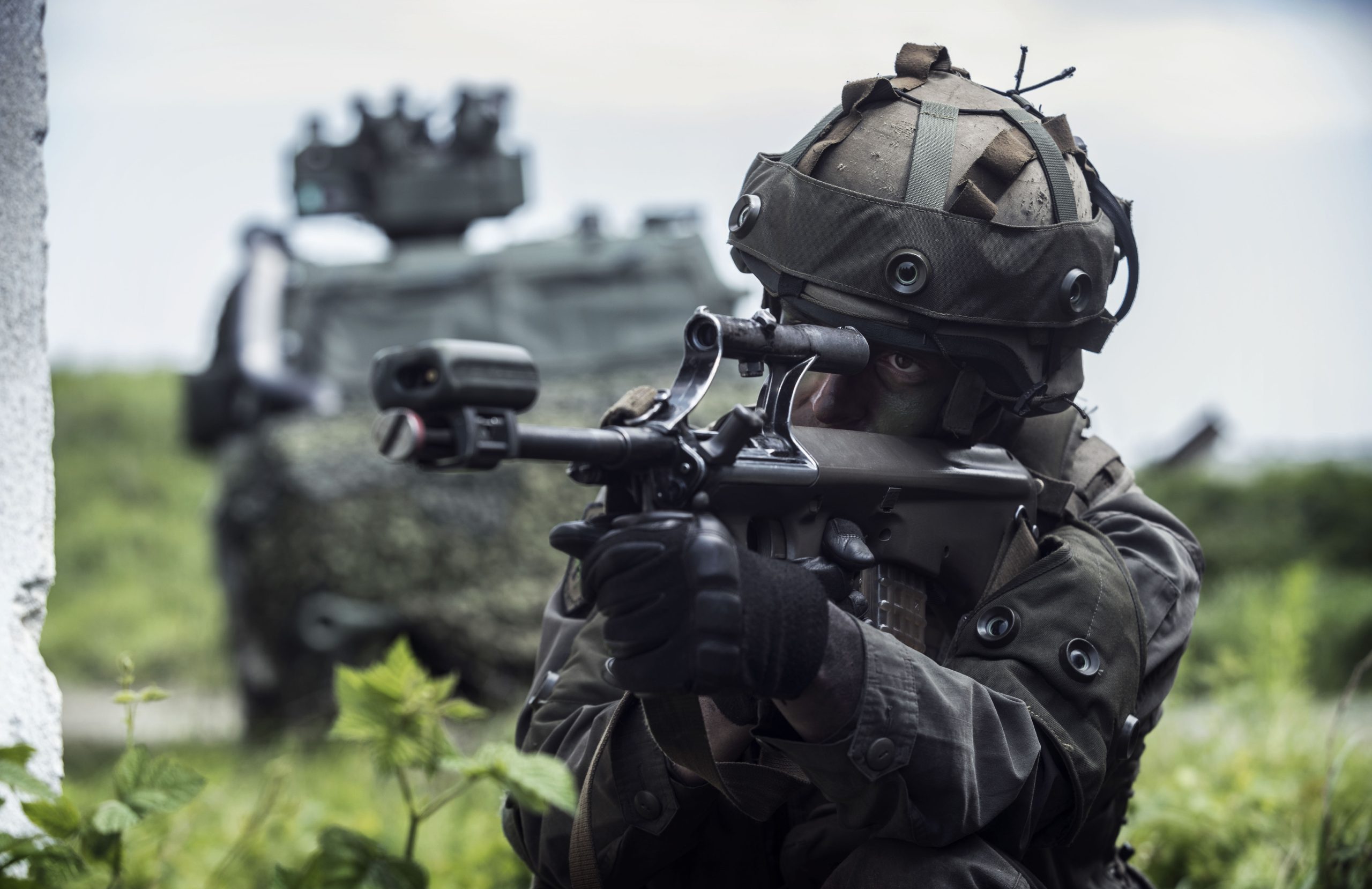
Early AUG models used a progressive trigger rather than a conventional separate selector lever for choosing between semi-automatic and fully automatic fire. A shorter, lighter pull produced a single shot, while pulling farther back selected automatic fire. This arrangement reduced external controls and gave the rifle an uncluttered appearance. It also demanded training, because the trigger itself performed two roles. The system illustrated the AUG team’s willingness to rethink familiar controls, although later versions and civilian models may differ in their trigger arrangements.
8. Ambidextrous Potential
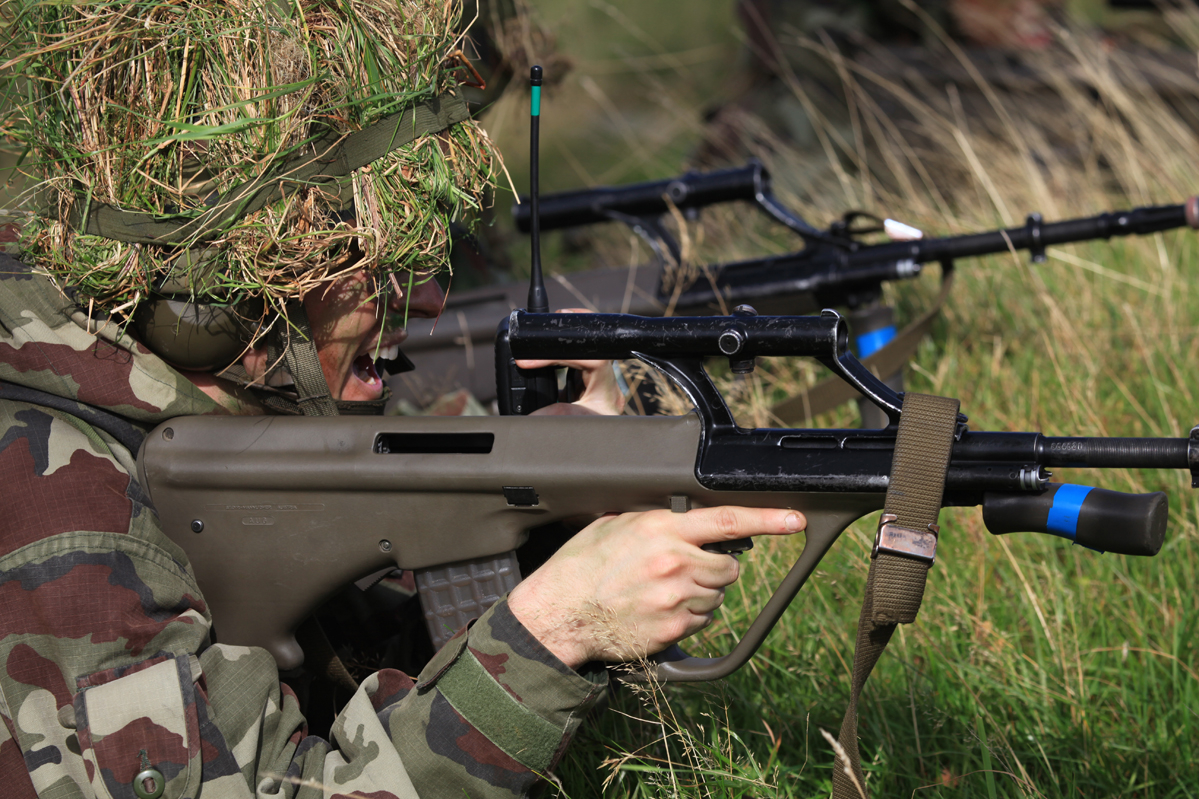
The AUG’s layout was planned with left-handed as well as right-handed users in mind, but the design needed more than simply moving a control. Its standard configuration ejects cases to one side, so left-side ejection requires a compatible bolt and appropriate setup. This detail shows how thoroughly the bullpup arrangement affects the whole firearm: the action sits close to the shooter’s face, making ejection direction especially important. The AUG’s provision for alternate ejection helped distinguish it from designs that were effectively configured only for right-handed use.
9. Short-Stroke Gas Piston

Inside the AUG, a short-stroke gas-piston system drives the action, working with a rotating bolt to cycle the rifle. The parts sit within its housing, preserving the smooth outer silhouette. The gas system also includes settings intended to accommodate different operating conditions. This mechanism was not unique to the AUG, but its combination with a bullpup layout, polymer stock, integrated optic, and modular barrel created a coherent package. The result looked less like a traditional rifle updated with accessories and more like a system designed from the start.
10. A Design That Lasted
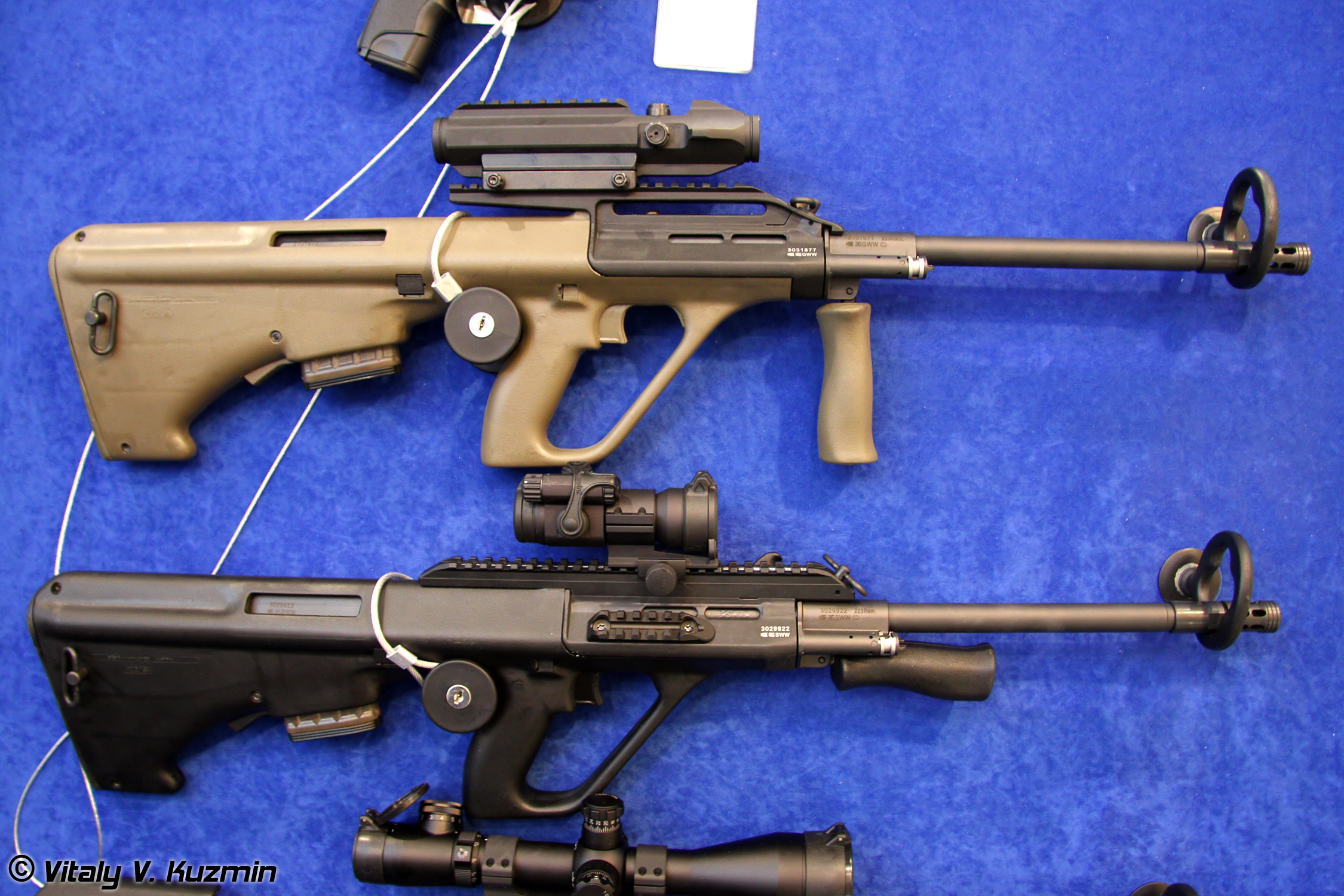
The AUG was adopted by Austria in 1977 as the StG 77, and its service history gave the design lasting credibility. The platform later appeared in numerous military and law-enforcement roles, while newer versions added features such as Picatinny accessory rails. The A3 family, for example, made it easier to mount different optics and equipment than the original fixed-sight arrangement. Nearly five decades later, the AUG remains recognizable because its core layout changed little. Its longevity shows that its unusual features were more than a short-lived futuristic styling exercise.