Two guns, two eras, and one famously confusing name. The reason both are called BAR starts with John Browning, but the story quickly branches into war, branding, and changing ideas about what an autoloading rifle should be.
The original BAR was a military weapon born for World War I
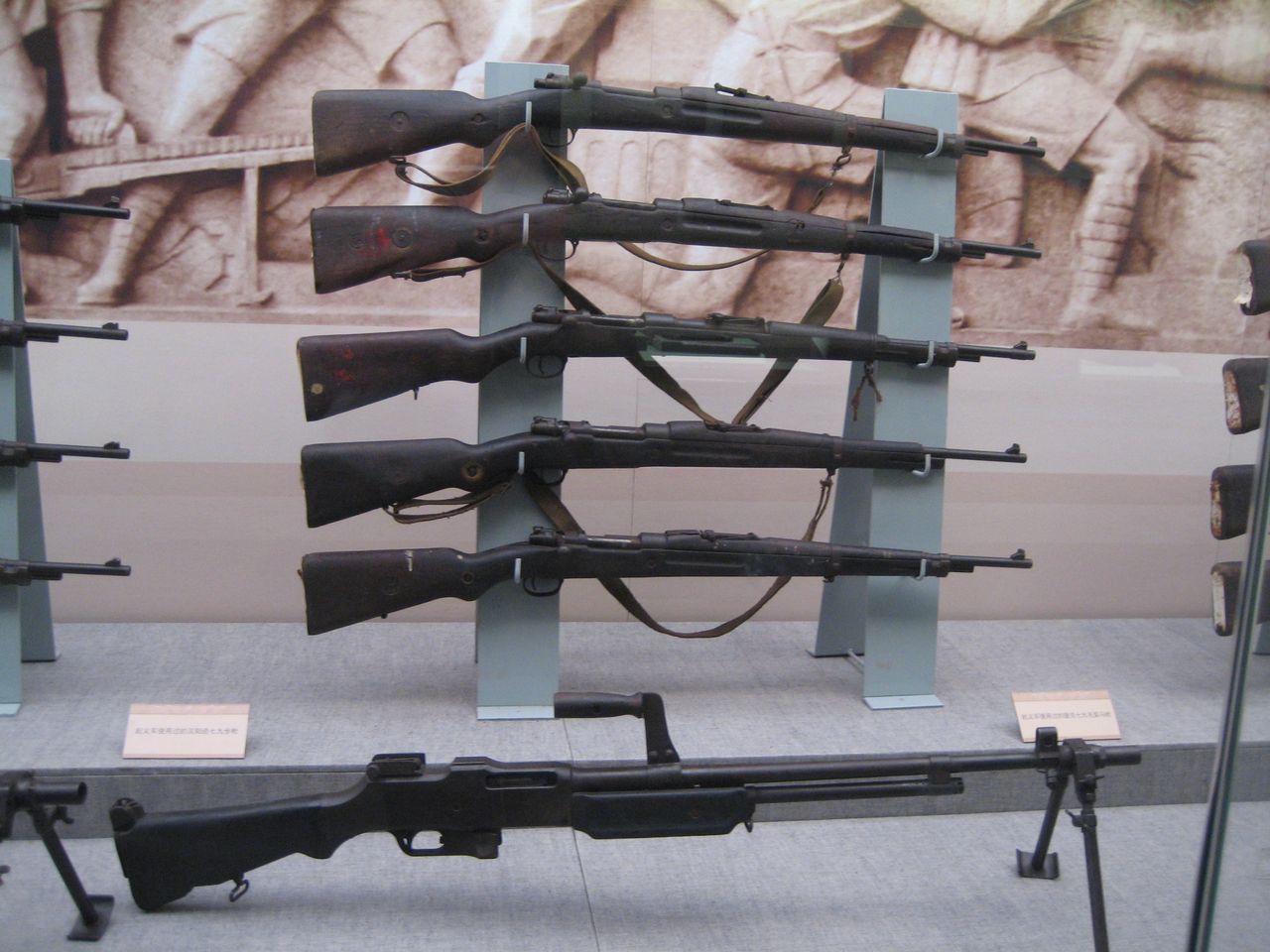
When most firearms historians say “the BAR,” they mean the Browning Automatic Rifle, the M1918 designed by John Moses Browning near the end of World War I. It was conceived as a shoulder fired automatic weapon that could accompany advancing infantry and deliver mobile suppressive fire. In a period when machine guns were often heavy, tripod mounted, and tied to fixed positions, Browning’s design promised something very different. It gave soldiers a powerful .30-06 automatic rifle they could carry forward with the assault.
The U.S. Army adopted the M1918 in 1918, and its intended role was what the era called “walking fire.” The idea was that troops crossing enemy ground could fire from the shoulder or hip while moving, helping keep defenders pinned down. In practice, that concept had limits because the rifle weighed around 16 pounds unloaded and produced substantial recoil in full automatic fire. Even so, it represented a major step toward what later generations would recognize as the automatic rifle and squad support weapon concept.
The Browning Automatic Rifle used a 20 round detachable box magazine and was gas operated, with a long stroke piston system that proved robust in dirty battlefield conditions. Later variants, especially the M1918A2 used extensively in World War II and Korea, shifted away from the original idea of mobile assault fire and into a more established support role. The bipod equipped A2 version often served as the base of fire within an infantry squad, despite still lacking some characteristics of a true light machine gun, such as a quick change barrel.
Combat experience gave the BAR an enormous reputation. American troops carried it in World War II across Europe and the Pacific, and veterans often described the gun as powerful, dependable, and morale boosting. Historians at institutions such as the U.S. Army Center of Military History have long noted that while the BAR was not perfect, soldiers valued its hard hitting .30 caliber fire. That battlefield fame is the first half of the naming puzzle, because “BAR” became one of the most recognized initials in American firearms history.
The modern Browning BAR is a sporting rifle, not the old automatic rifle

The second gun called BAR is the Browning BAR sporting rifle, a civilian hunting arm introduced in 1967 by Browning. Although it shares the Browning name and the same three letter abbreviation, it is not the military Browning Automatic Rifle in either purpose or internal design. It is a semiautomatic sporting rifle meant for big game hunting, not a select fire combat weapon built for squad level fire support. That distinction matters because many casual observers assume the commercial BAR is simply a toned down version of the military gun, which it is not.
Mechanically, the sporting BAR belongs to a completely different family. It was developed as a gas operated semiautomatic rifle optimized for hunting cartridges, accuracy, and manageable recoil in the field. Over the decades it has been chambered in rounds such as .243 Winchester, .270 Winchester, .30-06 Springfield, 7mm Remington Magnum, and .300 Winchester Magnum. Its profile, receiver shape, stock design, and operating system all reflect postwar sporting needs rather than early 20th century military doctrine.
The confusion is partly understandable because Browning’s marketing did not choose a random acronym. “BAR” already carried enormous recognition among American gun owners, and attaching those initials to a premium autoloading hunting rifle linked the new product to John Browning’s legendary reputation. Browning never marketed the sporting BAR as a battlefield descendant of the M1918, but the shared label inevitably encouraged people to connect the two. Gun store conversations have been blurring that distinction for decades.
A simple way to separate them is to think in terms of function, era, and legal configuration. The original military BAR was a full power automatic rifle first adopted in 1918 and associated with war service. The sporting Browning BAR is a commercial semiautomatic rifle from the late 1960s onward, intended for deer stands, elk camps, and general big game use. They share initials and ancestry through the Browning brand, but they are different tools built for different worlds.
John Browning’s name is the real bridge between them
To understand why the same initials stuck, it helps to start with John Moses Browning himself. Browning was one of the most influential firearm designers in history, responsible for an astonishing range of rifles, shotguns, pistols, and machine guns. His work shaped products made by Winchester, Colt, Remington, Fabrique Nationale, and the Browning company that still carries his family name. When a firearm bore the Browning identity, it immediately inherited a degree of prestige that few designers have ever matched.
The original BAR earned its initials honestly as a descriptive military title: Browning Automatic Rifle. That was not a marketing invention so much as a straightforward naming convention of the period, tying the gun to its designer and role. Over time, though, BAR stopped being just a literal acronym and became a symbol of rugged American firepower. Veterans’ memoirs, war films, collector circles, and military museums all helped cement the term in the public imagination.
By the 1960s, Browning as a brand had strong reason to leverage that recognition. The company was offering refined hunting arms to a growing postwar American market that valued both innovation and tradition. Using “BAR” for a semiautomatic sporting rifle allowed Browning to connect a modern commercial product with an older legend, while still keeping the emphasis on the Browning name. In branding terms, it was efficient and memorable, even if it guaranteed some lasting confusion.
This sort of naming overlap is not unique in firearms history. Companies often revive old model names or military associated labels because they convey familiarity and credibility. But the BAR case stands out because the two firearms are so fundamentally different in role and public image. One conjures Marines on Pacific islands or GIs in hedgerows. The other suggests walnut stocks, scoped rifles, and North American hunting camps. The shared name works because both draw authority from the same towering figure: Browning.
How the two BARs differ in design, handling, and real world use

Set the rifles side by side and the differences become obvious very quickly. The military M1918 BAR is large, heavy, and built to withstand sustained battlefield use with robust steel components and a detachable box magazine projecting below the action. The sporting Browning BAR, while still substantial compared with many bolt action hunting rifles, is sleeker and more balanced for field carry. Its lines are those of a hunting arm, often with a polished blue finish, checkered stock, and receiver drilled for optics.
Their controls and firing behavior also separate them sharply. The military BAR was designed in select fire form, though later doctrine emphasized controlled automatic fire rather than casual bursts. It was expected to help dominate terrain, break up attacks, and support maneuver under combat pressure. The sporting BAR is semiautomatic only, feeding one round per trigger press and prioritizing quick follow up shots on game animals. Hunters value it for reducing felt recoil and allowing fast second shots, especially in calibers where a bolt gun may feel slower under stress.
The cartridges they use may overlap in broad power class, but the mission changes everything. The original BAR became iconic with .30-06 military ball ammunition and combat loads intended for penetration, reliability, and range under wartime conditions. The sporting BAR uses hunting loads tailored to ethical kills on deer, elk, black bear, and similar game. Field reports from hunters often praise its accuracy as more than sufficient for realistic hunting distances, particularly in woods and broken country where rapid target reacquisition matters.
Real world culture reinforces the divide. Collectors discuss original BARs in terms of wartime production, manufacturers such as Colt and New England Small Arms, and the rarity of transferable automatic firearms under U.S. law. Hunters discuss the Browning BAR by generation, from Belgian made early rifles to later Mark II and current Mark 3 variants, focusing on trigger feel, magazine systems, stock options, and caliber selection. Same initials, entirely different conversations. That is why experts are careful to ask, “Do you mean the military BAR or the Browning sporting BAR?”
Why the shared BAR name still matters today
The BAR naming issue persists because both rifles remain culturally visible. The military Browning Automatic Rifle is a staple of museums, collector books, historical documentaries, and video games set in the world wars or Korea. The sporting Browning BAR continues to appear in catalogs, hunting camps, and gun safes across North America and Europe. As long as both remain relevant, new shooters will keep asking whether they are related, and older shooters will keep explaining the distinction.
There is also a legal and political dimension to the confusion. In public debate, people sometimes hear “BAR” and assume any rifle carrying the name must be an automatic battlefield arm. In reality, the civilian Browning BAR sold through normal commercial channels is a semiautomatic hunting rifle, functionally closer to other autoloading sporting guns than to a military machine gun. Clear terminology matters because firearms discussions are already full of misunderstood labels, and BAR is one of the easiest places for casual readers to get lost.
For enthusiasts, the dual use of BAR offers a useful lesson in how firearm names travel through time. A name can begin as a literal military description, then evolve into a shorthand for heritage and trust. Browning understood that its customer base respected history, and the company benefited from tying a modern sporting rifle to one of the most famous initials in small arms history. That choice was commercially smart, even though it blurred technical distinctions that experts care about deeply.
In the end, the answer is simple once the history is clear. The first BAR was the Browning Automatic Rifle, John Browning’s famous military design. The second BAR is a Browning branded semiautomatic sporting rifle that borrowed those already legendary initials. They share a name because they share Browning’s legacy, not because they are the same gun. If you remember that one was built for the battlefield and the other for the deer woods, the mystery of BAR disappears.