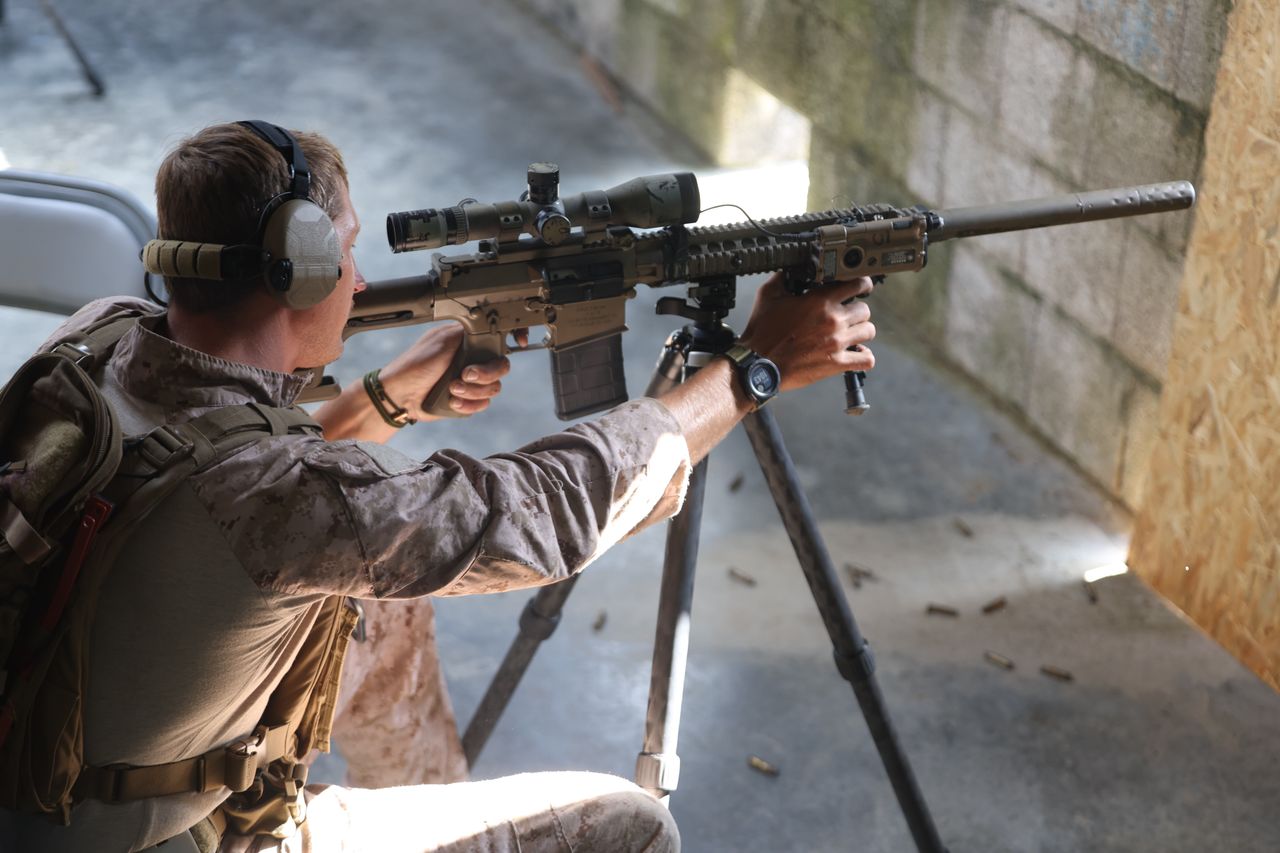
Some rifles never really disappear. In the Marine Corps, they just wait for the next war to make them useful again.
The Marine Corps has always been willing to revive an old idea
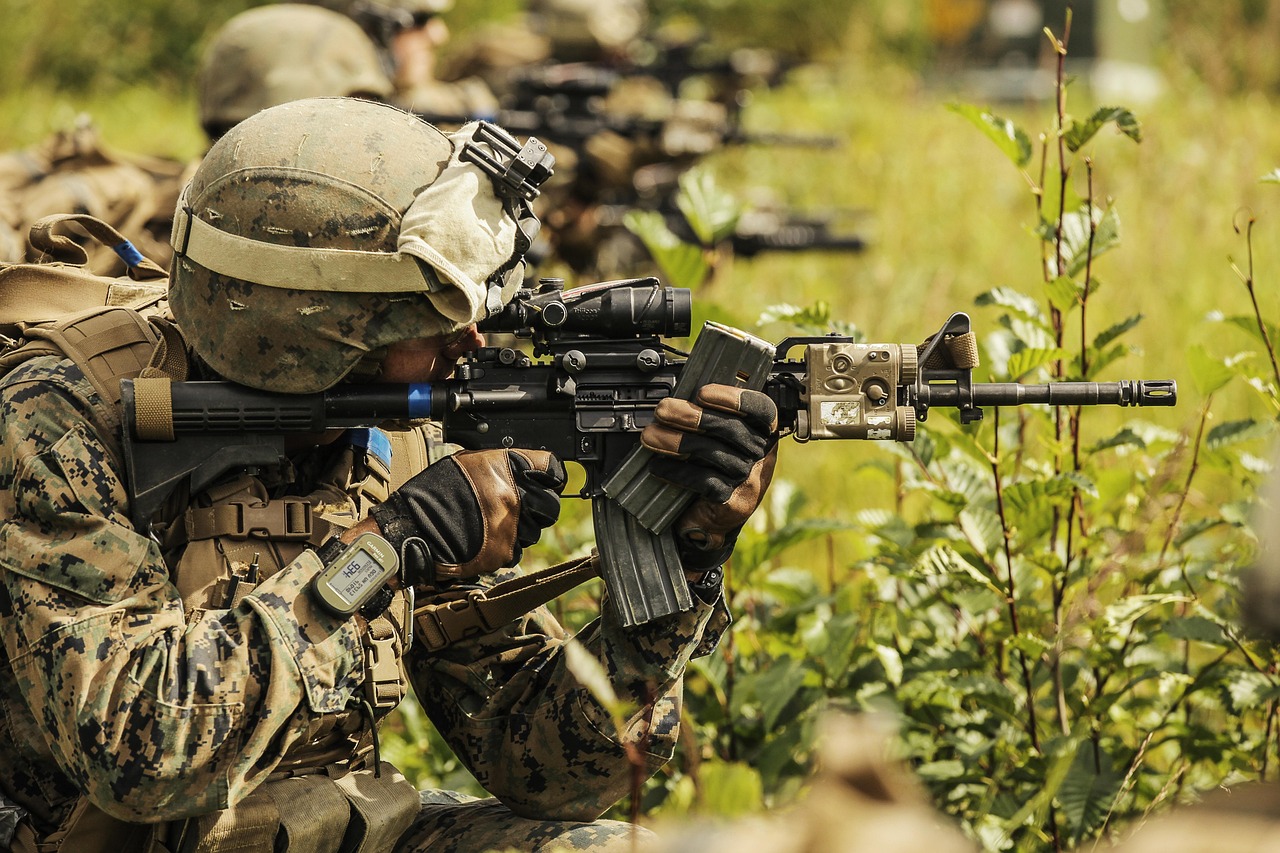
The phrase “brought back a rifle it retired decades ago” sounds dramatic, but for the Marines, it is actually part of a familiar pattern. The Corps has repeatedly shelved older weapons, then pulled them back into service when combat realities exposed a capability gap. That happened with the M14, and in a different way, it happened with precision rifles tied to the scout sniper mission.
Marine history shows this clearly. The M14 was replaced as a standard service rifle by the M16 family long ago, yet the Corps and the wider U.S. military later found renewed value in 7.62mm rifles for designated marksmen and certain long-range roles. A Marine Corps historical publication even described the M14 as “retired, then resurrected,” which captures the institutional mindset perfectly.
That mindset still matters today. Marines are not sentimental about rifles for the sake of tradition alone. They bring weapons back when those weapons solve a problem better than the newer option sitting in the arms room.
In other words, this is not about romance. It is about matching a weapon to a mission, especially when the battlefield starts punishing one-size-fits-all thinking.
The real reason older rifles return is simple: range and punch

When a rifle comes back from the dead, the reason is usually ballistic performance. Lighter 5.56mm rifles are excellent for many infantry tasks, but there are times when commanders want more reach, better barrier performance, and stronger terminal effects at distance. That is where older 7.62mm platforms keep reentering the conversation.
The M14 is the classic example. After its retirement as a front-line standard rifle, it returned in designated marksman roles because troops needed something that could hit harder and farther than a standard carbine in certain environments. Military reporting over the years has pointed to exactly that logic, especially in open terrain where enemy fighters engaged from beyond the comfort zone of shorter-range rifles.
The Marine Corps has lived that lesson in Iraq and Afghanistan. Marines trained with the Mk 12 designated marksman rifle in Iraq, and official Marine reporting noted that these rifles were specifically issued to select Marines with advanced marksmanship training rather than being broadly distributed. That tells you something important: the Corps values niche rifles when they add precision the general-issue weapon cannot.
Modern doctrine has changed, but the problem has not. Marines still need a mix of compact rifles, automatic rifles, and precision-capable weapons if they want small units to stay effective across varied terrain.
This story is also about the end of one sniper era and the start of another
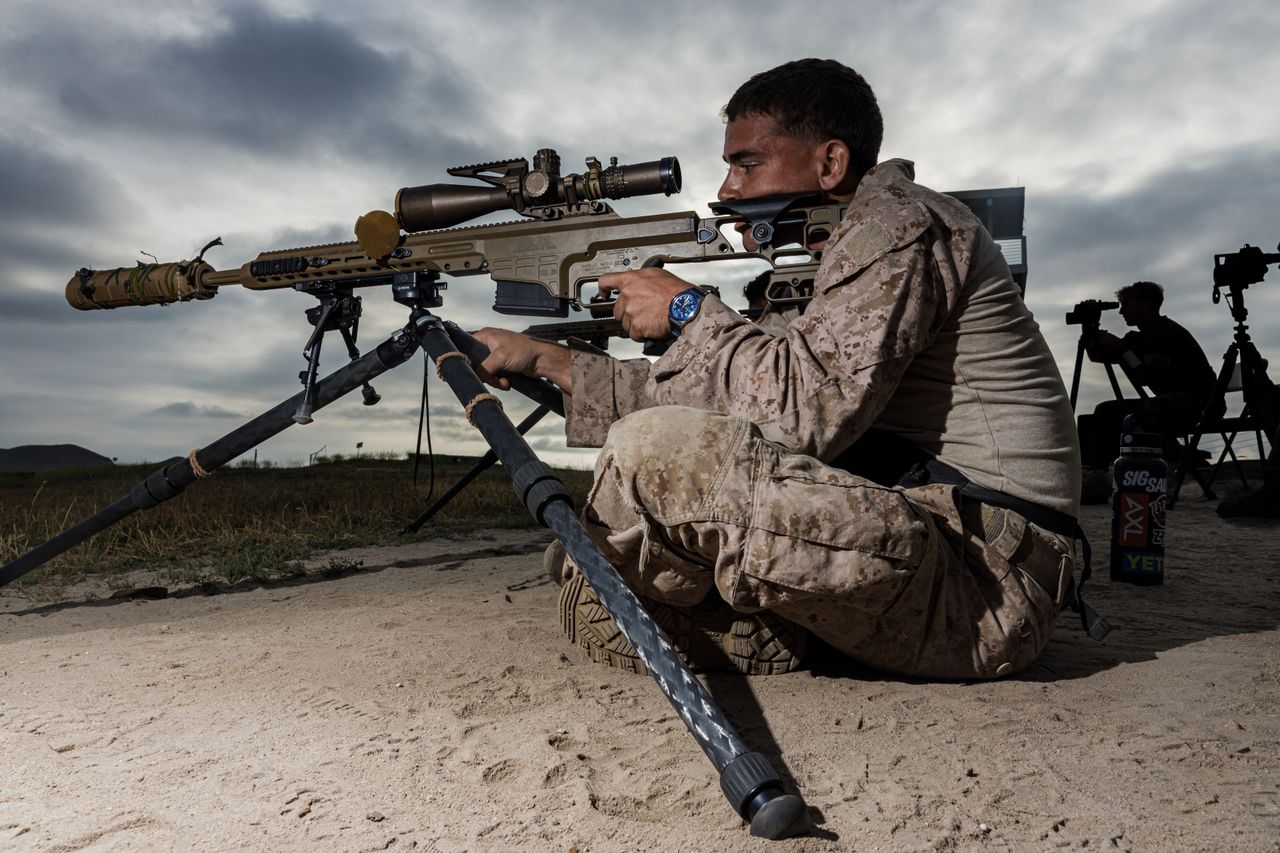
If you are thinking specifically of Marine sniper rifles, the bigger story is the Corps’ long transition away from older M40-series bolt guns toward newer systems. In 2022, the Marine Corps said the Mk22 Mod 0 Advanced Sniper Rifle would replace legacy M40A6 and Mk13 Mod 7 rifles. That was a major institutional shift, and it signaled that the Corps wanted greater range and caliber flexibility than older platforms could offer.
The Mk22 is not just another bolt gun with a fresh paint scheme. The Marines highlighted its ability to change barrels and fire different calibers, including .338 Norma Magnum and .300 Norma Magnum, depending on mission needs. That kind of modularity matters when planners are thinking about future fights in larger maritime spaces and against better-equipped adversaries.
At the same time, Force Design 2030 reshaped infantry units and divested the traditional scout sniper platoon structure. In 2023, the Marine Corps announced scout platoons for infantry battalions while retaining precision marksmanship capability for specific missions. That means precision shooting did not vanish, but it is now being organized differently.
So when people say the Marines “brought back” an old rifle, they are often reacting to this broader reset. Legacy rifles keep surfacing because the Corps is still balancing proven precision tools against a new force structure.
Old rifles solve modern problems better than many people expect

There is a reason older rifles keep surviving modernization waves: they often do a few things exceptionally well. A heavier 7.62mm rifle can be less handy in tight spaces, but it gives Marines better standoff capability, improved wind performance, and more authority on target at longer distances. Those advantages still matter, especially in mountains, deserts, coastal observation posts, and other wide-open areas.
That logic also applies beyond sniping. The Marine Corps’ evolving infantry concepts now put a premium on distributed operations, small-unit lethality, and sensing farther than the enemy. In its Force Design updates, the service has emphasized more adaptable infantry formations and even returned to a 13-Marine rifle squad with an added precision fires Marine. That is not an accident. It reflects a growing belief that squads need more specialized reach.
An older rifle can fill that gap faster than a brand-new procurement program. If the Corps already understands the weapon, has a training base for it, and knows exactly where it fits, bringing it back can be more practical than waiting years for the perfect replacement.
That is the part civilians often miss. In military procurement, “old” does not mean irrelevant. It often means available, understood, and still effective.
The Marine Corps is not reversing course; it is layering capabilities
It would be a mistake to read this as a sign that the Marines regret modernizing. The Corps is not tossing aside the M27 Infantry Automatic Rifle or abandoning newer precision systems. In fact, recent reporting indicates the Marines are sticking with the M27 rather than swapping wholesale to the Army’s newer M7 rifle. That decision suggests the service still believes in its current core rifle setup for general infantry use.
What the Corps is doing instead is adding layers. General-purpose rifles handle the bulk of close- and medium-range fighting. Automatic rifles add suppressive fire. Designated marksman and sniper systems cover the gaps at a distance. That layered approach is more realistic than expecting one rifle to dominate every scenario.
This is also why even retired weapon families can linger in official inventories. Marine Corps publications and tables have continued to reflect systems such as the M40A6 and M14 DMR in training and administrative contexts even as the service transitions to newer tools. Retirement on paper is rarely as neat as people imagine.
For Marines, capability matters more than clean timelines. If an older rifle still gives a platoon commander options, it remains useful whether or not it looks fashionable in a modernization briefing.
Battlefield lessons keep punishing neat procurement theories

Weapons programs are often sold with the promise that one new system will simplify everything. Then reality intervenes. Terrain changes. Adversaries adapt. Units end up needing longer range, better optics, or a caliber with more punch than expected. That is usually when the supposedly obsolete rifle starts looking smart again.
The Marines have seen this cycle for decades. The Corps embraced precision bolt guns like the M40 family, added semi-automatic systems such as the Mk 12 and M110 for faster engagement, fielded the Mk13 for greater long-range lethality, and then moved toward the Mk22 for even more flexibility. Each step addressed a real need, but none permanently erased the trade-offs that came before.
That is why legacy rifles never fully leave the conversation. A weapon that seems outdated in one era can become highly relevant in the next if mission profiles shift. According to official Marine reporting, the complementary capabilities of systems like the M40 and M110 were already recognized years ago. The current debate is really an extension of that same thinking.
So yes, bringing an older rifle back can look strange from the outside. Inside the military, it often looks like common sense.
What this comeback really says about the Marines
More than anything, the return of a retired rifle says the Marine Corps is pragmatic. The service has strong traditions, but it is deeply unsentimental when lives are on the line. If a decades-old rifle still offers the right mix of accuracy, power, and field reliability for a particular mission, Marines will use it without apology.
It also says modern warfare is getting more complex, not less. The Corps is preparing for dispersed operations, longer engagement distances, and adversaries who can force Marines to fight across wider spaces. Under those conditions, a rifle retired in one context can become valuable again in another.
That does not mean every old gun deserves a comeback. Some are simply outclassed. But the Marine Corps has long shown that it will resurrect a weapon when the tactical math works, whether that means an M14-style designated marksman concept, a legacy sniper platform held in the inventory, or a transitional rifle that bridges the gap to something newer.
The big takeaway is simple. The Marines did not bring back an old rifle because they are stuck in the past. They brought it back because parts of the future look a lot like the problems that the old rifle was built to solve.