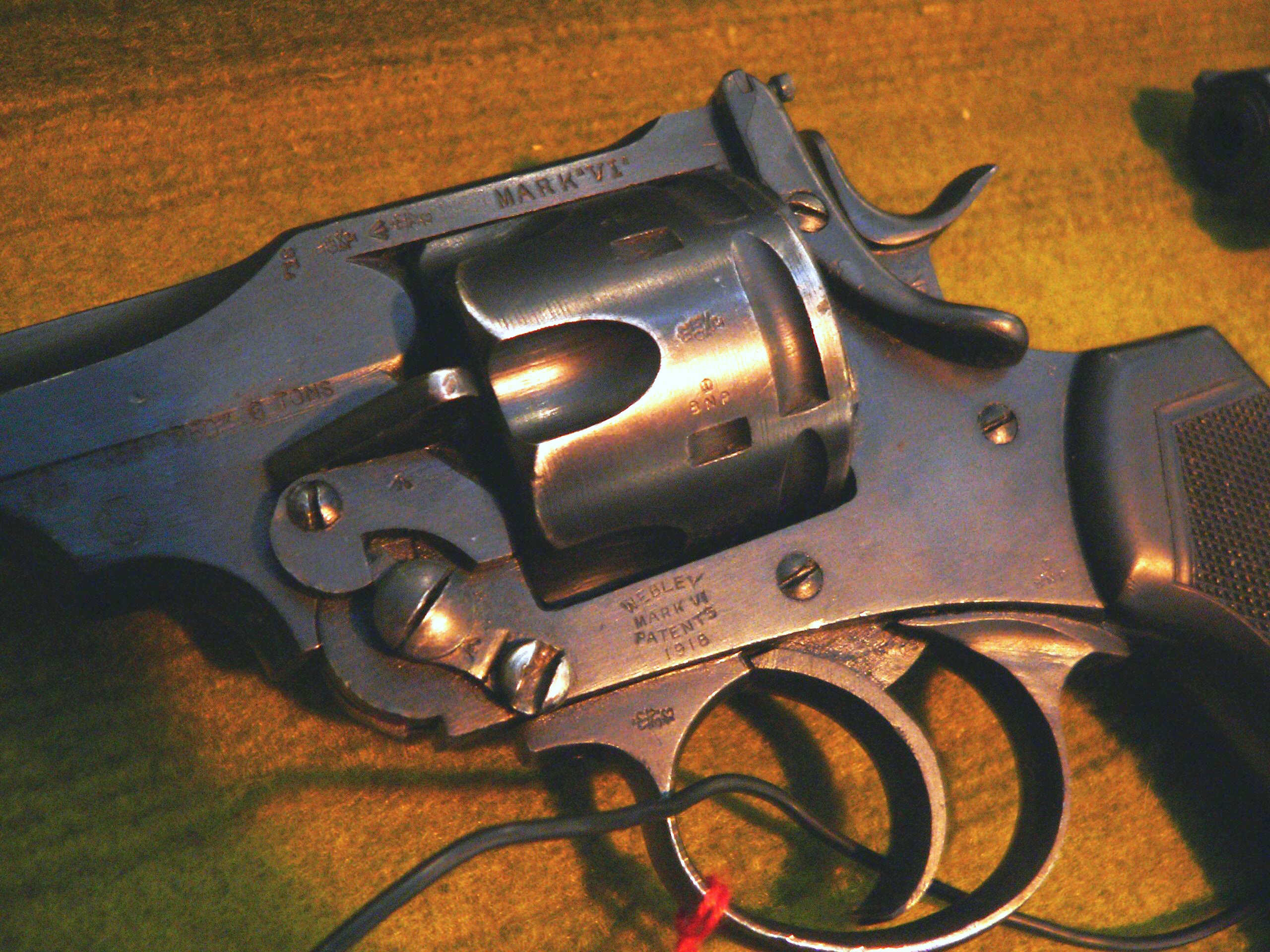
Some firearms fade once a war ends, but the Webley Mk VI refused to. Adopted in 1915 and finally retired in 1963, this hefty British service revolver outlasted trench warfare, two world wars, and a generation of newer pistols. Its story is not about speed or style. It comes down to steady engineering, a hard-hitting cartridge, and a design simple enough for tired soldiers to trust. Here are seven facts that explain why it served so long.
1. Break-Top Design With Instant Ejection
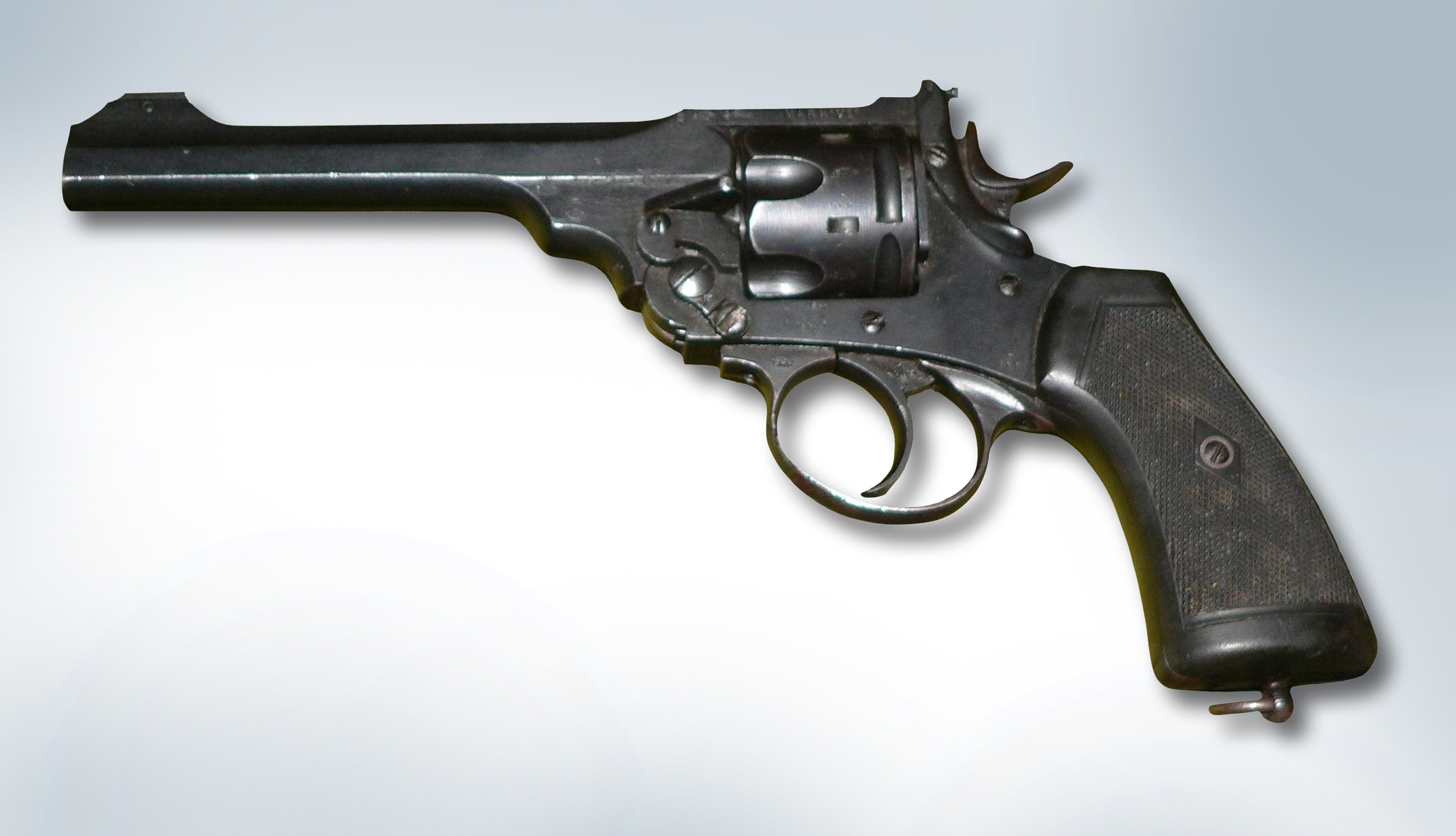
Open the latch on the Webley Mk VI, tip the barrel downward, and the star extractor throws all six empty cases clear in a single motion. That feature mattered enormously in 1915, when rival revolvers still needed each chamber emptied one at a time through a loading gate. A practiced soldier could refill the cylinder with loose rounds in roughly 15 to 20 seconds, which felt fast during a trench raid. The hinge sits ahead of the cylinder, and a heavy latch locks the frame shut once the barrel is closed again. Against a Colt Peacemaker, which needed six separate pokes of the ejector rod, the Webley saved time, and fewer fumbled cases meant fewer dangerous pauses in the dark.
2. A Heavy .455 Cartridge With Real Authority
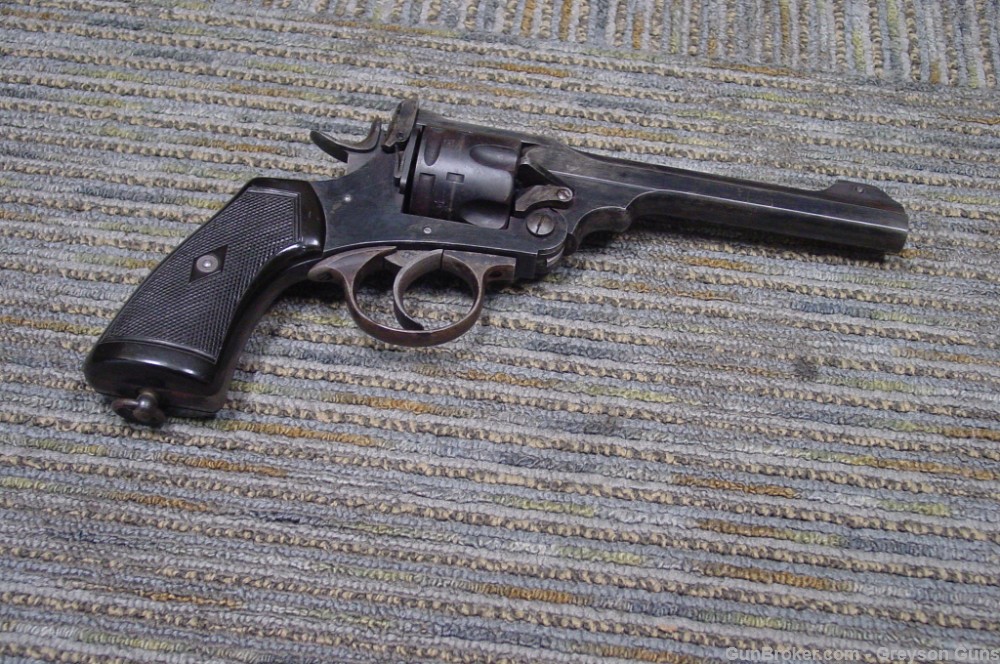
The Mk VI fired the .455 Webley round, a fat lead bullet of about 265 grains that left the 6-inch barrel at roughly 600 feet per second. That sounds slow beside a modern 9mm, yet the heavy slug carried around 210 foot-pounds of energy and hit with real authority at close range. British planners wanted that weight after colonial campaigns showed that smaller bullets often failed to halt determined fighters. Recoil felt like a firm push rather than a sharp kick, so a trained shooter could keep a group of roughly 4 inches at 25 yards. Ammunition was plentiful too, since the Royal Laboratory and private makers turned out millions of .455 cartridges each year of the war.
3. Mass Production From 1915 Onward
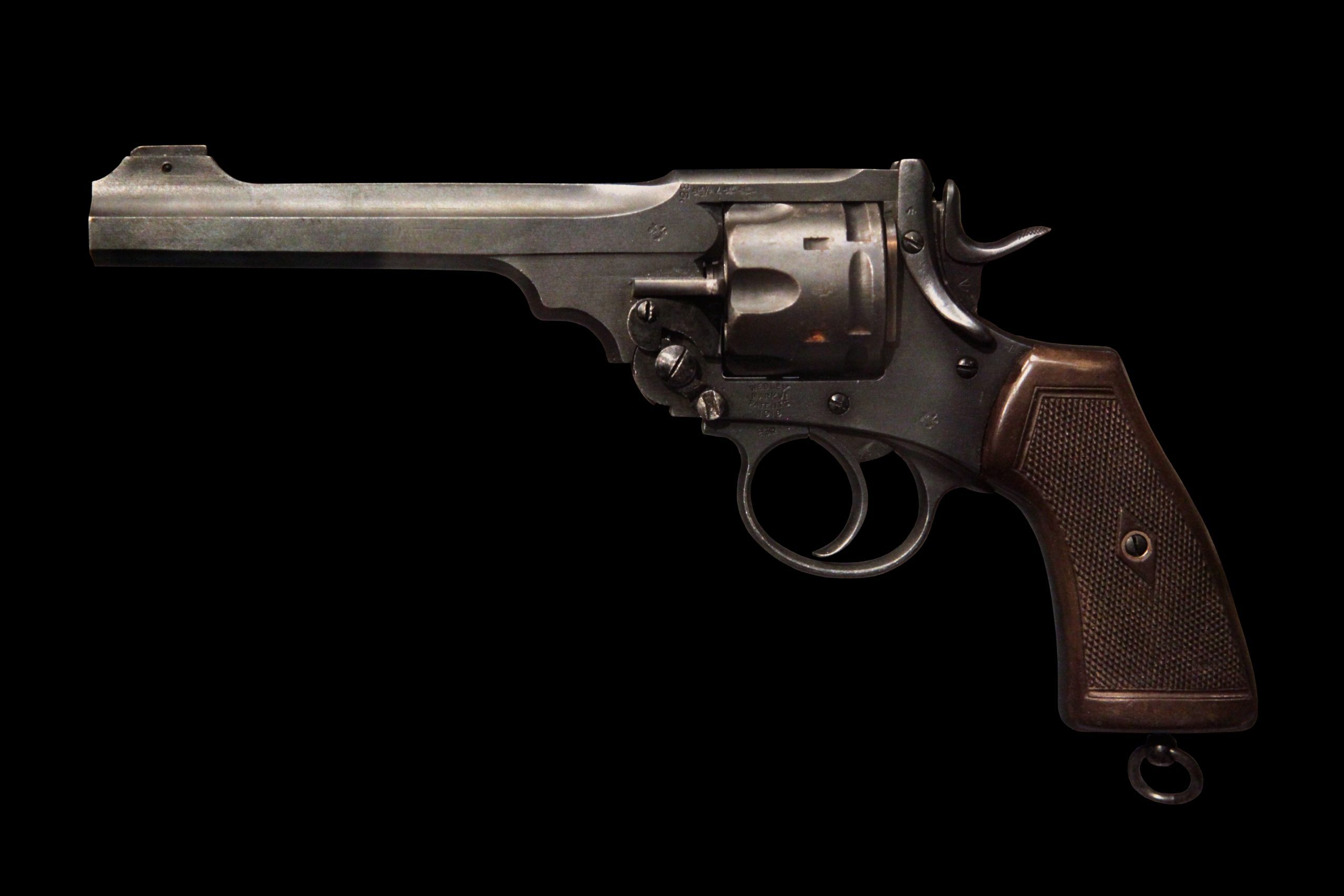
Britain adopted the Mk VI in May 1915, roughly nine months after the First World War began. Webley and Scott of Birmingham built the revolver in huge numbers, and around 300,000 examples left the factory before production wound down in the early 1920s. Such volume turned the pistol into a familiar sight in dugouts, aircraft cockpits, and warships alike. The design itself traced back to the Mk I of 1887, so by 1915 Webley had nearly three decades of refinement behind the frame. Each Mk VI was proof tested, stamped, and inspected before it reached an officer’s holster, a routine that kept quality steady even as output climbed. Wartime pressure never softened the build.
4. A Rugged Build That Shrugged Off Mud
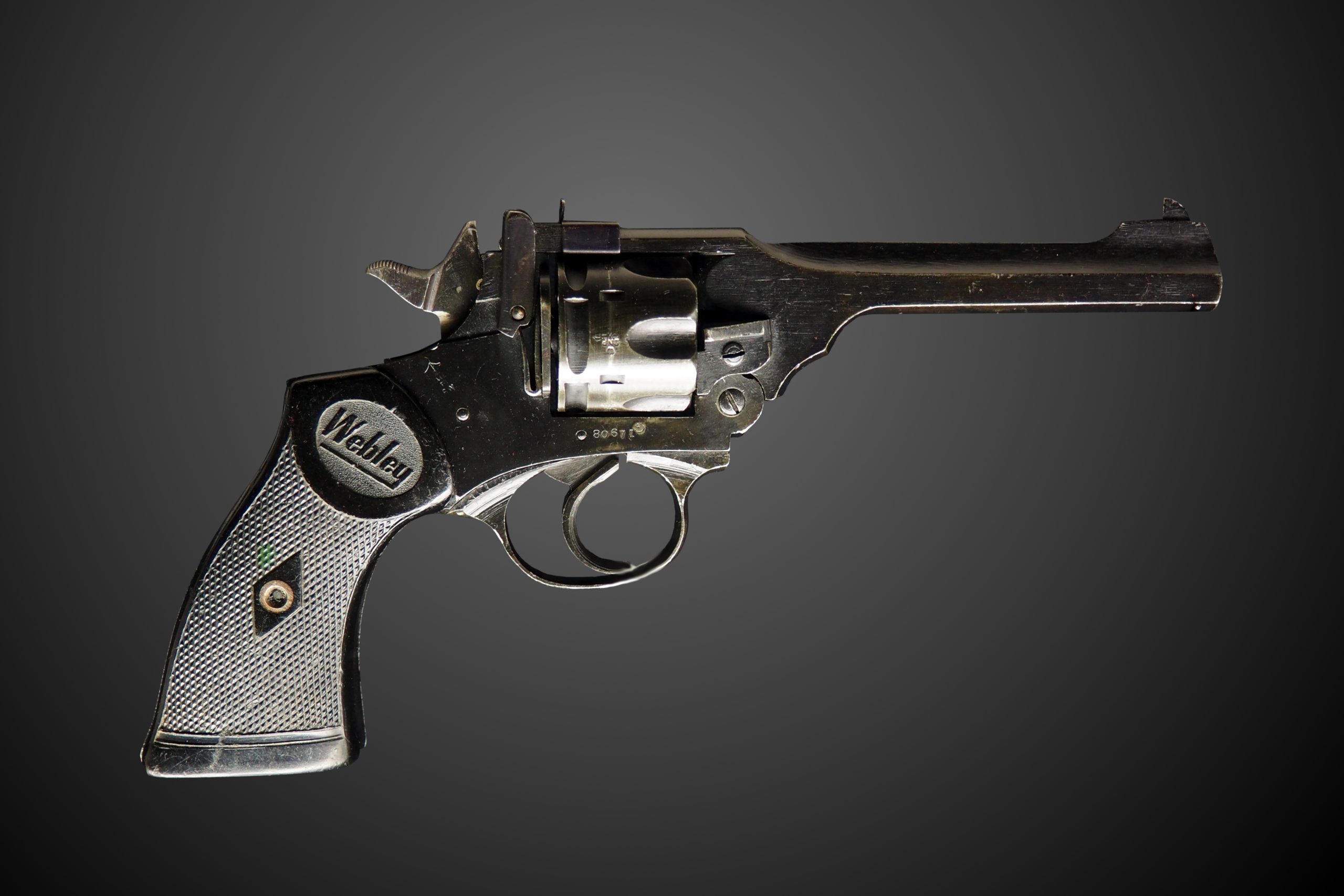
Mud, sand, and rain did little to stop a Mk VI, which is why it earned a loyal following from the Somme to the Middle East. Its frame and cylinder were forged from steel and built heavy, giving the revolver an unloaded weight of about 2.4 pounds, or 1.09 kilograms. Few small parts moved inside, and the action relied on bold, simple geometry instead of delicate springs. Cleaning meant opening the frame, swabbing the bore, and wiping the cylinder, a task that took only a few minutes. The big fixed sights, a notched rear and a blade up front, would not snag on clothing or break when knocked in a crowded dugout. Even after decades in storage, plenty still fire reliably.
5. A Grip and Balance That Tamed Recoil
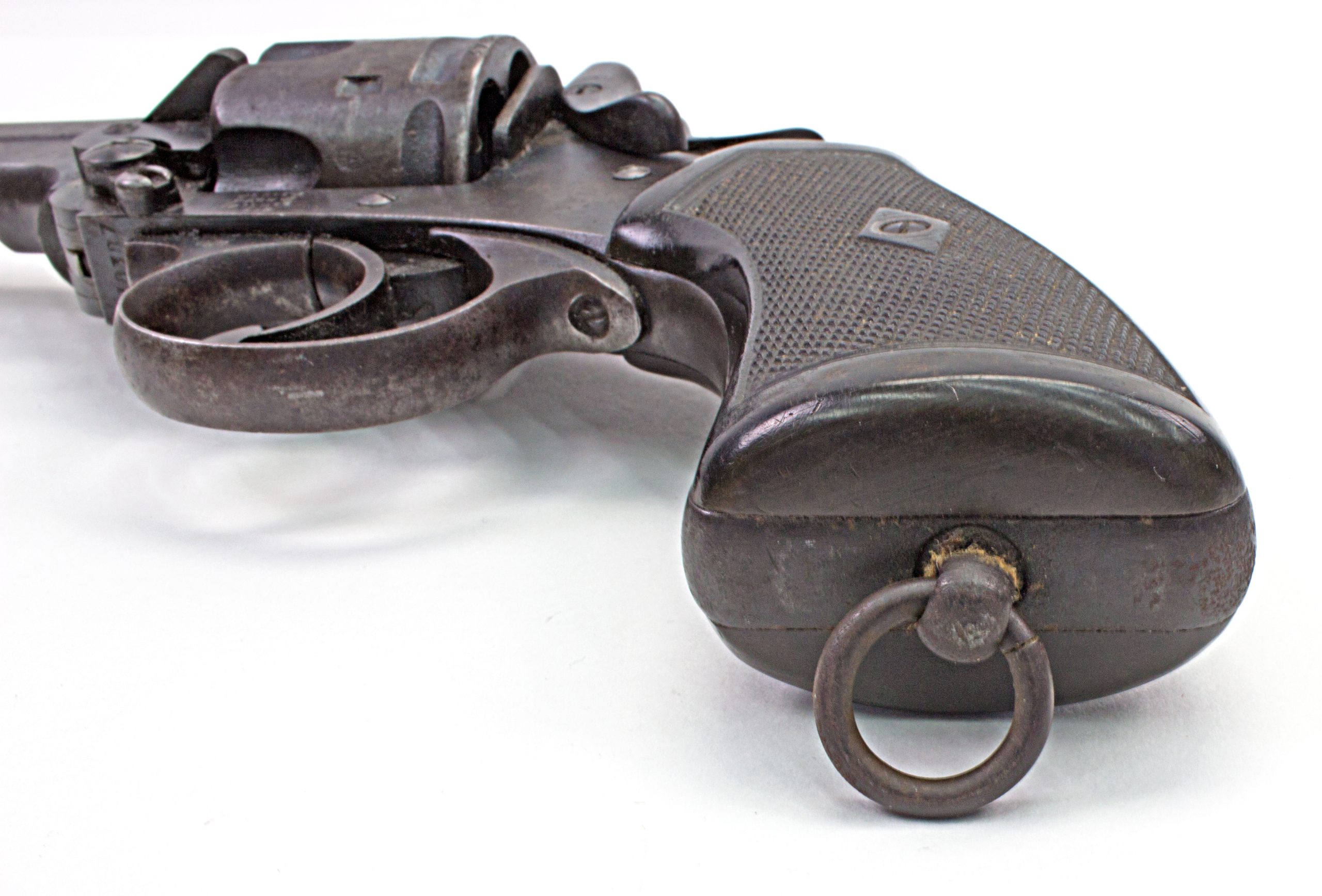
At 11.25 inches long with a 6-inch barrel, the Mk VI looks large, but its big grip fills the hand and tames the heavy cartridge. The distinctive hooked grip sits low in the hand and rolls with the recoil, so the sights return near the target for a quick second shot. Double-action pulls are heavy, often over 10 pounds, yet the long, smooth stroke suits close-range work better than most people expect. Cocking the hammer first lightens the pull dramatically and helps with careful shots at 50 yards, though most fighting happened far closer. A lanyard ring on the butt kept the weapon tied to a cord, which saved many a pistol in a flooded trench or a rolling ship.
6. Service Across Forces and Decades
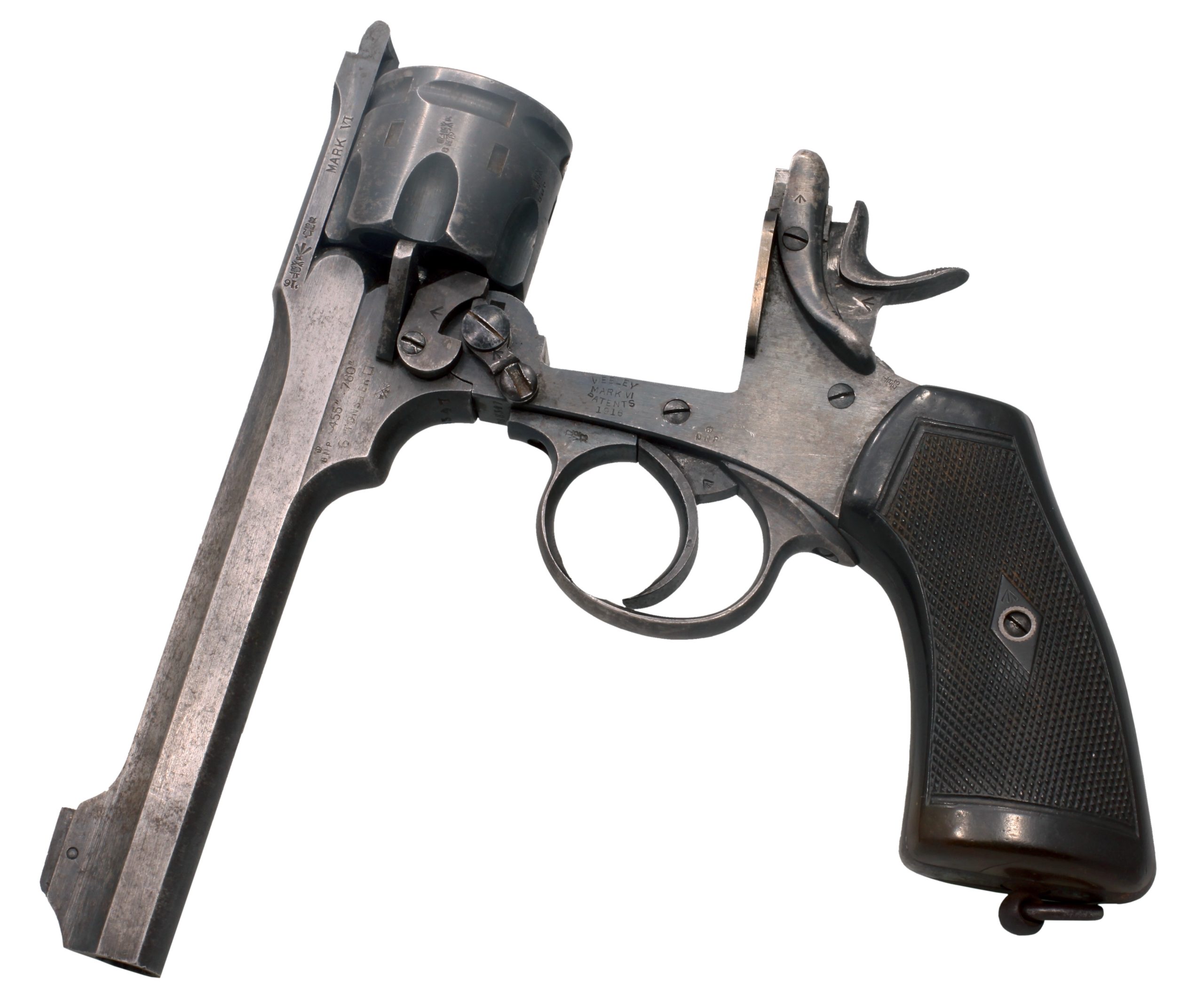
Few sidearms stayed in front-line hands as long as the Mk VI. It served through both World Wars, the Irish War of Independence, and the Malayan Emergency of 1948 to 1960. Britain declared it obsolete only in 1963, nearly half a century after adoption. The Enfield No. 2 Mk I in .38/200 officially took over in 1932, yet shortages kept Webleys on belts well into the 1940s. Royal Navy boarding parties, RAF aircrew, tank crews, and Commonwealth units from Canada to Australia all carried the same revolver. That shared supply of ammunition and spare parts made logistics much simpler for armies stretched across several continents. Seen across 48 years, that is a remarkable record.
7. Conversions That Kept It Alive
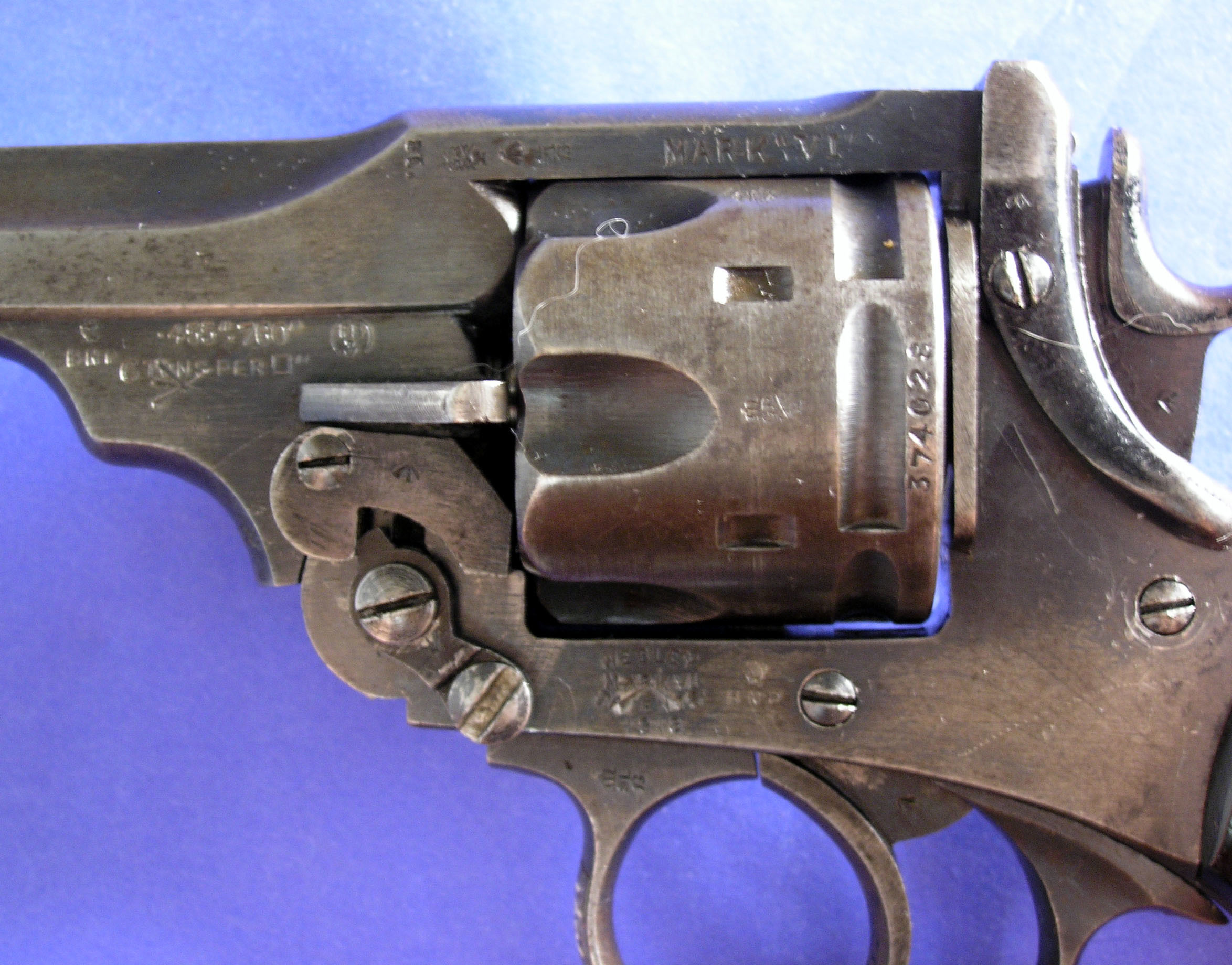
Adaptability helped the Mk VI outlive its official career. In 1931, Webley offered a .22 rimfire version, built on the same frame, so recruits could practice cheaply without the heavy recoil. Armourers fitted the Mk VI for .45 ACP by reaming the chambers, with half-moon clips holding six rimless rounds. Those conversions matter today because .455 ammunition has become a specialty item, though a few firms still load it. Collectors prize examples with intact bluing and matching serial numbers, and sound revolvers often change hands for roughly 500 to 1,200 dollars. Vintage military revolver matches still bring out shooters who enjoy its mild recoil and over a century of history.