The idea sounds obvious at first glance. If your phone can recognize your fingerprint, why can’t a handgun do the same?
The promise has always been bigger than the product

For more than 20 years, smart guns have been pitched as a technological fix for one of the hardest problems in American life: unauthorized firearm use. The sales pitch is simple and emotionally powerful. A personalized gun could, in theory, stop a child from firing it, prevent a thief from turning it on the owner, and reduce accidents without requiring the owner to change much at all.
That promise helped drive repeated waves of attention, from early experiments like the Armatix iP1 to newer biometric handguns from Biofire. In August 2024, Biofire said it had begun delivering its consumer smart gun to initial customers, with a listed total price of $1,499 after a refundable deposit. According to the company, the pistol uses fingerprint and facial recognition rather than a separate wearable token. That is a leap from older designs that depended on watches or radio-frequency pairing.
Yet smart guns remain a niche product because the real market question is not whether the idea is attractive. It is whether the gun works every single time under stress, with no hesitation, no dead battery, no dirty sensor, and no second chance. In that sense, smart guns are not competing against imagination. They are competing against the brutally simple reliability standard buyers already expect from a conventional handgun.
Reliability problems hit harder in guns than in almost any other gadget

Biometric systems work well enough for many consumer devices because a brief failure is annoying, not catastrophic. If your phone misses your fingerprint, try again. If your front door lock hesitates, you wait a second. A defensive firearm operates in a totally different category because the entire value of the tool may come down to one urgent moment in low light, with sweaty hands, gloves, rain, blood, dirt, or an awkward grip.
That is exactly where fingerprint technology has long shown limitations. NIST guidance notes that fingerprint capture can be affected by moisture, dirty or dry hands, gloves, finger injuries, age, and occupations that wear down friction ridges. NIST has also stressed more broadly that fingerprint image quality is closely tied to matching performance. Those are manageable weaknesses in office access control. In a life-or-death encounter, they become central objections.
This is why even people who like the concept often stop short of trusting the execution. Firearms buyers tend to be deeply conservative about failure points, and for good reason. A missed recognition event on a pistol is not judged like a software glitch. It is judged like a mechanical stoppage, except one introduced on purpose by the very technology meant to improve safety.
Politics poisoned the category long before the technology matured

Smart guns also carry political baggage that ordinary gun products do not. In the United States, many gun owners have feared that once a workable personalized handgun existed, lawmakers could use it as a pretext to force the technology onto the broader market. That fear was not invented out of thin air. It was fueled for years by New Jersey’s old smart-gun law, which tied broader sales consequences to the availability of personalized handguns.
New Jersey substantially repealed that original framework in 2019 and replaced it with a different system centered on a Personalized Handgun Authorization Commission and roster process. The newer law did not keep the old trigger that many gun owners considered threatening, but the damage to trust had already been done. Once a product becomes associated with future mandates, buyers start seeing every launch not as a choice, but as a possible Trojan horse.
That suspicion helped doom earlier attempts. In 2014, Maryland dealer Engage Armament backed away from selling the Armatix iP1 after a fierce backlash and threats, while a California retailer had already retreated under similar pressure. Whatever one thinks of that reaction, it showed a core truth about this market: a gun that becomes a political symbol is much harder to sell as a practical tool.
Price, complexity, and maintenance make adoption even tougher
Even if politics disappeared tomorrow, smart guns would still face a cold consumer math problem. A conventional defensive handgun can be bought in many cases for hundreds less than a biometric alternative, and the buyer already understands how it works. With a smart gun, the customer is not just paying for steel, polymer, and sights. They are paying for sensors, onboard computing, batteries, software validation, and a more complex support chain.
That changes the ownership experience. A gun owner knows how to think about springs, magazines, lubrication, and ammunition. Add electronics, firmware, charging cycles, enrollment steps, and failure overrides, and the product suddenly asks the buyer to trust an entirely different maintenance model. Biofire’s launch drew attention partly because it integrated the electronics into the handgun itself rather than relying on a separate wearable. But integration solves one kind of hassle while still preserving the larger question: what happens after years of storage, sporadic use, and real-world neglect?
For many consumers, the answer is simple. If the goal is home defense, they would rather store a conventional firearm securely and spend the price difference on a safe, training, ammunition, and range time. That is not a flashy answer, but it is how most buyers already think.
The target customer exists, but the market is narrower than it looks
There absolutely is a customer for smart guns. Some first-time buyers want a firearm in the home but are nervous about children, guests, or theft. Some households want an extra layer beyond a safe. Some politically moderate or tech-friendly buyers simply like the idea of personalized access. That is real demand, and newer products have shown there is at least some willingness to place deposits and watch the space closely.
But that audience is still narrower than headlines suggest. Experienced gun owners often prioritize immediate usability above every other feature, and many see training and secure storage as more dependable safety tools than electronics. Law enforcement and military adoption, which could legitimize the category overnight, remains a steep hill because agencies tend to reject anything that adds failure modes, battery dependence, or retraining burdens without overwhelming upside.
Meanwhile, state roster approvals have not translated into mass adoption. Biofire has highlighted approvals and roster additions in places including Maryland, Massachusetts, and California, and Maryland’s 2026 smart gun report notes the Biofire handgun was approved there in December 2024. Regulatory acceptance matters, but shelf legality is not the same thing as broad demand. A product can be allowed everywhere and still wanted almost nowhere.
Trust is the real barrier, and trust is earned slowly in this industry
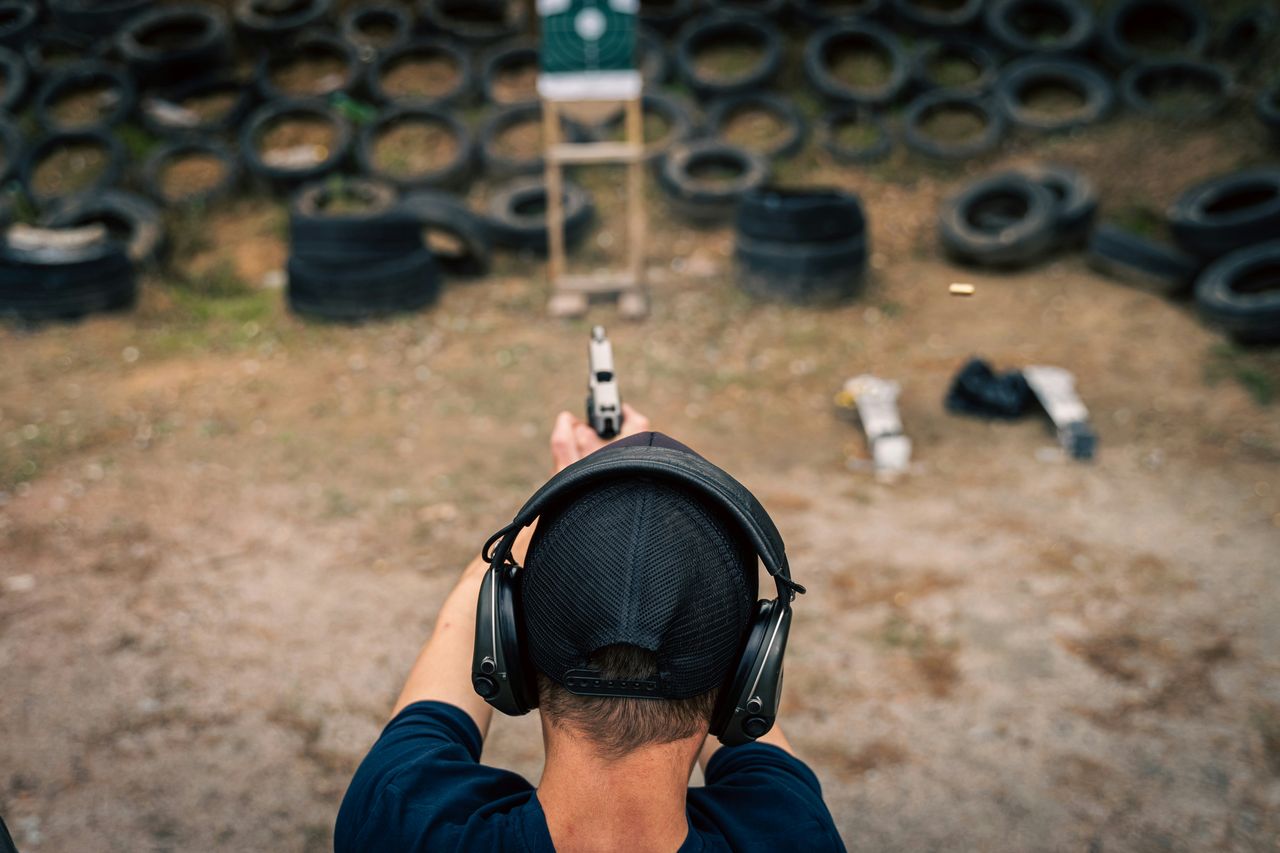
The firearms market is unusually unforgiving because reputation travels fast and bad stories travel faster. A truck can have quirks. A phone can freeze. A smart thermostat can reboot. People grumble and move on. A defensive handgun is judged by a harsher standard: owners want confidence before the crisis, not explanations after it. One high-profile failure can outweigh a thousand uneventful range sessions.
That is why smart gun makers face a burden that goes beyond engineering. They need sustained third-party testing, hard-use reviews, transparent failure data, and enough time in the field to convince skeptics that the guns are boringly dependable. Not interestingly dependable. Not promising. Boring. The category has rarely had enough delivered units, independent testing volume, or years of uneventful ownership to build that kind of trust.
And the problem compounds itself. Because adoption is low, there are fewer long-term users. Because there are fewer long-term users, there is less social proof. Because there is less social proof, more buyers wait on the sidelines. Smart guns are stuck in the worst possible retail loop for a safety-critical product: people want proof before buying, but the product needs buyers before it can accumulate proof.
Smart guns may survive, but probably as a specialty product
None of this means smart guns are doomed forever. The concept is no longer science fiction, and modern systems are clearly more advanced than the awkward early attempts that relied on external watches or crude authorization methods. Biometrics, batteries, embedded computing, and manufacturing all continue to improve. There is every reason to think future designs will get faster, tougher, and easier to live with.
But the most likely future is not a sweeping takeover of the handgun market. It is a gradual carve-out. Smart guns may find a place with certain first-time buyers, some families with heightened safety concerns, and a subset of owners who view electronics as an acceptable trade for personalized access. That is a real market, just not a huge one.
The deeper reason they keep failing to catch on is that the gun world does not reward almost reliability. It rewards proven, simple, repeatable performance under ugly conditions. Until a biometric handgun can match that standard in the minds of ordinary buyers, smart guns will remain what they have been for decades: an intriguing solution that still asks the market for more faith than the market is willing to give.