Noodling looks simple from the bank, but up close it is one of the most debated ways to catch fish in America. That is exactly why one state may celebrate it while another treats it like a bad idea waiting to become a rescue call.
What noodling actually is, and why it sparks such strong reactions

Noodling, also called hand fishing, grabbling, or tickling in some regions, means reaching by hand into holes, undercut banks, root tangles, or manmade cavities where spawning catfish are guarding nests. The angler provokes the fish into biting or clamping down, then wrestles it out by hand. In practice, it is usually aimed at flathead, blue, or channel catfish during warm weather when fish are holding tight in cavities.
That description alone explains the split reaction. To supporters, noodling is selective, physical, and deeply traditional. It is often described as a fair fight because the person is using only hands, not rods, nets, or electronics. According to Field & Stream, the method is legal in some form in 16 states, mostly in the South and Midwest, which shows how rooted it is in certain fishing cultures.
To critics, the same practice looks unnecessarily dangerous and hard to supervise. A person is putting an arm into dark water where the target may not be the only thing hiding there. The image of someone chest-deep in a muddy current, feeling around inside a submerged hole, is enough for many regulators and landowners to call it reckless before the first fish is even landed.
Why some states allow it as a cultural tradition, not a loophole

States that allow noodling usually do not treat it as an anything-goes stunt. They regulate it as a recognized harvest method, often with seasons, species limits, gear restrictions, or location-specific rules. Oklahoma, for example, explicitly defines noodling as taking nongame fish and catfish by use of hands only, and its wildlife code lays out where it is lawful and where it is restricted.
Kentucky also shows how legal acceptance can coexist with tight boundaries. State regulations set a defined grabbing season from June 1 through August 31 during daylight hours, with a daily creel limit and a cap on how many catfish may be kept. That kind of structure tells regulators their view of hand fishing as a manageable tradition, not a free-for-all.
Texas has likewise acknowledged hand fishing in its public-facing materials, and Wisconsin publishes catfish bow, crossbow, and hand-fishing rules through its DNR. In these states, legality often reflects long local familiarity. When wildlife agencies and fishing communities have decades of experience with a method, they are more likely to build a rulebook around it than ban it outright.
Why do other states see the same activity as reckless or not worth the risk

The biggest reason some states reject noodling is simple: risk management. Even if the fish itself is the goal, the setting can be unstable, murky, and unpredictable. Anglers are often dealing with submerged logs, current, drop-offs, slick mud, low visibility, and the possibility of panic when a large fish thrashes at close range. That is not a theoretical concern. CDC guidance on water safety repeatedly emphasizes that natural bodies of water carry added hazards and that drowning can happen quickly and silently.
Drowning risk also has a strong behavioral component. CDC notes that males account for nearly 80% of drowning deaths, with risk-taking behaviors and alcohol use among the contributing factors. That matters because noodling is often group recreation in summer, in remote water, and sometimes wrapped in bravado. Regulators do not have to prove every noodler is careless to worry that the activity itself attracts high-risk decision-making.
There is also the issue of non-target animals and injury. Catfish bites are not the only concern when hands go into hidden cavities. Wildlife and public health agencies routinely warn that turtles and other reptiles can inflict painful bites, and in many waters an angler cannot see what is inside a hole before reaching in. That uncertainty is a major reason some states decide the recreation value is not worth the rescue, enforcement, and liability burden.
Conservation concerns play a bigger role than many people realize
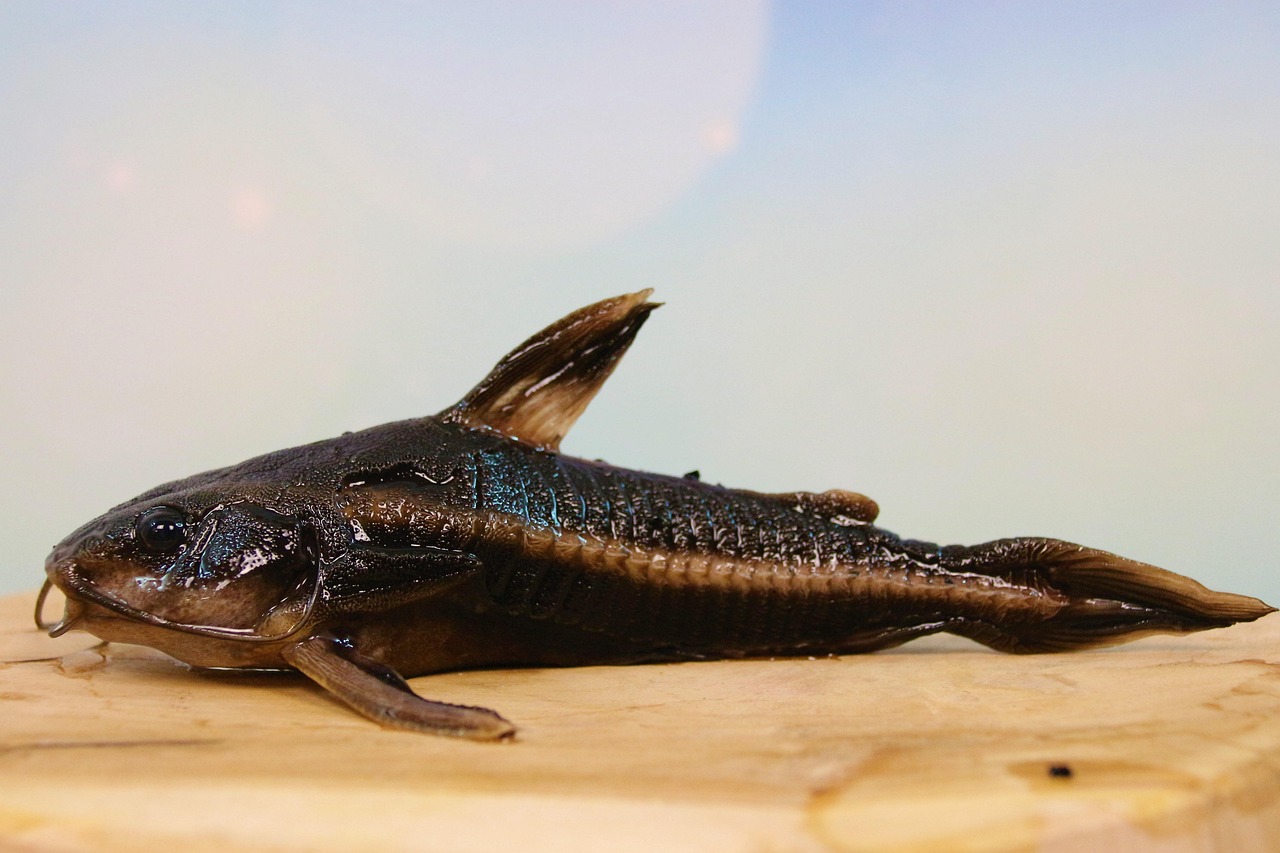
Safety gets the headlines, but fish biology often drives the legal debate. Noodling typically happens during the nesting period, when male catfish are guarding eggs or fry inside cavities. Removing that fish can disrupt spawning success in a way that rod-and-reel fishing does not always do as directly. A state with abundant catfish recruitment may tolerate that pressure, while a state with more fragile local fisheries may not.
This is why legal states often narrow the rules instead of opening the door completely. Tennessee, for example, allows grabbling-style harvest under broader methods-other-than-rod-and-reel regulations, but still limits harvest of oversized catfish by allowing only one fish over 34 inches per day. Restrictions like that reflect concern for large breeding fish that anchor a population.
Wisconsin does something similar by embedding hand-fishing rules within a larger catfish management framework, including bag limits and boundary-water distinctions. In other words, legality does not mean the state thinks the method is biologically harmless. It means managers believe the impact can be controlled with seasons, creel limits, and site-specific rules. Where agencies are less confident about that balance, prohibition is the cleaner policy choice.
Enforcement is another reason laws differ so much from state to state
A regulation has to be enforceable in the real world, not just sensible on paper. Noodling is notoriously difficult to monitor because it often happens in remote stretches of river, flooded timber, private ponds, backwaters, and undercut banks where conservation officers cannot easily observe what is being taken or whether the angler is following size and bag limits. That enforcement headache makes some agencies skeptical from the start.
There is also a line-drawing problem. When one person says they are hand fishing and another is disturbing habitat, using unapproved containers, or taking fish from prohibited structures, the evidence can get muddy fast. Oklahoma addresses this by specifying allowed waters and defining the method in black-and-white terms. The more detailed the code, the easier it is to distinguish legal hand fishing from illegal harvest practices.
States without a long noodling culture may decide that writing and policing a special carve-out is more trouble than it is worth. From a regulator’s perspective, banning a niche, high-risk method can be administratively cleaner than training officers, educating the public, and litigating edge cases about where hands were placed, what species were targeted, or whether a cavity was natural or artificial.
Geography and regional identity shape these laws as much as science does
If you map where noodling is legal, a pattern emerges. The practice is concentrated in parts of the South and Midwest, places where warm-water catfish are abundant, muddy rivers are common, and multigenerational fishing traditions still strongly influence outdoor law. Field & Stream’s recent overview lists legal states that include Alabama, Arkansas, Georgia, Illinois, Kansas, Kentucky, Louisiana, Maryland, Mississippi, North Carolina, Oklahoma, South Carolina, Tennessee, Texas, West Virginia, and Wisconsin.
That regional clustering matters because fish laws are never just about biology. They are also about what local residents see as normal, legitimate, and worth preserving. In one state, noodling is folded into a summer ritual, complete with family knowledge about nesting cavities, safe teamwork, and cleaning big flatheads. In another, it looks like an unnecessary risk imported from television and social media.
Lawmakers and wildlife boards respond to those local attitudes. A state with strong support from anglers, guides, and rural communities is more likely to regulate noodling than outlaw it. A state with less cultural buy-in and more concern from biologists, landowners, or rescue agencies may classify the same behavior as reckless, even if the underlying act is physically identical.
What the legal split really says about American outdoor policy
The divide over noodling is not really about whether grabbing a catfish by hand is brave or foolish. It is about how states balance freedom, tradition, biology, and public safety. Outdoor law in America often works this way. States do not just ask, “Can people do this?” They ask, “Can people do this safely enough, sustainably enough, and clearly enough that we can regulate it?”
Where the answer is yes, noodling gets a season, a bag limit, and a place in the fishing code. Kentucky’s daylight-only summer season, Oklahoma’s method definition, Tennessee’s size-based catfish limit, and Wisconsin’s hand-fishing framework all show that acceptance usually comes with structure.
Where the answer is no, the method is framed as reckless because the risk-to-reward ratio looks poor. That does not always mean officials are attacking tradition. Often, they are responding to local waterways, enforcement capacity, spawning concerns, and plain-old accident prevention. So the legal patchwork makes sense: noodling is not one thing everywhere. In some states,s it is a regulated heritage fishery. In others, it is a hazard that officials would rather stop before somebody gets hurt.