Firearms history is full of designs that seemed awkward, plain, oversized, or even unfinished when compared with more familiar weapons. Yet many of those visual compromises were deliberate responses to cost, weight, ammunition, manufacturing limits, or specialized military requirements. Some became widely used, while others remained experimental or limited. Looking beyond their appearance reveals why designers accepted unusual shapes and mechanisms in the first place.
1. Sten Gun
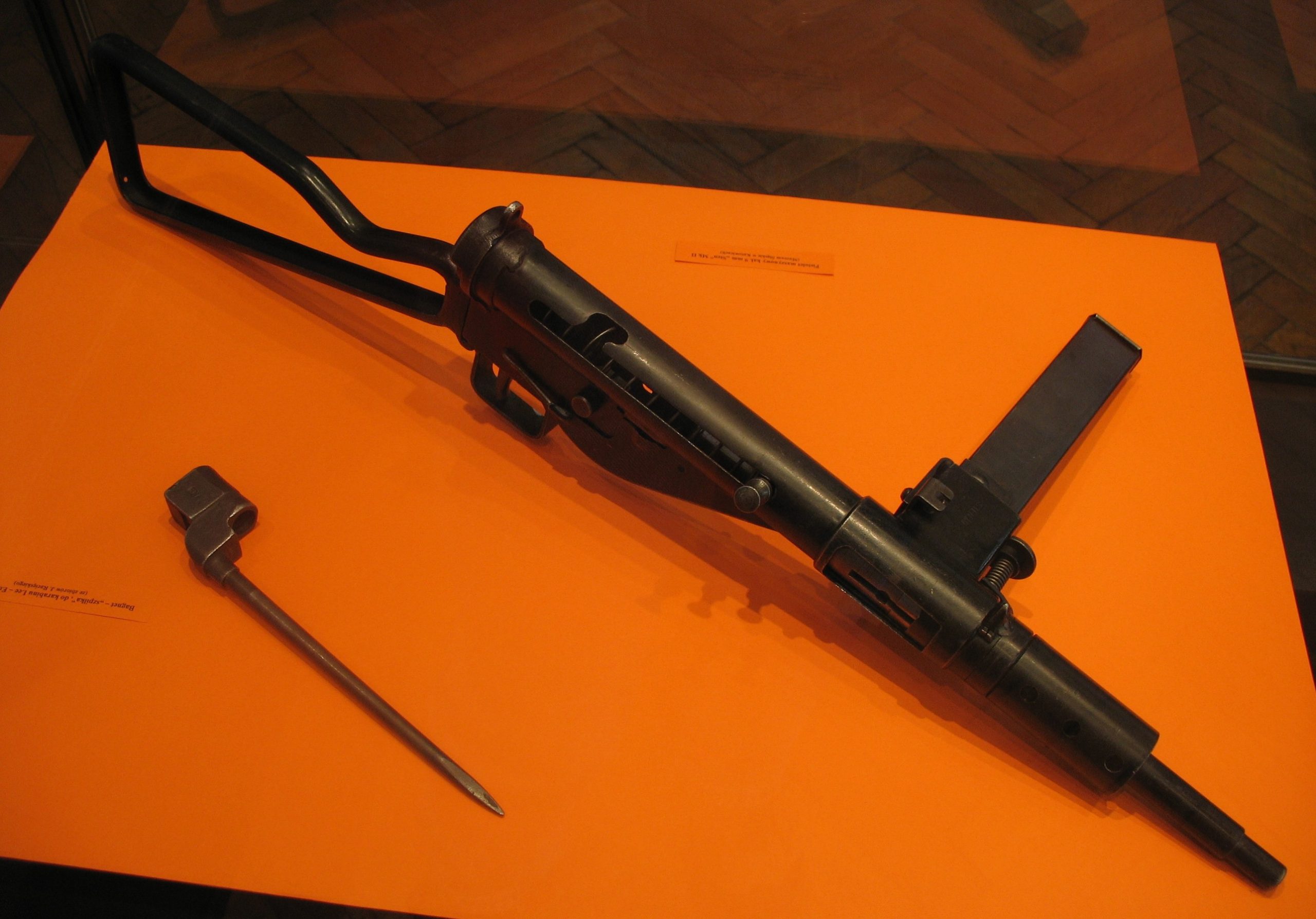
The British Sten looked almost unfinished, with a tubular receiver, wire stock, and a magazine mounted sideways. That appearance reflected its actual purpose: to produce a usable submachine gun quickly and cheaply during wartime. The Mk II could be made with roughly 47 major parts, and production spread among many factories. It used 9mm ammunition, a practical choice because Britain already faced shortages and needed compatibility with allied stocks. More than 4 million Stens were produced during World War II, showing that its awkward look was tied to industrial priorities.
2. M3 Grease Gun
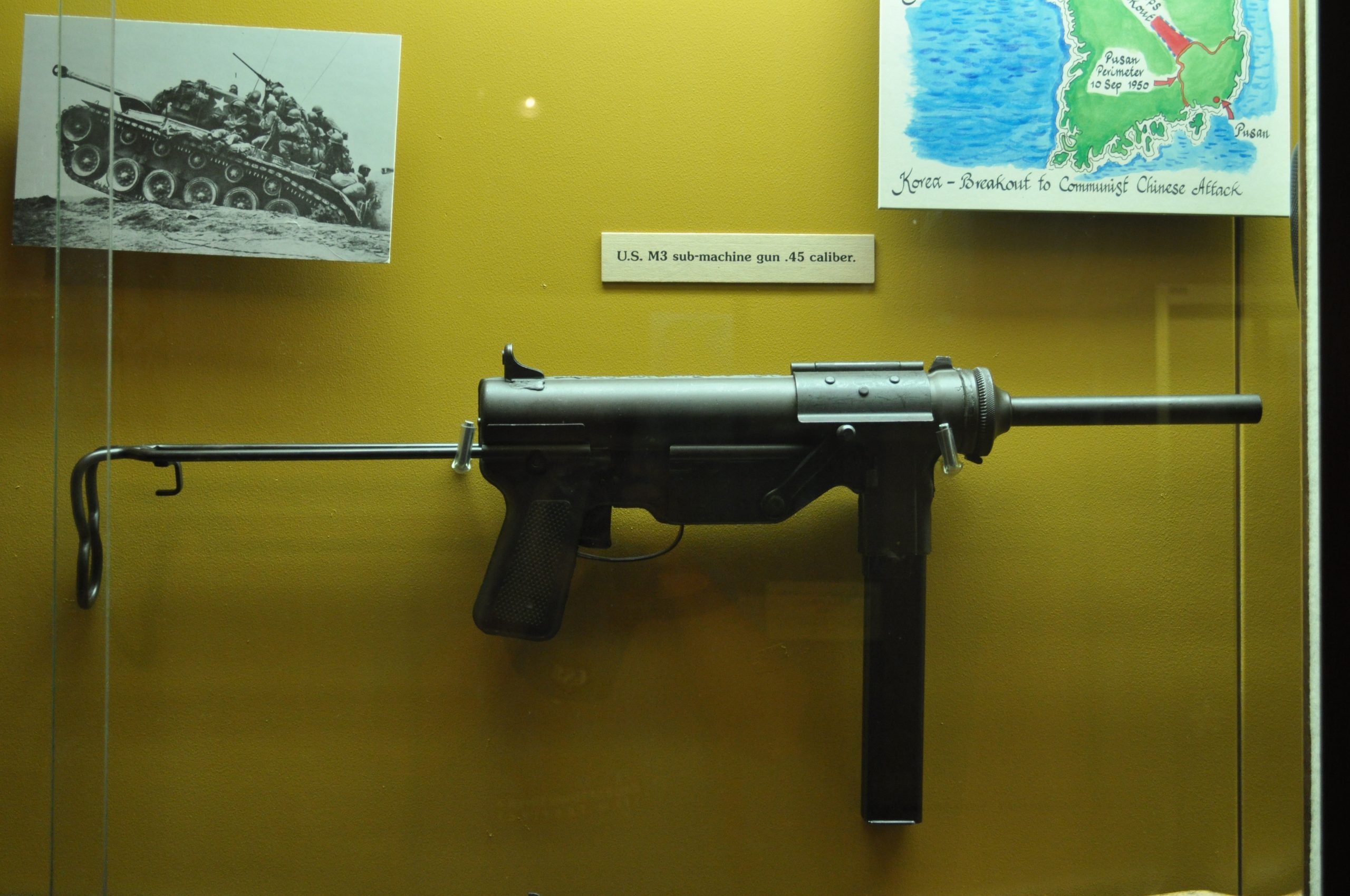
The M3 looked less like a military arm than a mechanic’s tool, but nearly every strange-looking feature served economy. Its stamped-steel construction reduced machining, while the .45 ACP chambering matched ammunition already used by American forces. The M3 weighed about 8 pounds and used a 30-round magazine, making it lighter than the Thompson it was intended to supplement. Production began in 1943, and more than 600,000 M3s were made during World War II. Its plain appearance was therefore a deliberate response to wartime manufacturing pressure.
3. FP-45 Liberator
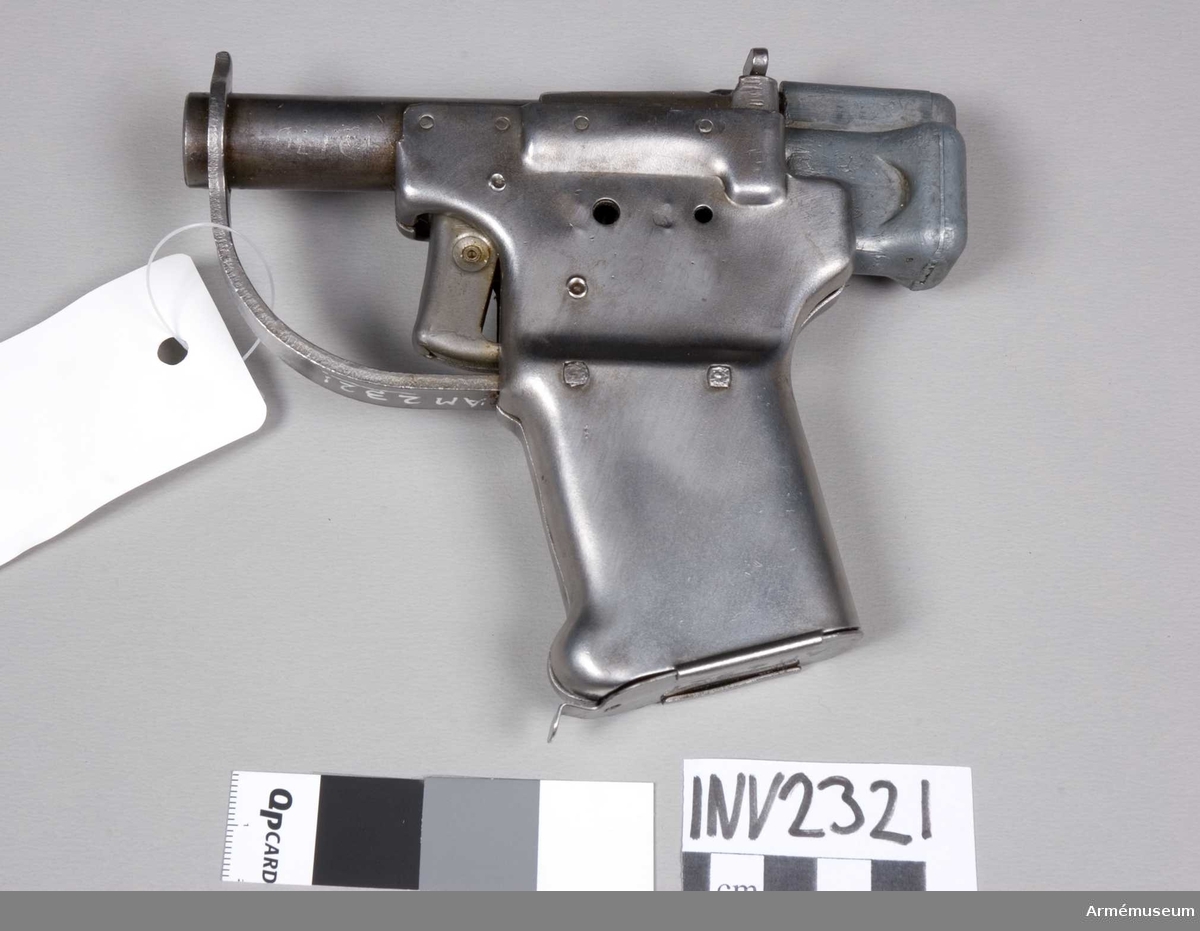
The FP-45 Liberator looked crude because it was never intended to be a conventional infantry weapon. Developed during World War II for resistance groups, it was a single-shot .45-caliber pistol designed for fast, inexpensive production. About 1 million were manufactured in 1942. The pistol had no conventional sights and carried spare cartridges in its wooden storage box. Its purpose was largely logistical: provide a basic weapon for occupied territory that could be produced in huge numbers and distributed discreetly. The awkward design was closely tied to its unusual wartime mission.
4. Welrod
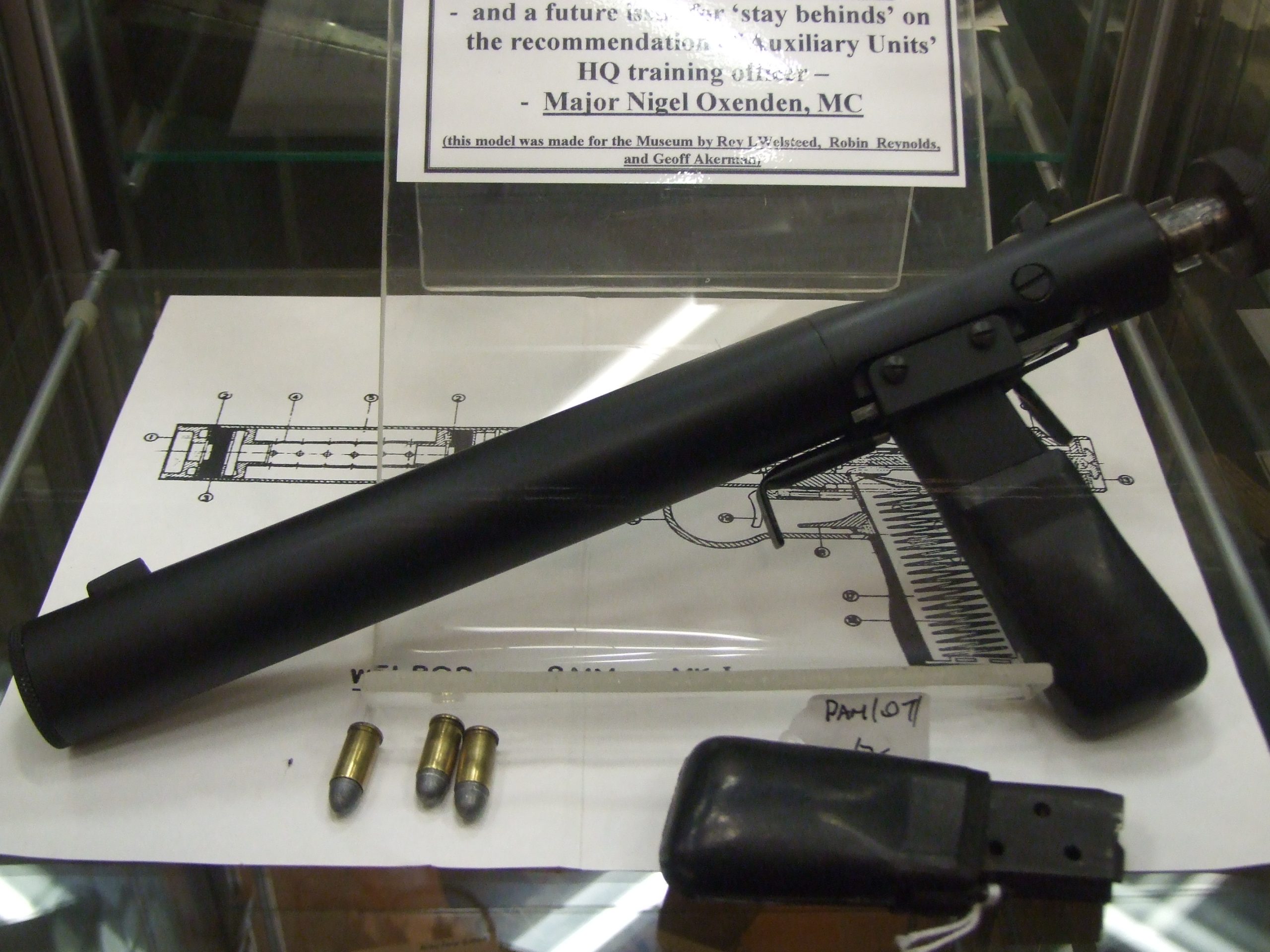
The British Welrod looked like a metal tube with a pistol grip, and that unusual shape was tied to its specialized mission. Developed during World War II for clandestine use, it incorporated a suppressor around the barrel rather than treating suppression as a separate accessory. Its bolt-action design also avoided the moving action of many self-loading pistols. Versions were made in 9mm and .32 ACP, while magazines typically held 6 or 8 rounds depending on the model. It was never a general-issue service pistol because its value came from a very narrow operational role.
5. Johnson Model 1941 Rifle
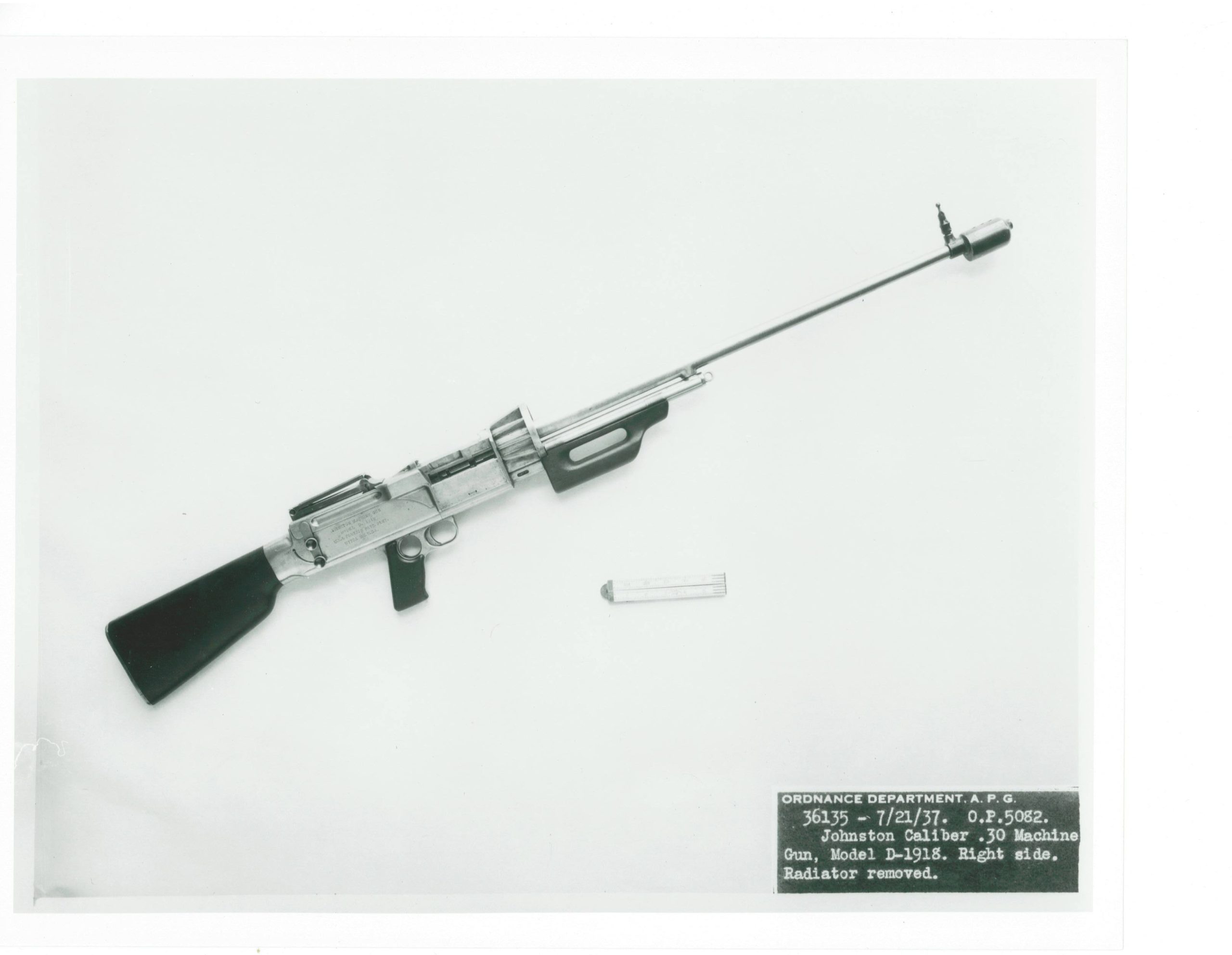
The Johnson Model 1941 looked unconventional because Melvin Johnson chose a recoil-operated system instead of the gas system used by the M1 Garand. Its barrel could also be removed quickly, while a 10-round rotary magazine could be topped up without removing it. Those features suited users who valued flexible handling and maintenance. The U.S. military did not adopt it in large numbers, but Marine Raiders and other specialized users employed Johnson rifles during World War II. Its unusual layout was therefore a collection of deliberate engineering choices, not random eccentricity.
6. Chauchat
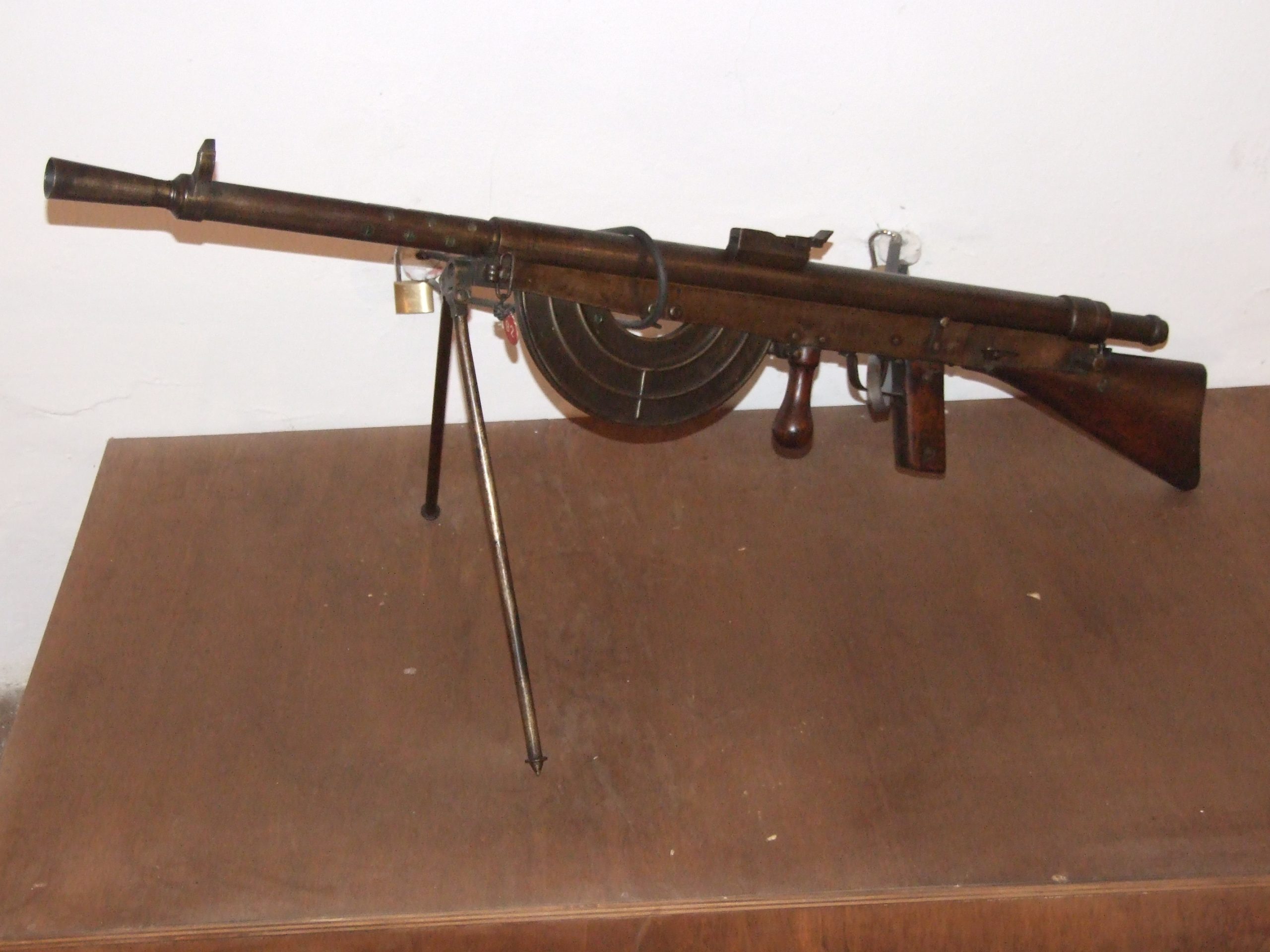
The French Chauchat became famous for its ungainly profile, but its appearance reflected an attempt to create a portable automatic rifle. It used the 8mm Lebel cartridge and long recoil operation, with a light construction compared with heavier machine guns of its era. France adopted it during World War I, and more than 260,000 were produced in French and American versions. Its performance suffered from design and ammunition-related problems, yet its goal was important: give infantry a mobile automatic weapon that could move with advancing troops rather than remain fixed in place.
7. Bren Gun
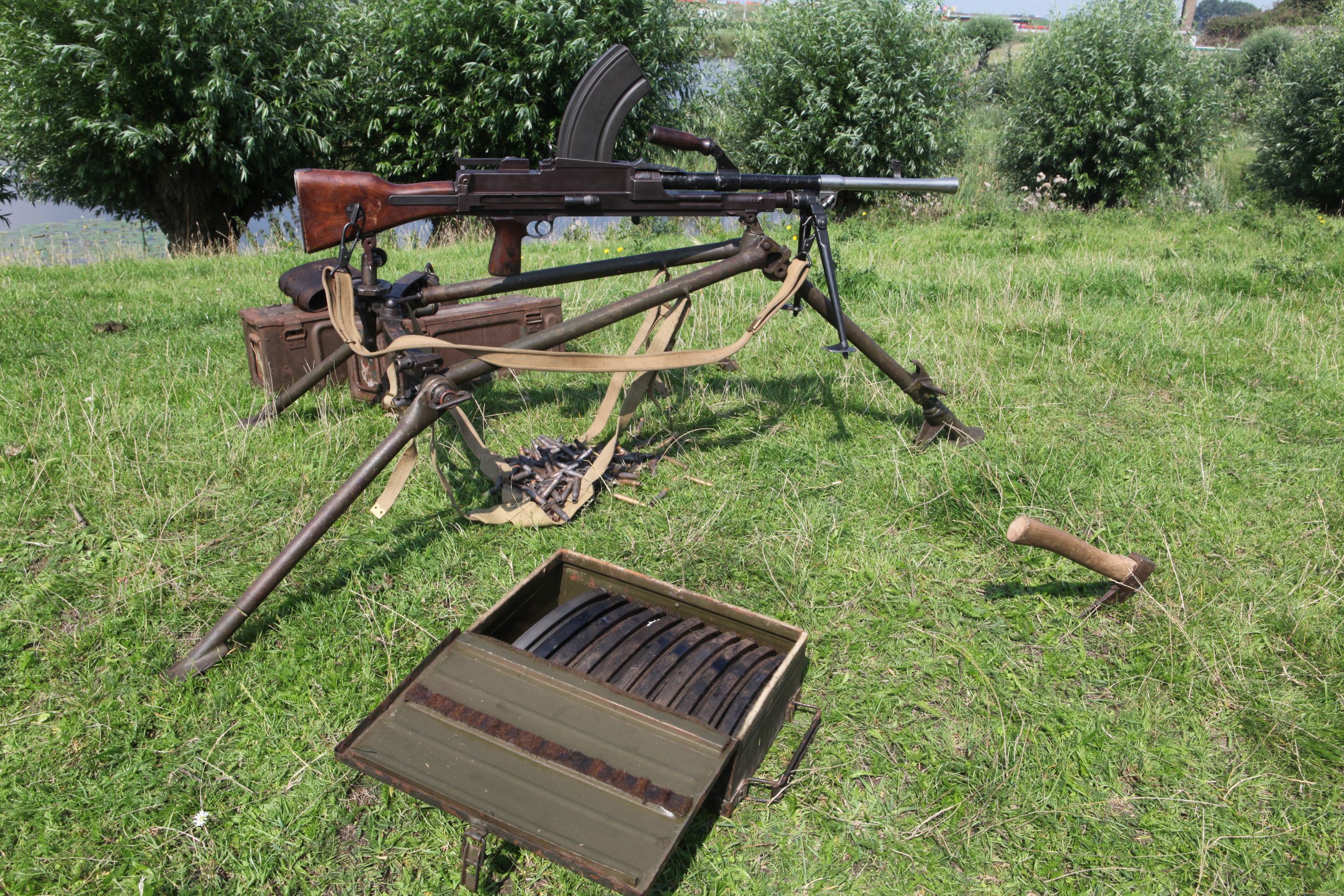
The Bren gun’s top-mounted magazine and curved profile could look like compromises beside conventional rifles. The arrangement helped keep the feed system and sights practical around the operating mechanism. It fired the .303 British cartridge and used detachable magazines, most commonly holding 30 rounds. The Bren entered British service in 1938 and remained an important infantry automatic weapon for decades, with production exceeding 300,000 examples. Its unusual profile was closely connected to reliability, controllability, and the British Army’s need for a portable squad automatic weapon.
8. P90
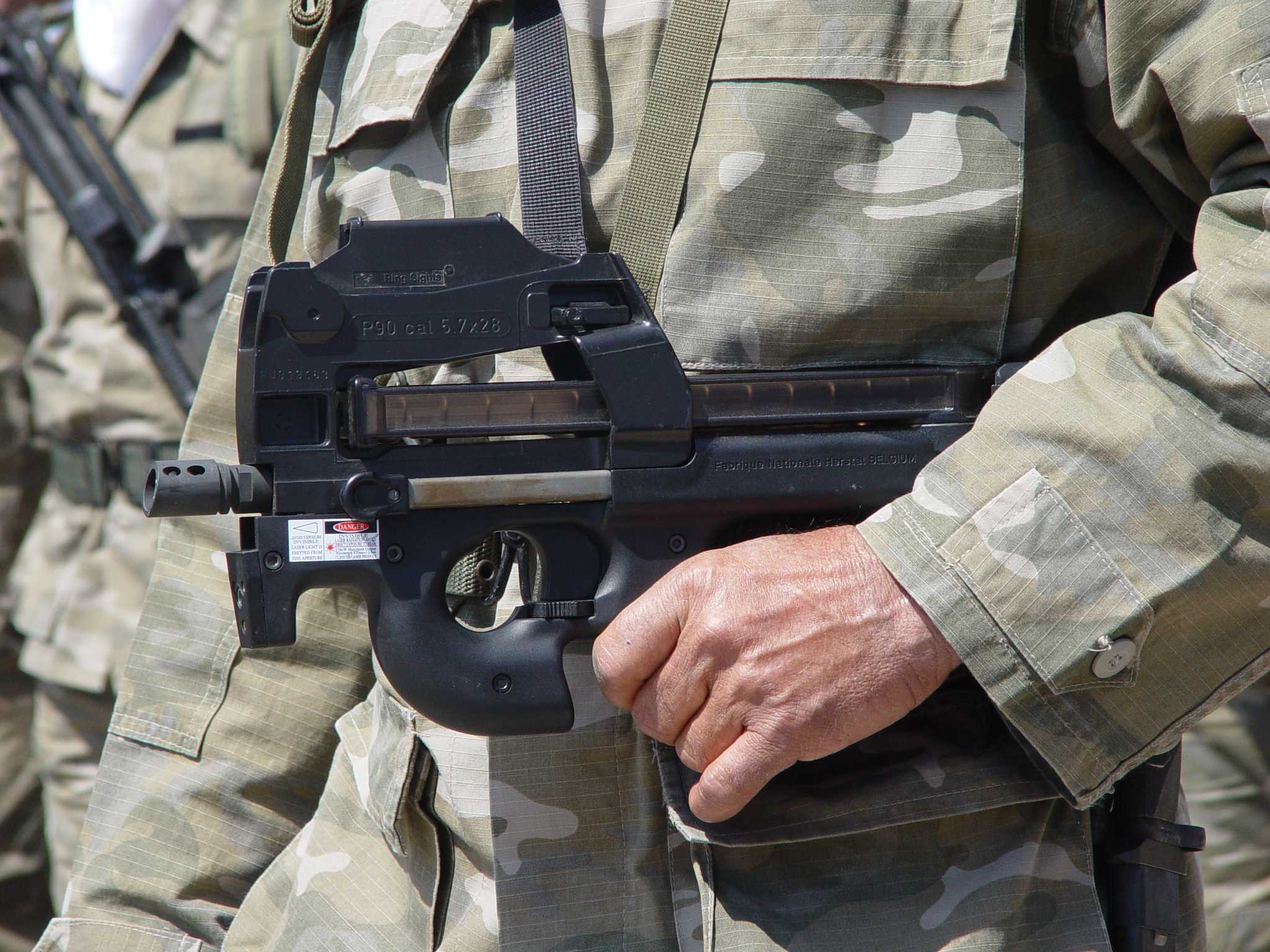
The FN P90 looked unlike a conventional submachine gun because its designers were solving a specific problem: give military and security personnel a compact weapon with useful ammunition capacity. Its 50-round magazine sits horizontally above the barrel, allowing a short overall package without a magazine projecting downward. Introduced in 1990, the P90 uses the 5.7x28mm cartridge and a delayed blowback action. Its controls are arranged for either hand. The unusual shape was therefore tied to compactness, ammunition capacity, and handling rather than appearance alone.
9. G11
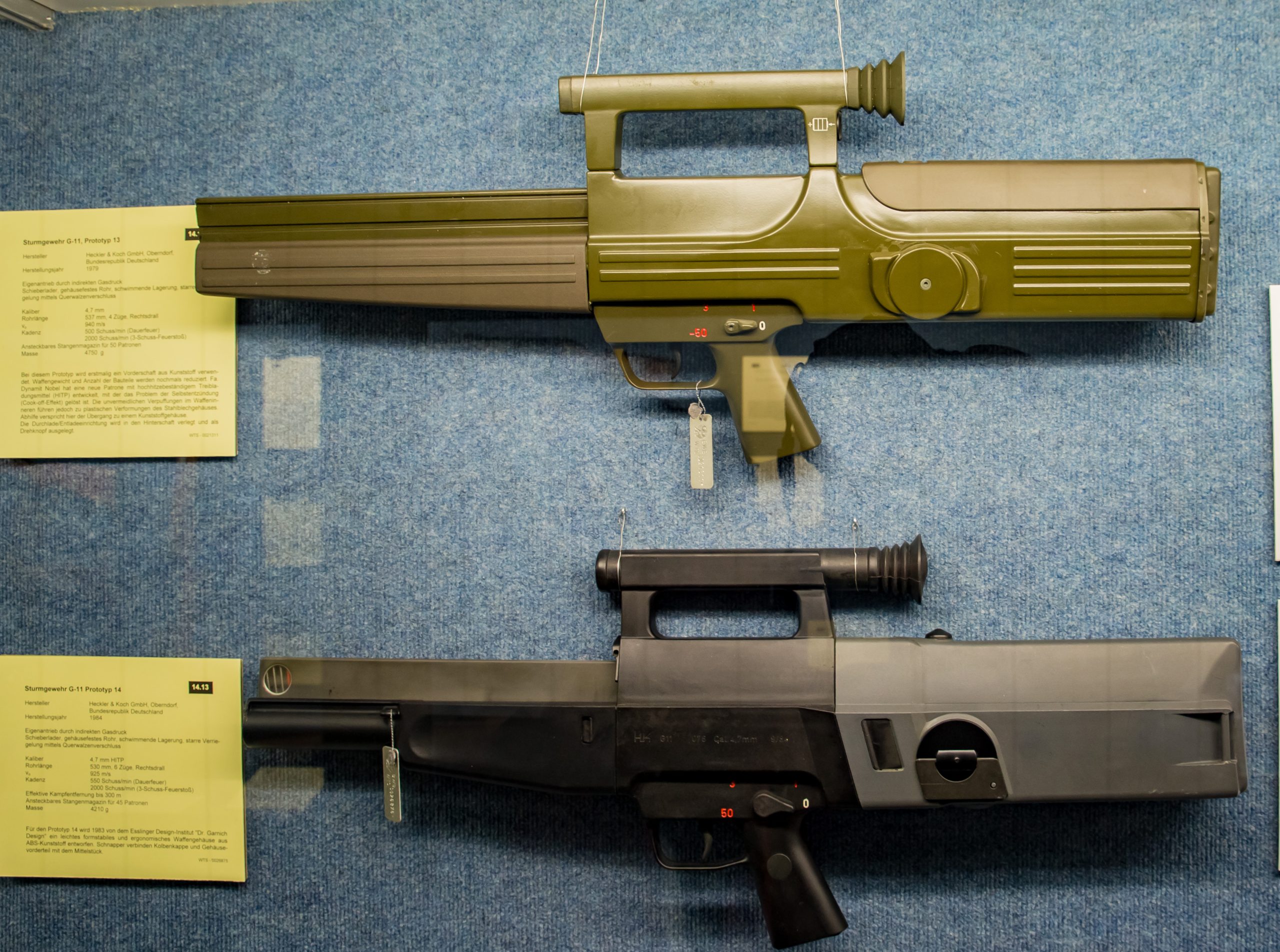
The Heckler & Koch G11 looked futuristic because it attempted to rethink rifle conventions at once. Developed in West Germany during the Cold War, it used caseless ammunition to remove the conventional cartridge case and employed a rotating chamber. A three-round burst could be fired at a very high cyclic rate before recoil significantly affected the shooter’s position. The project ended without general adoption, partly because of cost, technical complexity, and changing procurement priorities. Its odd shape represented an ambitious attempt to address ammunition weight and burst control.
10. Gyrojet Pistol
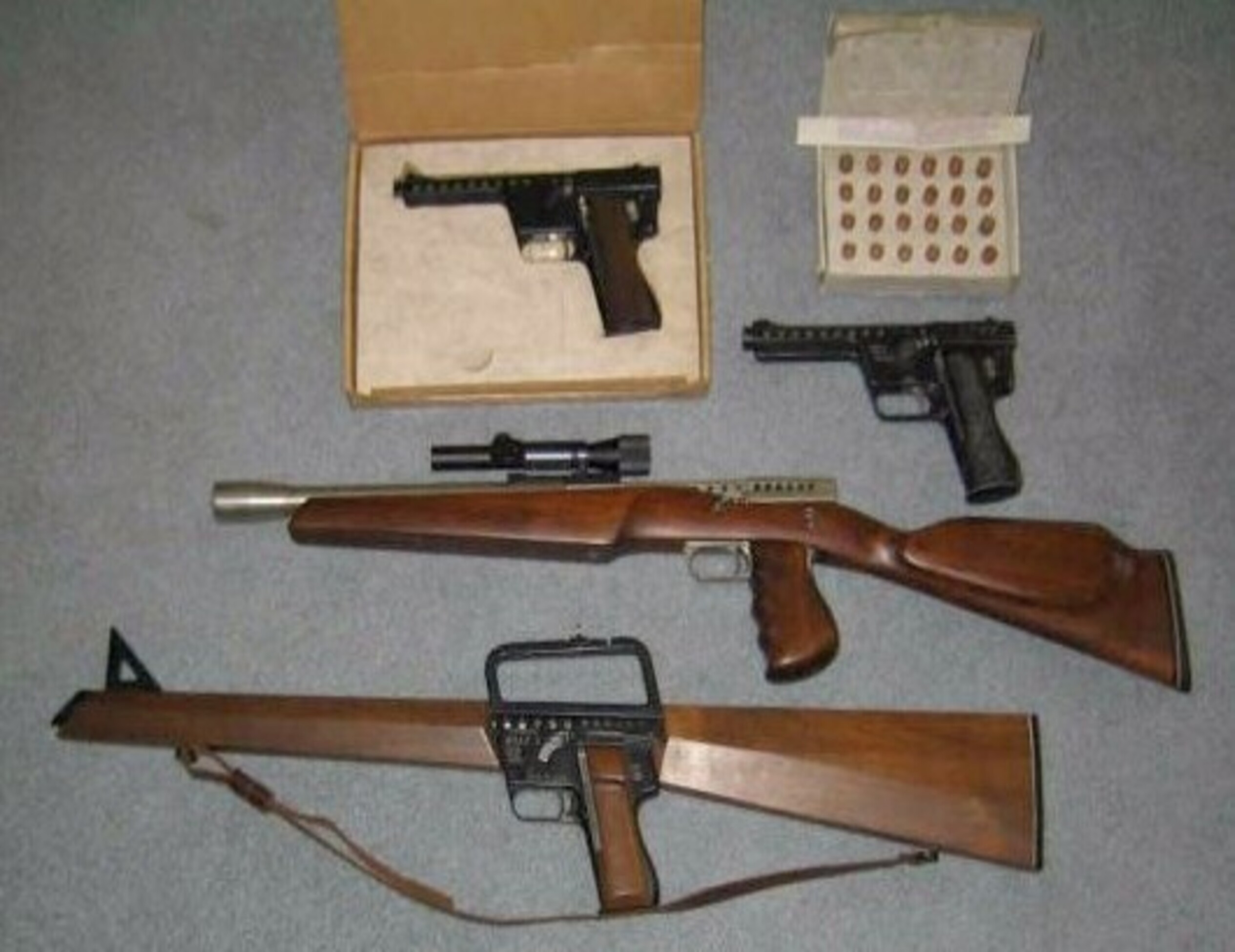
The Gyrojet pistol looked strange because it did not use a conventional bullet propelled by a normal cartridge. Its ammunition used small rocket-propelled projectiles, giving the weapon a science-fiction appearance. The concept offered low recoil, but it introduced trade-offs involving ammunition and consistency. Production versions appeared in the 1960s, and the project remained limited. Its unusual appearance was not accidental: the design had to accommodate an ammunition system that behaved differently from conventional pistol cartridges.
11. M1 Carbine
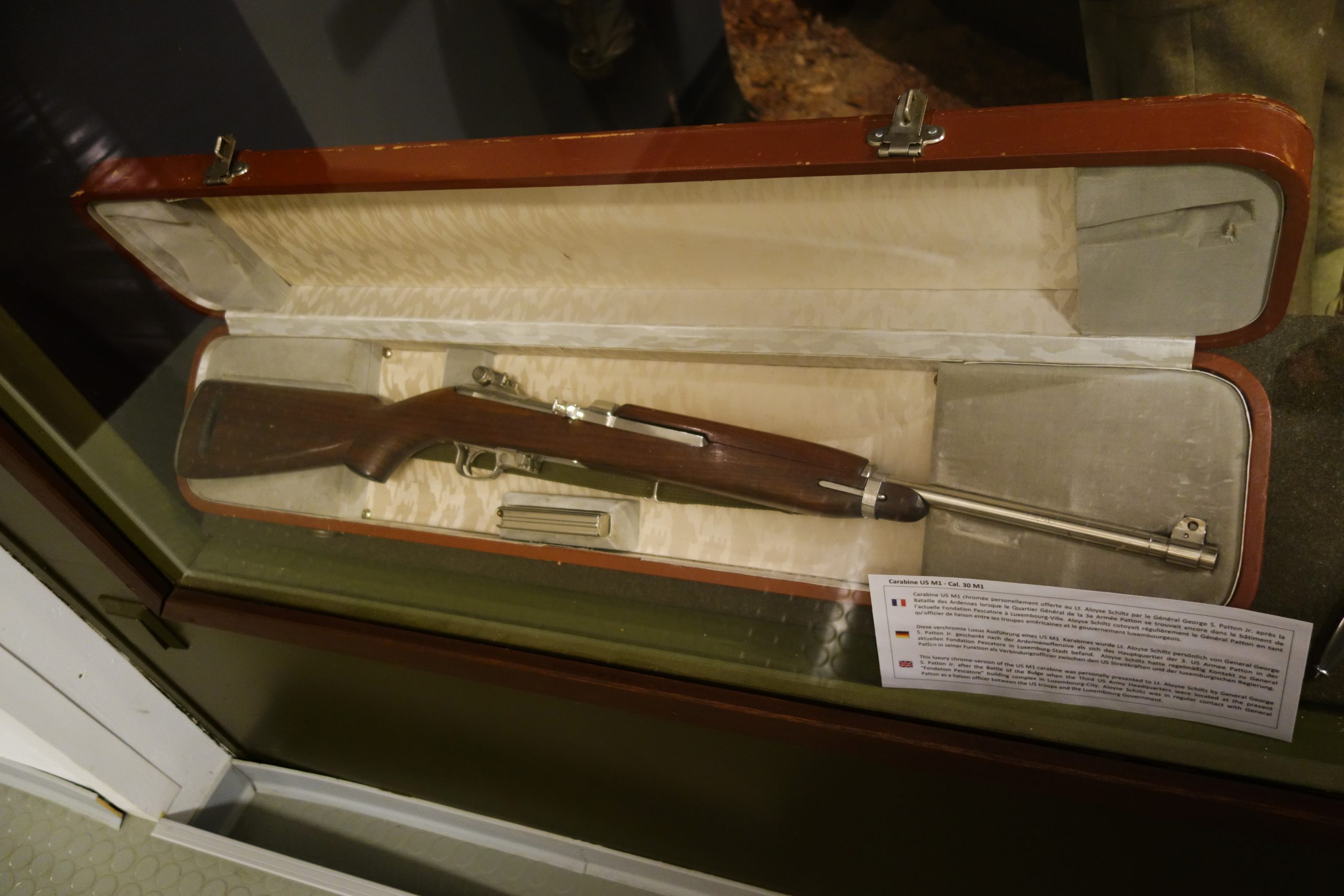
The M1 Carbine could look like a compromise between a pistol and a full-size rifle, and that was exactly the gap it was designed to fill. Adopted by the United States in 1941, it was shorter and lighter than the M1 Garand while firing the .30 Carbine cartridge. The standard magazine held 15 rounds, with 30-round magazines appearing later. More than 6 million M1 Carbines were produced during World War II, and they served personnel who needed something handier than a full-length rifle. Its proportions reflect