A hunter stepping across your boundary can turn a quiet day into a tense one fast. The key is to respond in a way that protects people first and your rights second, without letting anger drive the decision.
Why property-line breaches matter more than people think

When hunters cross onto private land, many landowners treat it as a nuisance until it happens repeatedly or too close to a home, barn, livestock area, or family trail. In reality, the issue is bigger than courtesy. It involves trespass law, firearm safety, liability concerns, and the basic right to control who enters your land and when.
State wildlife agencies are consistent on one point: a hunting license does not give anyone the right to enter private property. New York’s Department of Environmental Conservation says permission is required whether land is posted or not, and Texas Parks and Wildlife similarly states hunters may not hunt on privately owned land without the owner’s or agent’s permission. In guidance for deer season, Michigan’s DNR also reminds hunters to respect posted boundaries and not retrieve wounded game from private land without consent.
That last point surprises many people. A common excuse is that a deer, dog, or piece of gear crossed the line first. But several state agencies make clear that the animal crossing over does not automatically create a legal right to follow. In New York and Michigan, official guidance says a hunter must seek landowner permission before pursuing or retrieving wounded deer on private property.
This matters because many confrontations begin after the shot, not before it. A landowner looks out and sees strangers walking in with rifles, convinced they are acting reasonably. The hunter may think the situation is minor. The landowner may see an armed trespasser near a home or a family member. That gap in expectations is exactly why calm, documented, rule-based responses work better than emotional ones.
What to do in the moment if hunters are on your land

The first rule is simple: do not escalate an armed encounter. If you see hunters on your property, keep your distance, stay visible if you must speak, and avoid rapid movement or confrontational behavior. If you feel unsafe, go inside, get others to safety, and call local law enforcement or the state conservation officer instead of trying to handle it face-to-face.
If you do speak to the hunter, keep it short and direct. Tell them they are on private property, that they do not have permission to be there, and that they need to leave by the safest route. Do not grab equipment, block a vehicle with your body, or physically try to detain anyone. A trespass case is helped by good evidence, not by creating a separate disturbance.
Useful evidence includes time-stamped photos, video from a safe location, vehicle descriptions, license plate numbers, stand or blind locations, spent shell casings, and exact map points where the crossing happened. If you have trail cameras or security cameras, preserve the original files. Write down what was said as soon as possible, because those details tend to fade or get distorted after a stressful exchange.
If a wounded deer or other game is involved, resist the urge to argue on the spot. You can simply say permission is denied or granted under whatever limits you choose. If you deny entry, several state agencies note that the hunter does not gain an automatic right to continue onto your land. If the encounter feels tense, let law enforcement manage the next step.
How signs, fences, paint marks, and maps actually help
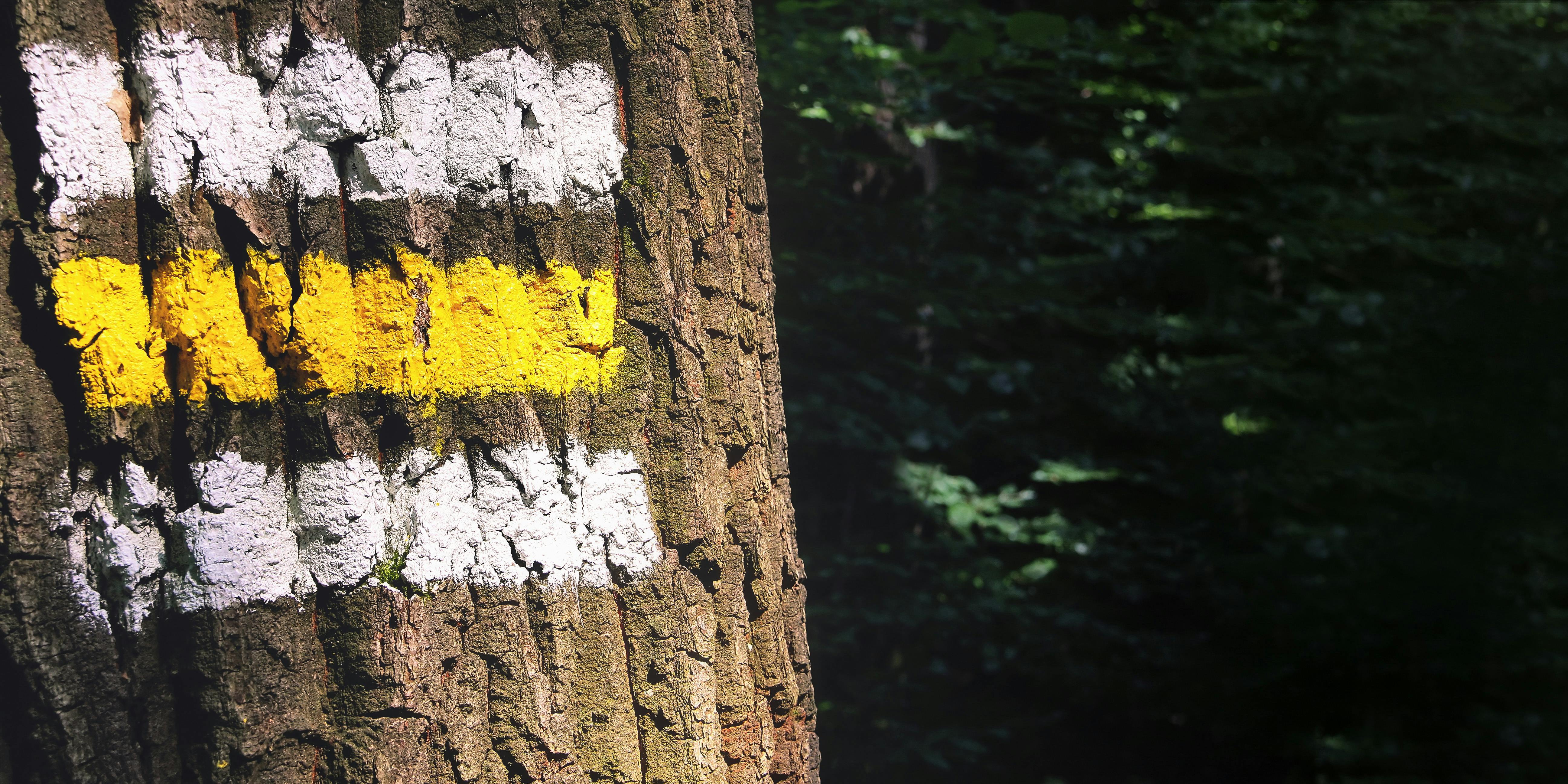
Landowners often assume boundaries are obvious when they are not. Tree lines wander, old fences sag, creek beds shift, and GPS apps are only as good as the map layer a hunter is using. Clear marking will not stop every bad actor, but it sharply reduces the number of “I thought this was public” excuses and gives officers stronger facts to work with.
Posting matters, even though trespass can still be illegal on unposted land in many places. New York DEC says trespassing is illegal even on unposted property, yet it also explains that conspicuous signs close to and along boundaries make restrictions unmistakable. In Texas, purple paint can serve as a legally recognized notice in some circumstances, and Missouri conservation guidance has long warned outdoor users to watch for purple paint and posted signs before entering land.
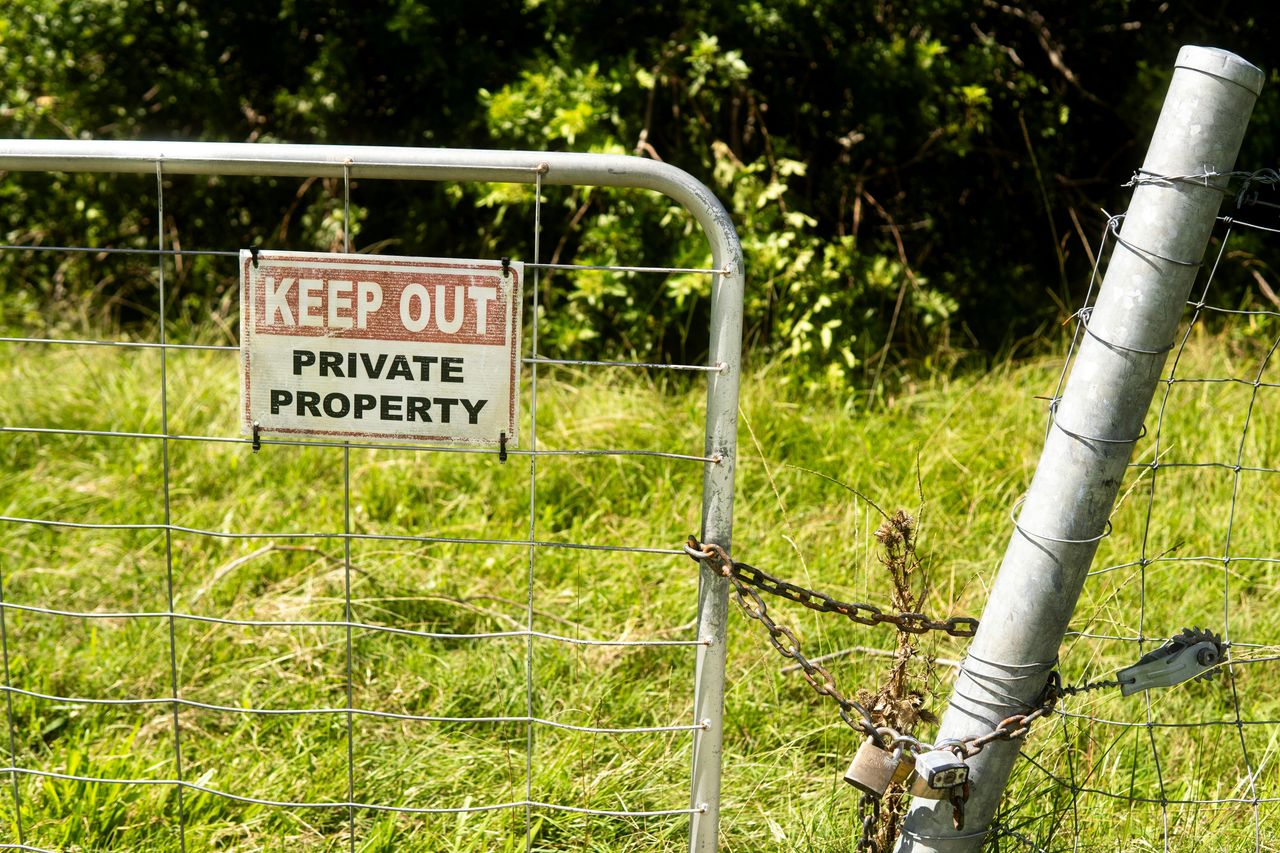
Good posting is boring, repetitive, and effective. Put signs at gates, corners, trail entries, road frontage, and natural access points. Replace faded signs before the season opens. If your state recognizes paint marks, use the required color, size, and spacing exactly as the law describes. Keep a simple property packet with survey pages, parcel maps, and marked access points ready in your phone and in print.
Digital mapping helps too. Many hunters now rely on phone-based land ownership maps, and that has reduced some accidental trespass while creating overconfidence in other cases. If you own rural land, compare your survey, county parcel map, and on-the-ground markers. A visible boundary backed by clean documentation is much easier to enforce than a line only the owner thinks they know.
When to call the game warden, sheriff, or local police

Not every boundary issue needs flashing lights, but some absolutely do. Call immediately if shots are fired near occupied buildings, hunters refuse to leave, someone acts aggressively, alcohol appears to be involved, or you believe people are entering repeatedly after being warned. The presence of firearms changes the risk calculation, and there is no prize for handling a dangerous scene alone.
In many states, conservation officers or environmental conservation police are the best first call when the problem is directly tied to hunting activity. Michigan’s DNR notes that conservation officers are often called when trespass disagreements escalate. New York DEC and similar agencies also handle hunting-related trespass, illegal game retrieval, and other field complaints that local patrol officers may see less often.
That said, local sheriffs and police still matter, especially when immediate removal, report writing, or criminal trespass enforcement is needed. Think in terms of overlap, not either-or. Wildlife officers know hunting regulations and evidence patterns. Local law enforcement may be faster to reach the scene or better positioned to respond if threats, property damage, or repeat offenders are involved.
When you call, be precise. Give your address, parcel access road, number of people, whether firearms are visible, whether anyone has been confronted, and whether the individuals are on foot, in a blind, or in a vehicle. Exact, calm details help dispatch classify the incident correctly and improve the odds of a timely, useful response.
Building a paper trail that makes enforcement easier

One isolated mistake can happen. A pattern is something else entirely. If the same hunters, club members, or neighboring guests keep crossing your line, create a file as if you may need it months from now. That means dates, times, photos, notes, prior warnings, case numbers, and copies of any certified letters or text messages you sent.
A paper trail matters because trespass disputes often become credibility contests. The other side may claim permission was implied, signs were missing, the line was unclear, or they were only retrieving game. Your job is not to produce a dramatic story. Your job is to show a consistent record: boundaries were marked, notice was given, entry continued, and you responded reasonably each time.
Written notice can be especially helpful with repeat offenders. New York DEC notes that landowners may issue a written notice prohibiting entry and that people told to leave must do so immediately. While the exact procedure varies by state, the principle is widely useful. Clear notice removes ambiguity and gives officers and prosecutors something concrete to point to.
This is also where neighbors help. If adjoining owners face the same problem, compare notes. Shared dates, vehicle descriptions, and access routes can reveal patterns that a single incident does not. Repeated entry from the same back road or field edge often tells enforcement far more than one blurry photo ever could.
Preventing repeat problems without creating a feud
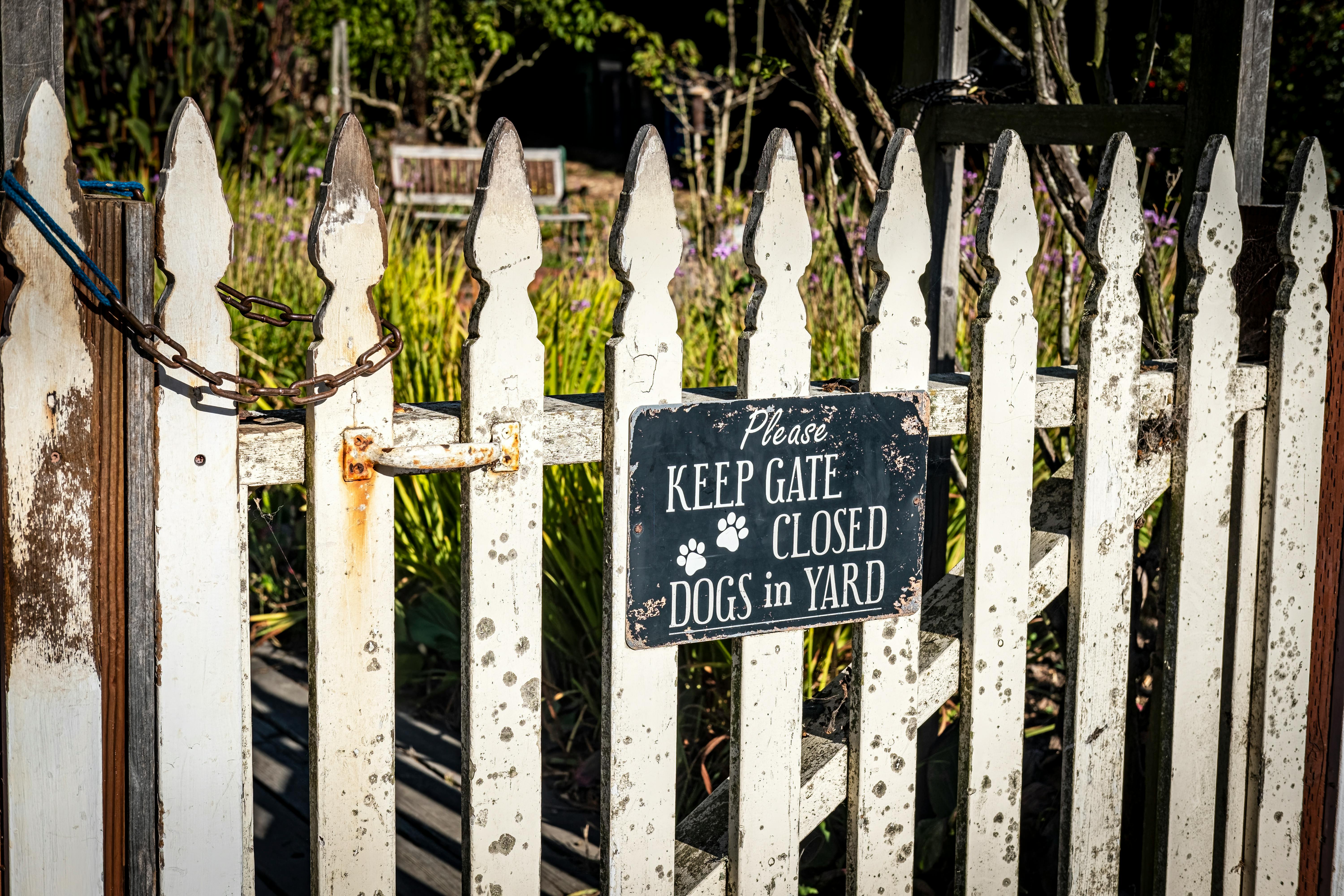
The best long-term strategy is firm, visible control of access paired with measured communication. Lock gates where lawful, close old cut-through trails, and make it obvious where permitted access begins and ends. Many landowners reduce problems simply by eliminating ambiguity before the season starts, not by winning arguments after opening day.
A preseason conversation with adjoining landowners can solve more than people expect. Ask who has permission to hunt nearby, what vehicles they will use, and where they usually park or enter. If everyone knows where the line is, honest mistakes drop. This matters because access to hunting land in the United States depends heavily on private property. The National Shooting Sports Foundation has reported that a majority of hunters use private land they do not own but have permission to hunt.
That statistic cuts both ways. It means many hunters are used to asking first and respecting a yes or no. It also means social assumptions can get sloppy, especially when permission was granted years ago by a former owner or only for one section of a farm. A simple reset each season can prevent old understandings from turning into new trespass claims.
You can also choose a controlled-permission system if you are open to some hunting. Written permission slips, named individuals only, vehicle rules, and no-retrieval-without-contact terms can prevent conflict. People tend to respect boundaries more when the rules are specific, written down, and applied consistently to everyone.
Balancing your rights, safety, and community relationships
Property-line breaches trigger strong feelings because they land at the intersection of privacy, safety, and identity. For many rural owners, land is not just an asset. It is home, family history, and a daily working ground. Someone stepping over the line with a firearm can feel deeply personal, even before any law is discussed.
Still, the most effective landowners are usually the calmest ones. They know the line, mark it well, document incidents, and call the right authority when necessary. They do not surrender their rights, but they also do not let a trespasser pull them into reckless behavior. That mix of restraint and preparation is what keeps a bad afternoon from becoming a dangerous one.
It also helps to separate hunters into categories. Some are careless, some are entitled, and some are genuinely mistaken. Your response can be equally clear in every case while still leaving room for common sense. A first-time boundary slip may end with a warning. A repeat entry after notice is a different matter entirely and should be treated that way.
In the end, dealing with hunters breaching property lines is about control, not drama. Control the boundary, the evidence, the communication, and the response. When you do that, you protect your land, improve your odds with enforcement, and lower the chances that one trespass turns into a lasting conflict with the people around you.