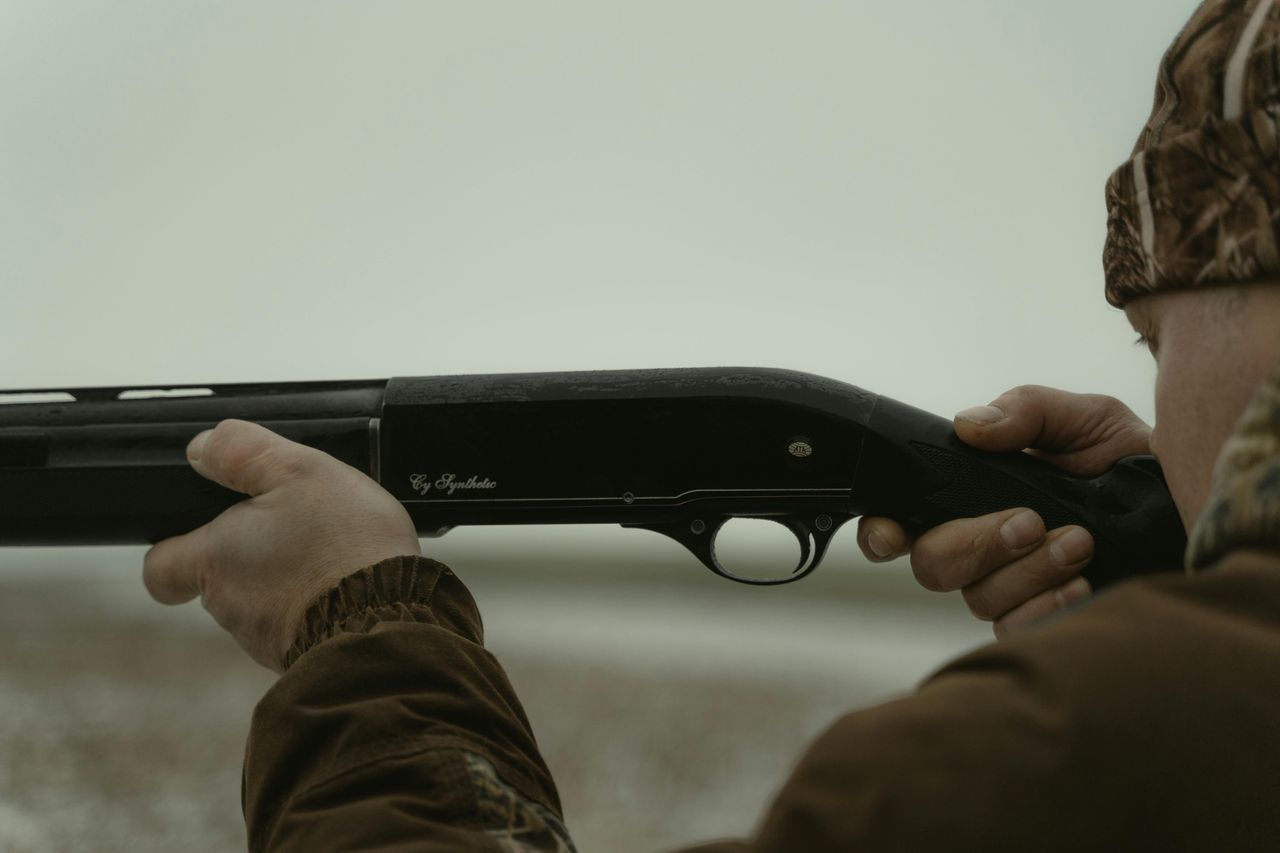
Fast shooting mattered long before modern semi-autos took over. The Remington Model 14 answered that need with a design that felt quick, handy, and surprisingly forward-thinking for its day.
A pump rifle built for hunters, not the parade ground
Introduced in 1913, the Remington Model 14 was John Pedersen’s answer to a hunting market dominated by lever actions. Remington and the NRA’s American Rifleman both note that the rifle was offered in .25, .30, .32, and .35 Remington, all practical woods cartridges for the era.
That chambering lineup mattered because it put the rifle squarely in the deer and black bear conversation. Hunters were not buying a novelty. They were buying a repeating rifle meant to compete head-on with the fast-handling carbines already riding in saddle scabbards and leaning in camp corners.
The Model 14 also arrived when hunters still expected a rifle to be slim and easy to carry all day. Compared with heavier autoloaders of the period, the pump gun gave sportsmen a trimmer package and a manual action many trusted in foul weather, brush, and cold hands.
Why fast follow-up shots were the whole point
The great selling point of the Model 14 was speed without much drama. A practiced shooter could keep the rifle to the shoulder, work the slide briskly, and fire again far faster than most hunters could with a turn-bolt rifle of the same period.
That mattered in the kind of hunting the rifle was built for. In thick timber, shots at whitetails often came suddenly, and a buck that stumbled, wheeled, or hit the brush might offer only a fleeting chance for a second round.
A pump action also felt natural to many hunters because the motion was direct and linear. There was no need to break the firing grip as much as with some other actions. In practical use, that meant less disruption to sight picture and less wasted movement between shots.
The spiral magazine was the clever trick
What made the Model 14 truly different was its spiral-grooved tubular magazine. American Rifleman has described that design as a way to offset cartridges so a bullet tip would not rest directly on the primer ahead of it during recoil.
That was a real engineering advantage because tube magazines usually favored blunt or round-nose bullets for safety reasons. Remington’s design tried to sidestep that limitation, giving hunters a rifle that kept the familiar balance of a tube-fed gun while addressing one of its biggest criticisms.
Even today, the corkscrew-like magazine is the first thing collectors notice. It was not just decorative flair. It showed that Remington understood hunters wanted speed, compactness, and modern cartridge performance in one rifle rather than choosing only two of the three.
Handling, takedown design, and field practicality
The Model 14 also earned respect for being handy in the field. Period and modern write-ups alike describe it as a light, quick pointing rifle, the sort of gun that came alive in thick cover where snap shooting and offhand balance mattered more than benchrest manners.
Another useful feature was its takedown construction. Remington documentation and collector references show the rifle could be separated for transport and cleaning, a welcome trait for hunters traveling by wagon, train, truck, or simply trying to stow a rifle neatly in camp.
This was part of the rifle’s broader appeal. It was not designed as a target rifle or a military arm. It was a practical hunting tool, easy to carry, reasonably compact, and fast to bring back into action when the first shot did not settle the matter.
Chamberings that matched real hunting needs
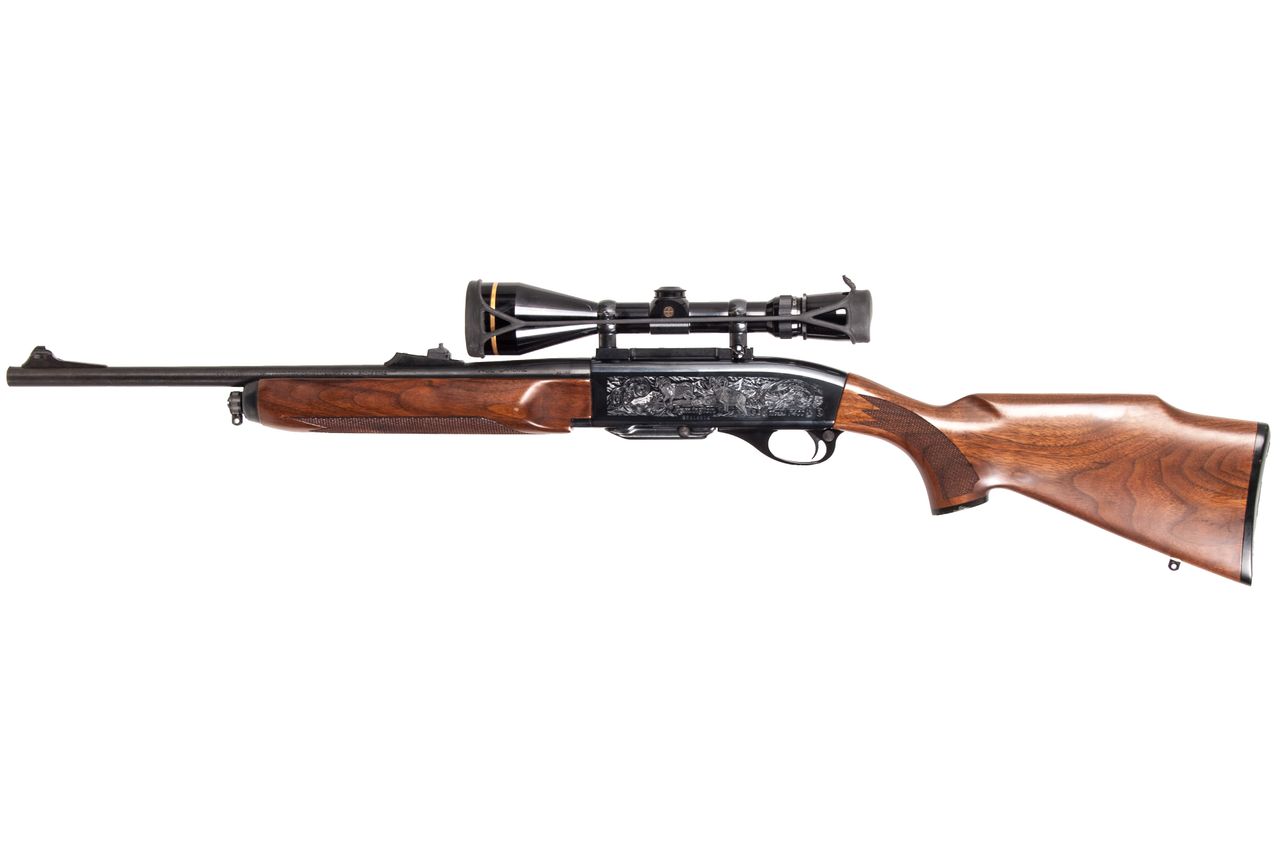
The four main chamberings tell you a lot about who the rifle was for. The .25 Remington, .30 Remington, .32 Remington, and especially .35 Remington gave hunters options that ranged from lighter deer work to heavier woods game at moderate ranges.
Of those, .35 Remington became the standout in popular memory. American Rifleman has noted that the cartridge soon appeared in the Model 14 after its earlier use in Remington’s Model 8, and it built a reputation as a hard-hitting choice for close cover hunting.
None of these cartridges were meant for extreme distance. That was never the point. The Model 14’s real strength was delivering useful power in the kind of country where a hunter might need to shoot quickly, cycle instantly, and fire again before the animal vanished into timber.
Why the Model 14 still matters
Production of the Model 14 and related 14 1/2 variants ran for more than two decades, and American Rifleman reports total output of roughly 125,000 rifles. That is strong evidence the concept connected with hunters even if it never replaced every lever gun in deer camp.
Its biggest legacy is simple: it proved a pump rifle could be more than a curiosity. The Model 14 offered speed, decent power, portability, and a distinctive magazine system that tackled a real problem in a clever way.
For hunters who wanted fast follow-up shots, that combination was the whole sales pitch. The rifle let them stay on target, work the action in one smooth motion, and put another round into the fight without carrying a heavier autoloader or slower bolt gun.