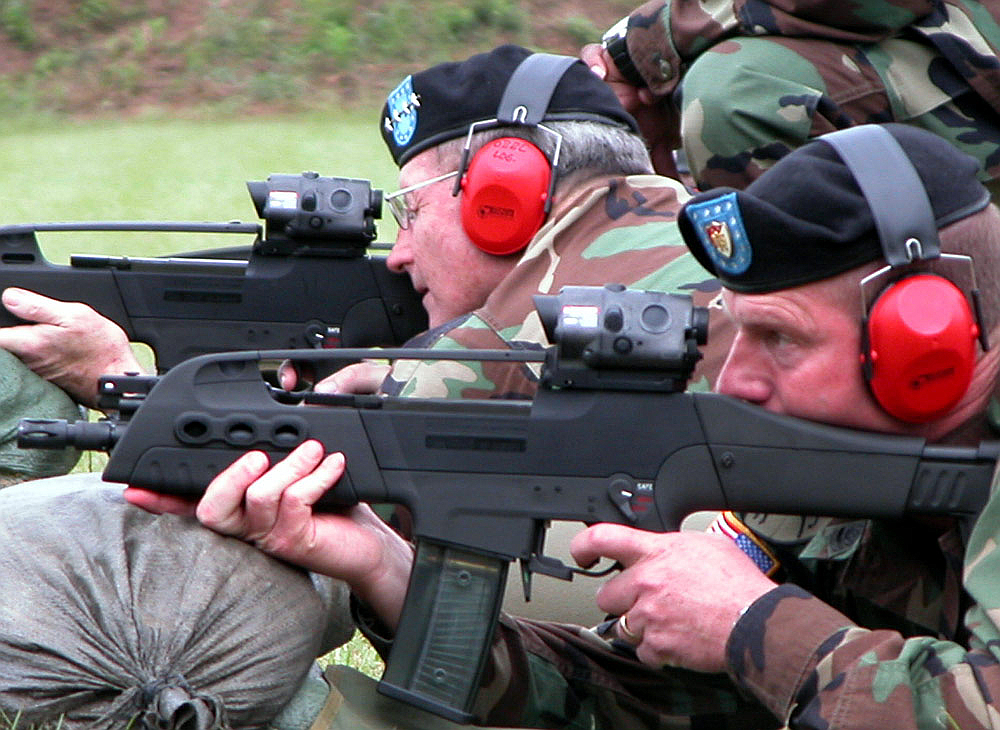
It looked futuristic, handled well, and arrived wrapped in the language of transformation. For a brief moment, the XM8 seemed like the rifle that would finally push the M4 aside.
The XM8 Started As Part Of A Much Bigger Idea
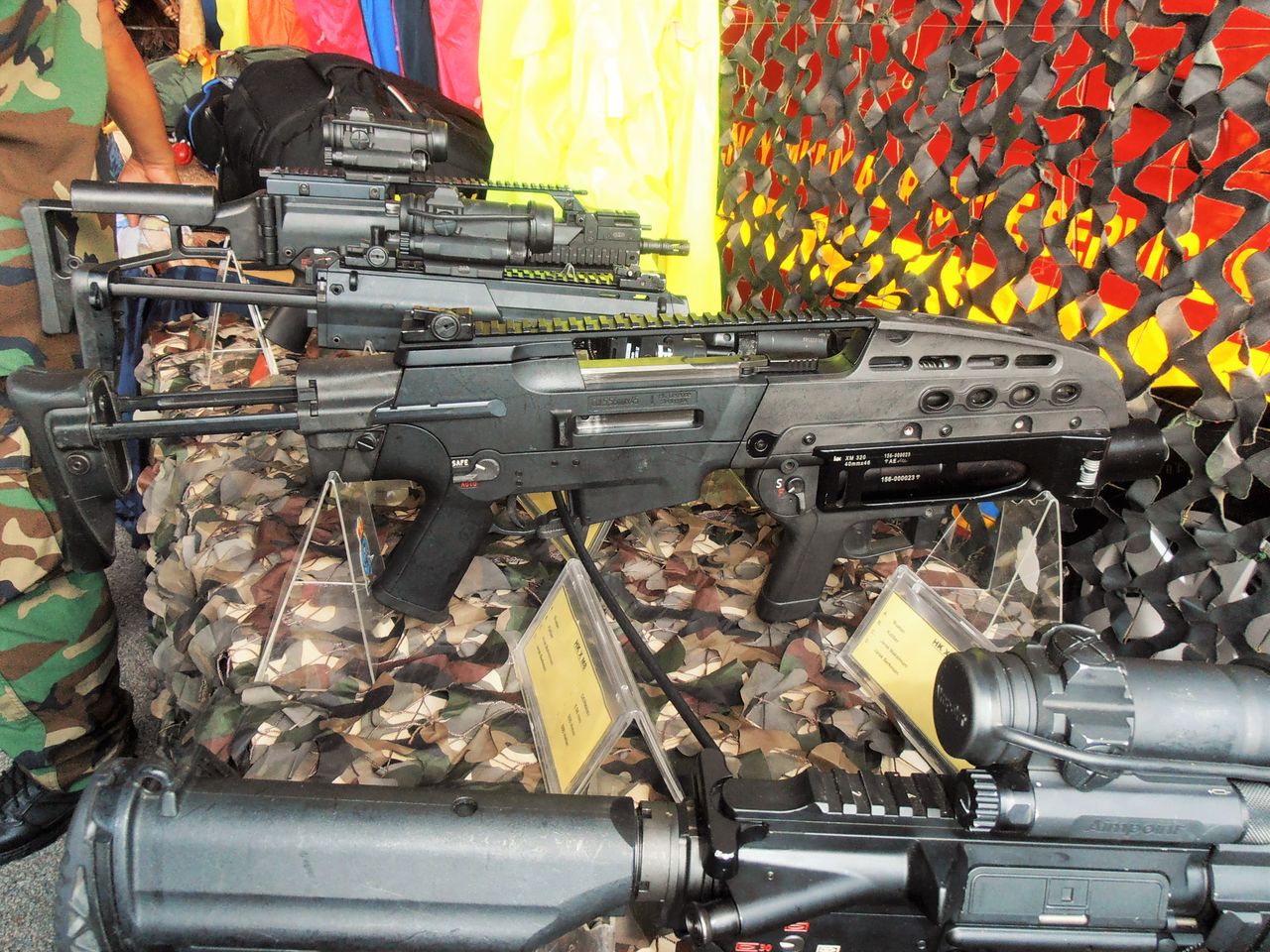
The XM8 did not begin as a clean-sheet replacement for the M4. It grew out of the Army’s Objective Individual Combat Weapon effort, better known as the OICW, a broader program meant to give infantry a leap in capability rather than a small upgrade.
That original concept paired a 5.56mm rifle with an airburst launcher in the XM29. But the combined weapon proved too heavy and too complicated, so the Army split the effort. According to the Army’s historical summary for fiscal year 2004, the rifle portion became OICW Increment I, which was the XM8 family.
Heckler & Koch, working from technology linked to the G36, shaped the XM8 into a family rather than a single rifle. The idea was to field compact, carbine, designated marksman, and automatic-rifle variants sharing common parts, training, and handling.
Why The Army Thought It Had A Winner
On paper, the XM8 checked a lot of boxes the Army wanted in the early 2000s. It was pitched as lighter than legacy rifles in some configurations, simpler to maintain, and more adaptable across different infantry roles without creating a logistics mess.
The Army’s own acquisition material from that era described integrated optics, multiple barrel lengths, and a modular architecture meant to reduce parts burdens. Testing also pushed the weapon through hot, cold, and dusty environments as the service tried to refine second-generation prototypes with soldier feedback.
That timing mattered. The Army was deep into its transformation era, and there was real institutional appetite for systems that looked more modern than the M16/M4 family. The XM8 fit the moment perfectly: it was compact, visually distinctive, and easy to market as a next-generation solution.
The Trouble Was That The Case Never Fully Closed
The biggest problem for the XM8 was not that it had no strengths. It was that many decision-makers were not convinced those strengths justified replacing a rifle family already widely fielded and deeply familiar to troops, armorers, and logisticians.
As scrutiny increased, critics asked whether the Army was moving too quickly toward a favored design without a fully open competition. A 2006 Defense Department inspector general report said contracting officials should not have included XM8 work in a modification after senior Army acquisition leadership had directed a competition for OICW Increment I in January 2005.
That was a serious issue because procurement fights can kill momentum fast. Once questions move from performance into fairness, requirements, and contracting process, even a promising weapon can become politically expensive to defend inside the Pentagon.
Tests, Comparisons, And The M4’s Staying Power
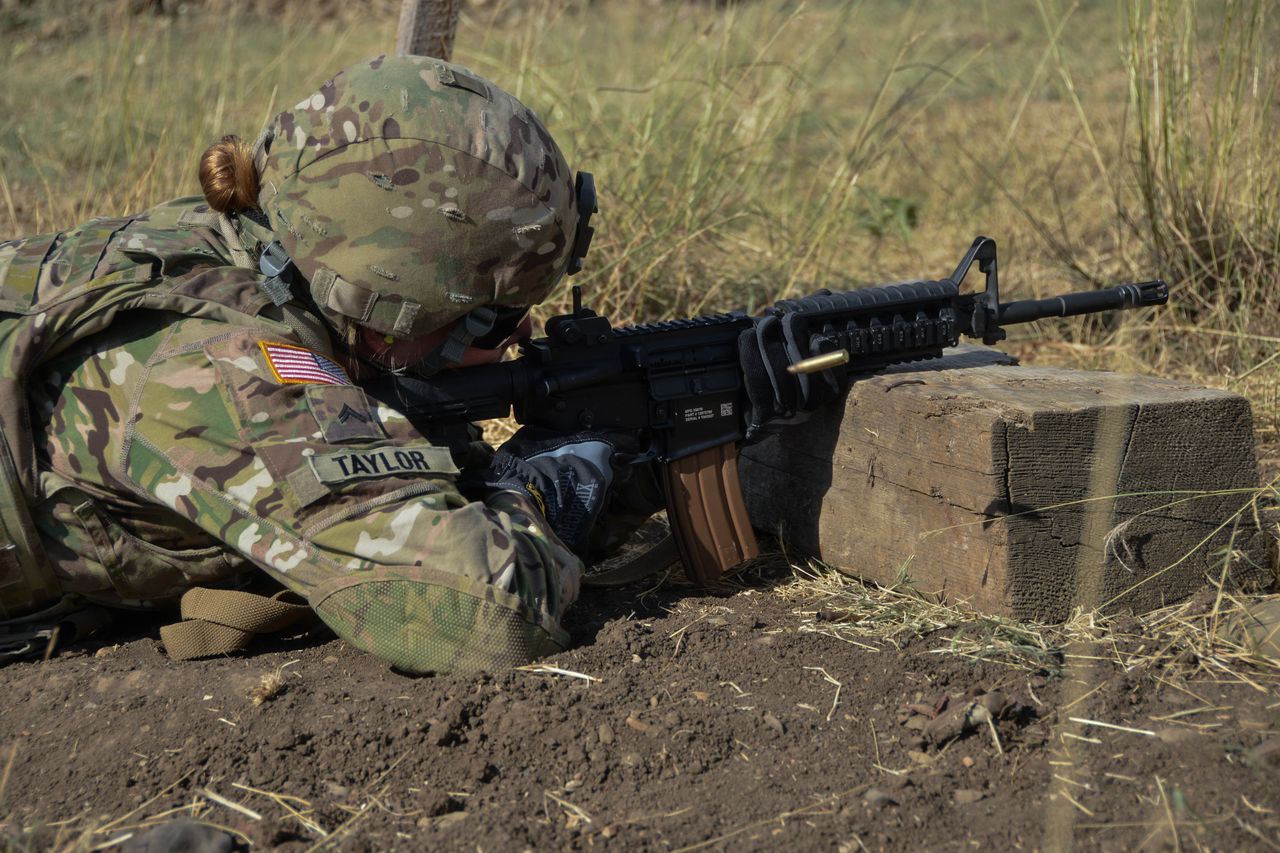
The XM8 also ran into a stubborn reality: the M4 was not standing still. The Army continued improving the carbine, and soldiers already trusted it. That trust mattered more than glossy concept art or optimistic briefing slides.
In 2007, the Army publicized results from its extreme dust tests comparing the M4 with the XM8, FN SCAR, and HK416. The Army said the testing was designed to push all four systems toward failure and identify performance boundaries, while also stressing that soldiers retained high confidence in the M4.
Those tests became a public proxy war over reliability, but they did not produce a simple knockout blow that forced immediate replacement. Without a dramatic and undeniable operational advantage, the XM8’s path narrowed even further.
Why The Program Finally Came Apart
By the mid-2000s, the XM8 was caught between ambition and bureaucracy. Requirements were moving, acquisition oversight was tightening, and the Army had other modernization priorities competing for money and attention during wartime.
The program also suffered from a familiar defense-acquisition problem: a weapon can be technically interesting yet still lack a stable, fully justified path to adoption. The GAO and other oversight bodies were increasingly focused on whether major programs were entering development with enough knowledge, discipline, and cost clarity.
In that environment, the XM8 stopped looking like an inevitable replacement and started looking like a risky bet. The Army eventually kept the M4 line in service, improved existing carbines, and moved on from the XM8 as a standard-issue future.
The XM8’s Real Legacy Is What Came Next

Even though it failed to replace the M4, the XM8 still mattered. It showed how badly the Army wanted a lighter, more integrated, more modular infantry weapon, and it previewed many of the arguments that would later return in the Next Generation Squad Weapon effort.
That later effort took a much more structured path. According to Army and Defense Department material, the XM7 rifle is now replacing the M4A1 for close combat formations, a reminder that the Army never abandoned the search; it just abandoned the XM8 route.
In that sense, the XM8 was less a dead end than an early draft. It arrived before the Army had the requirements, consensus, and acquisition footing to carry such a change across the finish line.