Some rifles earn a reputation. A few force an institution as skeptical as the U.S. Army to look twice at its own test sheets.
That is the story of the M2010 Enhanced Sniper Rifle, the upgraded long-range precision weapon that took the already respected M24 platform and pushed it into a different class.
A rifle that arrived at exactly the right moment
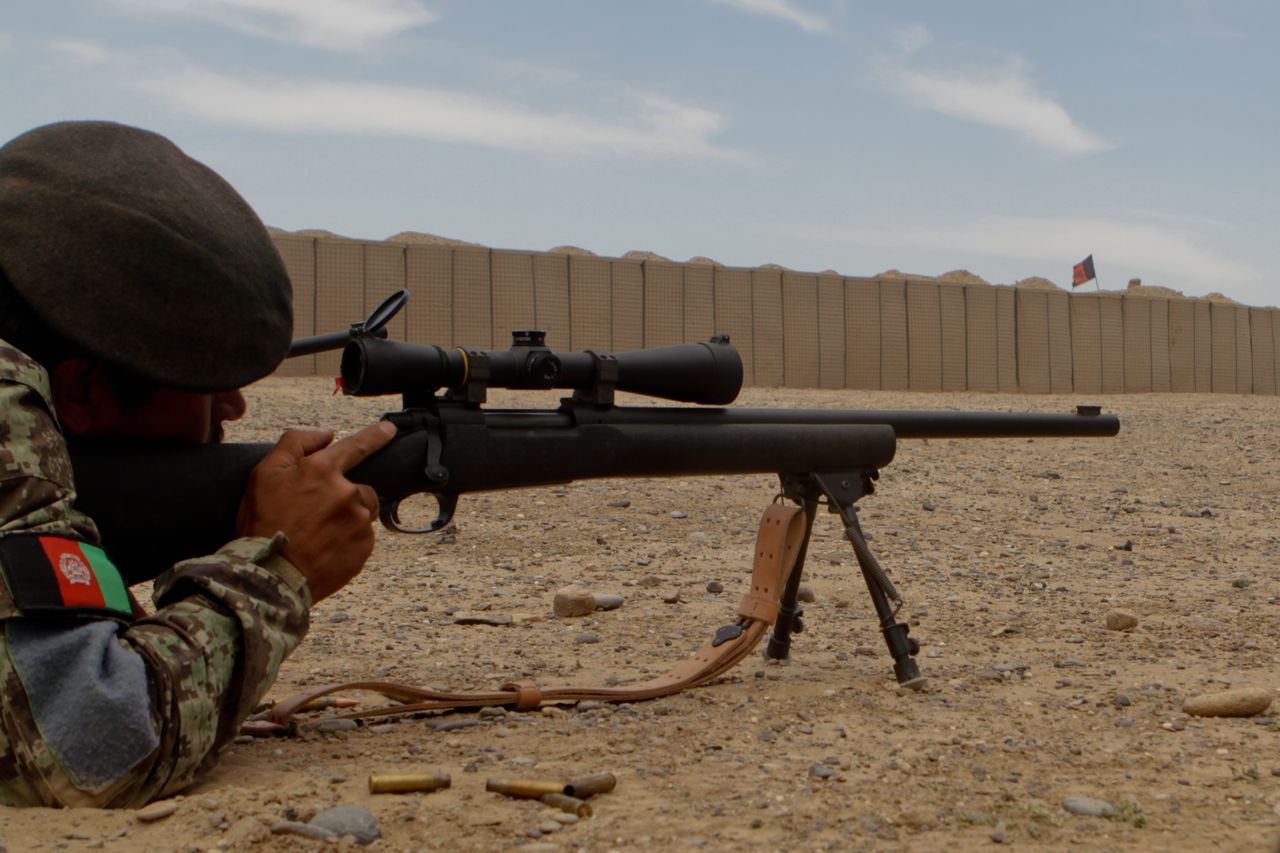
By the late 2000s, the Army had a clear battlefield problem. The M24 Sniper Weapon System was dependable and accurate, but its 7.62x51mm chambering left snipers short of the reach they increasingly needed in Afghanistan. Mountain terrain, thin air, and long sightlines created fights where enemies could engage from distances that strained the M24’s practical envelope.
Army reporting from 2009 described testing around the MK13 concept as an effort to fill the gap between the M24 and the .50-caliber rifle. Soldiers involved in those evaluations said the M24 could handle personnel targets to about 800 meters, while the .50-caliber systems stretched much farther but were less ideal for precise anti-personnel work. That gap mattered, and commanders knew it.
The answer was not to invent a rifle from scratch. Instead, the Army pursued an upgrade path that would rebuild existing M24s into a more capable system. In 2010, the service awarded a contract for what became the XM2010, later classified as the M2010 Enhanced Sniper Rifle. That decision let the Army move fast, preserve a familiar manual of arms, and wring much more performance out of a proven action.
Why did the test results look almost too good to be real?

The reason this rifle generated so much buzz is simple. It did not just improve on paper. It performed in ways that made seasoned shooters and procurement officials take notice. According to the Army, the XM2010 demonstrated what instructors described as pinpoint precision during evaluation, with strong performance in both daylight and limited visibility conditions.
That phrasing sounds restrained, but military language often is. When Army instructors praise a system for precision, clarity of optics, and shooter comfort all at once, that usually means the weapon exceeded expectations against a demanding test standard. The Army was not evaluating a benchrest toy. It was looking for repeatable field accuracy from a deployable combat rifle.
Part of the surprise came from how comprehensively the upgrade worked. This was not one magic component. The rifle received a free-floating barrel, a new chassis, better adjustability, improved optics, suppressor capability, and a cartridge with dramatically better long-range performance. Each change mattered, but together they created a system whose consistency made impressive groups and long hits feel less like luck and more like routine.
The engineering leap behind the M2010

At the heart of the M2010’s transformation was a caliber change. The Army moved from 7.62 NATO to .300 Winchester Magnum, a cartridge chosen specifically to extend effective range while preserving precision. Army materials on the M2010 describe the rifle as offering a 50 percent increase in effective range beyond legacy 7.62mm sniper rifles, with the practical reach extended to around 1,200 meters.
That is a major jump, and it matters because precision shooting is about much more than raw distance. A flatter trajectory and better retained energy simplify the firing solution and give the shooter more margin against range estimation errors. At long range, even a small improvement in ballistic efficiency can mean the difference between a first-round hit and a miss that sends the target diving for cover.
The rest of the rifle supported that ballistic advantage. The M2010 used a reworked M24 receiver fitted into a chassis with a fully adjustable stock, detachable box magazine, and a rail system for optics and accessories. Army descriptions also highlighted the Leupold Mark 4 extended-range optic and night sight compatibility. In practical terms, the shooter got a rifle that fit the body better, tracked more predictably, and gave clearer information through the glass.
Accuracy is never just about the rifle

One thing often gets lost in stories like this. Even a superb sniper rifle is only as good as the system around it. The Army’s own coverage of sniper training makes that point repeatedly. Wind reading, observation, camouflage, range estimation, and communication between shooter and spotter are every bit as important as mechanical precision.
Still, a better rifle changes what a trained team can attempt with confidence. A weapon that groups consistently, handles recoil smoothly, and returns predictable data lets a sniper team spend less mental energy doubting equipment and more energy solving the shot. That confidence is not ego. It is a battlefield asset.
The M2010 also benefited from emerging ammunition and optic improvements that helped modern snipers turn precision into repeatability. Better reticles, more usable stock adjustment, and suppressor integration all reduce friction in the shooting process. The Army was not merely buying tiny groups on a square range. It was about buying a platform that helped trained soldiers produce those results under imperfect real-world conditions.
What soldiers in the field thought of it
The most revealing comments about the M2010 came from the people expected to carry it. Army instructors and sniper representatives consistently emphasized not just the rifle’s range, but the way its ergonomics and optics made it easier to shoot well. That matters because field accuracy depends on human factors as much as raw barrel quality.
When the Army announced the 2010 contract, Sgt. 1st Class Robert Roof of the U.S. Army Sniper School praised the rifle’s precision and noted that the ergonomics made it comfortable to shoot. That is not throwaway praise. A comfortable, adjustable rifle lets more shooters build a stable position faster, maintain a natural point of aim, and stay effective through longer observation and engagement cycles.
Later Army reporting on the final M2010 production rifles was even more enthusiastic. Officials and users described the system as delivering a capability that far surpassed an already strong capability in the M24. That kind of language suggests the rifle did more than meet a checklist. It changed how Army snipers thought about controlling distance, dominating terrain, and engaging threats that had previously sat just outside the sweet spot of the older system.
The legend, the hype, and the truth
Now for the headline question. Was this the rifle so accurate that the Army almost did not believe the test results? Strictly speaking, official Army releases do not use that exact phrase. But the reputation comes from a real pattern in the record. The M2010’s performance was striking enough that evaluators, instructors, and users kept returning to the same themes: pinpoint precision, greater range, and a jump in capability that seemed unusually large for an upgrade rather than a wholly new weapon.
That is how military legends usually start. A system posts numbers or hit rates that seem out of scale with what came before, word spreads among shooters, and the story sharpens in the retelling. Over time, “remarkably accurate” becomes “too accurate to believe.” The myth grows, but it grows around a solid core of truth.
And the truth is compelling enough on its own. The M2010 was not a fantasy super rifle. It was a carefully thought-out modernization that combined better ballistics, better fit, and better optics into a sniper package whose results stood out even in a community that measures everything. Sometimes the unbelievable part is simply how much performance was still hidden inside an old design.
Why the M2010 still matters today
The M2010 was never the final word in precision weapons. The Army has continued moving toward newer advanced sniper concepts, and official weapons documents have noted that later programs would replace existing M2010 and M107 systems with platforms designed for even greater extreme range capability. That is the normal lifecycle of military small arms.
But the M2010 remains important because it showed how much a smart upgrade can accomplish. Rather than chase novelty for its own sake, the Army identified a battlefield problem, used lessons from ongoing war, and paired a trusted action with better ammunition and modern furniture. The result was faster fielding and a dramatic payoff in combat utility.
For the general public, that is the real takeaway. The most extraordinary military equipment stories are not always about science fiction technology. Sometimes they are about disciplined engineering, serious testing, and the moment experienced professionals realize the numbers on the target are better than they expected. The Army may not have literally refused to believe the results, but the M2010 came close to producing that kind of reaction, and that alone says a lot.