Some rifles become famous. A few actually change the way wars are fought.
Why the M1 Garand deserves this conversation
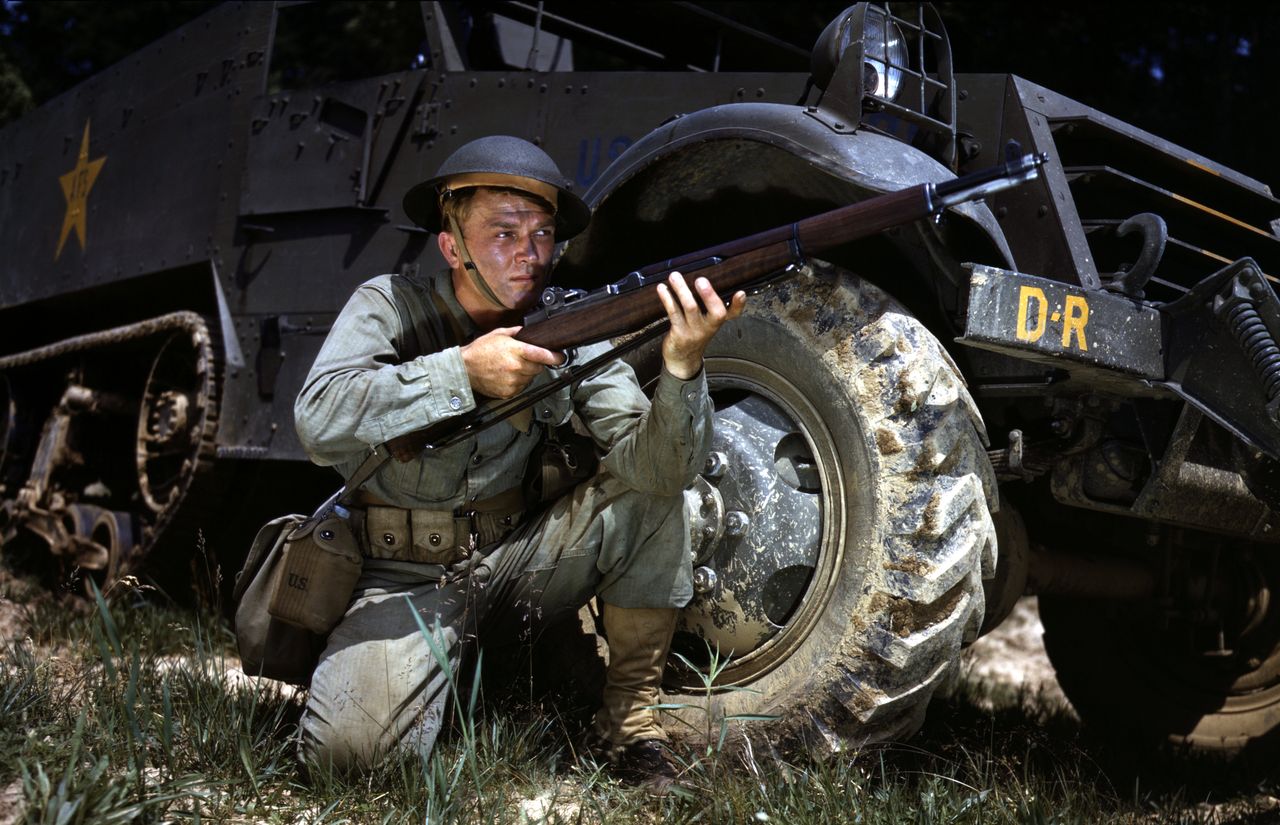
When people talk about revolutionary rifles, the STG44 usually gets the spotlight because it pointed toward the future assault rifle. But before that German design reached combat, the M1 Garand had already altered infantry warfare in a more immediate and practical way. It was not the first self-loading rifle ever built, but it was the first semi-automatic rifle adopted as the standard infantry arm by a major world power, according to the U.S. Army Ordnance Corps Hall of Fame and Springfield Armory history.
That distinction matters because standard issue changes everything. Experimental rifles can impress engineers, but they do not reshape doctrine until thousands, then millions, are in the hands of ordinary troops. The M1 crossed that line. The U.S. Army adopted it on January 9, 1936, after a long development cycle led by John C. Garand at Springfield Armory.
In plain terms, the rifle gave American infantrymen a faster follow-up shot without working a bolt between rounds. That meant less interruption, quicker correction after a miss, and more rounds on target during sudden close-range fights. On a battlefield where seconds decided survival, that was not a marginal improvement. It was a different rhythm of combat.
The problem it solved on the prewar battlefield

To understand the Garand’s impact, you have to remember what most armies still carried in the 1930s and early 1940s. The dominant service rifle was a bolt-action design such as the German Karabiner 98k, the British Lee-Enfield, or the Soviet Mosin-Nagant. These were rugged and often accurate, but every shot required a manual cycle before the next one could be fired.
That manual step imposed a cost in real combat. It pulled the rifle off target, interrupted sight picture, and demanded fine motor movement under stress. Well-trained soldiers could work a bolt very quickly, but the average infantryman in mud, fear, smoke, and exhaustion rarely performed like a range champion. Semi-automatic fire reduced that gap between trained ideal and battlefield reality.
The M1 did not make marksmanship irrelevant. What it did was make useful fire easier to sustain. U.S. troops could keep their eyes on the target area and press the fight with less mechanical interruption. According to the Naval History and Heritage Command, the rifle gave American troops a significant combat advantage in World War II. That advantage was especially important in meeting engagements, jungle fighting, and defensive actions where immediate repeated fire counted more than textbook range precision.
How John Garand and Springfield Armory got it right

John Cantius Garand was not chasing style points. He was solving a hard mechanical problem that had frustrated ordnance designers for years: how to build a semi-automatic service rifle that was durable, reliable, and suitable for mass production. Springfield Armory records note that Garand’s work stretched across the 1920s and early 1930s, with prototypes and refinements gradually pushing the concept from promise to practical weapon.
One key reason the design won was simplicity relative to its rivals. U.S. Army historical material notes that Garand’s rifle consistently proved more stable and reliable than competing designs. The rifle also benefited from a crucial policy decision. General Douglas MacArthur insisted the Army stay with .30 caliber ammunition rather than switch to .276, which forced redesign choices but ultimately aligned the rifle with existing logistics.
Just as important, Garand did not only help design the rifle. He also contributed to the tools, gauges, and production methods needed to manufacture it at scale, according to Army and National Park Service history. That often gets overlooked. A weapon changes warfare only if industry can flood the force with it. By the early war years, Springfield Armory and partner manufacturers had turned the M1 from an engineering success into a strategic asset.
What made the rifle so effective in combat
The M1 Garand fired the .30-06 cartridge and fed from an 8-round en bloc clip. Modern shooters sometimes fixate on the clip system’s limitations, and yes, it imposed constraints compared with later detachable box magazines. But in its time, the overall package was formidable: strong cartridge, reliable semi-automatic action, solid sights, and enough weight to help control recoil during fast follow-up shots.
In battle, those features translated into confidence. Troops could engage multiple targets faster than bolt-action opponents and recover from misses without the disruptive pause of running the action manually. That does not mean every American rifleman suddenly doubled his effectiveness, but across a platoon or company the aggregate effect was enormous. Fire superiority is often built from small time savings repeated across many shooters.
The rifle’s reputation among soldiers and commanders reflected that reality. George S. Patton famously called it “the greatest battle implement ever devised,” a line preserved in Army and National Park Service material. Hyperbole aside, the praise captured something real. The Garand gave standard infantry a level of responsive firepower that many opponents simply did not match with their issue rifles. Before the STG44 suggested the future, the Garand changed the present.
Where the M1 proved its value in World War II

The M1’s legend was built in actual fighting, not in brochures. American troops carried it across North Africa, Sicily, Normandy, the Ardennes, and the Pacific island campaigns. Springfield Armory’s own historical material notes its presence from Normandy to Okinawa, and U.S. military history repeatedly ties the rifle to the firepower edge enjoyed by American ground forces.
That edge mattered in the Pacific, where close jungle combat compressed reaction times and punished any pause between shots. Army acquisition history and related military accounts note that reequipping Marines with the M1 became a priority after early combat lessons. In those environments, the ability to fire again immediately could mean the difference between breaking an attack and being overrun.
Europe showed the same pattern in different terrain. In hedgerows, villages, forests, and sudden encounters, American rifle squads could produce fast, aimed fire without depending entirely on machine guns for volume. The Garand did not replace crew-served weapons, of course, but it raised the baseline lethality of the individual rifleman. That is why its impact was so profound. It distributed greater firepower across the whole infantry line rather than concentrating it in a few specialized hands.
The numbers behind its battlefield influence
A revolutionary weapon must exist in meaningful numbers, and the M1 did. National Park Service records from Springfield Armory show production ramping from tiny prewar quantities to massive wartime output. Springfield Armory alone produced about 3.5 million M1 rifles during World War II, according to the park’s museum history, while additional rifles came from Winchester and later postwar makers.
Those figures tell an important story. The Garand was not a boutique arm for elite units, and it was not a late-war novelty too scarce to matter. It became an industrial-scale standard rifle backed by the arsenal capacity of the United States. Springfield Armory also expanded rapidly before and during the war, with new facilities and a swelling workforce that included thousands of women, reflecting how central M1 production had become.
Mass issue changed tactics because commanders could assume that ordinary riflemen had self-loading firepower. Training, squad expectations, and battlefield behavior all adapt when the standard rifle shoots faster than the enemy’s. This is exactly why the Garand deserves to be called a war-changing weapon. It was not merely advanced. It was common enough, reliable enough, and widespread enough to shape how armies actually fought.
Why the STG44 gets the myth, and the M1 gets the credit
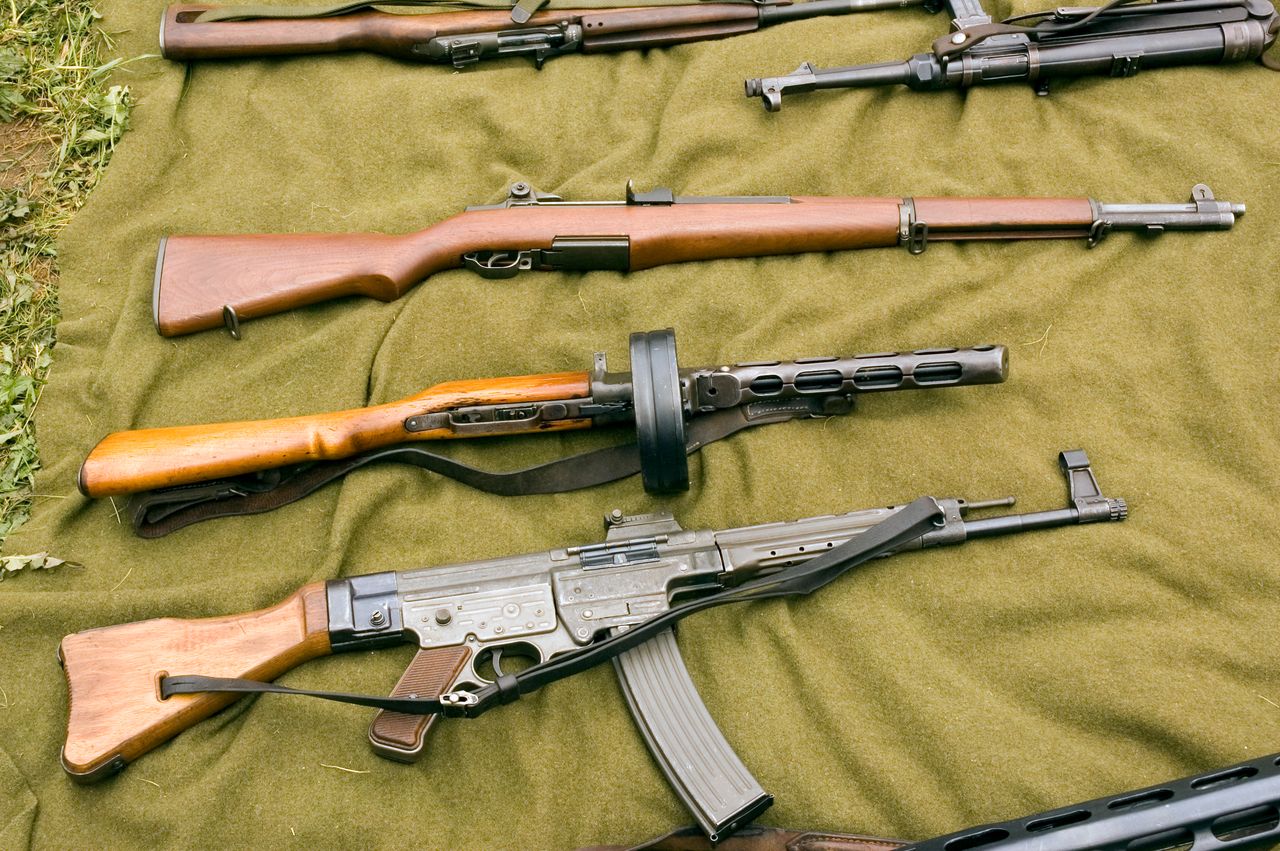
The STG44 deserves its place in history because it anticipated the assault rifle concept: intermediate cartridge, controllable rapid fire, detachable magazine, and a design philosophy that influenced later weapons. But it did not become the broadly fielded war-winning standard rifle of its era. The M1, for all its old-world wood-and-steel appearance, had already delivered a practical infantry revolution years earlier.
That is the key distinction. The STG44 pointed forward. The M1 delivered results at scale in the middle of a world war. One was a preview of postwar small-arms thinking. The other immediately changed the balance of firepower available to a regular infantry squad. If your measure is conceptual influence, the German rifle looms large. If your measure is who changed battlefield reality first, the answer is the Garand.
So when someone asks which rifle changed warfare before the STG44, the best answer is not the flashiest one. It is the M1 Garand, adopted in 1936, proven across World War II, and influential enough that later U.S. development focused on making it lighter, higher-capacity, and selectively fire capable. That is what real military disruption looks like. It does not always arrive looking modern. Sometimes it arrives early and wins anyway.