For a brief moment in the 1890s, this pistol looked like tomorrow. Then every army that handled it decided tomorrow could wait.
The Strange Promise of the Mannlicher M1894
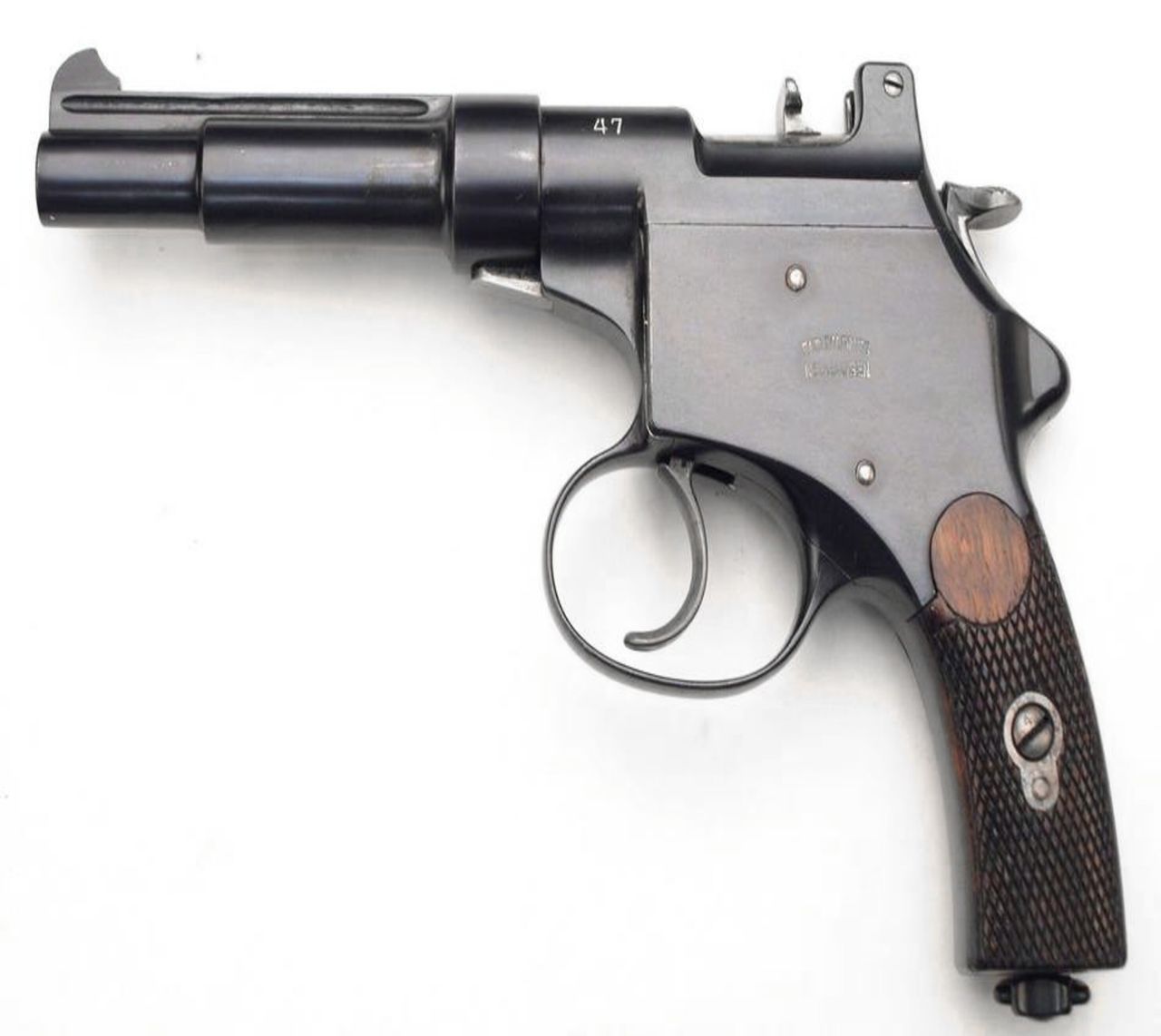
The pistol in question was the Mannlicher M1894, one of the earliest self-loading handguns ever seriously presented to military authorities. Designed by Ferdinand von Mannlicher, it arrived at a moment when armies were beginning to wonder whether the revolver had reached its limit. According to Forgotten Weapons and period arms histories, the pistol was tested by several militaries but adopted by none.
What made the M1894 stand out was not just its age, but its operating system. It used a blow-forward action, meaning the barrel moved forward under firing forces instead of a slide moving backward. That sounds elegant on paper, and in a workshop it probably looked brilliantly original.
In service terms, though, originality is only useful if it makes a sidearm easier to shoot, maintain, and trust. The Mannlicher offered a five-round internal magazine loaded by stripper clips, plus a double-action trigger. That gave it some modern-looking features, but not enough to outweigh the practical drawbacks that appeared the moment soldiers actually started firing it.
Why It Seemed Like A Revolver Killer
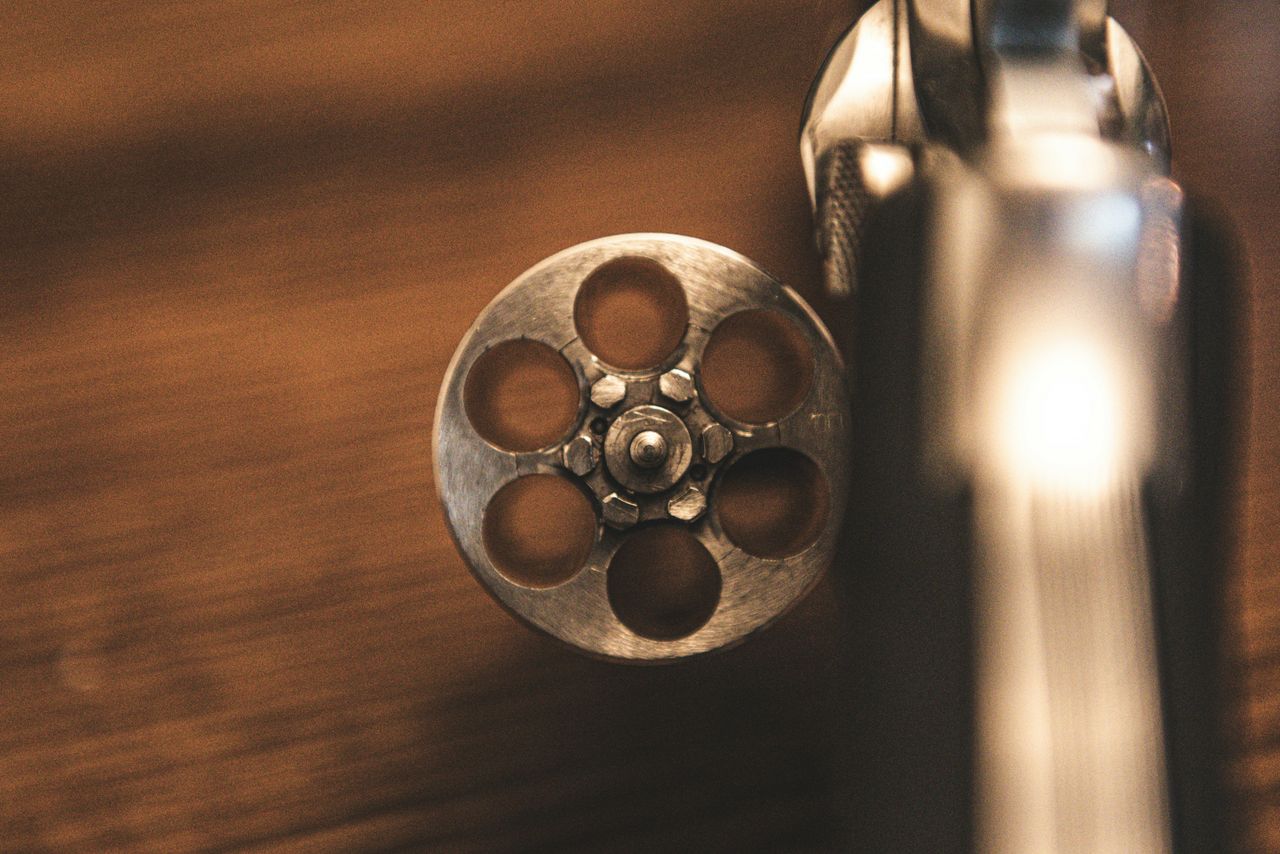
In the late 19th century, military planners were hungry for any edge that promised faster follow-up shots and simpler reloading. A self-loading pistol had obvious appeal because a revolver, while rugged, was slow to top off and limited by its cylinder. The Mannlicher seemed to answer that problem before most competitors had even sorted out the basic shape of the automatic pistol.
American Rifleman and Forgotten Weapons both place the gun among the first credible attempts to move handguns beyond the revolver era. That matters, because it shows the M1894 was not a curiosity in its own day. It was a serious engineering proposal at a time when nobody yet knew what the winning pistol formula would be.
On a tabletop, the gun looked advanced. In a trial environment, however, military boards were less interested in novelty than in whether the pistol gave officers and cavalrymen a real combat advantage. On that score, the Mannlicher kept running into the same brutal question: why switch if the replacement is not clearly better?
The Fatal Problem Was the Way It Shot
The biggest issue was the action itself. Blow-forward designs are mechanically unusual because barrel movement creates a recoil sensation many shooters find abrupt and unpleasant. Forgotten Weapons notes that this system increased felt recoil, and that tradeoff became especially hard to justify in a handgun already competing against familiar revolvers.
The trigger system did not help. Early self-loaders often suffered from heavy, awkward pulls, and the M1894 was no exception in practical handling. Add in a fixed internal magazine rather than a detachable box magazine, and the gun started to look less like a leap forward and more like a transitional experiment.
That is exactly how military evaluators treated it. A U.S. trial report, summarized by Forgotten Weapons, concluded that for all its technical interest, the pistol was in practical terms no more useful than a revolver. For a weapon meant to replace the service sidearm of an army, that was basically a death sentence.
Tested Broadly, Adopted by Nobody
The M1894 was not ignored. Variants were made in roughly 7.6-7.8 mm and later in 6.5 mm, with Swiss-linked production at Neuhausen following the earliest Austrian-made examples. Surviving research summarized by reference works suggests total production was tiny, around 150 or so in the first pattern, with even fewer later trial-oriented variants.
Several countries examined early Mannlicher self-loaders while trying to understand where handgun technology was headed. Switzerland, the United States, and other major powers all looked at automatic pistols in this period, but they wanted reliability, manageable recoil, simple training, and clear battlefield value. The M1894 did not offer enough of any of those.
That failure is easier to understand in hindsight because better designs were already on the horizon. Within a few years, militaries had access to more refined self-loaders with more conventional cycling systems, better ergonomics, and stronger reliability. Once those appeared, the Mannlicher’s case collapsed completely.
It Lost Because “Interesting” Is Not the Same as “Useful”

Gun history is full of designs that were technically ahead of their time but tactically behind the moment. The Mannlicher belongs in that category. It proved that a self-loading pistol could exist in military discussions, but it did not prove that this particular self-loader deserved a holster on a soldier’s belt.
That distinction matters. Military adoption has never been about clever mechanics alone. Field stripping, ammunition handling, recoil control, manufacturing complexity, and soldier confidence all matter more than patent originality. The M1894 was smart, but smart is not the same as durable, intuitive, or superior under stress.
In that sense, its rejection by every military that tested it was not bad luck. It was the market delivering a clear verdict. Armies were willing to replace revolvers, but only with pistols that solved old problems without creating stranger new ones.
The Mannlicher’s Real Legacy
Today, the Mannlicher M1894 survives as a fascinating dead end rather than a forgotten failure. Collectors and historians value it precisely because it shows how open the handgun world still was in the 1890s. Nobody yet knew that the future would belong to recoil-operated and blowback pistols with more conventional layouts.
Its story also explains why some famous early automatics succeeded where others vanished. The winners did not just fire self-loading cartridges. They balanced power, controllability, reliability, and maintenance in ways militaries could actually use.
So this was the pistol that was supposed to replace the revolver, then could not convince a single army to commit. Not because the idea was wrong, but because the execution was. The future was coming fast, and the Mannlicher M1894 simply turned out to be the wrong future.