Capacity changed the whole conversation.
For years, Glock’s slimline pistols were easy to carry but harder to justify against higher-capacity rivals.
Why The Glock 43X And 48 Needed A Better Magazine
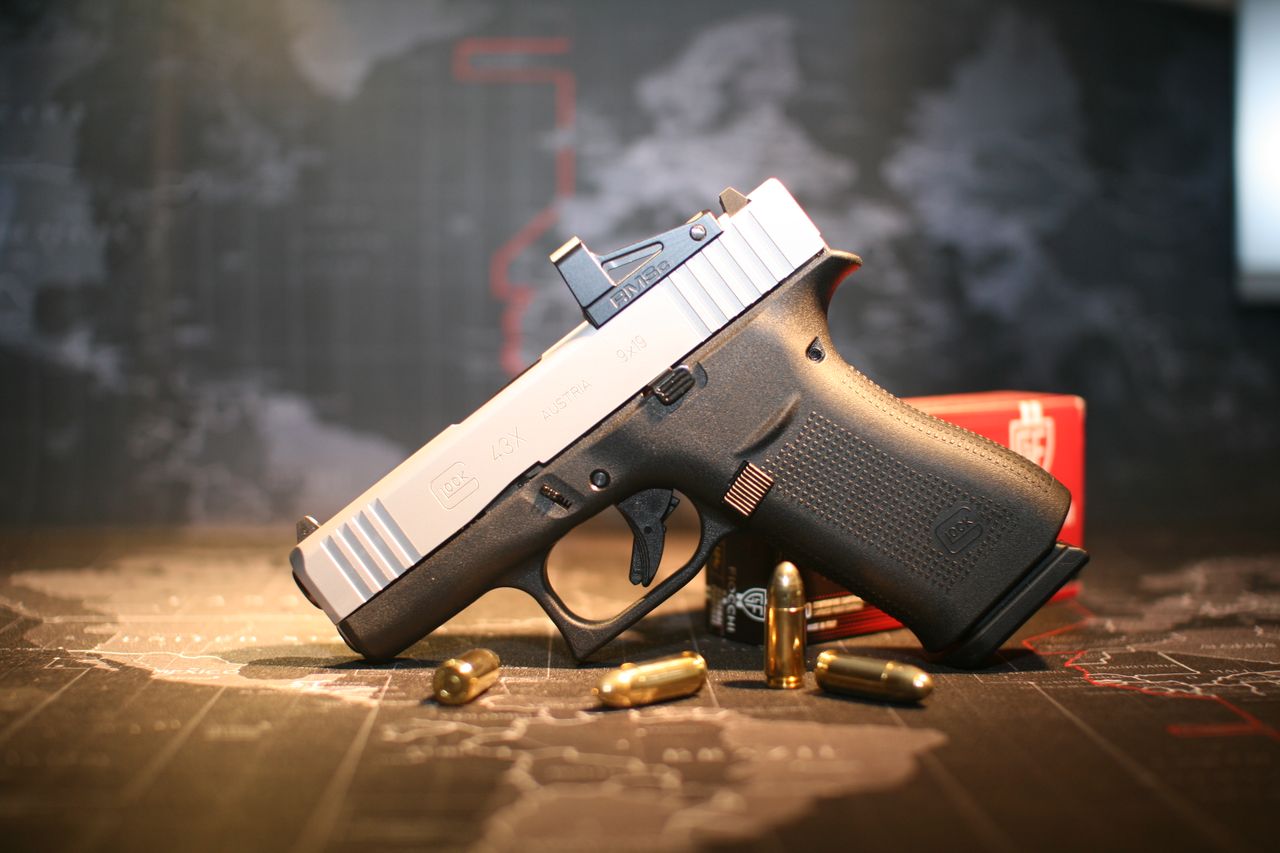
When Glock launched the G43X and G48 in 2019, the appeal was obvious. Both pistols offered the company’s familiar trigger, controls, and reliability in a thinner package that hid better than a Glock 19. Glock’s own buyer materials consistently listed the standard magazine capacity for those slimline guns at 10 rounds, which was perfectly serviceable for concealment but no longer class-leading in a market racing toward more capacity in the same footprint.
That limitation mattered because the rest of the handgun market did not stand still. As American Rifleman noted in its recent look at Glock’s new slimline magazines, pistols like the SIG P365 and Springfield Hellcat pushed consumer expectations upward by proving that compact carry guns could pack significantly more rounds without becoming bricks on the belt. Once that happened, a 10-round Glock started to look conservative rather than cutting edge.
This is exactly where the aftermarket stepped in. The challenge was simple to describe but hard to solve: create a magazine that fit the same slim grip, stayed reliable, and added real capacity without turning the pistol into a longer, bulkier compromise. That goal set the stage for the all-metal magazine that got so many Glock owners talking.
What It Means To Ditch Plastic Entirely
The phrase that grabs attention here is “ditched plastic entirely,” and for good reason. Traditional Glock magazines are famous for their polymer exterior wrapped around a metal liner. Glock itself has long highlighted that metal-lined construction as a defining part of its magazine evolution, and that hybrid design became part of the brand’s identity because it balances durability, drop-free function, and low cost.
An all-metal magazine takes a different path. By going to a thinner steel body, designers can reclaim a little bit of internal space that would otherwise be occupied by polymer walls. In a slim-frame pistol, tiny dimensional gains matter. You are not finding room by stretching the grip or hanging a long extension off the bottom. You are finding room by changing the architecture of the magazine body itself.
That is why five extra rounds is such a meaningful jump here. Going from the factory 10-round slimline magazine to a 15-round steel magazine is not a minor tweak. It is a 50 percent increase in onboard capacity, achieved in essentially the same space, and that kind of leap gets noticed by concealed carriers who want a thinner gun without giving up service-pistol firepower.
The Magazine That Started The Buzz

The best-known example is the Shield Arms S15, the steel magazine designed for the Glock 43X and Glock 48. It became popular because it promised exactly what slimline Glock owners wanted: a flush-fitting magazine with 15-round capacity instead of the factory 10. Recoil described the concept plainly several years ago, noting that the thinner metal body created the room needed to reach that number without increasing overall length.
What made the S15 important was not just capacity. It proved that the slim Glock frame had more potential in it than the factory magazine suggested. In practical terms, it let a concealed-carry pistol approach Glock 19 territory for ammunition capacity while preserving the narrower grip and easier concealment that made the 43X and 48 attractive in the first place.
But the early years were not friction-free. According to American Rifleman, Shield Arms went through multiple generations before the design functioned correctly across all Glock 43X and G48 pistols. That history matters because it shows how difficult magazine design really is. A magazine is not just a box with a spring. Feed angle, follower shape, spring rate, lockup, and release geometry all have to work together under recoil.
The Tradeoffs Most Buyers Need To Know
The biggest practical catch with many all-metal slimline Glock magazines has been the magazine release. American Rifleman explained that the Shield Arms design uses a metal body with a release cut-out rather than the factory-style indentation, which means users generally need to replace Glock’s stock polymer magazine catch with a metal one. That is not necessarily a deal-breaker, but it is absolutely not a drop-in, no-thought change.
That matters for the average owner more than enthusiasts sometimes admit. Glock built its reputation on simplicity. People like factory parts, easy maintenance, and predictable compatibility. Once a magazine upgrade also requires swapping in a different mag catch, the decision stops being casual. You are now changing the operating relationship between two wear parts, and that can affect long-term durability and reliability if the setup is mixed incorrectly.
There is also the human factor. More rounds in the same space usually means stiffer loading pressure. American Rifleman reported that Glock’s own new 15-round slimline magazine can be very hard to load fully, often requiring a loading tool. That is not unusual in high-capacity compact magazines, but it is the sort of real-world detail buyers should know before assuming every 15-round option will feel effortless on the range.
Glock Finally Answered With Its Own 15-Round Option
The most interesting recent twist is that Glock itself has now entered the conversation directly. American Rifleman reported last month that Glock introduced its own 15-round magazine for the G43X and G48. That is a major development because it signals the company recognized the same market pressure customers had been talking about for years: slim carry guns now need more than 10 rounds to stay fully competitive.
What makes Glock’s answer different is not just the logo on the baseplate. According to American Rifleman, the Glock-branded 15-round magazine keeps an indentation-style mag-release notch similar to the original factory magazines, which allows users to retain the stock polymer magazine catch. For a lot of Glock owners, that is the key selling point. More capacity is nice, but more capacity without changing the pistol’s release hardware is better.
There is a small compromise, though. The same report noted that the new magazine uses a thicker base pad and protrudes about a quarter-inch more than the original 10-round mag. So it is not a pure magic trick. Glock appears to have prioritized factory compatibility and reliability, even if that meant giving up a perfectly flush fit.
Why This Matters For Concealed Carry Shooters

For everyday carriers, the debate is not academic. Capacity shapes confidence, reload planning, and even which gun you choose to carry at all. Glock’s own guides have long positioned the 43X and 48 as 10+1 slimline pistols optimized for concealment. That worked well when buyers were mainly comparing thickness and comfort. It worked less well once competitors made higher capacity feel normal.
A 15-round option changes the value equation dramatically. Suddenly the 43X and 48 can offer near-duty-gun ammunition reserves while remaining distinctly slimmer than a compact double-stack. For shooters with smaller hands, that matters even more. A narrow grip can improve trigger reach and overall control, and now it no longer automatically forces as much of a capacity penalty as it once did.
That does not mean every owner should ditch their original magazines tomorrow. Factory 10-rounders still have a strong reputation, and some people will always prefer proven simplicity over squeezing every available round into a carry setup. But the existence of a credible all-metal path, and now a factory-backed 15-round path, means slimline Glock owners finally have choices that feel modern rather than compromised.
The Bigger Lesson For Glock And The Industry
The real story here is bigger than one magazine. It is about how a mature platform evolves when users keep pushing on its weak spots. Glock’s standard slimline magazines were never bad. In fact, the company’s polymer-over-steel approach is one of the most successful magazine formats ever made. The problem was that the market changed around it, and “good enough” capacity stopped being enough.
Aftermarket companies saw that first. Shield Arms took the risk, used steel to claw back internal volume, and proved there was strong demand for five more rounds in the same basic footprint. Even with the early growing pains and hardware caveats, the concept reshaped expectations for what a slim Glock could be. Once that happened, it was only a matter of time before Glock had to respond.
So when people talk about the new Glock magazine that ditched plastic entirely and still holds five more rounds, they are really talking about a design breakthrough that forced a major brand to move. Whether you prefer the pure steel aftermarket route or Glock’s newer factory 15-round answer, one thing is clear: the era of accepting 10 rounds as the final word for slimline Glocks is over.