Some guns are famous for firepower. This one is famous for what it proved about engineering under pressure.
The captured gun that changed everything
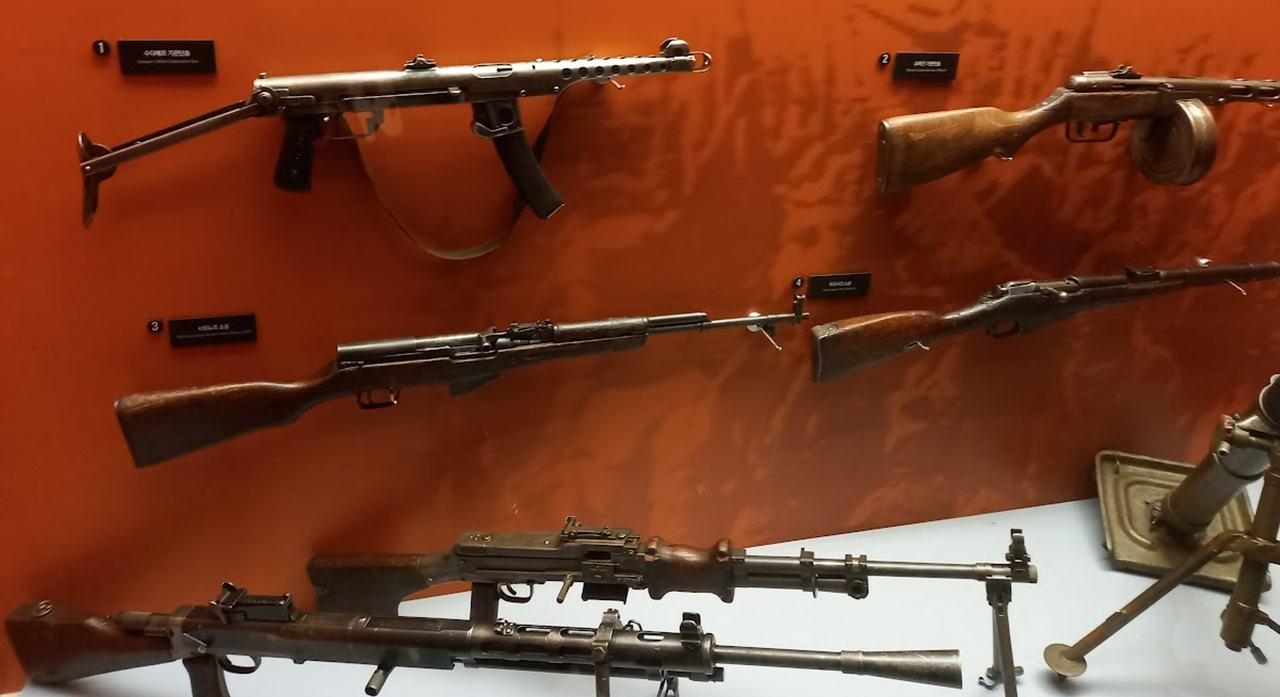
During World War II, Finland got its hands on a Soviet PPS-43, a stamped-steel submachine gun built for speed, low cost, and brutal frontline practicality. According to Forgotten Weapons and standard reference histories, the PPS-43 was one of the simplest and most efficient Soviet wartime submachine guns ever fielded.
That mattered because Finland already had excellent submachine guns, especially the Suomi KP/-31. The Suomi was accurate and respected, but it was also more expensive and time-consuming to manufacture than a sheet-metal wartime emergency gun.
The Soviet PPS-43 offered a different philosophy. It was compact, folding-stock, and heavily optimized for mass production in wartime conditions, exactly the kind of design a smaller nation under strain would notice immediately.
Why Finland wanted a copy

Finland’s war experience made the appeal obvious. The country needed arms that could be produced faster and cheaper without giving up too much battlefield usefulness.
The PPS-43 was practically a case study in manufacturing realism. It relied on stampings and welds more than the finely machined approach seen in older designs, and that made it especially attractive to anyone thinking about industrial survival rather than peacetime perfection.
According to weapon histories summarized by Military Factory and Forgotten Weapons, the Finnish answer became the KP m/44. It was not merely inspired by the Soviet gun in a vague sense; it was directly copied and then adapted to Finnish preferences.
Reverse-engineering from a single sample

This is the part that gives the story its lasting mystique. Multiple historical summaries note that Finland developed its copy from a captured Soviet example, not from a factory license, technical package, or warehouse full of reference guns.
That is an extraordinary engineering challenge. A team has to measure every critical dimension, infer tolerances, understand metallurgy as best it can, and determine which features are essential versus which are just artifacts of one specific specimen.
In practice, reverse-engineering a firearm from one captured sample means reading the gun like a mechanical document. Every rivet, weld, spring path, feed angle, and folding-stock hinge becomes evidence.
The Finnish version was not identical
The Finnish KP m/44 stayed close to the PPS-43 in layout, but it was not a carbon copy. Historical descriptions note that Finland rechambered the concept for 9×19mm Parabellum rather than the Soviet 7.62×25mm Tokarev cartridge.
That change had consequences. The magazine system also shifted, with Finnish use of Suomi-type magazines, including box and drum options associated with existing national stockpiles and doctrine.
So the gun became a hybrid of necessity and familiarity. The receiver concept, compact profile, and stamped-war-production spirit came from the Soviet original, while caliber and feeding choices reflected Finnish logistics and habits.
A clever idea with real tradeoffs
Reverse-engineering can save time, but it rarely creates perfection on the first try. The KP m/44 reportedly suffered magazine-related issues, especially when using adapted double-column magazines and drums in a design not born around them.
That does not make the project a failure. It shows the exact pressure point in copied weapons design: changing ammunition or feed geometry can ripple through the entire system.
This is a lesson firearms engineers know well. A gun is not just a barrel and bolt; it is a timing machine, and when one element changes, reliability can start negotiating back.
From Finnish copy to Spanish descendant
The story did not stop in Finland. Reference material on the later Spanish DUX guns notes that they were based directly on the Finnish m/44, which itself had been based on the Soviet PPS-43.
That gives this weapon family a fascinating genealogy. A Soviet wartime gun was captured by Finland, reverse-engineered into a local copy, and then echoed again in postwar Europe through Spanish production.
It is a reminder that military technology often spreads less like a straight patent trail and more like a chain of battlefield improvisations. One captured gun can become a design seed for multiple countries.
Why this story still matters
For general readers, the appeal is bigger than gun collecting trivia. This is really a story about industrial adaptation under wartime pressure.
The captured PPS-43 showed Finland that elegant design is not always the same thing as practical design. Sometimes the weapon that wins engineers over is the one that can be built quickly, repaired simply, and issued fast.
That is why the KP m/44 remains such a compelling case. It stands as proof that a single battlefield pickup, studied carefully enough, can reshape a nation’s manufacturing choices and leave a legacy far beyond the front where it was found.