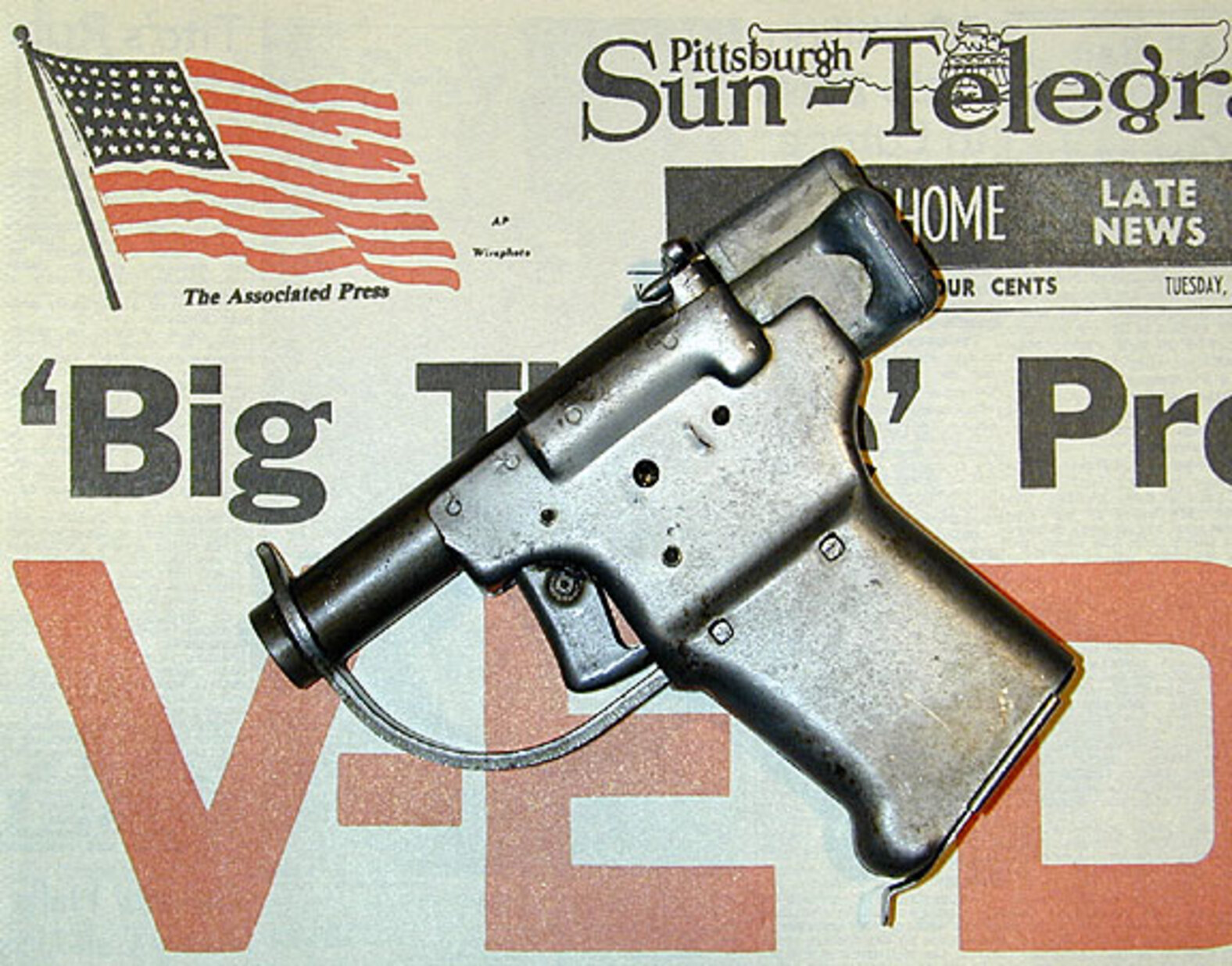
It looked more like a stamped-metal emergency tool than a real handgun. That was exactly the point.
A Pistol Built for a Very Specific Kind of War
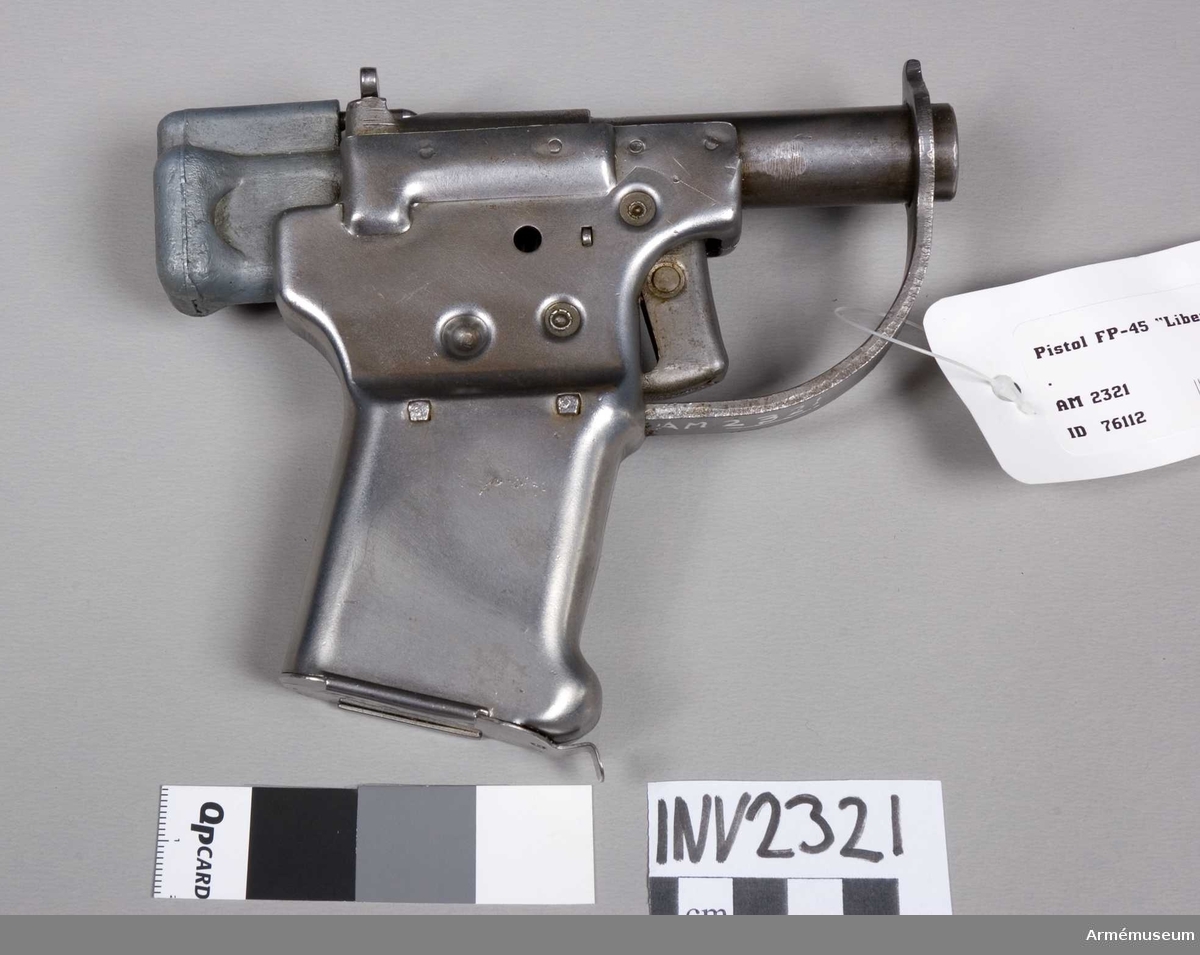
The FP-45 Liberator was never meant to be a soldier’s sidearm in the usual sense. It was conceived during World War II as a one-shot weapon that could be handed to resistance fighters, guerrillas, or civilians operating behind enemy lines.
According to the National Park Service, the idea was brutally simple: use the single .45 ACP round to kill or disable an isolated enemy soldier, then take his proper weapon. That mission shaped every part of the design, from the crude construction to the complete lack of refinement.
The official designation helped hide its purpose. “FP” stood for “Flare Projector,” a deliberately misleading label for what was really a covert pistol meant for irregular warfare.
Why It Cost About $2
The Liberator’s most famous claim is its price, often given as about $2 or, more precisely, around $2.10 per unit. American Rifleman and other historical sources credit that astonishingly low figure to stamped-sheet-metal construction and an extreme focus on speed over durability.
Guide Lamp Division of General Motors built the pistol, not a traditional gunmaker in the usual sense. That mattered, because the company already understood mass production, metal stamping, and wartime industrial tempo.
The result was a gun that could be made fast and in huge numbers. U.S. Army historical material notes that roughly 1,000,000 Liberators were produced in 1942, which remains one of the most remarkable bursts of handgun production in wartime history.
Crude by Design, Not by Accident
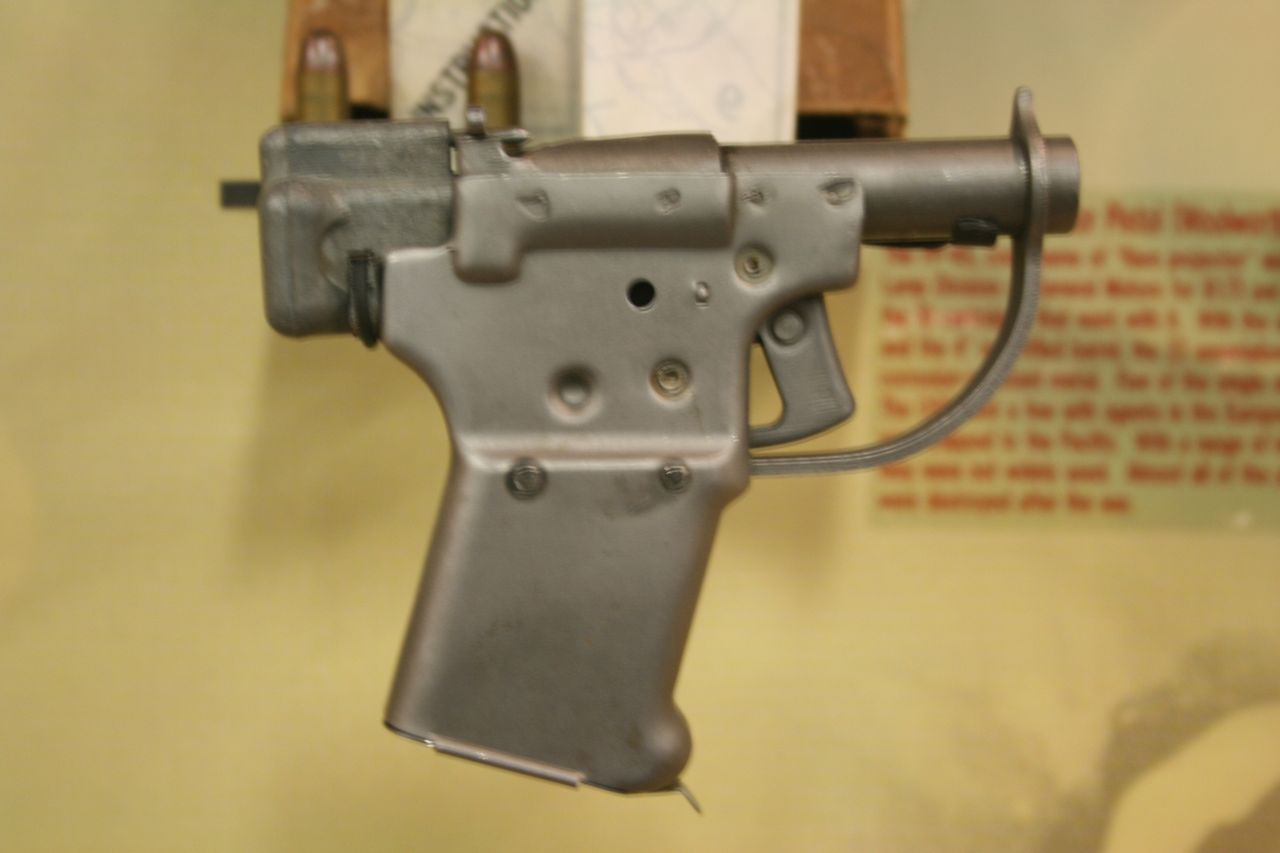
Mechanically, the Liberator was about as simple as a firearm can get. It was a single-shot, striker-fired pistol chambered in .45 ACP, with a smoothbore barrel and manual loading and cocking.
That smoothbore barrel is one reason the gun had a terrible reputation for accuracy beyond very short range. American Rifleman has described its practical range as under 50 feet, and even that was optimistic under stress.
Each pistol was typically packaged with 10 rounds of ammunition, a wooden dowel for knocking out spent cases, and illustrated instructions. That kit tells you everything about the gun’s limitations: fire once, extract manually, reload slowly, and hope the first shot solved the problem.
Dropped to Resistance Fighters, but Not Everywhere
The Liberator is often wrapped in myth, especially the idea that it was scattered across occupied Europe by the crate. The historical record is murkier than the legend.
National Park Service material indicates the pistol was distributed by the OSS behind Japanese lines in places such as China and was also intended for indigenous guerrillas in China and the Philippines. That suggests the Pacific and Asian theaters were more central to actual distribution than popular memory sometimes admits.
Many of the million guns reportedly never saw operational use at all. The weapon was attractive in concept, but commanders had real doubts about whether an untrained user with a one-shot pistol could survive long enough to capture a better weapon.
The Liberator as Psychological Warfare
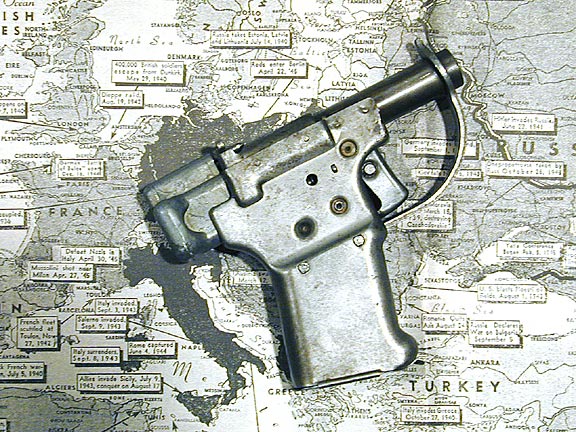
To understand the FP-45, you have to see it as more than a firearm. It was also a psychological weapon, tied to the broader wartime belief that cheap arms could encourage resistance, spread insecurity, and force occupying troops to fear attack from seemingly harmless civilians.
That is why the pistol’s symbolic value may have exceeded its battlefield value. A hidden handgun in occupied territory could create anxiety far beyond the damage caused by the weapon itself.
In that sense, the Liberator was less about marksmanship and more about disruption. It embodied a wartime strategy that mixed propaganda, sabotage, and guerrilla action into one cold, utilitarian package.
Why the FP-45 Still Fascinates Collectors
Today, the Liberator survives as one of the strangest artifacts of World War II weapons history. Smithsonian collections preserve examples, and collectors remain drawn to it not because it was elegant or effective, but because it was such a stark expression of total-war thinking.
It is ugly, improvised-looking, and mechanically primitive. Yet those traits are exactly what make it memorable, because they reveal how far industrial America was willing to go in designing weapons for clandestine conflict.
The FP-45 Liberator was a bad pistol by almost every normal standard. But as a piece of wartime strategy, industrial improvisation, and psychological warfare, it remains unforgettable.