The Volcanic pistol occupies an unusual place in American firearms history. Introduced during the early 1850s, it attempted to offer something different from the traditional percussion revolvers and single-shot handguns of its time. Its distinctive ammunition, unusual feeding arrangement, and innovative lever-operated mechanism made it an ambitious design, even though it struggled commercially. Developed through the work of inventors Horace Smith and Daniel B. Wesson, the Volcanic system eventually helped establish the mechanical ideas that led to the famous Henry rifle. Here are six fascinating quirks that explain what made this pistol so unusual and why its influence lasted far beyond its relatively short production life.
1. It Fired a Bullet That Also Served as Its Cartridge
The Volcanic’s unusual feature was its Rocket Ball ammunition. Instead of a conventional case holding bullet, powder, and primer, each round used a hollow-based projectile with propellant packed inside its rear cavity. The idea grew from Walter Hunt’s 1848 concept and was refined by Horace Smith and Daniel B. Wesson. Volcanic pistols appeared in .31 and .41 calibers. Removing the separate case made the ammunition compact and suited it to a repeating action, but the tiny space inside the bullet limited the powder charge. This clever idea solved one problem while creating another: the pistol could fire several rounds without conventional cartridges, yet each shot delivered modest power.
2. Its Lever Was Built Into the Trigger Guard
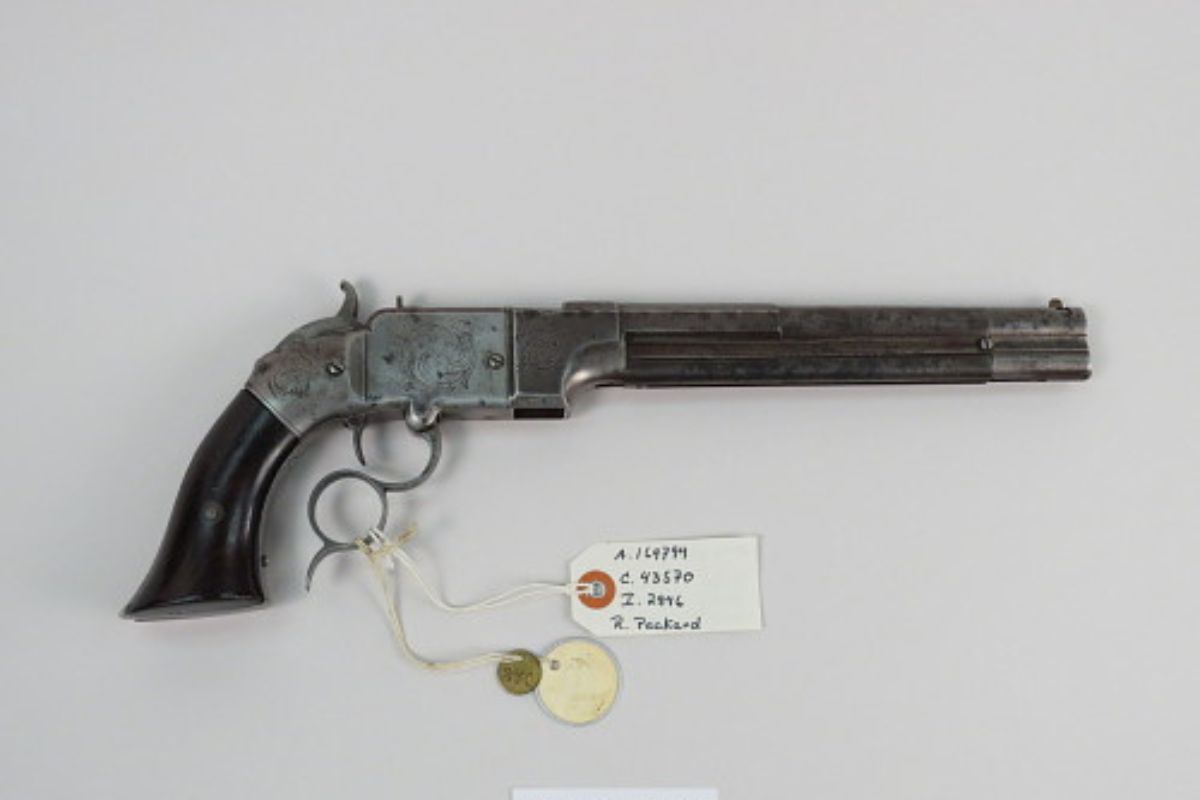
The Volcanic did not use the familiar revolver arrangement of a rotating cylinder. Instead, a loop-shaped lever formed part of the trigger guard. Moving it cycled the action, cocked the hammer, and brought another round from the tubular magazine toward the breech. Smith and Wesson’s 1854 patent, No. 10,535, covered the key repeating mechanism. The compact lever arrangement was an important step toward the system later enlarged for rifles. It also gave the pistol a distinctive profile beside mid-19th-century percussion handguns. The lever was not decorative: it placed the hand-operated cycling system beneath the receiver, where it could be adapted to a shoulder arm.
3. It Carried Its Ammunition Beneath the Barrel
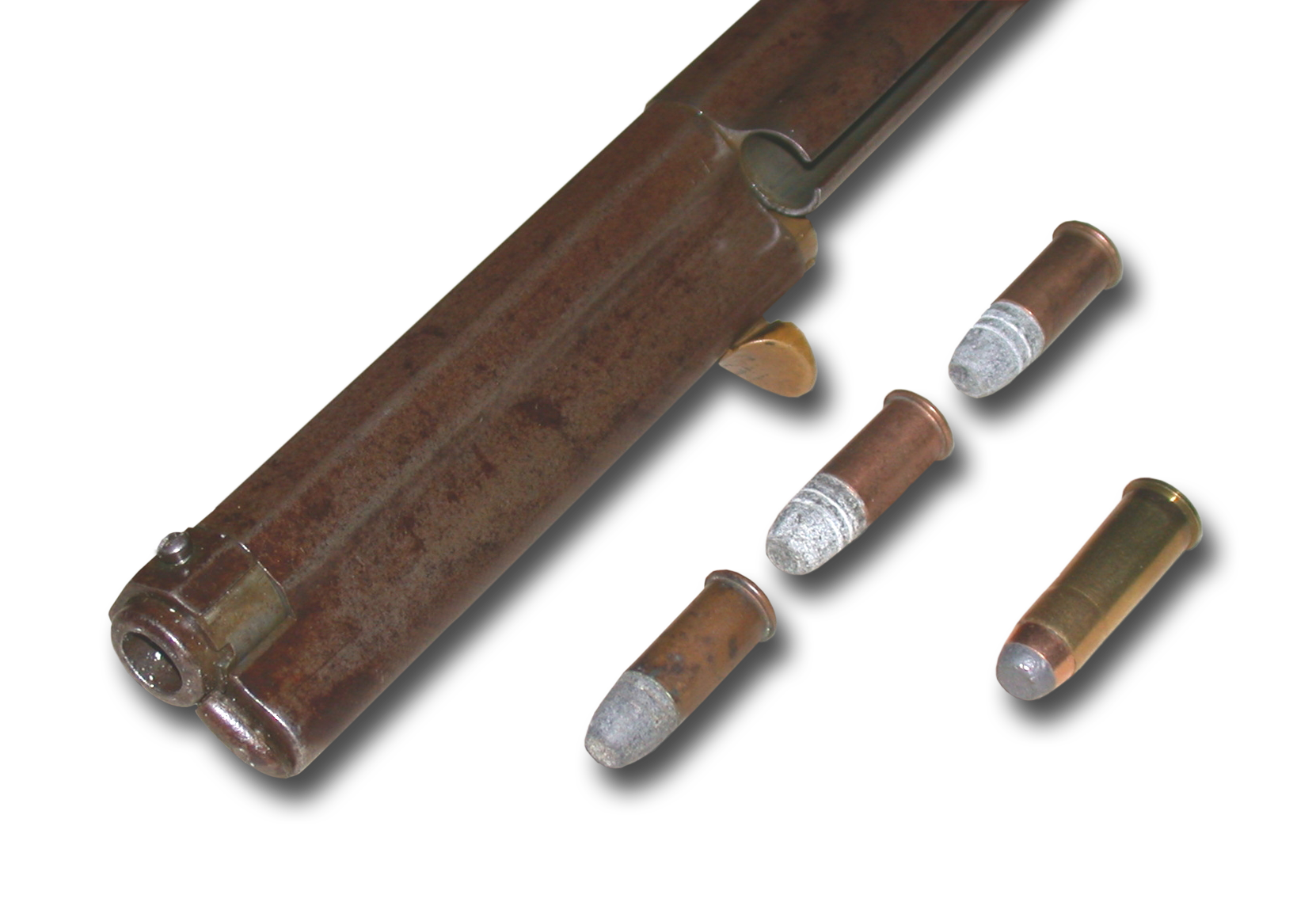
Like many later American repeaters, the Volcanic stored ammunition in a tubular magazine beneath the barrel. It was loaded from the front, using a rotating sleeve near the muzzle to expose the opening. Depending on caliber and barrel length, model descriptions commonly list capacities of about 6 to 10 rounds. That was a notable supply for a handgun in the 1850s, when many popular pistols fired one shot before reloading or relied on a percussion revolver’s cylinder. The arrangement also established a layout recognizable in later lever-action rifles. Its front-loading system, however, was less convenient than the improved arrangements developed for subsequent Henry and Winchester models.
4. Its Firepower Was Limited by the Rocket Ball
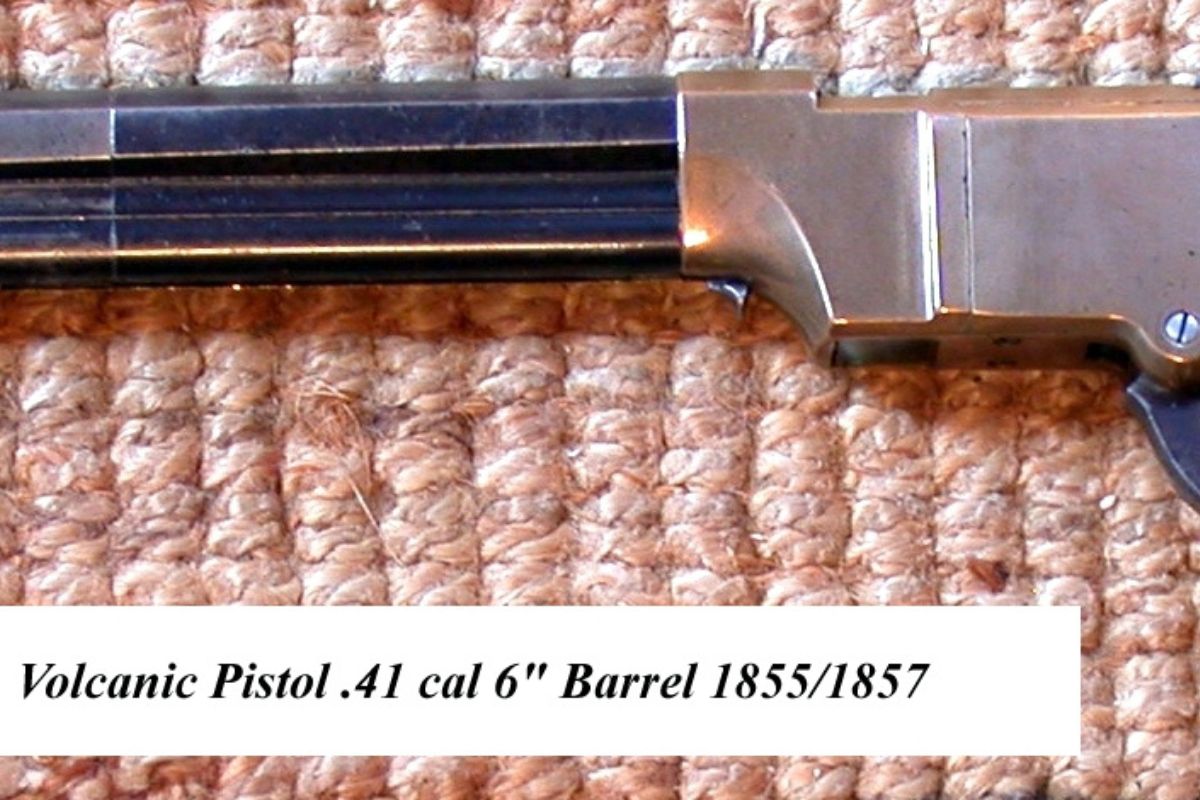
The Volcanic promised speed, but its ammunition lacked the power of contemporary revolvers and later metallic rounds. The hollow base left little room for propellant, and a commonly cited .41-caliber Rocket Ball used a charge of roughly 6.5 grains. Published estimates put its muzzle velocity around 500 to 600 feet per second, though figures vary by source and load. The result was a relatively weak projectile, limiting the pistol’s usefulness despite its multi-shot capacity. This weakness limited use and showed that a clever feeding system was only half the answer. The next generation needed a stronger, self-contained cartridge, along with refinements to the action and feeding system.
5. Its Successor Emerged After a Business Failure
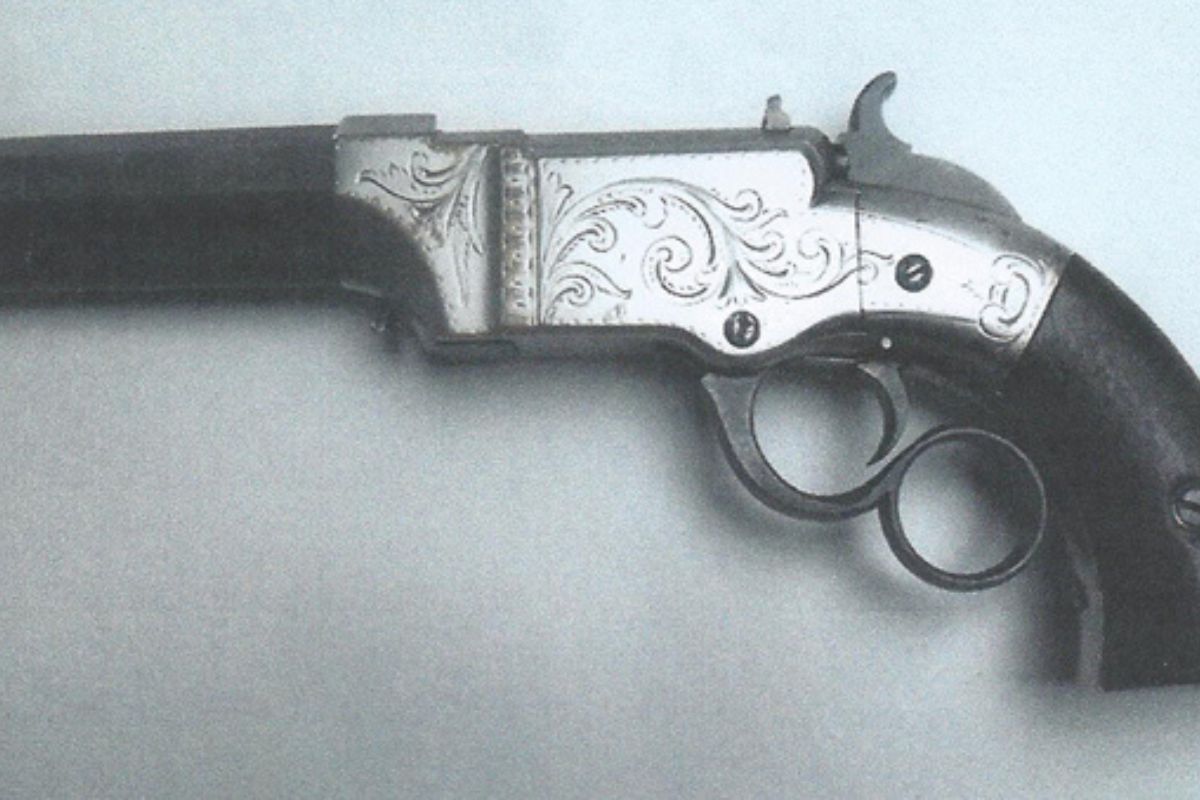
The Volcanic Repeating Arms Company struggled to sell its firearms and became insolvent in 1857. Oliver Winchester, an investor in the enterprise, acquired its assets and organized the New Haven Arms Company. Benjamin Tyler Henry later became a key figure in improving the design and its ammunition. The transition was not an instant switch from pistol to rifle: production continued while the mechanism and cartridge were reworked. The company’s difficulties showed that an inventive firearm could still fail if its ammunition disappointed customers. The business change kept the underlying ideas alive, providing the factory, machinery and experience from which the Henry rifle emerged in 1860.
6. The Henry Rifle Kept the Idea but Changed the Ammunition
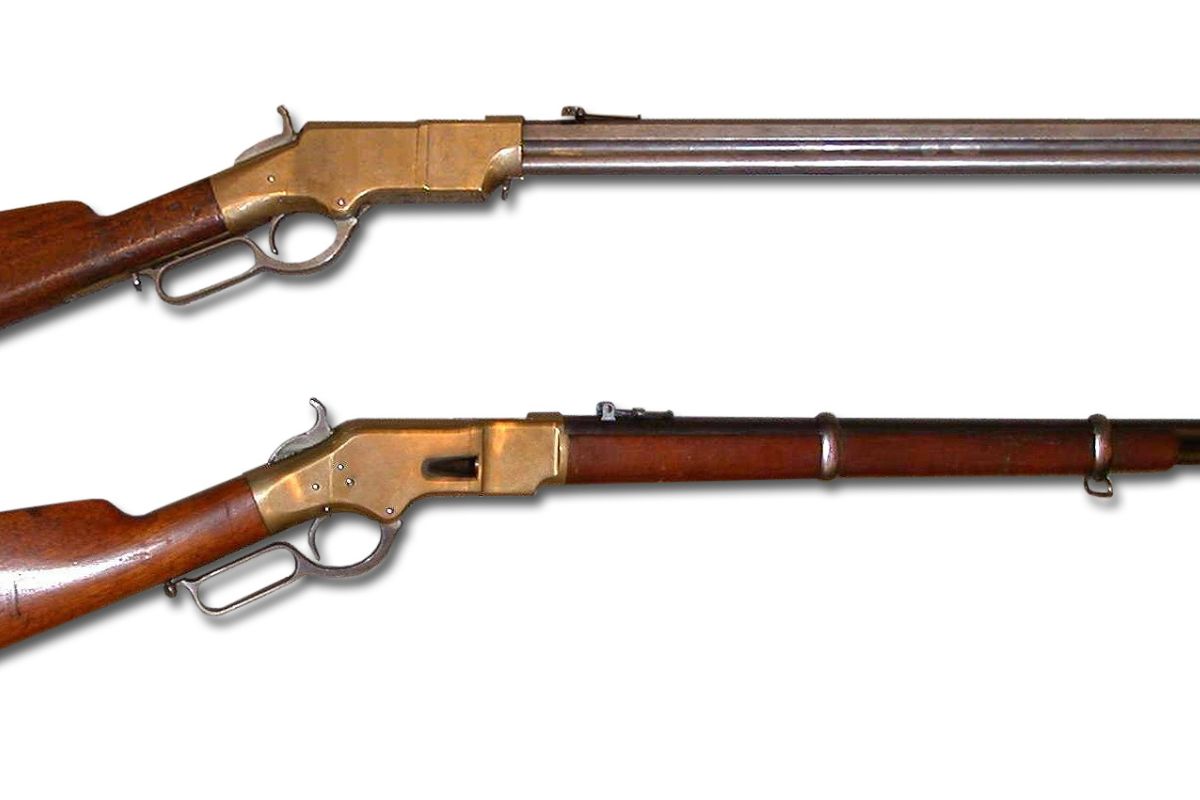
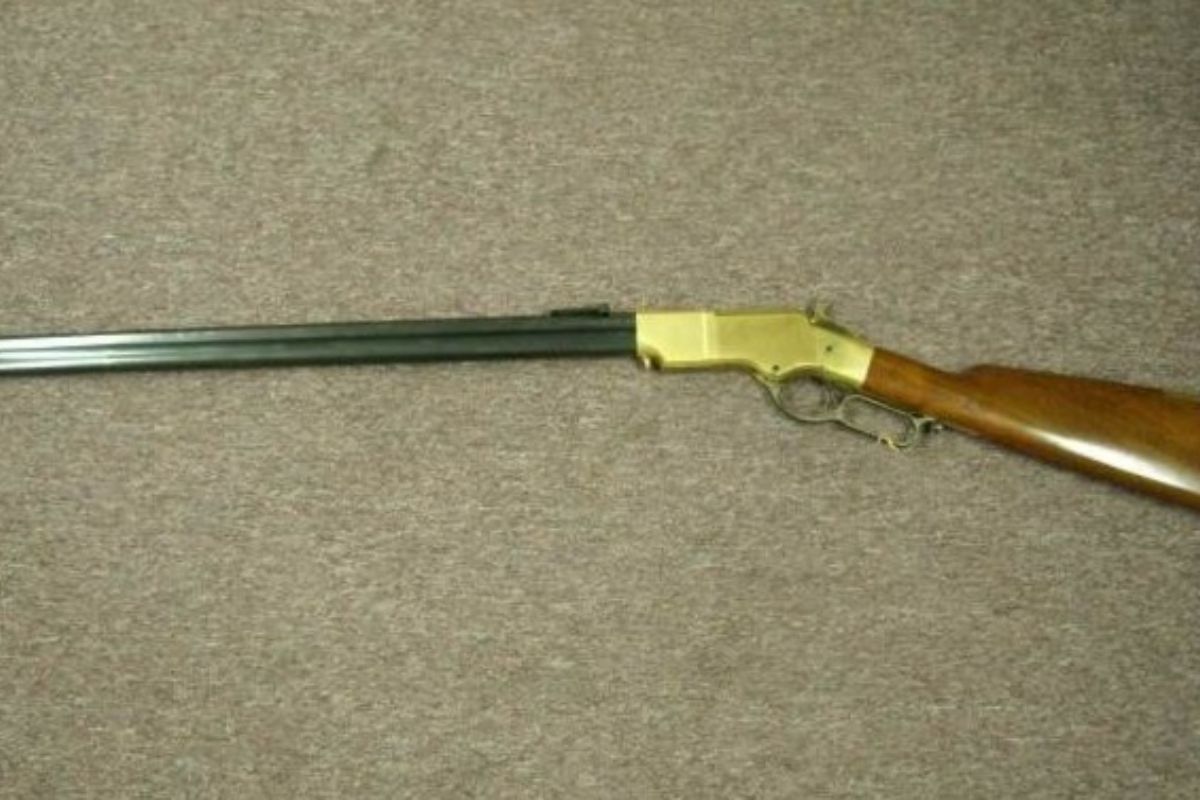
The 1860 Henry rifle retained the Volcanic family’s lever-operated toggle-link action and under-barrel tubular magazine, but used a more practical .44 rimfire cartridge. Benjamin Tyler Henry’s improvements provided a self-contained metallic case and a stronger powder charge than the Rocket Ball could accommodate. A standard Henry held 15 rounds in its magazine, plus one in the chamber, for 16 in total. That capacity made it a landmark repeater of the Civil War era. The Volcanic pistol had not been a commercial triumph, but its mechanical layout helped make the Henry possible. It is a clear example of how a flawed early design can provide the foundation for a successful successor.