It looked like something pulled straight from the Space Age. In practice, the 1960s rocket pistol was a fascinating dead end.
The Gun Of The Future Arrived At The Worst Possible Time
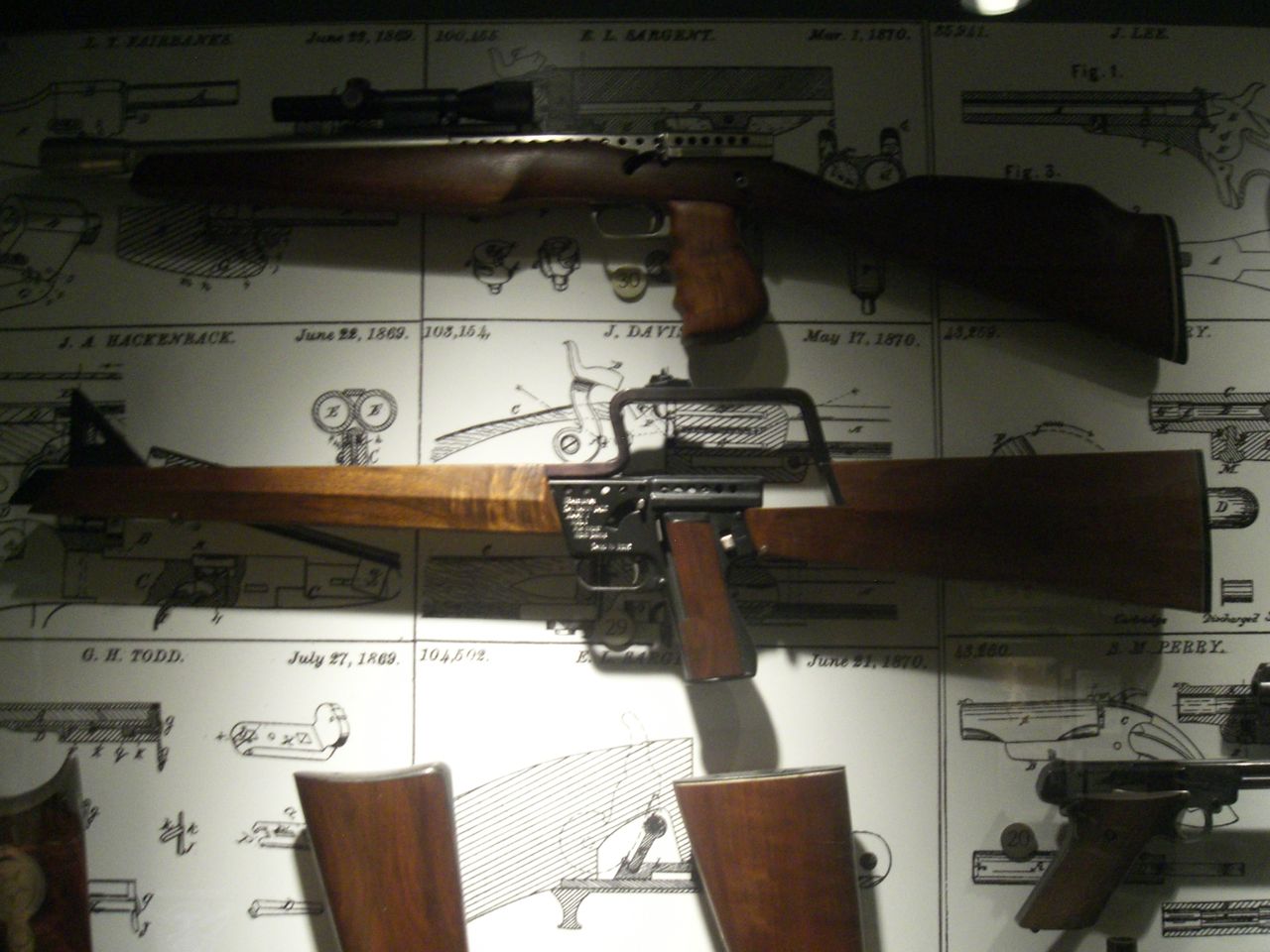
The so-called rocket pistol was the Gyrojet, developed by MB Associates in California during the early 1960s. Instead of firing a normal cartridge, it launched a small 13 mm rocket projectile with solid fuel packed into the rear. According to American Rifleman and Rock Island Auction, the commercial pistol reached market in the mid-1960s and was promoted as a radical leap beyond conventional firearms.
That pitch made perfect sense for the era. America was deep into the Cold War, the space race was reshaping public imagination, and almost any product with a futuristic angle could grab headlines. Life magazine helped turn the Gyrojet into a sensation in May 1966, presenting it as a missile-age sidearm with enormous promise.
The problem was that the Gyrojet was trying to sell novelty as maturity. A conventional pistol in the 1960s was already reliable, compact, and reasonably accurate. To replace that, a new system had to be dramatically better, not just more interesting.
It never cleared that bar. Even the gun’s fans tended to describe it as clever first and effective second, which is usually a warning sign when lives might depend on the result.
Tiny Rockets Sound Brilliant Until You Need Handgun Performance
The basic idea was undeniably ingenious. Each projectile carried its own propellant, and angled exhaust ports at the rear spun the rocket for stabilization, a concept reflected in period patents tied to the design. That meant the launcher itself could be simpler in some ways because the projectile, not the gun barrel, did much of the work.
In theory, this offered several attractive benefits. Recoil was lighter than many conventional handguns because the rocket accelerated after leaving the weapon rather than delivering all its force instantly. The launcher could also be made from relatively light materials, and the unusual ammunition suggested possibilities for specialized roles.
But handguns are brutally practical tools. They need to work at very short range, often under stress, and they need to deliver predictable power the instant the trigger is pressed. That is exactly where the Gyrojet’s rocket concept collided with reality.
American Rifleman noted that unlike ordinary bullets, which hit peak speed inside the barrel, the Gyrojet rocket left the launcher moving relatively slowly and did not reach top velocity until roughly 20 yards out. For a shoulder-fired launcher, that might be manageable. For a pistol, it was a fundamental design mismatch.
The Gyrojet Was Weak Up Close, And That Is A Huge Problem

A normal handgun is most useful at close distance. The Gyrojet was almost the opposite. Because its miniature rocket needed time to build thrust, it was least impressive precisely where a sidearm is supposed to excel.
That led to the weapon’s most famous flaw: weak muzzle performance. Rock Island Auction and American Rifleman both describe the same basic problem. The projectile accelerated after launch, so energy was lower near the target if that target was only a few feet away. At longer distances the round became more potent, but by then a pistol had already surrendered its main advantage.
This was not a small tradeoff. It meant the weapon failed the common-sense test that governs most sidearms. If a pistol is for emergencies, self-defense, or sudden close encounters, delayed acceleration is the wrong ballistic behavior.
The idea sounded futuristic because rockets usually imply power. But scale matters. A full-size rocket has space, fuel, and guidance potential. A tiny hand-launched rocket has almost none of that margin. The Gyrojet turned the drama of rocketry into a handgun-sized package, then discovered that the physics did not shrink gracefully with it.
Accuracy Problems Came From The Same Fancy Design

If the Gyrojet had at least been laser-straight in flight, some of its other weaknesses might have been tolerated. It was not. Reports from collectors, later writers, and period discussions consistently describe frustrating inaccuracy, and the reason sits right inside the ammunition.
The projectile depended on tiny canted exhaust ports to spin and stabilize itself. On paper, that was elegant. In manufacturing, it was a headache. Small inconsistencies in nozzle shape, fuel burn, or thrust direction could send rounds off course. With conventional ammunition, bullet and barrel technology had already benefited from decades of refinement. The Gyrojet was asking miniature rockets to perform with equal consistency, which was far more difficult.
American Society of Arms Collectors material on the Gyrojet’s development points to multiple nozzle experiments, which tells you engineers knew this was a sensitive variable. Even slight deviations mattered because the entire stabilization system depended on precise exhaust behavior.
That left shooters with a weapon that could be exciting but unpredictable. A futuristic gun that cannot guarantee where its shot will land is not a weapon of the future. It is a prototype that escaped into the marketplace a little too early.
Reliability, Cost, And Law Finished The Job
Reliability was another major strike. American Rifleman has described the Gyrojet as a dim flash in the pan, and later summaries of military testing point to misfires and ammunition sensitivity. Some accounts tied poor field performance to humidity, an especially ugly vulnerability for any weapon considered for jungle conditions during the Vietnam era.
That matters because rocket ammunition is inherently more finicky than a standard cartridge. You are not just igniting powder behind a bullet. You are depending on a tiny self-contained motor, a stable propellant grain, clean nozzle geometry, and consistent ignition in a miniature package. Every extra variable is another chance for disappointment.
Then there was cost. Gyrojet ammunition was expensive, unusual, and never produced at anything like mainstream scale. A firearm can survive quirks if it is cheap and common, or it can survive high cost if it is clearly superior. The Gyrojet was neither.
Legal changes did not help either. Rock Island Auction notes that the Gun Control Act of 1968 classified projectiles over .50 caliber as destructive devices in many circumstances. For a niche 13 mm system already struggling commercially, that kind of regulatory pressure made a bad situation worse.
The Real Legacy Was Style, Not Success
Today, the Gyrojet survives mostly as a collector’s piece and a symbol of unfiltered 1960s optimism. It appeared in period pop culture, including the 1966 film Murderers’ Row, and that was fitting. The gun always belonged more naturally in spy fiction and speculative design than in a holster meant for serious daily use.
Its failure does not mean the inventors were foolish. In some ways, they were asking a smart question before materials, manufacturing control, and mission fit had real answers. Could you build a low-recoil launcher around self-propelled ammunition? Yes. Could you make it outperform ordinary handguns in the roles that matter most? No, not then, and probably not in that format.
That is why the rocket pistol never really worked. It was not defeated by one dramatic flaw, but by a stack of practical ones: slow close-range performance, inconsistent accuracy, ammunition complexity, high cost, and poor real-world reliability.
The Gyrojet remains irresistible because it captures a very human habit. We often assume the future will look stranger than the present. Sometimes the real future is less exotic: the old design stays on top because, for the job at hand, it simply works better.