People want a clean answer here. They usually do not get one.
Why this argument never seems to end

The pump vs. semi-auto home defense debate survives because both sides are arguing from partial truths. Pump shotgun fans point to rugged simplicity, lower purchase prices, and the idea that a manually cycled action is less picky about ammunition. Semi-auto supporters counter with faster follow-up shots, less felt recoil in many gas-operated designs, and fewer opportunities to short-stroke the gun under stress. Both camps are right often enough to sound definitive.
That is what makes the discussion so sticky for ordinary buyers. A person shopping for one defensive firearm is not asking what works in a vacuum. They are asking what works at 2 a.m., in a hallway, half awake, with shaking hands and poor lighting. The answer changes depending on age, strength, training time, household layout, and tolerance for maintenance.
Instructors have been making this point for years. According to guidance echoed across major firearms training schools, mechanical capability matters less than user competence under pressure. A shotgun can be powerful and effective, but it is not magic. The real question is not which platform wins the internet argument. It is which one a specific person can run safely, consistently, and accurately when things are going wrong fast.
The pump shotgun’s strongest case

The pump shotgun has earned its reputation honestly. It can be durable, comparatively affordable, and straightforward in concept. Models like the Remington 870 and Mossberg 500 built decades of trust with police, hunters, and homeowners because they generally work across a broad range of loads, from lighter birdshot to heavier buckshot and slugs. For buyers on a budget, that versatility still matters.
There is also a practical argument for manual control. With a pump, the shooter provides the energy to chamber the next shell, so low-recoil loads or odd ammunition are less likely to cause cycling problems that can appear in some semi-autos. In a market where people buy whatever shells they can find, not just ideal test loads, that flexibility can be useful. Simplicity of operation on paper is another selling point, at least initially.
But pumps ask more of the shooter than many advertisements imply. You must run the fore-end fully rearward and fully forward every time, without hesitation. Under stress, people short-stroke pumps, inducing failures that stop the gun cold until corrected. Instructors regularly see this on ranges, especially among newer users who assume the action was foolproof. Reliable design is not the same thing as error-proof handling.
The semi-auto argument is stronger than critics admit
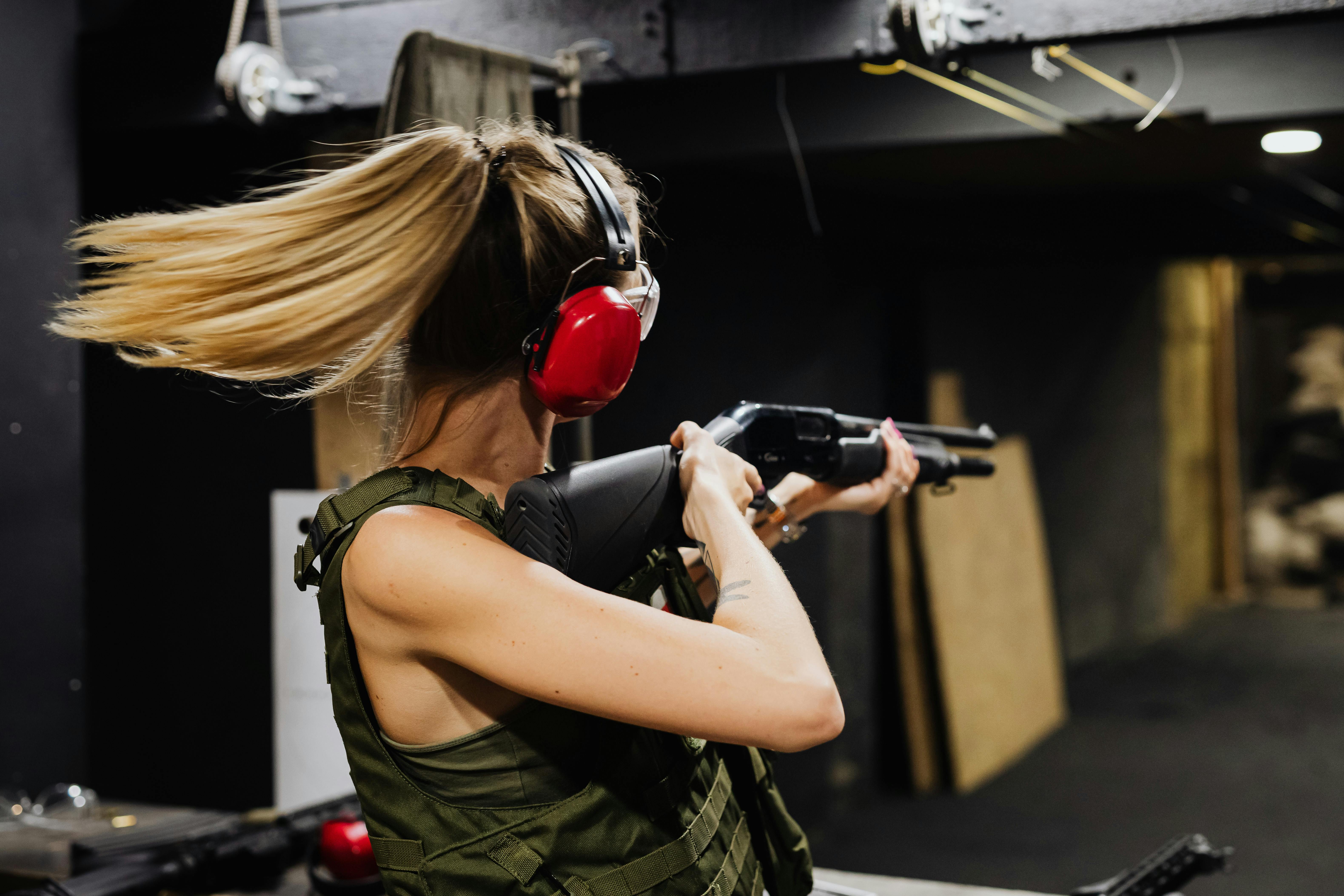
Semi-auto shotguns used to carry a broader reputation for finickiness, and some older examples earned it. Modern designs, especially quality gas systems and well-made inertia guns, have narrowed that gap significantly. In testing by reviewers, trainers, and competitive shooters, many current semi-autos run thousands of rounds with impressive reliability when fed ammunition they are designed to handle. The best ones are no longer exotic specialists.
The biggest practical advantage is speed with reduced disruption. A semi-auto cycles itself after each shot, which means the shooter can keep both hands focused on controlling the gun and tracking the target. That matters in a close-range defensive scenario where fractions of seconds count and visual focus may already be compromised by adrenaline. Follow-up shots are usually quicker, and for many users, they are also more accurate.
Recoil is another underappreciated factor. Gas-operated semi-autos often spread recoil impulse over time, making the gun feel less punishing than a pump firing the same load. That can improve confidence for smaller shooters, older adults, and anyone recoil-sensitive enough to avoid practice. Critics are right that semi-autos require more attention to maintenance and load selection. Still, a platform that gets practiced with regularly often beats a tougher gun that lives untouched in a closet.
Where both sides get dangerously oversimplified

One of the worst myths in this debate is that the sound of a pump being racked will end a confrontation instantly. Sometimes intruders flee at any sign of resistance. Sometimes they do not. Building a defensive plan around a cinematic noise cue is not a strategy. It also assumes the gun was stored with an empty chamber and that the user has time, dexterity, and situational awareness to chamber a round without fumbling.
Another simplification is the belief that the shotgun spread eliminates the need to aim. Inside most homes, engagement distances are short enough that buckshot patterns can remain surprisingly tight. Depending on barrel length, choke, and ammunition, the pattern spread across a room may be only a few inches. Every pellet still has to be accounted for, and misses still miss. A shotgun can be effective, but it is an aimed weapon.
Then there is the blanket advice that one type is “better for beginners.” Beginners are not one group. A physically strong person with little shooting background may adapt quickly to a pump. Someone with arthritis, reduced upper-body strength, or a small frame may manage a semi-auto more safely and confidently. Simple labels hide the truth that ergonomics, confidence, and regular training matter more than tribal brand loyalty.
The real deciding factors inside an actual home
Inside a home, maneuverability and storage matter more than many buyers expect. A long gun can be highly effective, but moving through tight doorways and around furniture is not as easy as range practice suggests. Barrel length, overall length, stock fit, and weapon-mounted light setup all affect handling. Whether the gun is a pump or a semi-auto matters less than whether the owner can shoulder it quickly and safely in confined spaces.
Capacity is another area where internet arguments drift away from reality. A typical defensive shotgun may hold anywhere from 4+1 to 8+1, depending on configuration. Some people see that as ample, others as a major limitation. The more useful question is whether the owner can keep the gun running, reload it under pressure, and avoid ammo choices that over-penetrate or underperform. Hardware numbers alone do not tell that story.
Household composition changes the equation,n too. A parent with children may prioritize secure storage and simple readiness procedures. An older couple may care more about recoil management than maximum payload. Apartment dwellers may weigh wall penetration concerns differently than someone in a detached rural home. The defensive firearm is part of a larger safety plan, not a stand-alone solution that exists apart from the people living around it.
Training exposes the winner and the loser
Put both platforms into a structured class, ass and the debate gets more honest. Shooters arrive convinced that pumps are simpler, often discover that running one fast without inducing user error takes real repetition. Shooters who assumed semi-autos are effortless learn that load choice, stance, and maintenance can still produce malfunctions if ignored. The range has a way of stripping romance out of both stories.
A common pattern appears in training data from instructors and schools: the gun people practice with becomes the one they trust most. That sounds obvious, but it cuts through endless theorizing. A homeowner who fires 500 rounds a year through a semi-auto and rehearses loading, malfunction clearances, and light use is likely better prepared than someone who owns a pump with legendary reliability but has only fired one box of shells since purchase.
Stress inoculation matters as much as round count. Shooting on a square range in daylight is not the same as manipulating a shotgun after being startled awake. Timed drills, movement, low-light work, and decision-making exercises reveal weaknesses quickly. The better platform is the one that still feels manageable when the heart rate spikes, the hands sweat, and fine motor skills start to leave the building.
Cost, maintenance, and long-term ownership
Budget drives many purchases, and pumps usually win the sticker-price comparison. A reliable pump can cost hundreds less than a high-quality semi-auto, leaving money for ammunition, a light, secure storage, and professional instruction. That matters because accessories and training are not optional extras in a defensive setup. A cheaper gun that funds better preparation may be the smarter buy than a premium firearm that empties the wallet.
On the other hand, long-term ownership is about more than purchase price. Semi-autos can demand a bit more cleaning discipline, especially gas guns that collect fouling in the operating system. Springs, seals, and ammunition compatibility deserve attention. None of that makes them fragile, but it does mean the owner needs to understand the machine. A neglected semi-auto may become unreliable in ways a neglected pump might not, at least not as quickly.
The hidden cost is the cost of avoidance. If a pump’s recoil and manual action discourage practice, or if a semi-auto’s complexity intimidates the owner into leaving it unloaded and unfamiliar, then the lower price or higher capacity becomes irrelevant. The best value is the gun that the owner can afford, maintain, and train with enough to build real competence. Ownership without repetition is just expensive reassurance.
The answer nobody likes, but most experts give
The unsatisfying conclusion is that neither platform wins universally, and that is exactly why the debate never dies. Pumps remain excellent defensive tools in trained hands, particularly for buyers who value ruggedness, ammunition flexibility, and lower upfront cost. Semi-autos remain excellent defensive tools for those who prioritize faster follow-up shots, softer recoil, and reduced handling errors between shots. Both can fail, and both can shine.
If there is a practical rule, it is this: buy the shotgun you can run reliably with your chosen defensive load after meaningful testing. That means patterning buckshot at realistic room distances, confirming function with enough rounds to trust the system, and learning loading and malfunction drills until they stop feeling foreign. It also means being honest about physical limitations rather than buying the gun that flatters your self-image.
Most credible instructors land in the same place. The better home defense shotgun is the one matched to the shooter, the environment, and the willingness to train. That answer is less fun than declaring a champion, but it is far more useful. In the real world, the winner is not pump or semi-auto. The winner is preparation, and the loser is anyone who mistakes a strong opinion for a tested plan.