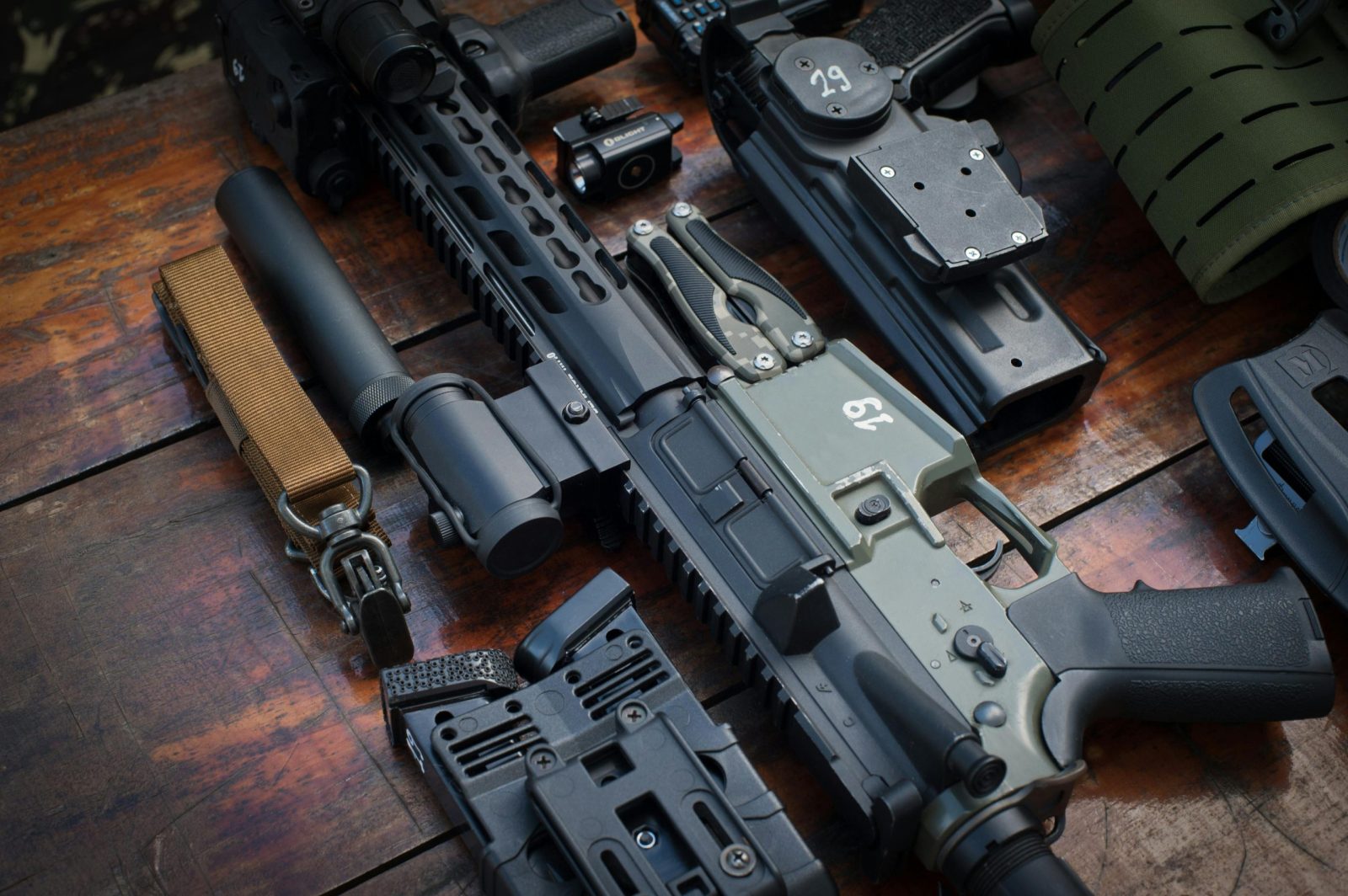
The fight over firearms is moving to the storefront level. And the NRA says gun shops are now the next big target.
Why are gun dealers suddenly at the center of the fight

For years, the biggest national arguments over gun policy focused on buyers, bans, and background checks. Now the pressure is shifting toward the businesses that sell firearms, with state legislatures, attorneys general, and local officials layering on licensing rules, security mandates, training standards, surveillance requirements, and new compliance paperwork. According to the NRA and its lobbying arm, that trend is no accident.
The group argues that regulators increasingly see gun dealers as a pressure point. If lawmakers cannot outright ban broad categories of firearms, the NRA says, they can make lawful sales harder, slower, and more expensive by tightening the rules on the stores themselves. That message has become central to the organization’s recent pushback against dealer-focused laws in blue states and major metro areas.
There is a real policy backdrop here. A growing number of states already require some form of state-level dealer licensing or certification on top of the federal firearms license system, according to Johns Hopkins researchers and state agencies. Federal dealers also operate under a maze of state and local ordinances that can differ sharply from one jurisdiction to the next, while ATF continues to publish updated compilations of state and local firearms rules to help businesses keep up. According to NRA-ILA, that fragmented landscape is exactly what it fears most because the compliance burden falls hardest on smaller family-owned stores rather than large chains.
The rules expanding across states are not all the same
What makes this crackdown debate more complicated is that the regulations are not uniform. In New York, firearm dealers and gunsmiths must comply with statutory security and operational requirements, including written security plans and alarm-related standards under state law and regulations. California has imposed dealer surveillance-related requirements, with the state Justice Department noting that older law had no such video and audio mandate before lawmakers changed it.
Illinois has its own dealer certification structure through the Firearm Dealer License Certification Act. State police guidance says certified dealers and employees involved in transfers must receive annual training on legal requirements and responsible business practices. Supporters present these laws as basic guardrails for a high-risk industry, similar to standards imposed on pharmacies, bars, or explosives vendors.
Colorado has emerged as another major flashpoint. State materials say a firearms dealer permit became a state requirement for dealers beginning July 1, 2025, adding another layer beyond the federal license. Colorado lawmakers have continued refining that system, and a 2026 measure allows escalating penalties for certain repeat violations beginning January 1, 2027. To the NRA, that looks like mission creep. To advocates of tighter oversight, it looks like a state building an enforcement structure with actual consequences.
The NRA says small gun shops are being squeezed
The NRA’s core argument is political, economic, and cultural all at once. It says many of these rules are sold as public safety measures but function in practice as business suppression tools. That language has sharpened as more states add technical requirements that may be manageable for large retailers with compliance staff, but much tougher for one-location gun shops operating on thin margins.
That argument got a fresh boost this week as gun rights media highlighted the NRA’s warning that the latest wave of state and local dealer rules could push neighborhood shops out of business without meaningfully stopping criminals. The line resonates because small dealers often already face rent pressures, insurance costs, inventory financing issues, and complex federal recordkeeping obligations. Add mandatory cameras, alarm systems, staff certification, state permit fees, and repeated reporting deadlines, and the cumulative load becomes significant.
Even critics of the NRA sometimes concede the compliance strain is real, though they disagree about what to do with it. The deeper dispute is whether burden alone makes a regulation unjustified. The NRA says yes when lawful commerce is the target. Gun control advocates say no if tighter dealer standards reduce diversion, theft, straw purchasing, or sloppy transfer practices. That is the fault line, and neither side is giving ground.
Federal enforcement has shaped the mood around local crackdowns

State and local regulations are only part of the story. The broader atmosphere around gun dealers was heavily influenced by federal enforcement during the Biden years, especially the ATF’s so-called zero-tolerance approach toward certain willful violations. That policy became a rallying cry for gun rights groups and the firearms industry, which argued dealers were being threatened with license loss over technical mistakes.
Reuters reported in April 2025 that the Justice Department repealed that Biden-era policy. The prior framework had directed ATF to move toward revocation in cases involving specified willful violations such as sales to prohibited persons, failure to run background checks, falsified records, or failures connected to trace requests. Gun rights advocates welcomed the rollback, saying it ended an enforcement philosophy that treated retailers as adversaries instead of regulated partners.
Still, the residue of that era remains. ATF data and reporting cited by The Trace showed that 2024 saw more gun dealer license revocations than any year in at least two decades. Whether one sees that as overdue accountability or regulatory overreach, it changed how dealers interpret every new mandate. When a shop owner hears about another state permit, inspection rule, or security certification, it lands in a business climate already primed for fear, caution, and legal expense.
Supporters of the new rules say oversight closes obvious gaps
Supporters of these laws reject the NRA’s framing almost completely. Their view is that firearms dealers occupy a uniquely sensitive place in the supply chain and should be held to rigorous standards, especially when stolen inventory, bad records, or weak security can contribute to trafficking and other crimes. In that reading, dealer rules are not backdoor gun control. They are basic risk management.
State agencies often describe the measures in those terms. California’s rulemaking materials for dealer surveillance standards said the state previously had no requirements for maintaining a digital video and audio system and that the new standards were intended to enhance public safety. New York’s framework similarly treats dealer security planning and alarm standards as routine compliance obligations rather than extraordinary restrictions.
Public health and gun violence prevention researchers make a related case. A Johns Hopkins policy roadmap published in 2025 said 17 states and Washington, D.C., already had some form of dealer licensing requirement by October 2025 and argued that federal oversight alone has historically been limited. From that perspective, state action fills a practical enforcement gap. That does not settle the political argument, but it explains why the regulatory trend is continuing despite fierce resistance from the NRA and allied groups.
The legal and political battle is really about preemption

Underneath the rhetoric, this is also a fight about who gets to make gun policy. NRA-ILA has long championed firearm preemption laws, which block local governments from adopting restrictions stricter than state law. The organization argues preemption protects lawful gun owners and businesses from a confusing patchwork that changes from town to town and can trap ordinary people in accidental violations.
That matters because many dealer disputes do not begin in Congress. They begin in city halls, county offices, zoning boards, and state agencies, writing rules after a bill passes. A gun shop may comply with federal law and state law, yet still face a local licensing issue, a security ordinance, or a land use fight. For the NRA, preemption is the firewall that stops those lower-level governments from regulating firearms commerce to exhaustion.
Recent NRA-aligned commentary and legislative updates show the group is still investing heavily in both litigation and statehouse lobbying on these questions. The strategy is straightforward: challenge dealer restrictions in court where possible, strengthen preemption statutes where votes exist, and frame every new compliance mandate as part of a broader effort to choke off lawful firearm access. It is a familiar NRA playbook, but the dealer battleground gives it new urgency.
What this means for gun buyers and the road ahead

For the general public, this fight is not just about store owners. If the NRA is right, more regulation will mean fewer neighborhood dealers, longer travel times for buyers, reduced competition, and higher prices for firearms, transfers, and compliance-related services. In rural areas especially, the loss of even one small dealer can reshape access in practical ways that are easy for lawmakers in big cities to overlook.
If supporters of the regulations are right, the trade-off is worth it. They would argue that stronger oversight makes theft harder, improves records, raises staff competency, and gives regulators leverage before bad practices spiral into bigger public safety problems. In other words, inconvenience for lawful commerce may be the price of a safer market. That argument will continue to carry weight in states already moving toward tighter gun laws.
The likely outcome is more conflict, not less. Dealer regulation is becoming one of the most active fronts in the national gun debate because it sits at the intersection of commerce, constitutional rights, crime prevention, and local control. The NRA clearly sees that shift and is responding with the language of siege. Whether voters see a sensible crackdown or a targeted squeeze on lawful gun shops will shape what comes next.